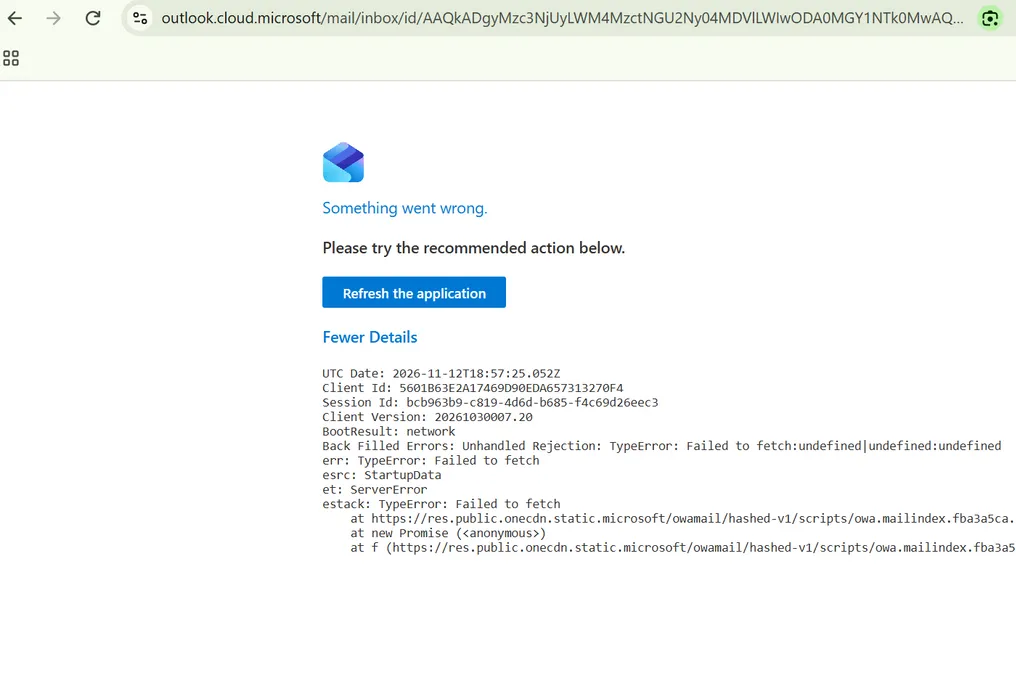
Microsoft published a report detailing the service interruption that affected Outlook and other platforms on November 12th. In addition to identifying the source of the problem, the document points out consequences, including the non-delivery of certain messages while the failure persisted.
The instability of Exchange Online, an essential service for Outlook's operation, prevented the proper processing of both email reception and sending, resulting in a queue for deliveries.
To mitigate mass failures, Microsoft changed the resending protocol, extending the period for new delivery attempts from 24 to 48 hours. Although this measure showed partial success, as noted by Neowin, there were distinctions in the consequences.
All emails linked to Microsoft 365 corporate accounts were delivered, albeit with a delay. However, messages addressed to Outlook home user addresses that had been inactive for more than thirty days expired and were returned to the senders.
It is important to note that an inactive account does not mean it is disabled; it is presumed that deactivation occurs after a specific period, in this case, 30 days. This suggests that the overall impact of the message delivery failure was not drastic, although Microsoft did not disclose the exact volume of affected accounts or messages.
Additionally, the interruption was classified as serious because it compromised several crucial security mechanisms. Among them, Zero-hour Auto Purge (ZAP), responsible for automatically identifying and removing malicious messages already delivered from inboxes, became inoperable. Safe Links, which ensures the security of links in Outlook messages, also failed, as did the email management system in quarantine used by IT administrators.
However, the most significant consequence was the generalized difficulty in accessing Microsoft services, since Outlook itself only returned to normal operation the day after the incident.
As anticipated by Microsoft itself, the root cause of the problem lay in a software update implemented on the Microsoft 365 network gateways, which are the servers responsible for managing and distributing user connections between the company's different services.
To prevent future shutdowns, the company announced several corrective actions. One plan includes relocating gateway capabilities until the first quarter of 2027, aiming to prevent the overload of a single server from causing a similar cascading effect to what recently occurred. The full details of these measures are contained in the final report issued by Microsoft.