NSEL paid a one-time settlement of 1950 crore rupees, concluding a 14-year payment default
Read more
Business Standard
business-standard.com

NSEL paid a one-time settlement of 1950 crore rupees, concluding a 14-year payment default

National Spot Exchange Ltd (NSEL) announced that it has made a One-Time Settlement (OTS) payment of 1950 crore rupees to the concerned claimants. This measure allowed for the closure of a payment default crisis amounting to 5600 crore rupees, which lasted nearly 14 years during legal proceedings.

The settlement scheme was approved by the Mumbai Bench of the National Company Law Tribunal (NCLT). The total amount was deposited into a special account, and payments to the respective creditors are scheduled for November 23, 2026. These funds were transferred to 63 Moons Technologies, which acted as the administrator for the said creditors.

Previously, on October 8, a special court in Mumbai authorized the monetization of assets worth approximately 3464 crore rupees seized by the Enforcement Directorate to help finance this settlement.

Initially, the scheme was proposed by the NSEL Investors Forum, an association representing a large number of traders. NSEL, with the support of 63 Moons Technologies, accepted this proposal and presented it to the tribunal as a final settlement.

The tribunal approved the plan following a vote, where 92.81 percent of claimants by number and 91.35 percent by value supported it. NSEL stated in its submission that the settlement was voluntarily offered from the own funds of 63 Moons, despite no money trail being found by any investigative agency regarding NSEL, 63 Moons, and its promoters. It was established that the money trail led to 17 defaulting groups from whom repayments will be made.

Jinesh Shah, mentor and trainer at 63 Moons Technologies, called the OTS 'unprecedented in the history of Corporate India' and noted that it sets a standard for fair and constructive resolution of financial crises. He expressed gratitude to the governments of Central and Maharashtra, investigative agencies, including EOW, ED, and CBI, as well as the judicial system.

Chairman of NIF, Sharad Saraf, stated that the payment is fair to the claimants and will provide a roadmap for future resolutions in financial crises. He thanked the teams of NSEL and 63 Moons, as well as NIF member Sushil Jivardkar and eight members of his steering committee.

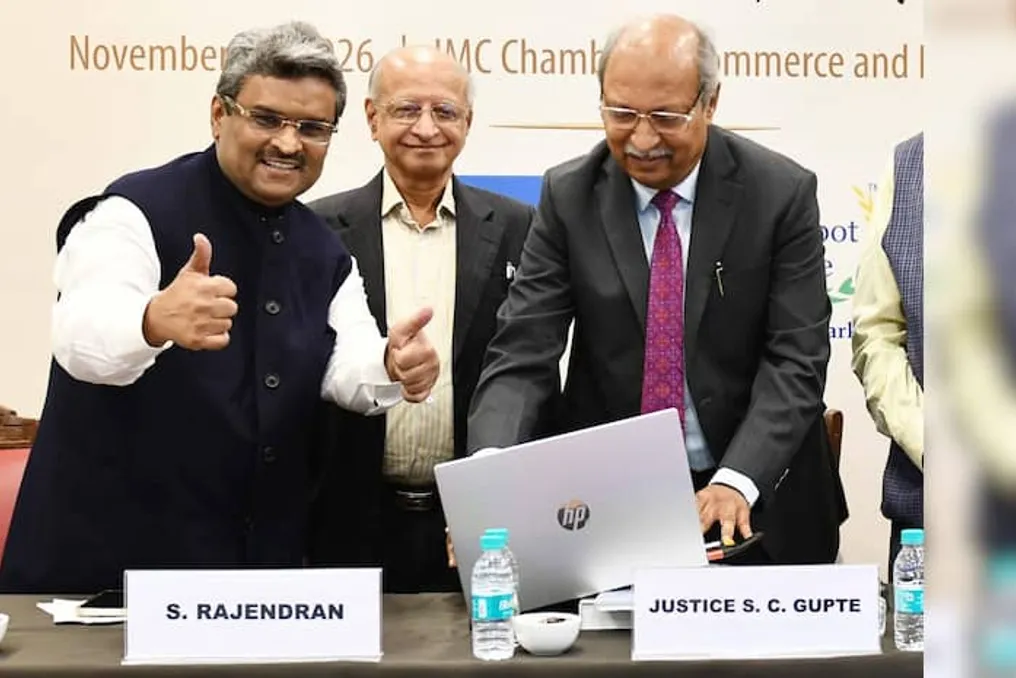
Rajendran, CEO and Managing Director of 63 Moons Technologies, emphasized the historical nature of the payment by noting that no investigative agency or court had established a money trail to 63 Moons or its promoters, yet the company adopted a solution-oriented approach. Niraj Sharma, CEO and Managing Director of NSEL, noted that this stage would not have been reached without the support of the authorities, courts, and NIF.

In August 2013, NSEL, with the support of 63 Moons, paid approximately 179 crore rupees to 7053 small claimants with outstanding debts below 10 lakh rupees; all claimants in this category received one hundred percent of their dues. The 5600 crore rupee default crisis arose in July 2013, depriving thousands of investors of the ability to recover funds invested through brokers in paired spot contracts. Trading on the exchange was suspended on July 31, 2013, by government directive.
Similar stories

Lawyer Senator Received 34.32 Crore Rupees from NHAI, Then Returned the Funds at the Agency's Request
Read more
www.aajtak.in

Lawyer Senator Received 34.32 Crore Rupees from NHAI, Then Returned the Funds at the Agency's Request

A large sum of money unexpectedly arrived in the bank account of one of the senior lawyers in Indore. While receiving small amounts is common, the notification of a deposit exceeding 34 billion rupees early in the morning caused a shock. This happened to one of the senior legal professionals in Indore, whose account received an amount of 34,32,94,346 rupees via the NEFT system.

After receiving such a huge sum, the lawyer began checking the transaction himself following a call from the bank. It turned out that the money was sent not by any private individual or businessman, but by the National Highways Authority of India (NHAI). The situation attracted widespread public attention: who is this lawyer, and why did NHAI have to ask him to return these funds?

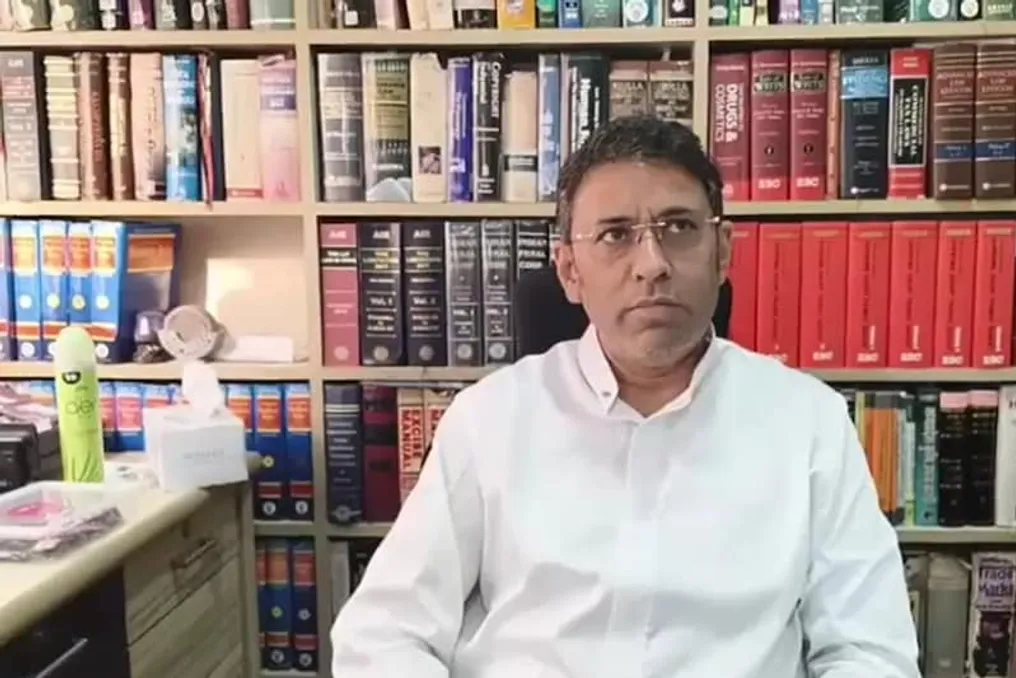
The central figure in this incident was Ajay Bagdia, a senior lawyer from Indore. He works as a lawyer and represents interests in cases related to NHAI. Thus, the lawyer's professional activity is connected to the very government organization that transferred millions of rupees to his account.

On November 7, 2026, the sum of 34,32,94,346 rupees was credited to Ajay Bagdia's account through NEFT. As soon as the receipt of such a significant amount became known, the bank contacted him, and a transaction notification arrived on his mobile. Usually, people rejoice over money deposited into their accounts, but in this case, the amount was so large that the lawyer started investigating the reason himself.

After checking the bank transaction, Ajay Bagdia discovered that the funds were sent from NHAI. Instead of trying to resolve the situation independently, he contacted the relevant officials. He called Manish Mine, the NHAI project head in Harda, and informed him about the large sum received from the agency.

Upon receiving this information, there was a commotion among the officials. The project head admitted the error in the payment process and asked the lawyer to return the entire amount. Within 48 hours, Ajay Bagdia returned the full amount of 34,32,94,346 rupees to NHAI. Thus, the entire large financial turnover was returned in just two days.

The most notable aspect of this case was that, despite receiving such a huge sum, the lawyer himself notified the officials. He did not try to appropriate or use the money, but contacted the relevant department and returned the entire amount.

This case raises the question of how NHAI could mistakenly send such a large sum to the wrong bank account. It is reported that before any payment, the agency conducts document and bank details verification at the level of project officers, project directors, and the finance department. Nevertheless, the transfer of an amount exceeding 34 billion rupees to a third party's account casts doubt on the payment process.

Given that Ajay Bagdia also represents interests in NHAI cases, it is crucial to determine on what basis his bank account was used for the payment and at what stage the error occurred.

Post Office offers guaranteed income scheme: earn over 500 thousand rupees just on interest
Read more
www.aajtak.in

Post Office offers guaranteed income scheme: earn over 500 thousand rupees just on interest

When it comes to reliable investments and high returns, government programs managed by post offices take the lead. These savings schemes are designed for a wide range of people, including children, the elderly, and women, allowing them to accumulate significant funds even with small contributions. Furthermore, many government programs guarantee regular income. Among such attractive options is the Post Office National Savings Certificate Scheme (Post Office NSC Scheme), which allows earning over 500 thousand rupees solely from interest.

Zero risk, state guarantee

People seek to place their savings where they will receive a high return, but the main concern is the safety of the invested funds. In this regard, Post Office savings schemes can be an ideal choice, as the government guarantees the security of any investment, eliminating the risk of losing money.

High interest rate on investments

Post Office savings schemes are an excellent option for investing not only due to their reliability but also because of attractive interest rates. Regarding the Post Office National Savings Certificate Scheme (Post Office NSC Scheme), the government offers an interest rate of 7.7% per annum. A special feature of this program is that the interest rate is calculated based on compound interest and paid to the depositor after the maturity period.

Start with a small amount

In Post Office schemes, you can start investing even with a very modest sum. Opening an account in Post Office NSC is possible with only 1000 rupees, and there is no upper limit for maximum investment. Thus, you can invest any amount and receive corresponding profit. You can open an account at the nearest post office or use the online account opening service.

Calculation of earning 500 thousand rupees on interest

With a lump-sum investment in the Post Office NSC Scheme, one can earn over 500 thousand rupees solely on interest over a five-year maturity period. The calculation is quite simple: to open an account in this scheme, a lump sum of 11,50,000 rupees must be deposited. After five years of maturity, this amount will increase to more than 16.66 lakh rupees. Of this, the income generated from compound interest alone will be 5,16,389 rupees.

Tax benefit advantages

In addition to the benefit from interest, government programs offer many other advantages. For example, in the Post Office NSC Scheme, an account can be opened in a child's name, and parents can manage the account of a child under 10 years old. Moreover, investing through this scheme allows for tax savings of up to 1.5 lakh rupees within one financial year under section 80C of income tax.

Important condition for investing and receiving benefits

To fully benefit from the Post Office National Savings Certificate Scheme, it must be held until maturity; otherwise, you will receive the full interest. Although investors in Post Office NSC are given the option to close the account early, this entails losses. If the account is closed after the first year of operation, no interest will be paid, and only the initial deposit amount will be returned. Therefore, to receive all the bonuses from the scheme, the account must be kept open for 5 years.

Popular