
How to prevent ants from appearing in the house in winter: expert tips
Read more
Aaj Tak
www.aajtak.in

How to prevent ants from appearing in the house in winter: expert tips

Although the appearance of ants in the house is a common occurrence during warm and rainy weather, many notice that they start reappearing when the weather gets cold. Ants can gather in long lines on kitchen surfaces, as well as in the corners of floors and walls. Often, people try to get rid of them using insect sprays, but they return after a few days.

As it gets colder, ants begin to look for a warm and safe place. Your home becomes an ideal shelter for them because food, water, and a comfortable place to protect against the cold are easily accessible there. If many ants accumulate in your house during winter, the cause might be your mistakes. However, you do not need to buy expensive sprays to get rid of them; it is enough to follow several simple rules to prevent ants from entering the dwelling.

According to experts, when the temperature drops, ants look for safe places to survive the winter. They can penetrate underground, into logs, or into hidden parts of the house walls. Like humans, ants need food, water, and a safe place to live, and all these three elements are easily found inside the house. This is why they become more noticeable when the weather gets colder.

It is important to understand that ants do not completely disappear in winter. Although their activity may decrease on cold days, as soon as the weather warms up a little, they become active again.

  1. Seal small holes in doors and windows: Ants can penetrate even through very small cracks and crevices. Therefore, it is necessary to check all unfilled areas around doors, windows, and walls. Cracks where ants have been spotted should be sealed with sealant or caulking.
  2. Inspect pots and wood before bringing them indoors: Sometimes ants enter the house along with plants, wood, or other items left outside. Therefore, before bringing any pot or tree indoors, it must be thoroughly inspected. Special attention should be paid to plants brought in from outside during the winter period.
  3. Keep tree branches away from the house: If tree or shrub branches growing near the house touch the walls or roof, they should be trimmed and moved away. Such branches can become an easy path for ants and other insects to enter the house.
  4. Do not allow dry leaves to accumulate near the house walls: The presence of dry leaves, wooden debris, and moist soil around the exterior walls of the house creates shelters for ants and insects. Therefore, regular cleaning is necessary, and you should ensure that wet leaves do not accumulate at the base of the house.
  5. Keep decorative items away from the house: During the winter and holiday seasons, people often place pumpkins, dry grass, corn cobs, and other decorative elements outside the house. However, ants and other pests can hide under these items. Therefore, decorative items should be placed slightly away from doors and walls.
  6. Do not leave food crumbs in the kitchen: If small pieces of sponge cake, bread, or other food remain on the kitchen counter or floor, ants are quickly attracted to them. Therefore, the kitchen must be thoroughly cleaned after cooking and eating. Food products should be stored in airtight containers instead of being left open.
  7. Avoid frequent spraying of insecticides: When ants appear, most people immediately use sprays. This may kill visible ants, but the entire colony may hide somewhere else. For some species, spraying can lead to their colony splitting into different parts, which will worsen the problem.
  8. Use liquid or gel baits if necessary: If ants constantly appear in the house, special liquid or gel baits can be used. Ants carry this bait into their nest, allowing the entire colony to be affected. However, several days may be required for the effect to manifest.

Similar stories

Five plants you can grow indoors to repel insects, including one for making mosquito coils
Read more
www.aajtak.in

Five plants you can grow indoors to repel insects, including one for making mosquito coils

Despite keeping the house clean, flies, mosquitoes, ants, and other small insects can sometimes be bothersome. This is especially noticeable in the evening when these pests gather near doors, windows, and balconies. Typically, chemical sprays are used to combat insects, but the strong smell and unpleasant odor of such products can cause discomfort to many people.

Instead, a more natural approach can be used to protect the home from pests. The scent of some plants is disliked by many types of insects. Planting these plants in the yard, on the balcony, near the window, or next to the main entrance can help reduce the number of insects. Furthermore, these plants will improve the appearance of your home. Below are five such plants that can help get rid of insects.

Lavender is known for its aroma and beautiful purple flowers. However, its scent is disliked by several insects, helping to repel mosquitoes, butterflies, flies, and gnats. It is recommended to place it on the balcony, near the window, or near the main entrance. It is important to remember that this plant requires good light and well-drained soil.

Marigold flowers are not only beautiful but also possess a special aroma. This scent can help repel some harmful insects, especially whiteflies and small pests that damage plants. If you have a small garden or balcony, it is worth planting marigolds in a pot. With good sunlight, they bloom profusely.

Lemongrass is also on this list. If you have many mosquitoes in your house, you can plant lemongrass. Its leaves emit a sharp citrus aroma that is disliked by many insects and mosquitoes. Essential oils derived from this plant are used in various insect repellent products. Lemongrass is best placed on the balcony, roof, or in the yard, ensuring it receives enough sunlight.

Basil is easily found in Indian homes. It is usually planted for worship and health maintenance, but its strong aroma also helps repel some insects. The natural oils contained in basil leaves are disliked by mosquitoes and other small pests. The plant can be placed in the yard, on the balcony, or near the window. It needs to be watered daily and provided with good light to stay green.

Mint leaves are often used to make chutneys, drinks, and enhance the flavor of food, but this plant can also help repel insects. Its strong and cool aroma can prevent the approach of pests such as ants, spiders, and mosquitoes. Mint can be planted in a small pot near the door, window, or on the balcony. Since mint spreads quickly, it is better to plant it in a separate pot. Mint leaves can also be eaten.

Six measures for home walls in winter to prevent dampness and paint peeling
Read more
www.aajtak.in

Six measures for home walls in winter to prevent dampness and paint peeling

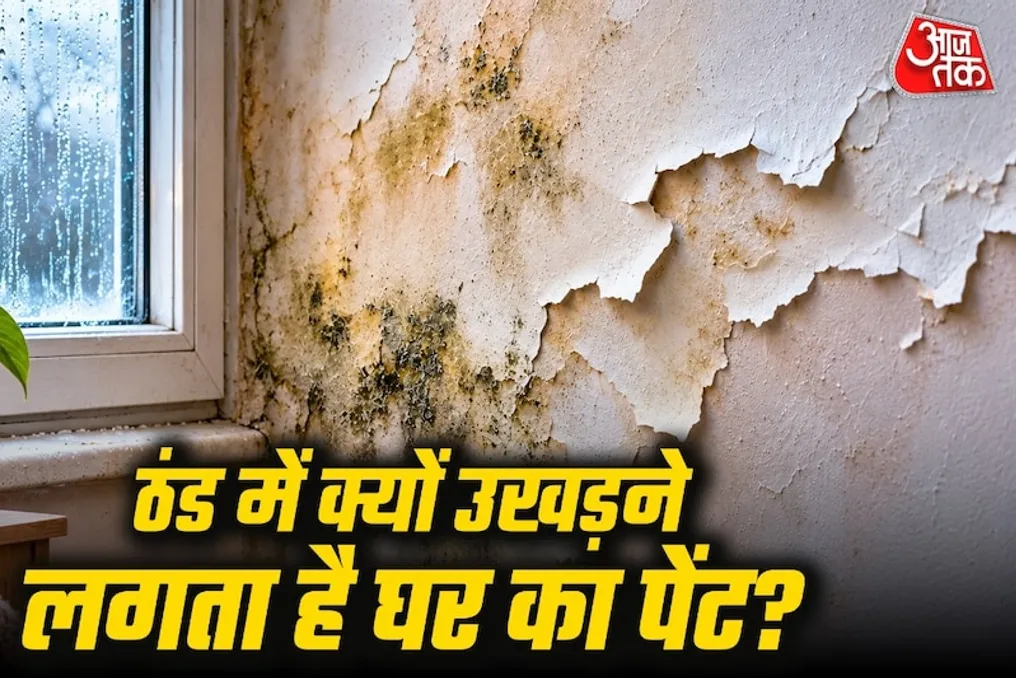
As the winter season begins, various problems often arise in homes, among which is the appearance of dampness on walls and paint peeling. It is noticeable that during cold weather, wet spots appear on the walls; sometimes the paint swells, and sometimes its layer begins to peel off like a crust. Black and green spots may also appear in the wall corners. Initially, people tend to consider this an ordinary inconvenience and ignore it. Some decide to repaint the wall, while others try to dry the damp area by applying fabric or newspaper. However, such actions do not eliminate the problem, and after some time, dampness reappears on the wall.

In fact, there are many reasons for dampness appearing on walls in winter. The main causes include increased humidity inside the house, insufficient air exchange, water penetration into the walls, and water ingress from the roof. If these causes are not eliminated in time, besides paint damage, mold can appear on the walls.

In winter, the outdoor temperature drops significantly, which affects the house walls. The walls become cold, while the indoor air humidity constantly increases due to cooking, showering, drying laundry, and breathing. When the warm and humid indoor atmosphere comes into contact with the cold walls, the water vapor in the air begins to turn into fine droplets. This process is called condensation. Simply put, it is similar to the formation of droplets on the outside of a cold bottle of water in winter, just as moisture can accumulate on cold walls.

Initially, this moisture appears on window panes, in wall corners, and behind cabinets. If the room lacks a proper ventilation system, this moisture can persist for a long time, gradually leading to signs of dampness on the walls.

Before painting the walls, it is crucial that the surface is clean and dry. If there is already moisture inside the wall, it can weaken the adhesion of the paint. With constant water or moisture in the wall, the layer between the paint and the wall is damaged. As a result, small bubbles begin to form on the paint surface. Over time, these bubbles burst, and the paint starts to peel off in a crust.

Sometimes white powder also appears on the wall. This happens when water inside the wall carries dissolved salts to the surface. After the water dries, these substances remain as a white layer. This problem is called efflorescence. This is why applying new paint to a damp wall without eliminating the root cause does not bring long-term benefit, as the paint can spoil again.

First reason: insufficient air exchange in the house. In winter, people close doors and windows to protect themselves from cold air. This prevents internal moisture from escaping. Vapor formed during cooking, showering, and breathing accumulates in the room, gradually affecting the walls.

Second reason: water leakage inside the walls. If there is a leak somewhere in the house's plumbing, water can slowly penetrate the wall. Even a small hole in the pipe can lead to a constant inflow of water. At first, this goes unnoticed, but then wet spots, paint swelling, and signs of dampness appear.

Third reason: leaks from the roof. If there are cracks in the roof or rainwater accumulates, it can slowly seep inside. This affects the roof and the associated walls. Dark spots often appear in the roof corners, and the paint begins to peel off.

Fourth reason: drying clothes indoors. Since there is little sun in winter, people dry wet clothes in rooms. Water from the clothes gradually evaporates into the air, increasing the humidity in the room. If the windows are closed, this moisture can settle on the walls.

Fifth reason: cracks in external walls. Small cracks in the exterior walls of the house allow rain and moisture from other sources to penetrate inside. Furthermore, a damaged layer of paint or plaster may not prevent water penetration. This leads to the appearance of dampness traces on the interior walls.

Sixth reason: moisture rising from the ground into the walls. In some houses, moisture contained in the soil begins to rise up from the lower parts of the walls. This phenomenon is called capillary rise of moisture. In such cases, dampness, paint peeling, and the appearance of white salt layers may be observed at the bottom of the wall. This problem often occurs when there is no proper moisture prevention system between the foundation and the walls.

If you want to avoid dampness on your home walls in winter, you need to take some simple steps.

Selection of the best robot vacuums on sale on Amazon to facilitate home cleaning
Read more
olhardigital.com.br

Selection of the best robot vacuums on sale on Amazon to facilitate home cleaning

It is possible to keep the floor clean without the need to use a vacuum cleaner daily, thanks to the growing accessibility of robot vacuums, which offer convenience in daily life. Three options on sale on Amazon have been selected to help choose the perfect model for the home, whether for vacuuming, sweeping, or mopping.

WAP Robot Vacuum Robot W90 3 in 1

The WAP Robot W90 presents itself as a compact solution capable of simultaneously vacuuming, sweeping, and dampening the floor. Equipped with a 250ml reservoir, being dual voltage, and having an anti-fall system, it operates autonomously, preventing falls on stairs or steps. This model is indicated for medium-sized apartments and houses that require daily cleaning without complications.

In a significant update, the WAP Robot W400 has received improvements over its previous versions. It now offers compatibility with voice assistants, features a larger 300ml reservoir, and has 30W of power, allowing it to handle heavier dirt. This appliance operates in automatic mode and responds to voice commands, making the cleaning routine more convenient for Alexa or Google Assistant users.

The Philco PAS23 integrates the functions of vacuuming, sweeping, and wet MOP into a single device. It features an anti-collision system designed to protect furniture and walls during its path. Being a product of the Brazilian brand, it offers cleaning versatility with a black design and dual voltage operation, making it a reliable alternative.

It is important to note that stock availability in these promotions may change at any time, so it is recommended to access the links immediately to secure the offer before prices increase. A robot vacuum is an item that, once experienced, becomes indispensable.

Popular