Jensen Huang returns to Nvidia leadership; shares surge 31% after board approval
Read more
Olhar Digital
olhardigital.com.br

Jensen Huang returns to Nvidia leadership; shares surge 31% after board approval

Nvidia announced on Monday, the 23rd, the return of Jensen Huang to the positions of Chairman and CEO, as well as his reinstatement to the board of directors. This decision was unanimously approved following meetings dedicated to assessing his suitability to continue leading the chip manufacturer.

The return occurred after allegations surfaced regarding the executive's extramarital involvement, including a relationship with a woman identified as a possible Chinese spy. Immediately following the announcement, the company's shares jumped by 31%, recovering almost all losses recorded since the case came to light.

According to a statement issued by Nvidia, the board made this deliberation after dialogues with Huang, in which his leadership capacity and level of transparency were analyzed. The evaluation process also involved participation from high-ranking members of the United States government. Based on this data, the board members expressed confidence that the reinstatement would not pose risks to national security.

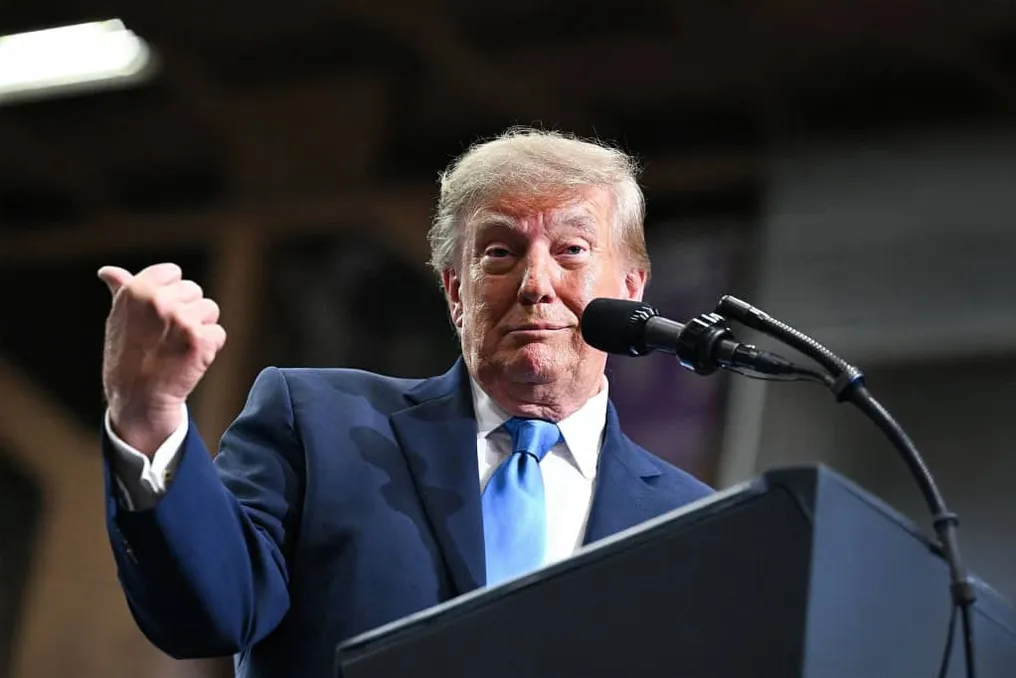
Donald Trump, President of the United States, celebrated the decision in a social media post. He classified the measure as appropriate and argued that the country needs Huang's leadership to ensure Nvidia's success and the prosperity of the American economy. Trump also stated that the government had no reason to fear that the return represented a threat to national security nor did it possess evidence of illegal conduct by the executive.

Harvey C. Jones, who holds the position of Chairman of the Board, will maintain his position. He expressed that Huang is the ideal person to lead the company and thanked Colette Kress, Chief Financial Officer, who temporarily assumed the role of CEO during the period of absence.

In his first speech after being reinstated, Huang declared: 'I have the honor of returning to Nvidia and leading one of the world's most important technology companies at the beginning of a new industrial revolution.' The executive also extended his thanks to the board, employees, shareholders, and partners for the support provided.

Huang's return does not end the investigations related to the case. A committee composed exclusively of independent board members will continue to examine reports that the executive may have been the target of a foreign intelligence operation. This group has hired independent legal counsel, and Huang expressed his support for the investigation and his commitment to cooperate until its conclusion.

This inquiry takes place parallel to reports about Alice Huang. According to a New York Times report published on Sunday, the woman allegedly maintained contact with an agent of the Chinese Ministry of State Security during part of the time she was in a relationship with the executive.

Additionally, Nvidia established a National Security and Export Control committee, also composed only of independent directors. This committee will be responsible for monitoring compliance with trade regulations and inherent national security risks. The company will also begin searching for a compliance director, whose function will be to supervise adherence to internal policies and regulations across the corporation. This professional will report to the board's Nomination and Corporate Governance committee.

Nvidia confirmed that it will continue to cooperate with any investigations and requests for information conducted by the United States government. These new measures come after a change in the board's stance; in the weeks following Huang's absence, management had indicated that it did not consider his return. Colette Kress also reinforced this position in an interview given to CNBC while serving as the interim CEO of the manufacturer.
Similar stories

Jensen Huang returns to Nvidia presidency and CEO role after brief absence
Read more
tecnoblog.net

Jensen Huang returns to Nvidia presidency and CEO role after brief absence

Jensen Huang was reinstated to the position of President and CEO of Nvidia this Monday, November 23rd, after a period of only 11 days away. The board of directors gave unanimous approval for his return, mentioning that he had received information from high-ranking officials in the United States government and expressing confidence that his return does not pose a risk to national security.

The internal investigation regarding allegations that Huang was the target of foreign intelligence action will continue until its conclusion, and he stated that he will cooperate with the process. Additionally, the company has established a dedicated committee for national security and export control and plans to hire a Chief Compliance Officer.

Huang will also resume his position on the Nvidia board of directors. It is worth noting that the previous week, the company had considered dropping the executive's return. During his absence, CFO Colette Kress served as interim CEO while Nvidia sought new leadership.

Regarding his background, Jensen Huang was born on February 17, 1963, in Taiwan, and spent his childhood in Thailand before moving to the United States. He obtained an electrical engineering degree from Oregon State University in 1984, starting the course at age 16, and completed his master's degree at Stanford in 1992. Previously, he worked as a waiter and dishwasher at the Denny's chain, and later designed microprocessors at AMD, reaching the position of director at LSI Logic.

In 1993, Huang founded Nvidia along with engineers Chris Malachowsky and Curtis Priem, taking on the CEO role from the beginning. Under his administration, Nvidia evolved from a mere graphics card manufacturer to a provider of graphic processors used in training artificial intelligence models, which propelled the company to a trillion-dollar valuation. With approximately 4% of the company's shares, Huang has an estimated fortune of US$ 190 billion according to Forbes, equivalent to about R$ 1.1 trillion, ranking him among the ten richest people on the planet.

Jensen Huang reinstated as CEO of Nvidia after scandal
Read more
techcentral.co.za

Jensen Huang reinstated as CEO of Nvidia after scandal

Nvidia shares rose significantly in pre-market trading in New York on Monday following the announcement of Jensen Huang's return. This reversal came less than a week after the board of directors publicly ruled out his return.

Chairman of the board, Harvey Jones, stated during the company's earnings conference call on November 17 that the Nvidia board had unanimously accepted Huang's resignation and did not intend to reinstate Jensen as CEO.

However, on Monday, the board announced that it was satisfied with Huang's integrity and leadership capabilities, and that after receiving information from high-ranking US government officials, he saw no national security threat in his return.

Huang founded Nvidia in 1993 and transformed the company from a video game chip developer into a leading provider of artificial intelligence processors. He resigned on November 12, concluding a 33-year tenure, with CFO Colette Kress taking over as interim CEO. Initially, it was unclear what role Kress would play.

Huang admitted in a memo to employees on November 8 that he had been disloyal to his wife. The New York Times reported that he had a relationship with Alice Huang, a former executive at Singapore's Megaspeed, who was unrelated to him and whom US authorities designated as a Chinese intelligence asset. China's Ministry of Foreign Affairs called these allegations 'unfounded.' The newspaper later reported that he also had ties to Kimberly Powell, Nvidia's VP of Healthcare, who reported to him.

This scandal led to a loss of about $430 billion in Nvidia's market capitalization over two trading days, amid claims that these relationships helped deliver at least $7.5 billion worth of Nvidia chips to China. At one point, the chip maker lost about $800 billion in market value since the news broke.

The campaign for Huang's swift return gained support. Over 180,200 people signed a petition, Elon Musk supported the effort, and US President Donald Trump stated he was not against Huang's reinstatement. The Financial Times reported that Huang had discussed a possible return with his confidants, and that allies were assembling a 'war room' of Silicon Valley executives to lobby on the issue. Huang stated on November 17 that he would be 'readied' to lead Nvidia again.

The company held up in his absence

The company's business was able to function in his absence. Nvidia reported third-quarter revenue of $115.8 billion, which is 103% higher than the previous year, and forecasts fourth-quarter revenue of around $130 billion, exceeding Wall Street projections. According to the FT, the board also approached Rene Haas, CEO of chip developer Arm Holdings, as a potential successor.

Questions regarding the affair have not disappeared. US intelligence agencies continue to investigate the extent of Alice Huang's connection to the Chinese Ministry of State Security and what information she might have passed to Beijing, Reuters reported last week.

Jensen Huang's resignation creates uncertainty at Nvidia and questions the future of artificial intelligence
Read more
olhardigital.com.br

Jensen Huang's resignation creates uncertainty at Nvidia and questions the future of artificial intelligence

Jensen Huang's departure from Nvidia's leadership introduces a period of uncertainty that goes beyond a simple succession at the chip manufacturer. This change directly affects the maintenance of commercial and financial connections essential to sustaining the expansion of artificial intelligence, given that the executive played a crucial role in organizing investments among companies in the sector.

This move occurs at a critical time, where semiconductor suppliers, cloud service providers, and AI developers rely on large financial injections to increase the infrastructure needed both to train and operate AI models.

Nvidia's relevance in the market extends beyond the mere commercialization of processors; the company integrates a vast ecosystem of agreements and investments with corporations that require computational power to create artificial intelligence solutions. In this scenario, AI laboratories and cloud providers depend on infrastructure equipped with the manufacturer's chips, making commercial commitments and investments fundamental to enabling new facilities.

Huang was directly responsible for building these relationships. His work encompassed not only defining Nvidia's technological strategy but also coordinating with clients and partners who drive demand for its products. Thus, the executive's departure raises doubts about the company's ability to maintain this pace of coordination.

The challenge does not lie solely in developing the next chips, as Nvidia has technical teams and a product roadmap that do not depend exclusively on its founder. The real question is how the company will manage to preserve the network of agreements, investments, and operations that links the various actors in the AI market.

One aspect of great attention is the concept of circular financing. This model involves situations where companies that provide technology or infrastructure also invest in their customers or offer guarantees that aid in financing the acquisition of their own goods and services. This dynamic can accelerate the construction of data centers and expand computational capacity while establishing financial ties between interdependent entities to achieve their growth objectives. However, if there are revisions to commitments or delays in new investments, the impacts could propagate throughout the entire production chain.

Agreements and announcements involving companies such as OpenAI, CoreWeave, and Anthropic demonstrate the magnitude of resources mobilized to expand AI infrastructure. The continuity of these projects is tied to available funding, equipment availability, and confidence in future demand.

Although Huang's resignation does not imply the cancellation of these commitments, it adds a new variable to investor analysis: who will take over the role of articulating business in a sector where one company's investment decisions can shape the plans of many others?

The initial reaction of the stock market reflected investor apprehension. Nvidia's shares fell by more than 12% in early trading on Thursday (12), a move that could subtract about US$ 500 billion (approximately R$ 2.78 trillion) from its market value. In contrast, AMD and Broadcom showed increases of 2% and 5%, respectively.

Colette Kress, the CFO, will assume provisional management while the company evaluates potential replacements, both internal and external, for the definitive leadership. Nvidia will also need to prove its ability to safeguard its commercial strategy and the relationships established by Huang.

Recent financial results provide a solid operational base, with the company reporting US$ 96.2 billion (about R$ 533.9 billion) in revenue last quarter. Nevertheless, upcoming results, scheduled for November 17, will be monitored not only for sales figures but also for indicators related to demand, deliveries, and new investments.

Therefore, the success of the transition will be measured by Nvidia's ability to maintain its position within the AI infrastructure chain. More than simply finding a new CEO, the company must demonstrate that the business ecosystem built under Huang's management can continue without depending on his direct presence.

Popular