IndiQube's Growth Driven by Flexibility, Service Quality, and Employee Experience Improvement
Read more
YourStory [india, en]
yourstory.com

IndiQube's Growth Driven by Flexibility, Service Quality, and Employee Experience Improvement

IndiQube, a provider of managed office space services, continues to demonstrate high demand due to the expansion of its offerings to meet growing market needs.

Founded in 2015, IndiQube entered the market during a period of rapid growth in India's startup ecosystem, which was supported by sectors such as e-commerce, mobility, and food delivery. The company's founders observed that similar changes could occur in the real estate sector, which was characterized by limited flexibility and standardized services.

The company identified three key requirements for businesses: flexibility, service quality, and an excellent employee experience. Since then, IndiQube has transformed into a comprehensive provider of managed workspaces, serving 884 clients.

According to the report, in the second quarter of fiscal year 27, IndiQube reported a 34% year-on-year revenue growth, reaching 492 crore rupees, while reducing losses by 80% to 6 crore rupees.

By the end of the quarter, the company had presences in 17 cities, operating 138 centers and managing an area of 10.86 million square feet.

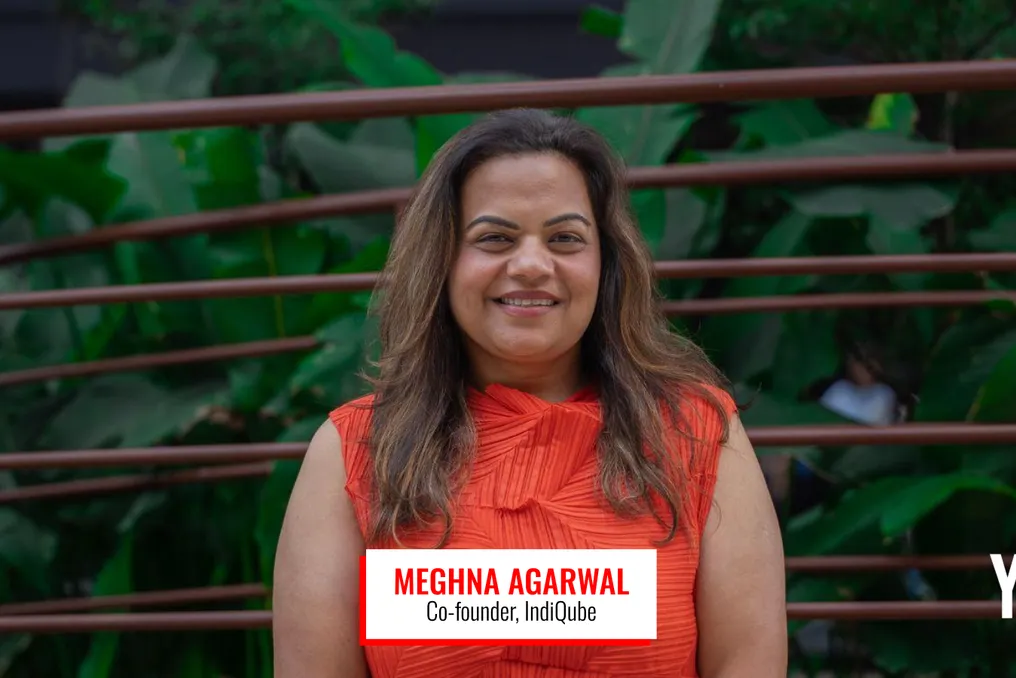
In an interview with YourStory, Meghna Agarwal, co-founder of IndiQube, highlighted the factors driving the company's growth and strategies aimed at maintaining a competitive advantage.

Comments from Meghna Agarwal

Meghna Agarwal noted that improved profitability was made possible by a stable employment rate, which increased from 89% to 91%, positively impacting growth. Due to the economies of scale, revenue growth is expected to reach around 30%, with EBITDA at 19-21%, and net profit (PAT) in the range of 8-10%.

Previously, clients were predominantly startups, but the portfolio has now expanded to include Indian enterprises, multinational corporations, and Global Capability Centers (GCCs), ensuring a balanced client base.

Regarding cities, Agarwal emphasized the importance of presence in Tier I cities due to the large number of companies. Among the ten largest cities, Bengaluru is the largest by area, but the company also operates in places like Coimbatore and Madurai.

The company's strategy involves both expanding its presence and deepening penetration in existing cities. For example, clients are interested in having multiple locations within one city, such as Bengaluru or Mumbai. Deeper penetration allows for achieving economies of scale, while broader presence helps test markets. A balance between these two approaches must be found.

Describing itself as an integrated managed platform, Agarwal presented four models. The first is the growth model, offering 'plug and play' services. The second is DesignQube, which handles interior design and is available to both IndiQube clients and external customers. The third is IndiQare, providing services such as food and transport, ensuring a consistent experience regardless of location. The fourth model is sustainability solutions, covering energy, water, and green building management.

According to Agarwal, the most valuable asset is the approach to real estate leasing: the company is not tied to a specific building or asset but focuses on talent. The company follows where specialists move. Furthermore, the company has renovated one-third of all properties in its portfolio. Other strengths include flexible offerings, ranging from 8,000 to 20,000 rupees per seat, a wide range of services maintaining consistent quality across all properties, and corporate governance, which, according to the founders' vision, aims to create value for everyone—clients, shareholders, and the team.

Finally, the company pays great attention to sustainable development, practicing it since the early 2000s. Today, about 85% of IndiQube properties are certified green buildings, and the company emphasizes building long-term relationships with its clients.


Similar stories

Companies are shifting from permanent employees to consultants, which is viewed as an indirect staff reduction
Read more
www.aajtak.in

Companies are shifting from permanent employees to consultants, which is viewed as an indirect staff reduction

For a long time, stable employment was considered a significant career achievement, implying a monthly salary, a set work schedule, employee benefits, and job security within one company. However, this system is undergoing changes.

Although companies still require qualified specialists, they are forming their teams based on specific projects, tasks, and business needs. In addition to permanent staff, consultants, independent professionals, fixed-term employees, and contract workers are being engaged. This does not mean the immediate disappearance of permanent jobs, but the approach to employment and career security is changing.

India's workforce is moving beyond traditional employment.

According to the Economic Survey for 2025-26, the number of gig economy workers in India increased from 7.7 million in the financial year 21 to 12 million in the financial year 25, representing a 55% growth over four years. Gig workers now account for more than 2% of the country's total workforce.

In the Economic Survey, gig work is defined as self-employment performed on a short-term basis, for a specific task or project. This includes a wide range of jobs, from goods delivery to professional services. Although its scope is broader than just consulting companies, its growth demonstrates the increasing number of opportunities outside traditional employment.

A similar trend is observed in organized hiring. According to the India Skills Report 2026, project-based hiring increased by 38% compared to the previous year. This report, prepared by the Confederation of Indian Industry and its partners, examines changing forms of employment, including independent specialists, AI-related roles, and remote work.

This data indicates that companies are increasingly preferring to hire people to complete specific tasks rather than relying solely on long-term traditional positions.

Flexible employment is becoming a new hiring path, raising concerns after contracts end.

These changes are not limited to independent specialists and consultants. Formal flexible employment is also becoming an important part of the employment system in India. According to annual data from the Federation of Indian Personnel for the financial year 26, provided by the India Brand Institute, the formal workforce associated with flexible employment stood at 1.91 million people. In financial year 26, this sector added 1.18 lakh new formal flexible workers, recording an 8% growth in new hiring.

Under flexible employment, companies engage personnel through recruitment agencies to meet their specific needs. This helps manage seasonal demand, quickly scale up teams, and acquire specialized skills without directly including every employee in the permanent payroll.

It is important to understand that flexible employment cannot be equated with independent consulting. Many flexible employees remain employees of recruitment agencies and may receive employment-related benefits.

India's changing workforce includes temporary staff from recruitment agencies, fixed-term employees hired directly, independent consultants providing professional services, and independent specialists completing various projects. All of them may fall outside traditional permanent employment, but the terms of their contracts and legal protection are not always the same.

When the services of fixed-term or project-based workers conclude, it does not always result in announced traditional layoffs. The contract may simply expire by date or not be renewed after the work is completed. For the employee, this can lead to job and income loss, as well as uncertainty about future opportunities.

The distinction between the growth of temporary and project hiring and the absence of layoffs or contract non-renewal is significant. This does not mean that flexible hiring is used exclusively to avoid dismissals, but it can make employee departures less noticeable compared to traditional job cuts.

What is the difference between a permanent employee and an independent consultant?

The main difference between a permanent employee and an independent consultant lies in the nature of their employment relationship. A permanent employee is typically retained without a predetermined end date and works according to company policy. Their employment may include termination notice, internal disciplinary procedures, salary structure, and applicable legal benefits.

A true independent consultant is engaged through a service agreement. This agreement usually defines the scope of work, expected outcomes, professional fee, term, and conditions for terminating the services. A permanent employee has an employment relationship with the organization, whereas a consultant performs professional work under a service contract. Permanent work is usually continuous and has no predetermined end date. Consulting work is typically tied to a specific term, project, or particular duty.

A permanent employee is usually paid a salary every month, while a consultant is paid a professional fee according to the contract. The conditions for terminating a permanent employee's service are determined by the employment contract, company policy, and applicable labor legislation. The conditions for the termination and exit of a consultant are stipulated in the service agreement.

Edtech company upGrad expands operations by launching a human resources consulting division
Read more
yourstory.com

Edtech company upGrad expands operations by launching a human resources consulting division

Edtech company upGrad has launched a new business unit called upGrad Next. This structure is designed to assist organizations in rethinking methods for structuring, hiring, rewarding, and developing employees amid the transformation of workflows by artificial intelligence (AI).

This move allows upGrad to expand its corporate portfolio by diversifying beyond education, which includes higher education, professional courses, overseas training services, and enterprise training. Previously, the acquisition of Unacademy added competitive exam preparation to the company's portfolio. The company, led by Chairman and Co-founder Ronnie Screwvala, is considering an Initial Public Offering (IPO).

Anandorup Ghose will head the Next division as its Managing Director. The initial team also includes Hrishikesh Godbole, Krishna Chaitanya, and Dinkar Pawan. Screwvala explained the launch as a reaction to the next stage of digital change. He noted that the last decade was dedicated to the complete digital transformation of organizations, while the next decade will focus on transforming the workforce to manage these changes and derive significant returns from them.

Next will provide consulting on organizational structure, recruitment, compensation, and talent development, as well as assisting in the implementation of adopted decisions. upGrad stated that it will combine experienced advisors with AI technologies, as well as its learning and recruitment operations, taking responsibility for achieving results, not just for the time spent by consultants.

Ghose, who has over 24 years of experience in HR and compensation consulting, previously worked as a partner at Aon and Deloitte, where he led the global compensation consulting practice. He sees a gap between large-scale technological transformation programs and specialized products. In his view, in the next decade, it will not be those who implement technology fastest who win, but those who most effectively unlock human potential.

His argument is that decisions regarding investments in AI, workplace design, and employee competencies must be made collaboratively. The mere implementation of technology does not guarantee increased productivity.

According to the Aon Human Capital Trends 2026 study, 43% of organizations in India have implemented AI, and another 20% are in the pilot testing phase; however, translating these investments into workforce results remains a complex task. The World Economic Forum's Future of Jobs Report 2025 forecasts that by 2030, 39% of workers' existing skills will be changed or become obsolete, while 63% of employers consider the skills gap a serious obstacle to business transformation.

Consulting and technology firms are also beginning to merge these capabilities. In October 2026, KPMG in India formed an alliance with HR tech company PeopleStrong, combining HR consulting with AI-based human capital management software to process employee and HR data. In September, Deloitte launched the Open Model Engineering practice to help organizations create and implement AI tools for business, and announced the hiring and training of specialists to work with clients. Both moves highlight the growing intersection between consulting and execution.

Meanwhile, government programs are expanding the talent pool. The Ministry of Skill Development and Entrepreneurship reported that the SOAR program in the Skill India Digital Skills Centre now includes 50 qualifications in AI and AI applications. As of August 2026, over 517,000 learners have registered, and more than 100,000 have received certificates.

Flexible workspaces are transforming companies' approach to office real estate
Read more
yourstory.com

Flexible workspaces are transforming companies' approach to office real estate

The COVID-19 pandemic has significantly changed how companies view office space. After employees spent months working from home, businesses had to reconsider what motivates people to return to the office and how to make that time as productive as possible.

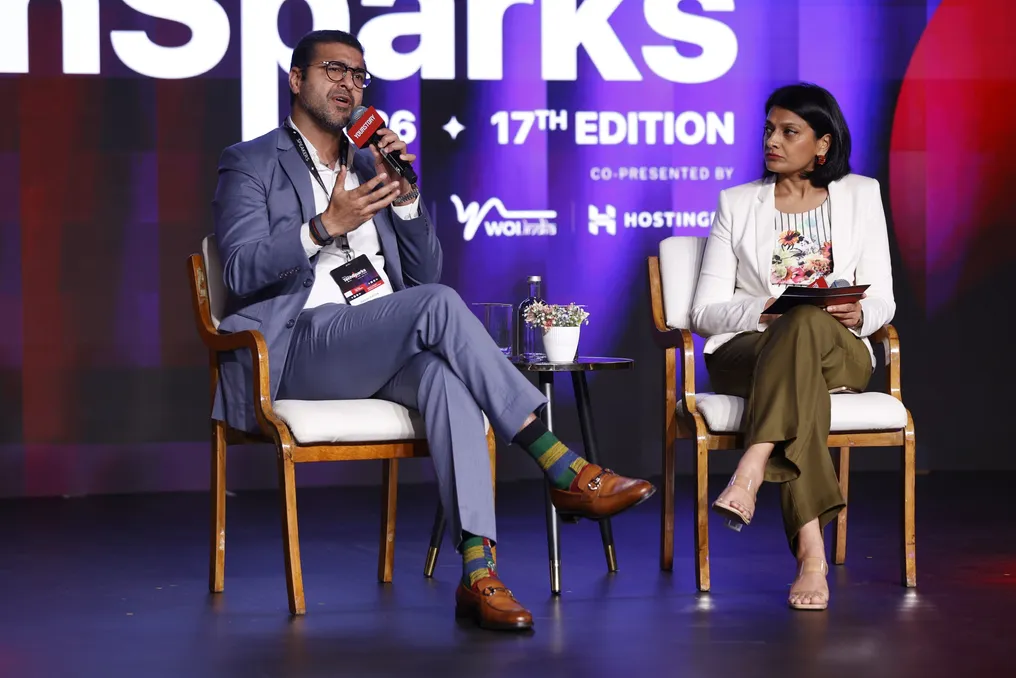
A fireside chat was held at the TechSparks 2026 event, hosted by Manish Khedia, Regional Managing Director of The Executive Centre (TEC), and Shivani Mutanna, Senior Director of Strategic Content and Video at YourStory. The discussion focused on the topic 'Corporate Office 2.0: Rethinking Space, Strategy, and Experience.'

The discussion examined how flexible workspaces, hybrid work models, and employee expectations influence corporate office planning.

From Square Footage to Collaboration

For a long time, decisions about office locations were based primarily on location, total area, number of workstations, and building type. The pandemic changed these priorities, first forcing employees to work remotely, and then making companies think about how to bring them back into the work environment.

According to Khedia, the current task is to create offices that employees want to visit, where they can work effectively, interact, and have access to necessary amenities. He noted: 'I think all companies are looking for ways to engage their employees to boost productivity, but not by increasing workload, but by creating an environment where they can collaborate.'

As a result, when choosing an office space, companies are starting to look beyond just a premium address. They consider the surrounding infrastructure, including tech parks, food courts, kindergartens, and other amenities that make daily work more comfortable. Inside the office, the focus shifts towards interaction and customer experience. Companies are moving away from traditional hierarchical layouts in favor of spaces that encourage idea exchange, teamwork, and unconventional thinking. Khedia emphasized that businesses are increasingly viewing offices as supportive communities for employees, rather than just fixed assets or status symbols.

Bringing Offices Closer to Employees

Location remains an important factor, especially in large cities like Bengaluru and Mumbai, where employees might spend two to three hours commuting daily. The time, cost, and effort associated with travel are one of the reasons companies are exploring hybrid work models and the 'hub and spoke' model. Instead of operating from one central office, companies can set up workspaces in different locations, allowing employees to work closer to home.

Khedia stated that the goal is to make the time spent in the office more productive while simultaneously reducing the burden of daily commutes. Employees gain more personal time, and companies can provide spaces for team interaction. This shift is not limited to megacities; Khedia pointed to Ahmedabad, Kochi, and Coimbatore as growing business centers supported by growing talent pools and improving infrastructure.

The expanding ecosystem of India's Global Capability Centers (GCCs) also influences office requirements. Companies assess not only the availability of talent but also whether the location possesses the necessary infrastructure for effective operation. Khedia specifically highlighted the quality of commercial real estate in India and the amenities available in elite office buildings across the country. For companies entering new markets, the growing network of business locations offers more opportunities to access talent without requiring employees to relocate to major cities.

Why Companies Are Choosing Flexible Offices

Business uncertainty is also changing how companies approach real estate needs planning. Traditional lease agreements often require companies to commit to space for five to ten years based on future growth forecasts. However, as business becomes more agile, such long-term commitments become complicated.

Khedia commented: 'If any multinational corporations come to India, they first have to invest in real estate based on a five-year horizon. Now, flexible office spaces eliminate this uncertainty. They allow companies to plan for the next one or two years.'

Flexible workspaces allow businesses to start with smaller offices, expand, or downsize as needed, paying only for what is used. This helps manage real estate costs and directs more resources toward hiring and other business priorities. Office design is also evolving: traditional cabins and cubicles are giving way to more open layouts that stimulate team interaction. Companies are also incorporating greenery and biophilic design to make workspaces cozier and more appealing.

Flexible Workspace Providers and Landlords

Khedia noted that flexible workspace providers are increasingly collaborating with traditional landlords instead of competing with them. Such partnerships help property owners attract more tenants by offering businesses various ways to occupy office space. He stated: 'Flexible office space is a true partner to the landlord. It doesn't change the landscape; it complements the landlord by creating a space that will attract more and more tenants to that building.'

He pointed to the sector's growth in India. When he started his career, flexible offices accounted for about 1% of the total real estate rental volume. By the last financial quarter, this share reached 23%. Furthermore, he reported that the absorption of flexible workspaces in India increased from about half a million square feet to over 17–18 million square feet. Providers like TEC now offer more than just desks and meeting rooms. Businesses can access offices tailored to their needs within a shared infrastructure. This allows companies to maintain confidentiality while benefiting from the flexibility and networking opportunities with other companies in the same building. For companies entering a new market or expanding their operations, this model also reduces the need to independently organize and manage all aspects of the office.

Corporate Office 2.0: Beyond the Workplace

Khedia believes that the next stage of office development will focus more on the daily needs of employees. This may include access to healthcare, childcare, dining, and other amenities inside or near office buildings. Such amenities can enhance workplace comfort, helping businesses attract and retain talent.

For Khedia, the concept of Corporate Office 2.0 means transitioning from standard office layouts to creating workplaces that support employees throughout the workday. As companies reassess their real estate needs, flexibility, collaboration potential, and employee experience are becoming key factors in determining what an office should offer.

Popular