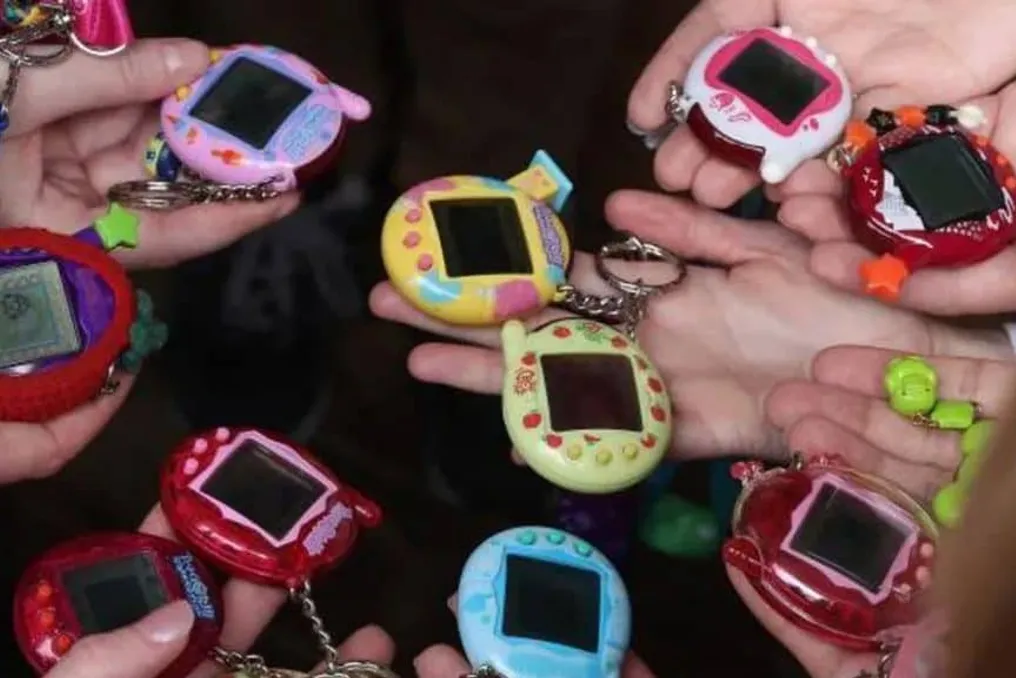
Tamagotchi celebrates 30 years and surpasses the mark of 100 million units sold
Read more
Olhar Digital
olhardigital.com.br

Tamagotchi celebrates 30 years and surpasses the mark of 100 million units sold

Tamagotchi turned 30 this Monday (23). Originally launched on November 23, 1996, the virtual pet from Bandai reached the goal of over 100 million units distributed to the market, a milestone achieved in July 2025.

What initially seemed like a passing trend in 1996 transformed into one of the few portable games that have experienced three revivals. The name combines the words 'tamago' (egg) and 'watch'.

The idea originated in Bandai's children's toy department during a period of financial difficulty for the company, when the project did not receive support. Taro Tsuji, who currently holds the position of Chief Tamagotchi Officer, admitted in an interview with PRESIDENT Online that at the time, he did not possess the necessary vision for the product's success.

Market research indicated that the ideal target audience was high school students, leading Bandai to alter the initial plan. The watch was adapted to become an egg-shaped keychain, measuring approximately 50 millimeters, intended to be attached to backpacks.

After the peak of popularity and the emergence of imitation products, Bandai accumulated a large amount of stagnant stock and recorded an extraordinary loss of about ¥6 billion in the fiscal year ended in March 1999. In 2004, models equipped with infrared communication brought Tamagotchi back to the market, selling about 5 million units in a single year.

In 2008, the introduction of the first color screen, which required larger batteries and increased the device size to 68 millimeters (37% larger than the original), marked another evolution. According to Tsuji, Tamagotchi has gone through a cycle of boom and return three times. The current phase is driven by the Original Tamagotchi, a reprint of the version sold internationally in 1997, and Tamagotchi Paradise, launched in July 2025. Additionally, a touch screen was added in 2021 and the first model with Wi-Fi connectivity, Tamagotchi Uni, in 2023.

Currently, two consumer segments sustain this phase of renewal. On one hand, there are women aged 30 to just over 40 who experienced the first success in 1996 and now acquire the latest models for their children. On the other hand, there are women in their 20s who participated in the second boom in the early 2000s. Regarding this second group, Tsuji commented in an interview with PRESIDENT Online that many of these people keep the old editions in their collections, treating them as accessories that evoke the 'Heisei retro' style.

Of the 100 million devices sold, 49% went to Japan, 33% to the United States, 16% to Europe, and 2% to Asia, excluding Japan. Celebrating this milestone, Tsuji stated in a Bandai press release: 'We were welcomed by people from all over the world and managed to deliver more than 100 million Tamagotchi units.'

A permanent store has been operational in Tokyo, located in the Harakado complex in Harajuku, since November 22, 2025. The exhibition titled 'Dai Tamagotchi' took place at the Roppongi Museum from January 7 to February 2, 2026, and subsequently traveled to Nagoya, Mito, Sapporo, Osaka, and Niigata. The next scheduled stop is Fukuoka, from December 29 to January 25, 2027, while Ishikawa and Hyogo are planned for the Japanese spring, between March and May.

Internationally, Paris hosted a space at the Gashapon store on rue de Rivoli from August 27 to November 4, and the United States conducted a tour across eight cities. Partnerships were also established with Uniqlo and Medicom Toy, the most recent being a collaboration with the 7-Eleven chain in Japan, which included six themed food items and an exclusive Tamagotchi.

The centerpiece of the anniversary celebration is the Tamagotchi Ring, announced on August 27, 2026. This model measures 28 millimeters, representing 56% of the original size, and features only 64 components, making it the smallest among the color devices manufactured by Bandai. The company stated that it took two years to develop what it describes in its press release as the 'smallest color screen device in the world.'

This ring is offered in three colors and features 30 characters from the series' history, costing ¥7,700 in Japan (approximately US$ 48). Pre-orders on Premium Bandai closed on October 6. Bandai confirmed that deliveries will begin in February 2027, and a second round of orders, opened on August 29, will be delivered in April. The manufacturer has not yet disclosed the price or sales channels for Brazil.

Although innovations such as color screens, Wi-Fi, and the ring have kept the brand visible, Tamagotchi has not survived solely on its sophistication. The essence that caused the toy's success in 1996 remains central: caring for a creature that can die. The 2025 Paradise, moreover, includes a 'peaceful death' scene for those who complete 30 years in the game.
Similar stories

Tencent's Hunyuan Hy4 flash model exceeded 50 trillion tokens in its first day of use
Read more
technode.com

Tencent's Hunyuan Hy4 flash model exceeded 50 trillion tokens in its first day of use

Tencent announced that its Hunyuan Hy4 flash model processed over 50 trillion tokens in just the first day after its launch on November 16. This figure was the highest among all models in the Hunyuan series for their first day of operation.

The strong start of Hy4 flash also reflected in its performance across various platforms. On November 17, the model ranked first in the daily LLM rating on OpenRouter.

Furthermore, Tencent noted that on its WorkBuddy platform, Hy4 flash demonstrated ten times greater usage compared to its predecessor, Hy4 preview, and helped complete over 50 million real user tasks.

According to Tencent data, Hy4 flash utilizes a hybrid activation architecture and has a total of 224 billion parameters, including 64 billion Engram parameters, with 12 billion parameters activated during inference. The model also supports multimodal processing and a context window of up to 1 million tokens, achieving a generation speed of about 200 tokens per second.

Of particular interest is the balance between performance and cost offered by Hy4 flash. According to Tencent's pricing, the model costs only 0.5 yuan ($0.07) per million input tokens and 2 yuan ($0.3) per million output tokens, while cached input tokens cost only 0.02 yuan ($0.003) per million.

Based on Tencent's internal WorkIndex benchmark, which assesses standard office tasks, Hy4 flash costs only one-thirteenth compared to Hy4 preview and one-twentieth compared to Hy4 for completing a single task. Its cost is also approximately one-eighth of the cost of mainstream lightweight models in the same category.

These advantages make the model particularly suitable for frequently performed office operations such as creating and editing presentations, document processing, spreadsheet recovery, audio and video processing, and visual understanding.

The launch followed a previous surge in demand for Hy4. When the model first appeared on WorkBuddy on November 4, demand driven by its agent capabilities exceeded expectations, and many users reached usage limits on the very first day. In response, Tencent increased Hy4 inference clusters tenfold and expanded free usage quotas.

However, this time the team apparently prepared more thoroughly for high competition before the launch of Hy4 flash, and there are currently no reports of widespread usage limit issues.

This development also reflects a broader shift in the competitive landscape of the artificial intelligence industry. As daily token usage in China continues to grow, tokens are becoming an increasingly important metric for measuring AI adoption. Meanwhile, local authorities across the country are introducing new measures, ranging from computing power and model vouchers to token-based funding, to make AI services more accessible.

Competition is now determined not only by the number of parameters or model performance. Achieving strong results while maintaining low operating costs is becoming equally important. The debut of Hy4 flash with 50 trillion tokens sends a clear signal: the market needs not only more powerful AI models but also models that are accessible enough for frequent daily use.

Nevertheless, there remains a gap between high initial usage and long-term commercial value. Competition among lightweight AI models may increasingly boil down not only to prices and token usage. The real challenge is to provide solutions for real business needs stably and reliably while keeping overall costs low. For Tencent's Hunyuan, the strong debut of Hy4 flash is a promising start, but its ability to convert initial usage momentum into sustainable user value will be a key test in the future.

Huawei's HarmonyOS surpasses 100 million installations, according to tracker estimates
Read more
technode.com

Huawei's HarmonyOS surpasses 100 million installations, according to tracker estimates

According to an estimate published on Monday by the third-party tracker Qimiao Toolbox, Huawei's HarmonyOS 5 and later versions have surpassed the 100 million installation mark. The tracker obtained this figure based on data from Huawei's AppGallery.

Previously, Huawei reported reaching over 90 million devices running HarmonyOS 6 or 7 as of September 28. This figure included phones, tablets, and personal computers.

Reaching this milestone reflects Huawei's transition to a mobile operating system with its own application ecosystem. Notably, HarmonyOS 5, introduced in October 2024 as HarmonyOS NEXT, discontinued support for Android applications.

Furthermore, the analytical company Counterpoint noted that in the first quarter of 2026, HarmonyOS captured 19% of China's smartphone operating system market, surpassing iOS, which held a 17% share.

Loans totaling 20.9 trillion UZS issued under the mortgage program from January to September 2026
Read more
uza.uz

Loans totaling 20.9 trillion UZS issued under the mortgage program from January to September 2026

It is reported that during the period from January to September 2026, citizens were provided with loans under the mortgage program totaling 20.9 trillion UZS.

Popular