According to an analysis of business records conducted by CNN, at least six Chinese universities under sanctions by the US government have purchased restricted Nvidia computer chips in recent years. This study highlights the difficulties the US faces in trying to control access to sought-after technologies.
Two of these universities, known for their ties to China's military structures, reported purchasing powerful chips in just the last few months. The exact number of participating universities and the full volume of their Nvidia purchases had not been previously disclosed.
These acquisitions were made through little-known sellers in China and involved relatively small batches of outdated chips, rather than advanced industrial computing equipment, which, according to researchers' concerns, could give China an edge over the US in the artificial intelligence race.
Nevertheless, these cases demonstrate how widely restricted Nvidia chips are available within China and how difficult it is for the US to block the sale of these chips even to some of the most high-risk entities. This raises particular concern against the backdrop of reports linking Nvidia's CEO to a potential Chinese intelligence agent.
Kate Koren, a former US export control official now serving as a senior director at the Center for Strategic and International Studies, noted: 'Once these chips enter China, it is very difficult for anyone to stop their sale. We know it is happening, and it is very hard to stop.'
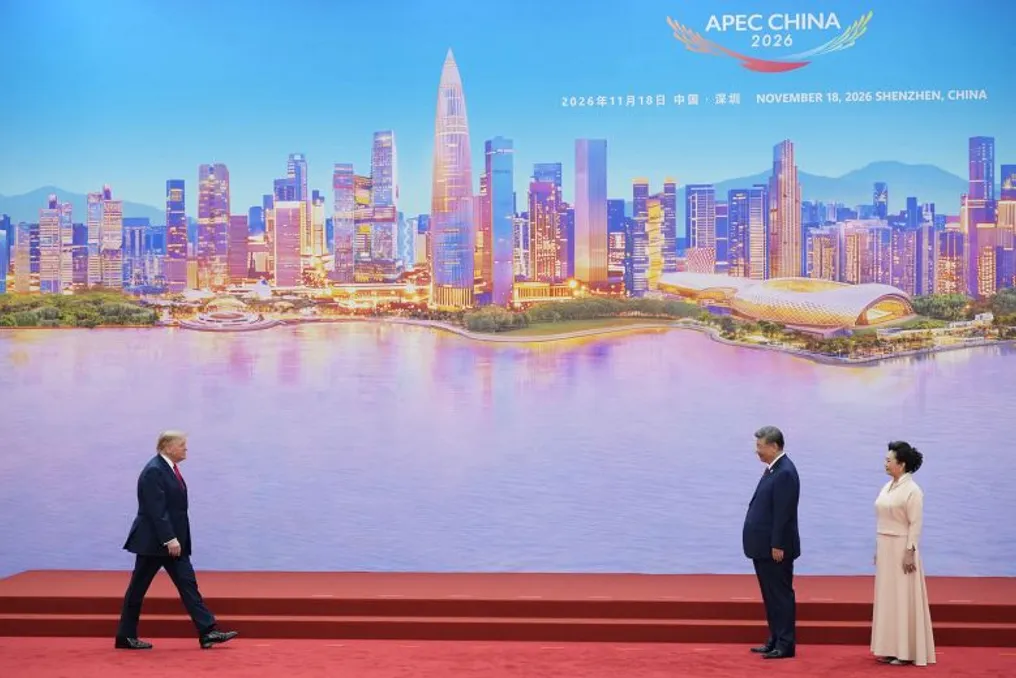
This issue is likely to become a major topic of discussion at the upcoming high-level meeting between President Donald Trump and Chinese President Xi Jinping, as the White House takes steps to close loopholes that allowed sensitive AI chips to enter China.
Concerns about China's access to this technology intensified after Nvidia CEO Jensen Huang resigned last week upon learning of a romantic relationship with a woman whose former company is suspected of smuggling chips into the country.
Last week, Mao Ning, spokesperson for China's Ministry of Foreign Affairs, told reporters that Beijing rejects US claims regarding the need for restrictions on high-performance chips for US national security purposes.
She emphasized: 'China firmly opposes the US excessively expanding the concept of national security and developing various types of discriminatory lists to target Chinese institutions.'
The CNN analysis was based on procurement documents obtained from a commercial database compiled in Chinese universities. According to Chinese regulations, universities and other state entities are required to publish notices on their websites when making certain purchases.
Of nearly 300 records obtained and studied by CNN, most reflect the acquisition of Nvidia technologies subject to US export controls, such as A100, A800, H100, H200, and H800 chips. Among the 90 buyers analyzed by CNN, almost 80% were universities, about 14% were research institutes, and some Nvidia chips were also acquired by government agencies.
CNN's review excluded the purchase of computing power from foreign data centers—one of the loopholes the Trump administration plans to close this week with new rules.
Most notable, according to experts, was the notification of an A100 chip purchase by the Harbin Institute of Technology in September for approximately $7,000, as well as two notifications in September and October stating that Northeastern Polytechnic University purchased four H200 chips for a total of about $240,000.
Both universities belong to a group known in China as the 'Seven Sons of National Defense' due to their ties with the People's Liberation Army of China. Gregory Allen, CEO of Decision Tree Research, a firm specializing in technological and geopolitical issues, noted: 'These are the universities closely linked to the Chinese army. If we talk about who will invest in military AI in China, much of it will start in these universities.'
The procurement notices contained little detail about the supply chains that delivered the chips from Nvidia to the universities, or how they might be used there. Both universities reported buying the chips not directly from Nvidia or a major supplier, but from little-known firms in China. Reuters previously reported on one such purchase by Northeastern Polytechnic University.
Under new policy adopted last year following lobbying by Nvidia and Huang, the US government allows the tech giant to sell the less powerful H200 chip to Chinese entities on an individual basis, but such sales are accompanied by strict requirements regarding end-user reporting of the chips. Experts consider unlikely the approval by American officials for sales intended for a university on the blacklist.
The sale of the A100 chip to China remains prohibited, but before the US government imposed restrictions in 2022, this equipment was widely sold in the country. Koren speculated: 'Perhaps they came from warehouses that were there before the controls were implemented,' because 'there was quite a long period' when the chips were not regulated by US export law.'
The third university in the 'Seven Sons' group—Beihang University in Beijing—also reported more than a dozen purchases of Nvidia chips between 2022 and 2024, according to records, primarily acquiring A100 and A800 chips. This university has been on the US blacklist since 2001.
In addition to universities with closer military ties, three other universities from the US government's 'Entity List'—a blacklist of organizations prohibited from receiving controlled goods without federal approval—also reported purchasing high-end Nvidia chips in recent years.
The records obtained by CNN are likely incomplete, as although public institutions in China are required to publish procurement decisions, many publish notices only locally or internally, or delete them quickly. The commercial aggregator used by CNN does not include all notices published by Chinese institutions.
CNN could not confirm whether the Nvidia equipment was delivered in every case described in the notices. US rules require Nvidia and other chip suppliers to identify the end-user for chips sold abroad and take various measures to prevent chips from reaching China.
It is unclear how the universities' suppliers obtained these chips. However, overall, the smuggling operations of these chips may rely on 'very sophisticated shell companies, with shipments from other countries into China, multiple transshipments, multiple currency conversions, and fake documents, which significantly complicates detection,' said Koren. She added that officials attempting to disrupt this supply chain face a 'constant' struggle to comply with bans, but 'it is rational to understand that despite all your efforts, some will still get through.'
_