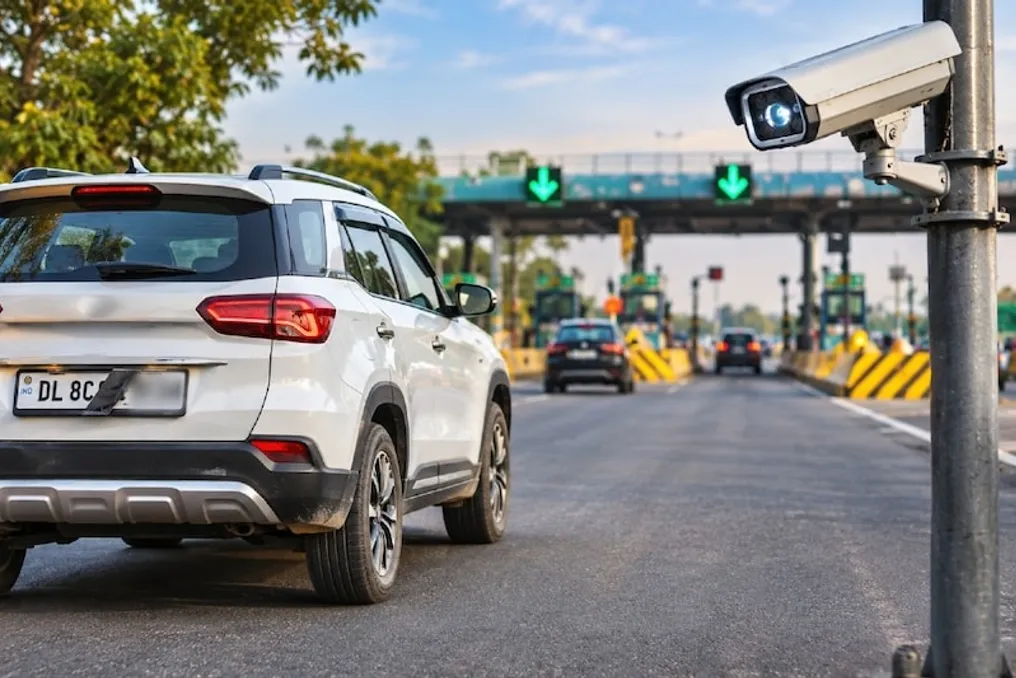
The government is preparing to adopt strict measures to ensure the successful operation of the barrierless toll collection system on highways across the country. However, some drivers are attempting to avoid paying tolls by manipulating their vehicles' license plates.
It is planned that any attempt to tamper with the license plate, whether by attaching fabric or obscuring it with dirt, will result in a heavy fine. The government intends to levy an amount four to eight times greater than the standard toll fee. This means that an attempt to save a small amount could result in expenses amounting to thousands of rupees.
According to an ET report, authorities are preparing stringent rules for the successful implementation of the barrierless collection system, which allows vehicles to pass through toll sections without stopping thanks to the operation of cameras and electronic systems. If a driver attempts to hide or alter the license plate to avoid payment, they face a significant fine.
The barrierless collection system is being gradually introduced in the country, where tolls are collected automatically using cameras and electronic devices, eliminating the need to stop at toll booths. Nevertheless, a serious problem has arisen before this new system: vehicle owners are altering their license plates so that cameras cannot read the registration number.
To solve this problem, the Ministry of Transport has begun developing amendments to the Rules for collecting fees on national highways. These changes provide for the possibility of charging vehicles that conceal or interfere with the license plate to evade toll payments an amount exceeding the usual toll fee by four to eight times.
The government plans to use artificial intelligence (AI) to implement this system. According to information received from officials, a system will be created in the coming months that will analyze images received from toll booth cameras, as well as other data. This will allow for the identification of vehicles whose license plates have been altered or whose registration number has been intentionally concealed.
Responsibility in this matter is distributed between the State Transport Department and the National Highways Authority of India (NHAI). State departments will be responsible for enforcing measures and collecting fines in accordance with the Motor Vehicles Act, while NHAI and similar road authorities may be responsible for levying increased charges.
NHAI has previously expressed concern about toll payment fraud. After launching the barrierless collection system at the Mundka toll plaza in Delhi, NHAI sent a letter to the Delhi government demanding constant monitoring of this issue. As this system began to be implemented at other toll plazas, NHAI raised this issue with the governments of other states.
Even according to the existing Motor Vehicles Act, changing a license plate is a punishable offense. Upon the first detection of such a violation, a fine of 5000 rupees is prescribed, and a repeat offense may incur a fine of 10000 rupees. However, after the new scheme comes into effect, vehicle owners will have to pay not only this fine but also an amount increased four to eight times from the standard toll fee, making the attempt to save money on the license plate very costly.