Ferrari launches 296 Challenge Stradale without hybrid system; F1 confirms return to V8 engines in 2030
Read more
FlatOut
flatout.com.br

Ferrari launches 296 Challenge Stradale without hybrid system; F1 confirms return to V8 engines in 2030

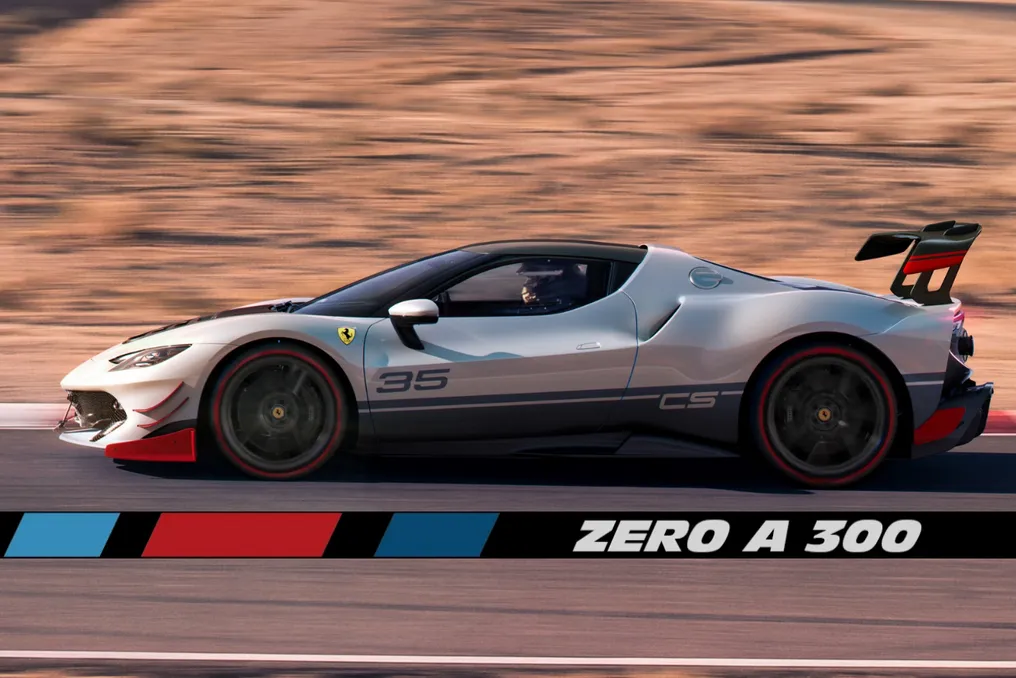
Ferrari has presented the new 296 Challenge Stradale, a model that resumes the brand's track car tradition, but without the aid of the hybrid system. This vehicle is a simplified version of the 296 designed to run faster, and the name 'Challenge Stradale' was previously used only on the 360 from 2003.

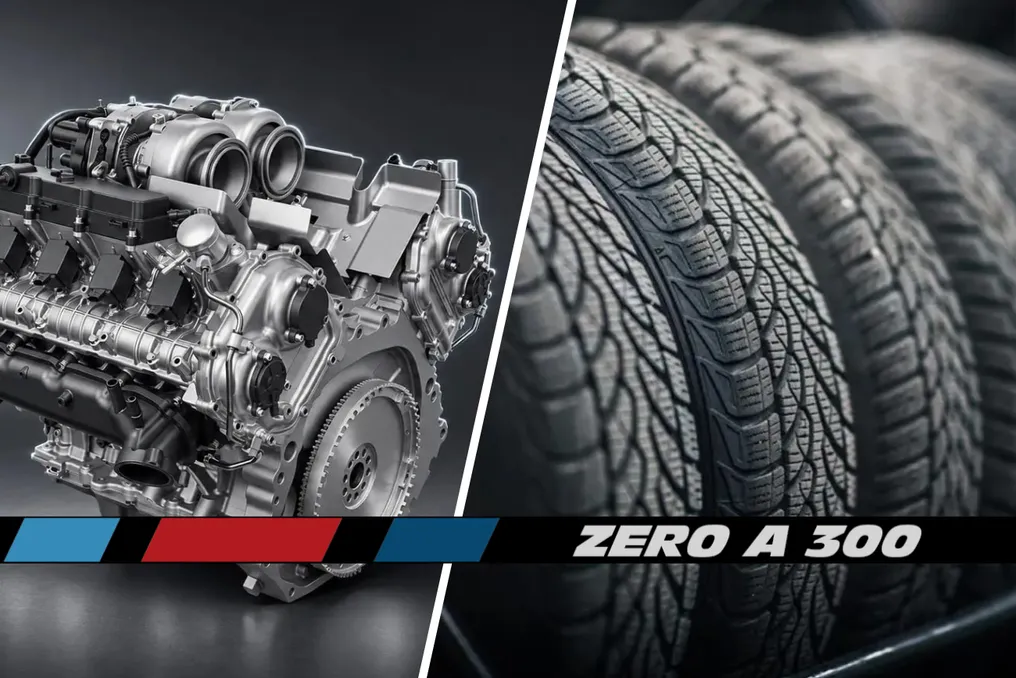
This car follows a line of tradition started with the 348 GT Competizione and passing through models such as the 430 Scuderia, 458 Speciale, and 488 Pista. It has been confirmed that the version does not have an electric motor or battery. It is equipped with a 3.0-liter twin-turbo V6 engine, whose turbos are located inside the 120° 'V'. This engine generates 670 hp at 8,000 rpm and 75.5 kgfm at 6,250 rpm, with a cut-off at 8,500 rpm. The turbo and thermal barrier components are inherited from the 296 Challenge track car.

The eight-speed dual-clutch gearbox offers two configurations: in race mode, it operates with quick shifts of about 170 milliseconds; at lower speeds, it uses the smoother calibration of the SF90 XX Stradale.

Technical details and comparison with other models

Some initial expectations did not materialize. August sources indicated a power output of 720 hp, which would surpass the 700 hp of the new 296 Challenge Evo, expected in 2027. There were also rumors of a weight under 1,300 kg. However, the actual weight is 1,330 kg (with weight reduction options), which is 140 kg less than the 296 GTB and 80 kg less than the 296 Speciale.

A notable point is that the Speciale's V6 already delivers 700 hp just with the combustion engine, meaning the Challenge Stradale has 30 hp less in the combustion engine, a fact Ferrari has not yet justified.

Aerodynamics also surprised. Although the prototypes had 'goose-neck' style rear supports, the production version uses lower mounts due to homologation requirements, especially in the United States. The wing alone generates 270 kg of downforce. The car totals 617 kg of downforce at 250 km/h, which is 72% higher than the GTB and 42% higher than the Speciale. This is achieved through a larger splitter, a completely closed floor with vortex generators, and two ducts connecting the underside to the top of the body, preventing aerodynamic drag loss during front braking.

The removal of the hybrid system required significant modifications, including the creation of a mechanical air conditioning compressor, a belt-driven starter generator, and a new transmission with lighter axle and casing. In the suspension, the springs became almost twice as stiff and received an auxiliary spring in series, inspired by the Challenge Evo. The dampers gained two additional extension adjustments to improve comfort on public roads, resulting in a 68% drop in roll compared to the GTB. The vehicle uses Pirelli P Zero R tires (with optional Trofeo RS semi-slick), 398 mm carbon-ceramic discs in the front and 380 mm in the rear, and predictive traction control unprecedented in a street Ferrari.

In terms of performance, the Challenge Stradale matches the Speciale in 0 to 100 km/h acceleration at 2.8 seconds. However, up to 200 km/h, it takes 7.9 seconds, one second slower. The advantage manifests at Fiorano, where it records 1min18s5, half a second faster than the Speciale and 2.5 seconds ahead of the GTB.

F1 confirms return to V8 engines for 2030

Mohammed Ben Sulayem announced in Miami in May that Formula 1 would return to V8 engines, initially scheduled for 2031, but brought forward after agreement from all six manufacturers. During the Las Vegas weekend, the FIA formalized the agreement for the 2030 engine: a 2.1-liter turbocharged V8, powered by sustainable fuel and featuring an electrical component much more modest than the current one.

The engine ended up smaller than planned in May, when a 2.6 to 3.0-liter twin-turbo was considered. The use of a turbo was mandated by manufacturers like Audi and helps maintain acceptable noise levels on urban circuits. The electrical part, according to the FIA document, will be limited to 200 kW (about 272 hp), in contrast to the 350 kW of current units. There will be no screeching sound of the 2.4-liter naturally aspirated engines that spun at 18,000 rpm until 2013.

The FIA document also introduces a more political change: each of the six manufacturers in 2030 may supply engines to only two teams, including their own. This means each manufacturer will have a client. For most, this does not drastically change the scenario; Ferrari will lose Cadillac, as it will start using GM engines in 2030, leaving it only with Haas. Red Bull Powertrains will serve only Red Bull and Racing Bulls, while Honda, Audi, and GM, for now, will only equip their own teams.

Mercedes faces a challenge, as it currently supplies engines to the factory teams, McLaren, Williams, and Alpine. Two of these three teams will need to seek another supplier, and the available spots will be with Honda, Audi, or GM. McLaren, which won the last two constructors' championships with a Mercedes engine, stated through Zak Brown that it does not want 'anything behind the car besides a Mercedes'. Williams also seems keen to remain. The question remains whether Mercedes will continue selling engines to its competitors.

The limitation aims to decrease the political influence of those who equip a large part of the grid, such as Mercedes and Ferrari. The manufacturers did not contest this, given that supplying engines in F1 results in a loss, as the maximum price charged to clients is $18 million per season. With six manufacturers offering two slots each, totaling twelve supplies for eleven teams, the FIA discarded the idea of a 'generic' engine and maintained the old 'obligation to supply,' which allows a manufacturer to be obliged to equip a third team without an engine, a clause that can be used given the competition for Mercedes' spots.

The final decision rests with the FIA World Council, which will meet in Shanghai next month. The return of the V8 is practically assured, but the limit of two teams still needs approval.

Nissan gives clues about the style of the next GT-R

It is almost certain that a new Nissan GT-R will be launched, and recently the responsible parties have begun giving hints about the design, an aspect considered as crucial as performance in any sports car, as it serves as the vehicle's calling card.

The previous GT-R was seen as an exception, whose lasting success (approximately 18 years, from 2007 to 2025) was based on the intrinsic quality of the design, despite its style not being particularly striking.

The next generation project is already under development, according to Nissan CEO Ivan Espinosa, but it is still far from reaching the public. The new model is expected to appear only at the beginning of the next decade, giving the design team time to explore various directions.

The first clue came from Matthew Weaver, Nissan's new global head of design and responsible for the R35's look. In an interview with the Japanese magazine Best Car, he mentioned that, 'if an R36 were produced, it would have round headlights', raising speculation about a possible return to origins, such as the Skyline GT-R C10 (Hakosuka) and its successor, the Kenmeri.

However, Ponz Pandikuthira, Nissan's planning director in North America, clarified in an interview with The Drive during the Los Angeles Auto Show that the intention is not to create a retro car. He explained that the manufacturer has not yet defined a final design, as it would not make sense to establish the appearance of a car that will only reach the market in 2030 or 2031. The executive emphasized that the goal is to blend historical references with a modern identity capable of maintaining appeal for many years, possibly until 2045, suggesting a long commercial life for the R36.
Similar stories

Cadillac Blackwing set to arrive in Brazil in 2027; Porsche tests Mission S at Nürburgring
Read more
flatout.com.br

Cadillac Blackwing set to arrive in Brazil in 2027; Porsche tests Mission S at Nürburgring

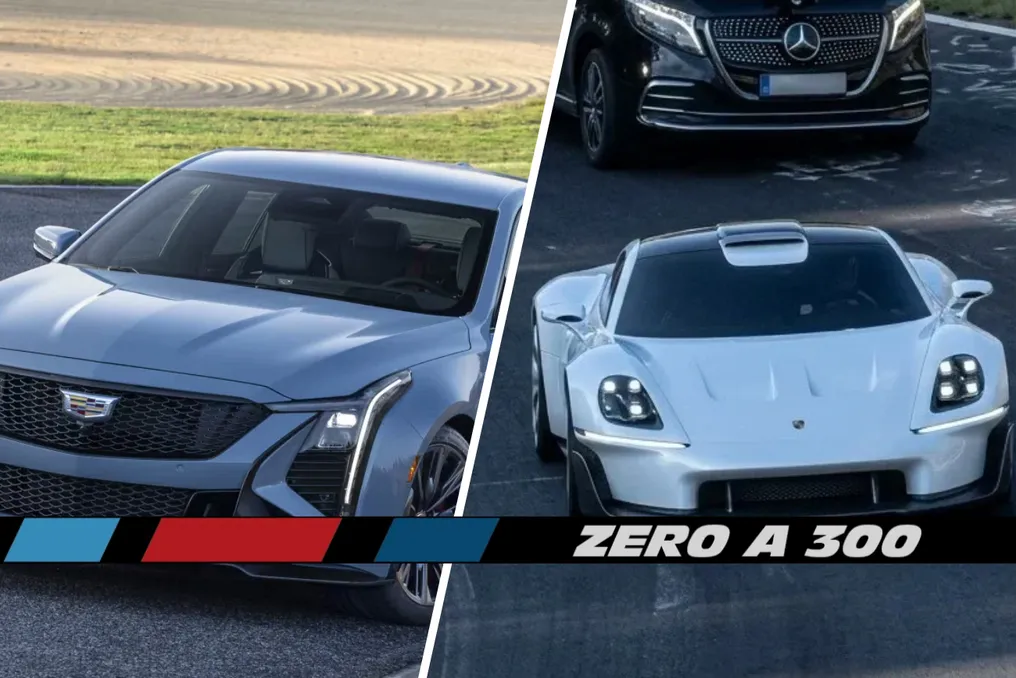
Cadillac may introduce the CT5-V Blackwing model to the Brazilian market in 2027. Following the confirmation of plans to bring the Escalade to the country, the brand also plans to make the CT5-V Blackwing available, which is the successor to the CTS-V that previously arrived through independent imports.

This vehicle uses a 6.2L supercharged LT family V8 engine, generating 677 horsepower and 91.1 kgfm of torque, paired with a six-speed manual transmission, although a ten-speed automatic option is available. The Blackwing features suspension equipped with magnetorheological dampers, an electronic locking differential, and Brembo brakes, potentially including carbon-ceramic discs as an accessory. It is relevant to note that the final tuning of the adaptive dampers was developed and validated by Brazilian engineers at the Cruz Alta Test Field, belonging to GM, located in Indaiatuba, São Paulo.

Although Cadillac has not officially confirmed the importation of the CT5-V Blackwing or detailed the available configurations, its cost is expected to exceed R$ 1,000,000, considering prices in the United States and from local competitors.

Porsche Mission S tested at Nürburgring, fueling rumors about an eight-cylinder boxer engine

One month after the Mission S presentation, the new rear-engined supercar concept from Porsche took the prototype to the Nürburgring circuit. The car was captured in what appears to be a promotional photoshoot.

The video shared by the @jb992_3rs profile on Instagram allowed listeners to hear the engine sound, which has a deeper and more robust tone compared to the six-cylinder boxer engine of the 911, strengthening speculation that Porsche is developing an eight-cylinder boxer for its future supercar.

Porsche has not yet confirmed the exact engine configuration, but the idea of an eight-cylinder boxer has circulated since before the Mission S debut. This configuration would be unprecedented in a regular production Porsche, despite the brand having already used it in various track models. The Mission S itself alludes to this past history through a horizontal fan positioned above the engine compartment, similar to the one used in the Porsche 917.

Michael Leiters, Porsche CEO, has already assured that the new platform was designed to accommodate both combustion engines and hybrid systems, and that there will be an option for a manual gearbox if demand arises. This model will be positioned above the 911 and, unlike supercars such as the Carrera GT and the 918 Spyder, will permanently integrate into the Porsche lineup, solving the company's 'next hypercar' question. Currently, there is no official data on power, displacement, or release date.

New Mercedes-Benz S-Class arrives in Brazil with starting price of R$ 1,270,000

Mercedes-Benz launched the updated version of the S-Class in Brazil, specifically the S 580 4MATIC, which features a V8 engine and a mild-hybrid system, with a starting price of R$ 1,266,900.

The S 580 incorporates a newer Mercedes design, characterized by multiple screen panels and lighting, but replaces the old V12 with a 4.0-liter biturbo M177 Evo V8 engine featuring a flat-plane crankshaft. This change aims to optimize efficiency and comply with emission regulations, while also providing greater agility. The new V8 generates 537 hp and 76.5 kgfm of torque, complemented by a 48-volt mild-hybrid system that provides up to 23 hp of electrical assistance. The vehicle is equipped with a nine-speed automatic transmission and all-wheel drive.

Despite its dimensions of 5.30 meters and its focus on comfort, the sedan can accelerate from 0 to 100 km/h in four seconds, with a top speed limited to 250 km/h. The combination of Airmatic pneumatic suspension and the steerable rear axle, capable of turning the wheels up to 4.5 degrees, aids in balancing driving comfort, stability, and maneuverability.

The S-Class was designed with both the driver and the rear passengers in mind. The standard configuration in Brazil includes five seats, heated rear seats, electric adjustments with memory function, four-zone air conditioning, and front airbags for rear occupants. As an option, the Premium Plus package converts the rear seat into two individual seats, separated by an executive console equipped with tables and controls. Additionally, there is a Burmester 4D sound system with 31 speakers and devices that transmit vibrations to the seats, allowing one to physically feel certain musical frequencies.

Aesthetically, the update maintains visual appeal with sophisticated lights and screens: the grille is now illuminated, the headlights project symbols onto the pavement, and a third 12.3-inch screen has been added to the dashboard for the front passenger.

Chinese CFMoto enters the superbikes segment with the V4SR-RR

CFMoto is among several Chinese manufacturers that have recently entered the Brazilian market, competing in a sector historically dominated by major Japanese brands. The company demonstrates ambition by presenting its first superbike, the CFMoto V4SR-RR, during the 2026 EICMA event held in Milan, Italy.

CFMoto aims for the V4SR-RR to be a worthy competitor to globally renowned brands like the Ducati Panigale V4 S and the BMW M 1000 RR, not only in appearance but also in performance. Its engine is a 997cc V4 producing 213 hp, with a crankshaft that rotates counter to the wheels (similar to the Ducati's), titanium connecting rods, and a maximum rotational speed of up to 15,000 rpm. The dry weight reaches 180 kg, making it 7 kg lighter than the Panigale.

The motorcycle is also equipped with a fully titanium Akrapovič exhaust system, Brembo Hypure brakes, Öhlins suspension, and Pirelli Diablo Supercorsa SP V4 tires. A notable feature is the active winglets located next to the front fender, which can move autonomously depending on the situation. In different positions, they serve to reduce drag or increase front downforce by up to 20%.

Although final performance results have not yet been disclosed, the CFMoto V4SR-RR has already set a record in China by achieving 315.82 km/h during the Chinese Maximum Speed Challenge for Motorcycles. More information will be made available in the coming weeks.

BMW reveals secret M7 prototype developed in the 90s

Historically, the M5 has occupied the top tier of BMW's M sedan hierarchy for over four decades, with the first generation, E28, launched in 1984, occasionally sharing the top spot with the M6 coupe. A commercially available BMW M7 never existed.

However, an official prototype of the BMW M7 was built and presented by the brand's classic division in a video. This project was based on the E38 generation of the 7 Series and remained confidential for almost thirty years. Initially, the car was a 1997 740i, but it received all the mechanics of the E39 M5, including the 4.9-liter S62 V8 engine producing 400 hp at 6,600 rpm, connected to a six-speed manual gearbox that sends power to the rear wheels. According to BMW, the vehicle weighed 1,875 kg (considered heavy for the time) and was capable of reaching 250 km/h.

Visually, the prototype is discreet, retaining the original bumpers of the 740i and lacking body identification. Without the BBS wheels, lower suspension, and four exhaust outlets, it would be difficult to identify that the car had been modified. Inside, the interior combines black and beige leather with an M steering wheel, a manual gear lever, and a landline phone in the center console.

BMW did not clarify why the M7 remained restricted to prototype status. One possible justification is that the model would have had little room to fit into the existing line: the 750i already occupied the pinnacle of the conventional line with its V12 engine, while the M5 would offer a nearly identical mechanical package in a smaller, lighter, and presumably more performant car, rendering the M7 unnecessary. However, the fact that a team dedicated efforts to building and testing a functional prototype indicates that the possibility was considered at some point.

Porsche launches 911 GT3 S/C and Targa 4 GTS in Brazil; Cadillac plans to introduce Escalade V8
Read more
flatout.com.br

Porsche launches 911 GT3 S/C and Targa 4 GTS in Brazil; Cadillac plans to introduce Escalade V8

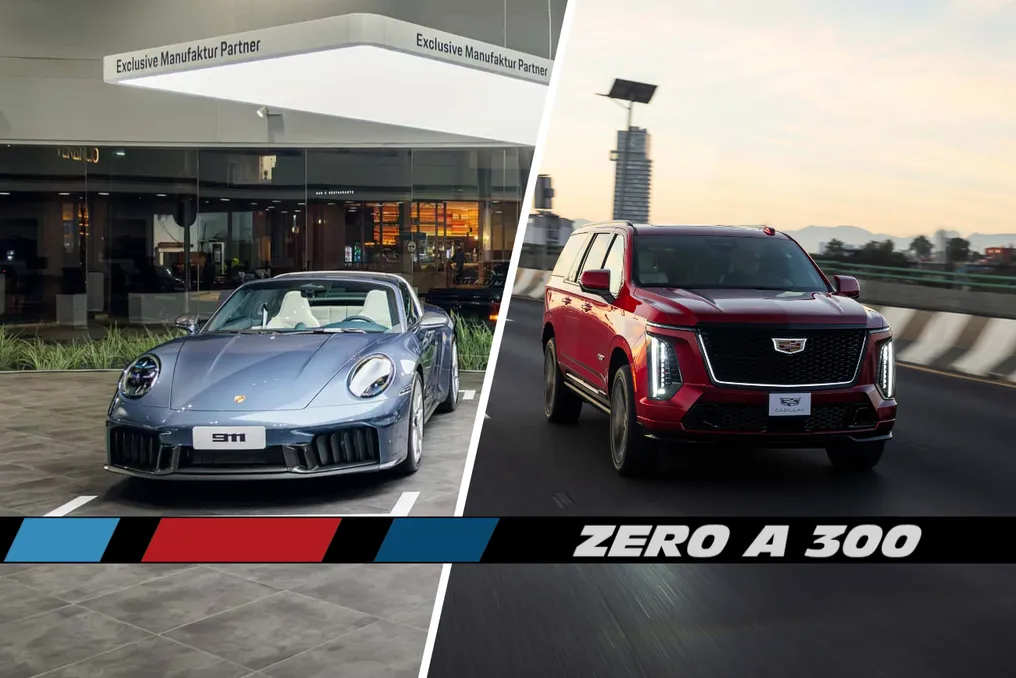
Porsche announced the launch of two variants of the 911 model in the Brazilian market this Wednesday, the 11th. The new arrivals are the 911 Targa 4 GTS and the new GT3 S/C. Both vehicles will be displayed to the public during the Porsche Fest event, scheduled for November 28th at Interlagos.

The GT3 S/C represents Porsche's first regular production convertible version, taking a position similar to the 2019 911 Speedster. It shares the same mechanical package as the GT3, utilizing the 4.0-liter naturally aspirated boxer engine, which generates 510 hp and 45.9 kgfm, coupled with a six-speed manual transmission.

To mitigate the weight added by the automatic roof, which opens in 12 seconds, Porsche employed materials such as carbon fiber and magnesium, in addition to carbon-ceramic brakes. Consequently, the GT3 S/C weighs 1,497 kg, only 35 kg more than the GT3 coupe with a manual gearbox. Despite this weight increase, the convertible maintains the performance of the closed model, reaching 100 km/h in 3.9 seconds and a top speed of 313 km/h. Its price in Brazil is set at R$ 2,060,000.

Meanwhile, the Targa 4 GTS operates with the T-Hybrid system, which integrates a 3.6-liter turbocharged boxer engine with an electric motor connected to the eight-speed PDK gearbox and an electric turbocharger. This setup delivers a combined output of 541 hp and 62.2 kgfm, allowing for 0 to 100 km/h acceleration in 3.1 seconds and reaching 312 km/h. The model features all-wheel drive, a steering rear axle, and active aerodynamic devices. It has been available for pre-sale since June and costs R$ 1,440,000.

The presentation is part of the celebrations of Porsche's 75 years in the automotive sector. In addition to these two additions, the manufacturer exhibited three customized GT3 Touring units through the Sonderwunsch program, which allows customers to request exclusive paint jobs, upholstery, and finishes. If the reader is in São Paulo, the cars are available for viewing at the Porsche Center São Paulo in Vila Olímpia.

GM advances plans to commercialize Escalade V8 in Brazil

It appears that General Motors (GM) is progressing with its plans to officially sell the Cadillac Escalade in Brazil. In an interview given to journalists this Wednesday (11) in Detroit, Fábio Rua, Vice President of GM South America, stated that introducing the SUV to the Brazilian market has become a matter of honor for the company. When questioned about the arrival of the model, he stated: 'It comes, or I am not called Fábio Rua.'

According to information from Jornal do Carro and Estadão, the Escalade is already undergoing the homologation process in the country, although there is no official launch date yet. The main hurdle lies in the differences between American and Brazilian homologation standards. While Brazil adheres to safety requirements aligned with international UN regulations, the United States uses its own standards, which are not automatically accepted locally. This implies adaptations and new certifications, whose costs may make official low-volume importation unfeasible. Additionally, the V8 engine needs adaptation for Brazilian gasoline, which contains 30% ethanol.

The Escalade is one of Cadillac's flagship models since its launch in 1998 and ranks among the largest American SUVs. In the standard configuration, it measures 5.38 meters in length, and the extended ESV version reaches 5.76 meters. In the US, the vehicle is equipped with a 6.2L naturally aspirated V8 producing 426 hp and 63.6 kgfm, linked to a ten-speed automatic transmission. There is also the Escalade-V, which uses a supercharged version of the 6.2L V8, generating 691 hp and 90.3 kgfm. Its interior accommodates up to eight passengers and features a 55-inch digital dashboard, massage seats, and an audio system with up to 42 speakers, often used as executive transport in the US.

The arrival of the Escalade would signify Cadillac's effective entry into Brazil, as the brand currently sells only the electric SUVs Lyriq and Vistiq in very small volumes. Although they opted for electric vehicles to start operations, the brand recognizes the demand for the Escalade, which is already being brought to Brazil by independent importers with some success. GM has not yet specified which versions will be offered, nor has it provided prices or a debut date.

Lotus reveals new 680 hp twin-turbo V8 engine; government increases import tax on tires
Read more
flatout.com.br

Lotus reveals new 680 hp twin-turbo V8 engine; government increases import tax on tires

Lotus announced the engine that will be incorporated into its new Esprit: a four-liter twin-turbo V8 engine named W40. This engine was developed by Horse Powertrain, a joint venture formed by Geely and Renault, and generates 680 hp along with 81.6 kgfm of torque.

Although Lotus has not officially confirmed yet that the supercar, currently known as Type 135, will be the new Esprit, rumors point to this possibility. The engine features a hot V configuration, with the exhaust manifold located between the cylinder blocks, resulting in a more compact package and optimizing gas flow. Thanks to the use of lightweight materials and direct fuel injection, Horse Powertrain managed to produce a relatively light engine, weighing less than 200 kg.

Together with the engine, a new eight-speed dual-clutch gearbox was created, capable of performing gear shifts in just 20 milliseconds. This transmission is designed to support up to 108 kgfm of torque. It is important to note that the V8 will not operate in isolation, as Lotus has already stated that the Type 135/Esprit will be a hybrid vehicle, using two electric motors to assist the combined power, aiming to exceed 1,000 hp.

The developers assure that lightness remains a priority, which is why the car will not be a plug-in hybrid, thus avoiding a large battery pack that would add unnecessary weight. Despite the speculation, the revelation of an entirely new V8 engine is already generating excitement. A supposed Lotus Esprit with over 1,000 hp may not be faithful to the original spirit, but it represents a logical industry trend.

The hybrid arrangement suggests that the new Esprit will have all-wheel drive, with the combustion engine powering the rear axle and the electric motors responsible for the front axle. It is suggested that Lotus consider including a mode to deactivate the front axle, allowing driving solely with the combustion engine. Additionally, it would be interesting if Lotus created a version that completely eliminated the hybrid system, keeping only the 680 hp of the twin-turbo V8, which might appeal to the more traditional public.

It is likely that the new V8 will not be limited to the Esprit, which may also have a simpler V6 version. The Chinese company Geely, owner of Lotus, holds other brands such as Volvo, Polestar, Zeekr, and Lynk & Co, and any of them could use the W40 engine, which has good low-speed torque and would be suitable for a luxury SUV.

On another front, the federal government raised the Import Tax from 25% to 30% on passenger car tires, meeting the request of national manufacturers. This change, valid for 12 months until November 9, 2027, aims to curb the entry of imported tires, especially Asian ones, but may increase the maintenance costs of Brazilian vehicles.

The new rate was defined by Resolution Gecex No. 978/2026. The standard tariff is 16%, but it was already temporarily at 25% since 2024, resulting in an immediate five percentage point increase. The National Association of Tire Industry (Anip) points out that the share of tires manufactured in Brazil in the replacement market has dropped drastically, from 66% in 2019 to only 30% in September 2026, with the remainder supplied by cheaper Asian imports.

On the other hand, importers, represented by Abidip, criticize the measure, claiming it harms competition and the consumer, potentially increasing maintenance costs, especially for low-income families. They argue that combating fraud, such as under-invoicing and tax evasion, would be a more appropriate solution.

Both national and imported tires are subject to the 9.75% IPI for new passenger tires, in addition to PIS and Cofins, which use a concentrated taxation regime. In the case of imported tires, taxation begins before the first sale in Brazil, applying the 30% Import Tax on the customs value (goods, freight, and international insurance), which raises the IPI calculation base. There are also PIS-Importation of 2.68% and Cofins-Importation of 12.35%, added to the state ICMS, whose national average in 2026 was 19.3%.

The situation of Chinese tires may be aggravated by specific anti-dumping duties, charged by weight, which, according to the Ministry of Development, Industry, Trade, and Services, can reach US$ 1.77 per kilogram until July 2030. The final impact will depend on how costs are passed on to consumers and the reaction of local producers.

Additionally, VWCO, Volkswagen's commercial vehicle division in Brazil, launched the Tempest van line. This family includes four models: Cargo (van), Window (with side windows), Minibus (passenger van), and Truck (cab chassis). The models vary in 11 versions, with load capacities between 3.5 and 4.1 tons, requiring at least Category C driver's license.

All variants share the same mechanics: a 2.0L turbodiesel engine producing 174 hp and 40.8 kgfm of torque, coupled with a six-speed manual gearbox that transmits power only to the rear wheels. Available trims are Comfort and Prime. The Comfort package offers a digital dashboard, a 12-inch multimedia center with Apple CarPlay and Android Auto connectivity, in addition to digital air conditioning and traction control. The Prime includes a 360-degree external camera, tire pressure monitoring, and a complete ADAS suite, such as blind spot monitoring and automatic emergency braking.

While prices have not yet been disclosed, sales of the Volkswagen Tempest are expected at the beginning of next year. Finally, regarding Chinese hybrids, it has been noted that some cars announce powers higher than reality due to a legal loophole. In Brazil, during homologation via Siscat (administered by Senatran), companies must report the individual power and the combined power of the hybrid system, but there is no clear regulation on which value should be displayed to the consumer, allowing manufacturers to highlight the total installed power, which is the simple sum and generally higher than the combined power.

Popular