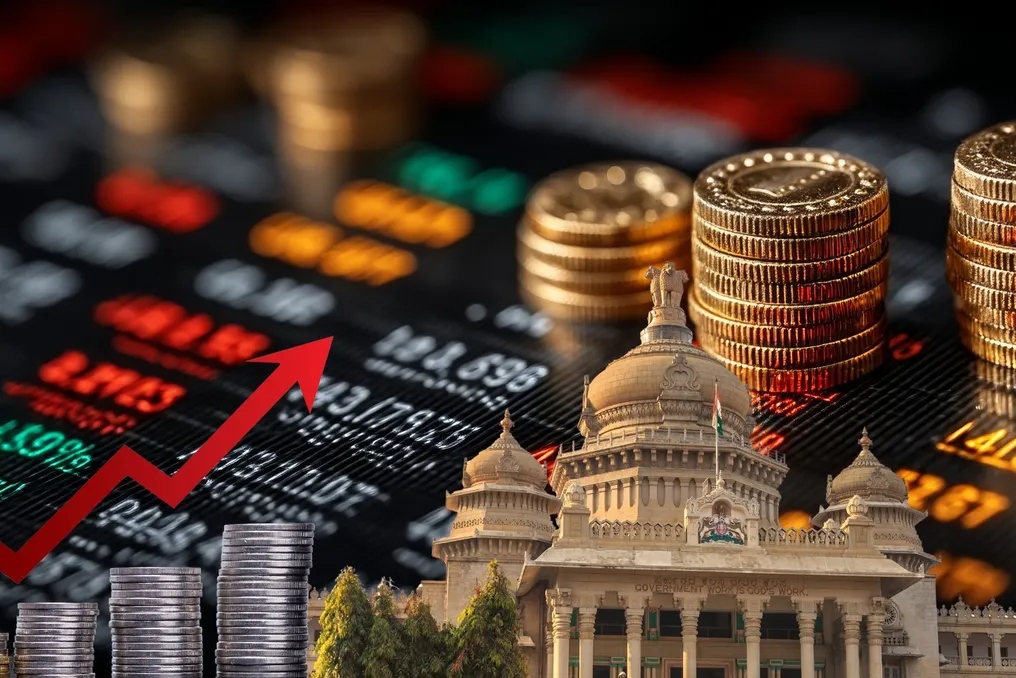
According to a report by Tracxn Technologies, Indian artificial intelligence companies attracted $1.6 billion in equity financing during the first nine months of 2026. This amount is almost double the figures from the same period last year and represents the highest total funding raised in any nine-month period covered since 2019.
The Tracxn Technologies report indicates that $1.6 billion was raised across 87 rounds in the first nine months of 2026, contrasting with 149 rounds registered the previous year. This suggests that the growth was driven by a relatively small number of large deals.
The investment structure was dominated by early-stage funding. During this period, Mumbai surpassed Bengaluru to become the city with the largest volume of funding. The ten largest rounds in 2026 accounted for $1.5 billion, which constitutes 90% of the total $1.6 billion.
Neysa, an AI cloud provider from Mumbai, received the largest share of funding, attracting $600 million in a Series B round in February, equivalent to 37% of all funding. Sarvam, a generative AI developer from Bengaluru, secured $255 million in a Series B round in June, followed by another $90.4 million in August. Yotta attracted $150 million in July.
The report also noted a 33% decrease in Series A and later-stage rounds, totaling 24 rounds compared to 36, and a 60% drop in the number of companies receiving funding for the first time, down to 24 from 60.
Globally, AI companies attracted $383.5 billion in the first nine months of 2026, with India's share of $1.6 billion accounting for only 0.4%, placing it ninth among countries.
Early-stage funding grew by 191%, reaching $1.3 billion from January to September, up from $434 million the previous year. However, the number of early-stage rounds decreased by 38% to 21. The average size of an early-stage round reached $60.2 million compared to $12.8 million the previous year.
According to the report data, Indian AI companies supported 111 investors in the first nine months of 2026, fewer than the 169 in the previous year. The number of first-time participating investors dropped to 43, and international investors numbered 29. Peak XV Partners led among early-stage investors with three investments, followed by Prosus and Khosla Ventures, each with two investments. Antler, IvyCap Ventures, and Finvolve made two seed investments, while SoftBank Vision Fund and Creaegis supported one late-stage round each.