Review of LG 43LR6700 Smart TV: A Balance Between Functionality, Connectivity, and Price
Read more
Olhar Digital
olhardigital.com.br

Review of LG 43LR6700 Smart TV: A Balance Between Functionality, Connectivity, and Price

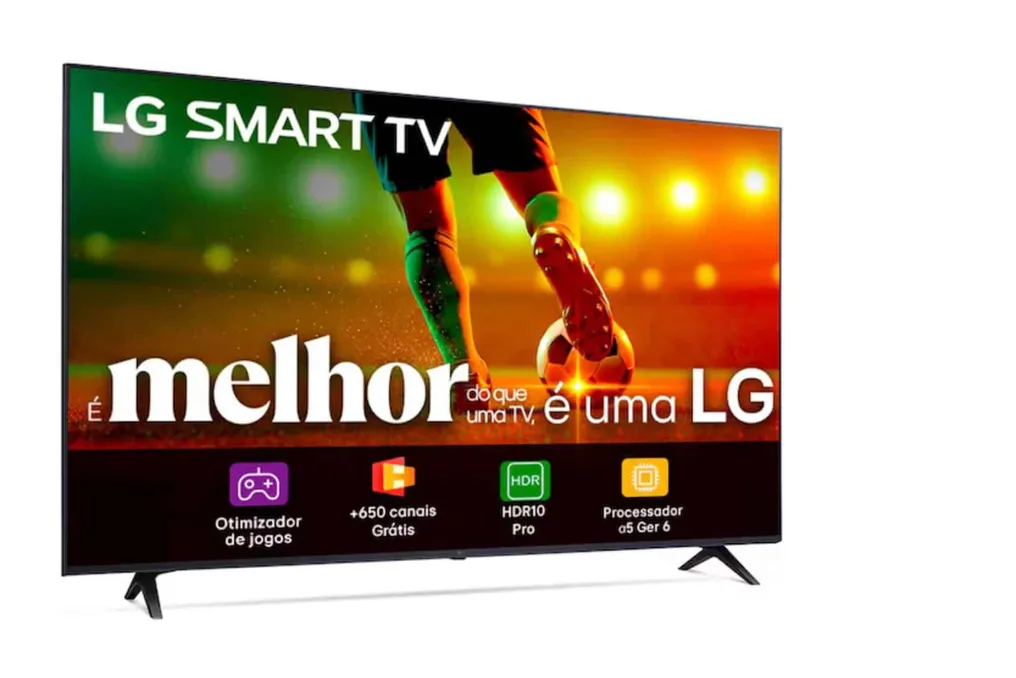
Choosing a modern television today is determined not only by screen size and image quality but also by aspects such as the operating system, connectivity options, compatibility with streaming services, and gaming features. In this context, LG has introduced the 43LR6700 Smart TV—a 43-inch model that combines Full HD resolution, AI-powered image processing, and the webOS 23 operating system.

This model is aimed at consumers who want to purchase a modern television for watching movies, series, broadcast programs, and internet content but do not wish to spend money on a 4K resolution device.

Thanks to its 43-inch diagonal, the LG 43LR6700 has dimensions suitable for installation in small living rooms, bedrooms, offices, or common areas. The appliance's design is characterized by restraint, thanks to relatively thin bezels and a style that matches the manufacturer's traditional aesthetic, allowing it to blend in unnoticed on furniture or when mounted on the wall.

The physical dimensions are approximately 97.3 cm wide, 62.3 cm high, and 21.6 cm deep with the stand; without the feet, the depth reduces to 8.5 cm. The weight of the television with the stand is about 8.1 kg. Standard VESA 200 x 200 mm mounting is provided for wall installation, ensuring compatibility with various brackets.

The 43-inch size is considered universal and suitable for those looking for a second screen for the bedroom or a compact option for a small room.

The LG 43LR6700 is equipped with a Full HD panel with a resolution of 1920 x 1080 pixels and a native refresh rate of 60 Hz. This allows for the playback of content with good clarity for watching regular programs, movies, series, YouTube videos, and streaming content. Full HD remains an acceptable choice for a significant portion of buyers, especially on a screen of this size and at an appropriate viewing distance.

It is important to understand the difference from 4K: Full HD contains slightly over two million pixels, whereas 4K reaches approximately 8.3 million, meaning four times more detail. When watching high-quality content, especially up close, a 4K TV can display a sharper picture. Therefore, if the goal is to watch movies and series in 4K, using modern consoles or striving for maximum resolution, other models should be considered.

However, for users of streaming services, open TV, paid channels, and Full HD video, the resolution of the LG 43LR6700 will fully meet their needs. One of the key advantages stated by LG is the 6th generation α5 AI processor. This component handles sound and image processing, aiming to enhance the viewing experience depending on the displayed content.

Among the features is upscaling—a technology that enhances the quality of low-resolution content to the screen level. Thus, the TV attempts to adapt smaller resolution images for playback in Full HD. It also features AI-based brightness control, which automatically adjusts the image using ambient light data. Additionally, Dynamic Tone Mapping is available, responsible for correct distribution of brightness and tone in supported content.

It is necessary to distinguish between AI processing and higher resolution. The processor can improve certain aspects of the image, but it does not turn a Full HD panel into 4K. LG also emphasizes the presence of HDR10 Pro technology, which relates to reproducing content with an extended range of brightness and contrast. The goal of this technology is to ensure better light output, highlighting details in both bright and dark scenes. The model supports HDR10 and HLG standards. In practice, the final result depends on the physical characteristics of the panel, primarily its brightness and color reproduction ability. Therefore, although HDR is an interesting feature, one cannot expect the same visual effect as on more expensive 4K TVs with advanced panel technologies. For the average consumer, HDR is a pleasant addition, but not the main reason for choosing this device.

The webOS 23 system is one of the strengths of the LG 43LR6700. It provides an organized interface with access to various streaming services, applications, and smart functions. Users can find platforms such as Netflix, Prime Video, Disney+, and YouTube, as well as other compatible services, although application availability may vary depending on the region and system updates. The interface also allows for profile creation and content recommendation viewing, simplifying the selection of entertainment options.

A positive point is the support for the LG ThinQ application, which allows controlling the TV via smartphone and accessing additional functions. The TV is also compatible with Apple AirPlay 2, which facilitates content casting from Apple devices. Furthermore, compatibility with Amazon Alexa and Smart Magic Control is provided, though it should be noted that the Smart Magic controller is sold separately, so one cannot assume all voice commands and motion navigation are included in the standard package.

In the audio system of the LG 43LR6700, a two-channel sound system with 20 watts of power and downward sound direction is installed, which is typical for TVs in this class. This power is sufficient for daily viewing of programs, news, cartoons, series, and movies in small or medium-sized rooms. LG also offers AI Sound, which uses processing to create a virtual 5.1 channel surround sound sensation. The Clear Voice Pro function aims to improve dialogue intelligibility and volume balancing. Nevertheless, it is important to maintain realistic expectations: virtual processing will not replace a full surround sound system. Those who prefer movies with intense sound effects or need deeper bass will likely require a soundbar or external audio system.

The good news is the inclusion of Bluetooth 5.0, digital optical output, and HDMI supporting eARC, which expands the possibilities for connecting compatible audio equipment. The manufacturer has also added features for gamers, including Game Optimizer, Game Panel, and HGiG support—technology designed to improve HDR display in games. These tools allow for parameter customization and simplify access to information about the gaming experience.

However, there are two important limitations: the resolution remains Full HD, and the native refresh rate is 60 Hz. This means the model does not provide the 120 Hz smoothness found in more advanced televisions, which is relevant for some modern consoles. For users of older consoles, casual gamers, or those connecting a PC for less demanding games, the LG will suffice satisfactorily. However, gamers seeking high clarity, greater smoothness, and maximum utilization of consoles like PlayStation 5 and Xbox Series X should consider 4K TVs with a 120 Hz refresh rate and a fuller set of HDMI 2.1 features.

The LG 43LR6700 has a set of connections that meets basic needs. It includes two HDMI ports (one supporting eARC), one USB 2.0 port, an Ethernet network connection for wired internet, Wi-Fi 5, and Bluetooth 5.0. There is also an antenna or cable TV input and a digital optical audio output. The number of HDMI ports is sufficient for connecting, for example, a game console and a cable TV box, although multiple devices might require an additional adapter. The presence of Wi-Fi and Bluetooth simplifies wireless accessory connection, while Ethernet serves as an alternative for wired internet access.

Key advantages of the LG 43LR6700 include: [List of positive points]. On the other hand, some aspects require attention: [List of remarks].

Overall, the LG 43LR6700 Smart TV aims to balance smart features, connectivity, and image quality in the mid-range price segment. Its main value lies in the combination of a well-known operating system, AI-based processing features, and a set of connections that meets the needs of most consumers. For those who need a 43-inch TV for watching movies, series, videos, regular broadcasts, and using streaming services, it can be a good choice. webOS is a noticeable advantage, as is compatibility with Bluetooth, AirPlay 2, and the ThinQ app. However, the Full HD resolution factor cannot be ignored. In a market where 4K TVs are becoming increasingly affordable, purchasing Full HD requires special attention to the price. If the price difference compared to a 43-inch 4K TV is not significant, it might be worth increasing the budget slightly for higher resolution.

Conclusion: The LG 43LR6700 is worth buying for those looking for a functional Smart TV from a reputable brand with good connectivity options who are not insisting on 4K resolution. It is an interesting option for bedrooms, small living rooms, or as a second TV in the house.
Similar stories

Review of 6 4K TV Box and TV Stick Models to Buy in 2026
Read more
tecnoblog.net

Review of 6 4K TV Box and TV Stick Models to Buy in 2026

TV Boxes and TV Sticks are an excellent way to turn a regular television into a smart TV without buying a new model. These devices can also improve navigation smoothness on older smart TVs.

Advanced dongles, such as the Fire TV Stick 4K Max, are ideal for 4K TVs that support HDR formats. There are also simpler TV Boxes, like the Smart Tv Box 4K Intelbras, which focus on supporting basic streaming applications.

List of Recommended Devices

Tecnoblog presents six options for TV Boxes or Sticks with up to 4K UHD resolution. The review features models from Amazon, Xiaomi, Roku, Vivensis, and Intelbras.

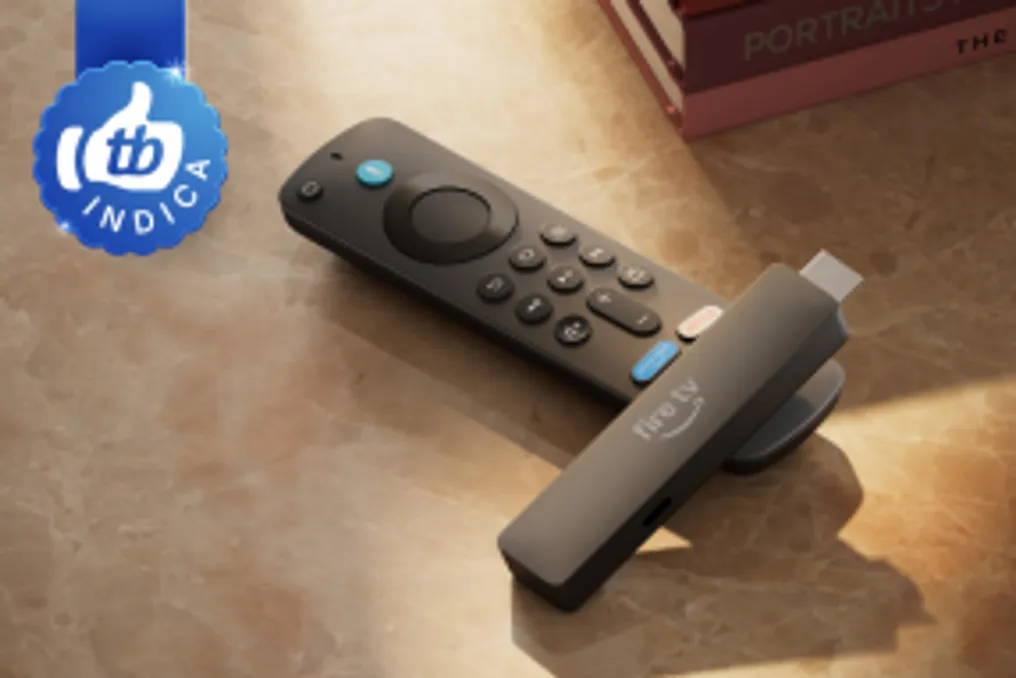
The Fire TV Stick 4K Max is Amazon's most powerful streaming device. This dongle supports up to 4K UHD output (3840 x 2160 pixels), is equipped with 2 GB of RAM and 16 GB of internal storage for installing favorite streaming apps and games. Furthermore, the Fire TV Stick supports Dolby Vision and HDR10+ technologies, allowing for brightness, color, and contrast enhancements in compatible HDR content. It is also compatible with Dolby Atmos for a more immersive audio experience. One distinguishing feature is its support for the Wi-Fi 6E standard, which operates in the 6 GHz band for higher connection speeds and lower latency. The device runs on Amazon's Fire OS and has an HDMI 2.1 output for connecting to televisions. Its dimensions are 108 mm (Height) x 30 mm (Width) x 14 mm (Depth).

The Xiaomi TV Box S 4K is the perfect streaming device for users who want to install many applications, thanks to its 32 GB of memory. This 4K UHD maximum resolution TV Box has 2 GB of RAM, ensuring smooth navigation. It supports advanced video formats such as Dolby Vision and HDR10+, as well as audio experiences with Dolby Atmos and DTS:X, provided the TV is also compatible with these technologies. The device runs on the Google TV system, includes Google Assistant, and simplifies smartphone mirroring via Google Cast. It is also equipped with Wi-Fi 6 for fast connections, Bluetooth 5.2, and a USB-A 2.0 port for external drives. Dimensions: 97 mm (Height) x 97 mm (Width) x 17 mm (Depth).

Roku Streaming Stick Plus

The Roku Streaming Stick Plus is an inexpensive dongle focused on streaming up to 4K resolution. It only has 1 GB of RAM, but the light and optimized RokuOS system helps reduce memory consumption. The device supports HDR10 and HDR10+ playback, provided the TV is compatible. However, the Roku Streaming Stick Plus cannot display images in Dolby Vision format, even if the TV supports this technology. Regarding connectivity, the Roku Streaming Stick Plus uses Wi-Fi 5 and has Bluetooth support, although the version is not specified by the manufacturer. Dimensions: 97 mm (Height) x 20 mm (Width) x 13 mm (Depth).

The Amazon Fire TV Stick 4K is a more modest version of the Max model. It also offers a maximum resolution of 4K UHD and 2 GB of RAM, but features a less powerful processor and 8 GB of internal storage—half that of the Max version. It also differs in its Wi-Fi standard, which is Wi-Fi 6. It uses the 802.11ax wireless network standard and supports the same access speeds as Wi-Fi 6E, although it does not operate on the 6 GHz frequency, which is characterized by lower network congestion. Despite this, the dongle runs on Fire OS and is compatible with Dolby Vision and HDR10+ technologies for playing high-quality HDR images. Dimensions: 108 mm (Width) x 30 mm (Height) x 14 mm (Depth).

Vivensis Stick VX Smart 4K

The Vivensis Stick VX Smart 4K is a TV Box for those who want to watch series, movies, soap operas, and television programs. It is the only device on the list that receives satellite open TV signals (KU band), providing over 80 free channels. Additionally, the device runs major streaming applications under the Android TV operating system with up to 4K resolution. It is also compatible with HDR10 and HDR10+ content if the TV supports it. The device also has two USB ports, Wi-Fi 5, and an RJ45 port for faster and more stable wired connection. The built-in Bluetooth version 5.0 lacks the stability and efficiency improvements found in newer versions. Dimensions: 120 mm (Height) x 120 mm (Width) x 26 mm (Depth).

Smart Tv Box 4K Intelbras

The Smart Tv Box 4K Intelbras is a basic device for converting any television into a smart TV. This TV Box runs on Android TV and is compatible with major streaming applications such as Netflix, Prime Video, and HBO Max. The device is better suited for simple TVs that do not support HDR content, as it lacks HDR10 or Dolby Vision support. As compensation, it is equipped with an RJ45 port for wired internet connection, two USB 2.0 ports, and integrated Bluetooth version 5.0. Dimensions: 162 mm (Height) x 162 mm (Width) x 75 mm (Depth).

When choosing the best TV Box, one should consider both the physical characteristics of the device and the hardware specifications, taking into account the limitations of the television itself. It is important to understand that TV Boxes and TV Sticks can transform regular televisions into smart TVs, but they come in different forms and connection types. TV Boxes have a casing format and require space to be mounted on a stand or shelf; they also need to be plugged into an outlet and usually offer USB and RJ45 ports. Some models, like the Vivensis Stick VX Smart 4K, can receive signals from a parabolic antenna. In contrast, TV Sticks are extremely compact, resembling a flash drive, and do not require a separate power outlet, as power can be supplied through the TV's USB port. However, they do not provide the connection ports typically found on TV Boxes. While TV Boxes need the internet to access streaming applications, some models can receive digital open TV signals or play recorded content from microSD cards and drives without relying on the internet. When purchasing, check for authenticity: counterfeit TV Boxes often have printing defects on the packaging, low build quality, and different fonts. Original products feature complete manufacturing details and clear information. The presence of Play Protect certification in the Google Play Store information is also a good indicator of authenticity. For the Xiaomi TV Box, it is recommended to open Mi Home and pair the remote control—only original products connect and display correctly within the Xiaomi ecosystem. The choice depends on your TV model and budget. Buying a TV Box is the most affordable way to make a TV a smart device. However, if the TV is too old, it may not handle modern technologies such as HDR, the latest processors, and modern displays. On the other hand, purchasing a smart TV eliminates the need to buy separate TV Boxes or Sticks and guarantees compatibility with current technologies, although its cost is higher than that of a TV Box or Stick; good and inexpensive smart TVs can be found.

Analysis of 8 55-inch Smart TV models recommended for purchase in 2026
Read more
tecnoblog.net

Analysis of 8 55-inch Smart TV models recommended for purchase in 2026

55-inch televisions are considered suitable for medium-sized living rooms and large bedrooms. Since this represents a long-term investment, the purchasing decision must balance usage needs with the available budget.

For those who prioritize maximum visual quality, seeking intense colors and deep blacks, OLED TVs are the best alternative. On the other hand, QLED panel models, especially MiniLED versions, often offer a superior cost-benefit ratio compared to conventional LED TVs.

Tecnoblog compiled a list with eight 55-inch Smart TV models suggested for purchase in 2026. The analysis covers televisions from the brands LG, Samsung, Hisense, and TCL, detailing the pros and cons of each.

TCL C6K

The TCL C6K is highlighted as an excellent option for 55-inch TVs. This model features a Mini LED panel equipped with up to 512 dimming zones, which allows for more precise light control, resulting in enhanced contrast and deeper blacks compared to less sophisticated panels.

With the Google TV operating system, the TV has an extremely thin design and incorporates Onkyo 2.1 Hi-Fi audio with a built-in subwoofer, providing a richer bass sound experience. Furthermore, the TCL C6K is compatible with Dolby Atmos, promising an enhanced spatial perception through three-dimensional audio.

Another strong point of the TCL C6K is support for up to 144 Hz VRR refresh rate in 4K resolution, which significantly benefits high-performance gaming. In terms of connectivity, it has four HDMI ports (two being 2.1), two USB ports, an Ethernet input, optical audio output, in addition to Wi-Fi 5 and Bluetooth 2.1 support.

LG OLED C6

The LG OLED C6 ranks among the brand's best models and is considered one of the most accurate choices for 2026. Its differential lies in the OLED panel, which offers vivid colors, absolute blacks, and infinite contrast, surpassing LED, QLED, and Mini LED TVs in quality.

This device is highly recommended for gamers, thanks to the native 120 Hz refresh rate (reaching up to 165 Hz with VRR) and support for AMD FreeSync and Nvidia G-Sync standards. For non-gamers, the LG C6 maintains excellent image quality for movies and series, supporting Dolby Vision, HDR10+, and HLG.

In terms of audio, the TV features a 2.2 channel sound system with a total power of 40W, composed of two conventional speakers and two additional subwoofers, which boost bass and increase the sense of immersion. It is also compatible with Dolby Atmos.

The operating system used is webOS, and LG guarantees five years of updates through the LG Re:new program. The TV has four HDMI inputs, three USB ports, optical audio output, Ethernet input, in addition to Wi-Fi 6 and Bluetooth 5.3. One user reported that despite the high investment, the TV's image and sound quality is excellent, surpassing the average of basic and mid-range devices.

Samsung M75H

The Samsung M75H is presented as a great alternative for those who want a 55-inch TV with superior quality to simpler options, without incurring excessive costs. Its main feature is Mini LED technology, which uses smaller emitters to illuminate the panel with 40 times greater precision, promoting better contrast and deeper blacks.

This television supports HDR10+, which increases brightness and contrast during scenes. Samsung has also implemented Pure Color Technology, which minimizes the appearance of fading by enhancing pixel accuracy. Regarding audio, it has two simple 10W + 10W speakers, without a built-in subwoofer.

The operating system of the Samsung M75H is One UI Tizen, offering seven years of guaranteed updates and access to major streaming applications, cloud gaming, and smart device integration. The TV comes equipped with three HDMI inputs, one USB port, Ethernet input, Wi-Fi 5, and Bluetooth 5.3.

The Samsung QN70F is another 55-inch Smart TV that combines QLED technology with Mini LED illumination. This provides more refined lighting control on the screen, resulting in more refined contrast, high brightness levels, and better detail in bright and dark scenes.

This model is equipped with the NQ4 AI Gen 2 processor, which uses 20 neural networks to analyze and refine brightness, colors, and texture in real time, performing upscaling of lower-resolution images to something close to 4K. The AI Mode also automatically adjusts image and sound according to the displayed content. With a native 120 Hz panel, it supports up to 144 Hz with VRR technology, making it ideal for gamers. The operating system is One UI Tizen, with a seven-year update guarantee, and the TV has four HDMI inputs, two USB ports, optical audio output, and an Ethernet port, in addition to Wi-Fi 5 and Bluetooth 5.3.

LG QNED70

Launched in 2026, the LG QNED70 is an excellent choice for those looking for an LG 55-inch TV that offers more than the basics. This model stands out with its QNED panel featuring Mini LED illumination, which uses quantum dots and tiny LEDs to generate vibrant colors, deeper blacks, more realistic images, and good contrast for watching series, movies, and sports.

Equipped with the AI Alpha 7 Gen9 processor, the LG QNED70 uses artificial intelligence to upscale images with resolutions lower than 4K. The TV also includes other AI features, such as Picture Wizard and Sound Wizard, whose algorithms learn the user's preferences regarding image and sound. The audio is considered basic, with two 10W speakers each, but the AI Sound Pro feature simulates a 9.1.2 environment.

Another positive point is the webOS operating system, which ensures five years of updates and compatibility with Apple AirPlay and Google Cast. The AI Magic remote allows interaction with the interface similar to using a mouse. The LG QNED70 has three HDMI inputs, one USB port, an Ethernet port, Bluetooth 5.3, and Wi-Fi 5.

The Samsung Q7F is a suitable option for daily use, without reaching the prices of the brand's Neo QLED and OLED lines. This model features a QLED panel, using quantum dots that ensure 100% color volume and Pantone certification for greater chromatic fidelity.

With the AI Q4 processor, the Samsung Q7F performs upscaling of low-resolution content with the help of artificial intelligence. The manufacturer has also provided the Vision AI feature, which automatically adjusts images, and Color Booster Pro, which enhances colors. The operating system is One UI Tizen, with seven years of guaranteed updates, in addition to integration with Samsung SmartThings, Amazon Alexa, and Apple AirPlay. The SolarCell remote control does not require batteries and can be charged via USB-C or ambient light. Regarding connections, this TV offers three HDMI inputs, one USB, and an Ethernet input, along with Wi-Fi 5 and Bluetooth 5.3.

TCL P7K

The TCL P7K is a suggestion for a 55-inch TV with a good cost-benefit ratio. Its highlight is the QLED panel, which uses quantum dots to deliver more vivid and realistic colors compared to simpler models. It operates with the Google TV operating system, which provides access to thousands of apps on the Play Store.

This television has the AiPQ Engine processor, which applies artificial intelligence to elevate the quality of images from smaller resolutions to something close to 4K. The TCL P7K also supports Dolby Atmos and Dolby Vision, ensuring a more immersive audio experience and high-quality HDR.

Although the panel only has 60 Hz, the Game Accelerator mode can simulate a refresh rate of up to 120 Hz during gaming sessions. The TCL P7K has three HDMI inputs, one USB port, an Ethernet input, and optical audio output, in addition to Wi-Fi 5 and Bluetooth 5.4 support.

Hisense Q6QV

The Hisense Q6QV is a model superior to the brand's basic offerings and represents an interesting option for a 55-inch TV with a great cost-benefit ratio. It uses a QLED panel, which employs dots to provide more vibrant and realistic colors compared to TVs that use conventional LED panels.

With the AiPQ processor, this TV uses artificial intelligence to improve the sharpness of lower-resolution content. The chip also activates other modes, such as AI Sports Mode, which optimizes image and sound in sports broadcasts, and AI Smooth Motion, which reduces blurring in games, sports, and fast scenes. Hisense equipped the Q6QV with Dolby Atmos and Dolby Vision certification, providing a more engaging brightness and sound experience. Regarding audio, this television has basic speakers.

Best Smart TVs with Google TV: 6 Recommended Models to Buy in 2026
Read more
tecnoblog.net

Best Smart TVs with Google TV: 6 Recommended Models to Buy in 2026

Smart TVs equipped with Google TV are ideal for consumers who value intuitive navigation, access to major streaming services, and personalized suggestions for movies and series through the Google account.

This operating system is available on televisions across various price ranges, spanning from simpler LED models to more advanced options like OLED and Mini LED. To assist in the purchasing decision, Tecnoblog has selected six Google TV system models that stand out in 2026.

Toshiba OLED X9900LS

The Toshiba OLED X9900LS is recommended for those seeking an OLED television focused on home entertainment, paying special attention to integrated audio quality and contrast. This model features a 65-inch screen and 4K resolution. Unlike LCD TVs, its pixels emit light individually, which allows for the representation of dark areas without illumination and more precise contrast control. The panel also has a 120 Hz refresh rate and supports Dolby Vision and HDR10+, although reflections may occur in very bright environments.

An additional highlight is the built-in sound system, composed of ten speakers distributed throughout the unit. For gaming enthusiasts, the 120 Hz frequency allows enjoyment of smoother motion content, provided the console or computer provides compatible signals. In terms of connectivity, it offers Wi-Fi 6, Bluetooth 5.2, Ethernet, four HDMI ports (two HDMI 2.1 and two HDMI 2.0), and two USB ports.

TCL C7L

The TCL C7L is designed for those who need a large screen to watch movies, sports, and play games, even in rooms with high light incidence. This model uses SQD-MiniLED technology in the 65-inch and 75-inch versions, both with 4K resolution. The system combines quantum dots with backlighting and local dimming to manage different image regions.

In the 75-inch version, the manufacturer specifies 1,352 dimming zones and an HDR brightness of up to 3,000 nits. Motion fluidity is another relevant aspect; with a native refresh rate of 144 Hz, the C7L can display games at higher rates than traditional 60 Hz TVs, provided the source is compatible. Furthermore, it supports VRR, AMD FreeSync Premium Pro, and Dolby Vision Gaming. The Google TV interface provides access to Play Store applications, while the HDMI 2.1, USB, Wi-Fi 5, and Bluetooth 5.4 connections facilitate the integration of consoles, computers, and other devices.

Hisense U7ESG

The Hisense U7ESG represents an alternative for those looking for a large 4K TV with features geared towards both watching movies and series and gaming. Available in 65-inch and 75-inch sizes in Brazil, this model combines Hi-QLED technology, which uses quantum dots to intensify color, with MiniLED lighting and local dimming. This combination allows for light control in different parts of the screen, improving contrast in bright and dark scenes.

The panel has a native refresh rate of 144 Hz, which can benefit the smoothness in gaming and other dynamic content. The TV also features VRR, which synchronizes the screen frequency with compatible devices, and ALLM, which automatically activates low latency mode. Connectivity includes Wi-Fi 6, Bluetooth 5.3, four HDMI 2.1 inputs, two USB ports, and HDMI eARC for appropriate audio equipment. Its sound system delivers a total power of 40 W, including a 20 W integrated subwoofer, in addition to supporting Dolby Atmos.

TCL C6K

The TCL C6K is ideal for those who want to combine streaming, movies, and gaming using MiniLED lighting, without necessarily requiring the full set of brightness and light control found in the C7L. It is compatible with Dolby Vision, HDR10+, and HLG in streaming content. Available in various sizes, from 55 inches to 98 inches, this line uses quantum dots to increase color fidelity and smaller LEDs to manage illumination. The number of dimming zones changes depending on the size; the 85-inch and 98-inch versions feature a Matte HVA finish, developed to reduce reflections.

The model also integrates a native refresh rate of 144 Hz and features such as VRR, ALLM, and AMD FreeSync Premium Pro, aimed at displaying variable frequency games. The HDMI 2.1 ports allow taking advantage of high-frequency signals on compatible equipment. The integrated audio is provided by a 2.1 channel Onkyo system, with a subwoofer and Dolby Atmos support. Additionally, the TV has Google TV, voice commands, Wi-Fi 5, and Bluetooth 5.4.

Philips PUG7019/78

The Philips PUG7019/78 primarily focuses on daily use, such as streaming and over-the-air TV, without concentrating on advanced image or gaming features. Available in various sizes, including 50 inches, 55 inches, and 58 inches, the line uses Pixel Precise Ultra HD processing, which is responsible for optimizing sharpness, colors, and motion. The system can also process lower-resolution content to adapt it to the 4K screen.

The television accepts signals up to 4K at 60 Hz and offers compatibility with HDR10 and HLG. For gaming, it presents features such as VRR, which synchronizes image refresh with compatible devices, and ALLM. The audio is provided by two 8 W speakers, with Dolby Audio support. The version also includes three HDMI 2.1 inputs, two USB ports, Ethernet, dual-band Wi-Fi 5, and Bluetooth 5.1, in addition to optical and HDMI ARC output for connection with external audio systems.

Semp S62

The Semp S62 proposes a solution focused on everyday entertainment. This line is also available in 50-inch, 55-inch, and 65-inch sizes, all with 4K resolution. Its LCD panel uses standard LED backlighting and HVA technology, which aids in contrast but lacks local dimming, limiting light control in dark scenes.

The processing employs AiPQ, complemented by features such as Ai-Clarity, Ai-Color, and Ai-Contrast, designed to adjust definition, colors, and contrast according to the content, in addition to supporting HDR10+. Connectivity includes dual-band Wi-Fi, Bluetooth 5.2, Ethernet, three HDMI 2.1 inputs, one USB port, and optical audio output. The integrated sound has a total power of 20 W, distributed across two channels, with Dolby Audio support.

It is essential to analyze not only the operating system's features but also the image quality, audio performance, and available connection options. Google TV facilitates access to popular platforms such as Netflix, Prime Video, Disney+, YouTube, Globoplay, and Apple TV, among others. Users have the option to install streaming, music, and entertainment services through the Google Play Store, although availability depends on each application's compatibility.

Regarding the difference between Google TV and Android TV, Google TV is an interface built on the Android TV system but offers a more personalization-focused experience. While Android TV presents a traditional application organization, Google TV prioritizes recommendations for movies and series from various services. Both share the same technological base and provide access to the Google Play Store.

The recommendation of which system to use depends on individual preferences. Google TV is more recommended for those seeking personalized recommendations, integration with Google services, and a wide range of applications. Roku TV equipped TVs tend to prioritize a simple interface, with direct navigation and easy access to streaming services, making them good for daily entertainment, but they offer distinct experiences.

Samsung Smart TVs use the proprietary Tizen operating system, with the One UI Tizen interface. This platform offers streaming applications, personalized recommendations, and integration with SmartThings compatible devices. Although it provides Google services, such as YouTube, Samsung does not adopt Google TV as a native system in its televisions.

Similarly, LG Smart TVs operate with webOS, its exclusive operating system, which provides access to applications such as Netflix, YouTube, Prime Video, and Disney+. This platform also offers content suggestions, voice commands, and integration with smart devices.

Popular