
Tea vendor in Bangalore earns ₹7500 daily but refuses to open a cafe
Read more
Aaj Tak
www.aajtak.in

Tea vendor in Bangalore earns ₹7500 daily but refuses to open a cafe

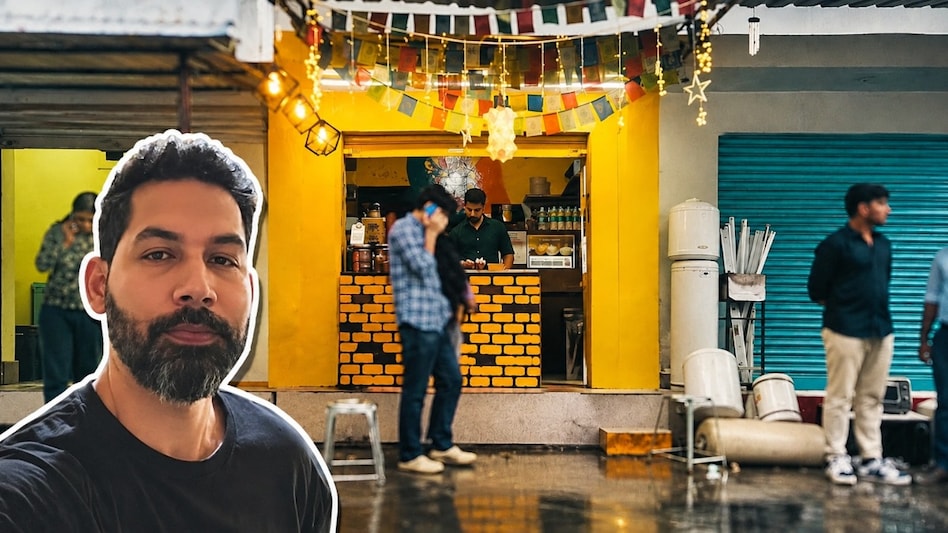
There is a belief that even a small tea kiosk can generate a good income, and this does not require large stores, luxurious interiors, or expensive cafes. A tea vendor working near an office area in Bangalore shared interesting details about his business.

He sells about 500 cups of tea daily. At a price of 15 rupees per cup, his daily turnover amounts to 7500 rupees. Despite this profit, he does not plan to open his own cafe, and he explained the reason in a very curious way.

This story became known through a post on the social media platform X by user Spriha Joshi (@sprahajoshi). She stopped by a small tea kiosk in a busy office area and asked the vendor about his business and daily earnings.

The vendor stated that he sells approximately 500 cups of tea per day, and with the cost of a cup at 15 rupees, the revenue from tea sales reaches 7500 rupees. However, his stall sells not only tea but also biscuits, sandwiches, and Maggi, which brings him additional income.

When Spriha asked the vendor why he doesn't open a large cafe despite high sales volume, his answer was very pragmatic. He noted that customers come here daily, and opening a cafe would lead to increased rent and overall expenses. Creating a cafe requires large spaces, furniture, interior design, and staff. Furthermore, there are monthly costs for rent, electricity, and maintenance.

The vendor believes that these costs can be significantly minimized in a small tea stall. He thinks there is no point in increasing expenses just for appearance if the current location provides a constant flow of customers and stable business.

The location of this tea kiosk plays a key role. Because it is located near a busy office area, employees working there regularly stop by for tea and snacks. This guarantees the vendor a steady stream of customers. People do not feel the need to visit an expensive cafe to have tea or a snack, so the business of the small kiosk develops steadily. The additional sale of biscuits, sandwiches, and Maggi also opens up extra sales channels.

Following Spriha Joshi's post on social media, discussions began regarding small businesses and understanding entrepreneurship. Some users noted that the vendor chose an ideal spot for his business. One commenter wrote that cafes charge for attracting customers through rent, whereas this vendor set up his stall where there were already hundreds of potential buyers.

Another user emphasized that cafes are known for their atmosphere and design, while the tea kiosk satisfies people's daily needs by offering affordable tea and snacks.

Similar stories

How salary growth affects Gen Z monthly expenses: the impact of lifestyle
Read more
www.aajtak.in

How salary growth affects Gen Z monthly expenses: the impact of lifestyle

A salary increase always pleases young people because higher income opens up opportunities to improve the quality of life, buy desired clothes, acquire good phones, frequent restaurant visits, and travel. However, sometimes expenses rise so quickly that savings remain unchanged by the end of the month. This phenomenon is called lifestyle inflation or 'lifestyle creep'.

Consider an example: a young person from Generation Z whose starting salary was 25 thousand rupees used the subway or buses for commuting, brought food from home, and made thoughtful online purchases. After a salary increase to 40 thousand rupees, his habits changed: he started regularly using taxis, visiting restaurants on weekends, and buying expensive clothing from famous brands. These expenses gradually became his new norm.

Social media can also contribute to increased spending. Seeing friends' and influencers' vacations, expensive cafes, new gadgets, and shopping on Instagram, many young people may want to lead a similar lifestyle. The problem arises when they try to imitate someone else's lifestyle without assessing their own income and needs. Such expenditures using credit cards and installments can create future financial pressure.

According to a Moneycontrol report from March 13, 2026, after an increase in income, expenses are also prone to rising, and additional earnings may be spent on a new lifestyle instead of going into savings. To prevent this, one should not spend the entire extra amount when the salary increases; part of it must be set aside for savings and investments.

It is necessary to create a budget based on the new salary but not to consider every convenience a necessity. Buying an expensive phone or taking a taxi is not a mistake, provided it aligns with the person's financial capabilities. Ultimately, the true benefit of a salary increase is realized only when your savings also increase.

Bangalore cafe owner shares experience of losing all staff despite improved working conditions
Read more
www.aajtak.in

Bangalore cafe owner shares experience of losing all staff despite improved working conditions

An incident occurred in Bangalore that drew attention on social media regarding work and startups. The cafe owner shared his experience of losing all his staff, even though he offered employees better working conditions, increased salary, and additional bonuses.

Mrigesh, who left the IT industry about four years ago to open his own cafe, posted a video on the official account of Mateka Chai Cafe. In this video, he expressed his disappointment over the sudden departure of his employees.

He stated that he made every effort for his staff: increasing salaries, providing financial support, and offering other benefits. Nevertheless, the employees resigned. Mrigesh said in the video that despite all the steps taken, his entire staff left, and advised others not to repeat his mistakes. By sharing his experience, he noted that he started the business with a special approach to human resource management but faced disappointment.

Having over eight years of experience in the IT sector, he tried to understand the problems faced by workers in this industry before starting his cafe. Mrigesh emphasized that his goal was to move away from traditional hospitality industry practices where employees are often forced to work long hours. He aimed to create a workplace where employees would receive better treatment, adherence to working hours, and support from the employer.

He told India Today that he wanted to counter the existing ecosystem where workers are forced to deal with all difficulties and stood against the established system. Furthermore, he spoke about changing the usual work schedule at the cafe. Although employees in this sector can work shifts of 10 to 11 hours, Mrigesh set an eight-hour workday in his establishment.

He further explained that he offered flexible schedules, higher pay, and extra assistance to his employees. According to him, he also tried hard to help staff members purchase items at their own expense. However, despite these efforts, the employees ultimately left their jobs. Mrigesh expressed dissatisfaction with this fact and questioned whether the desire to go beyond the usual employer expectations affected employee loyalty.

The exact reasons for the employees' departure from the cafe are not yet clear, and there is no confirmation that they left due to salary, working conditions, or any other specific issue.

The video quickly gained attention on social media, and users began sharing various opinions about the cafe owner's experience, as well as about the relationship between employers and employees. Some users supported him, believing that his attempts to provide better working conditions should be acknowledged, while others argued that the relationship between an employer and an employee cannot be built solely on extra benefits or generosity.

Khan Market in Delhi ranks among the world's most expensive shopping centers, rent reaches hundreds of thousands
Read more
www.aajtak.in

Khan Market in Delhi ranks among the world's most expensive shopping centers, rent reaches hundreds of thousands

The Khan Market shopping center in Delhi has secured a place among the world's most expensive retail markets. According to the report 'Main Streets Across the World 2026' by Cushman & Wakefield, Khan Market ranks 24th in the global rating. It is the only market in India included in the list of 147 leading retail markets worldwide.

The annual rental rate in Khan Market stores has increased by 14 percent, reaching $238 per square foot. In Indian rupees, this amounts to approximately 1875 rupees per square foot per month, meaning the approximate monthly rent for a 1000 square foot store is about 18.75 lakh rupees.

The report indicates that Aper Fifth Avenue in New York has been crowned the world's most expensive retail street. The annual rent there has grown by 35 percent, reaching $2700 per square foot. In 2025, it ranked third. New Bond Street in London is second with an annual rate of $2230 per square foot, and Via Montenapoleone in Milan, Italy, ranks third with a rate of $2160.

Overall, across major global retail markets, rent has risen by an average of 3 percent, while in 2025, this growth was 4.3 percent.

In the Asia-Pacific region, the annual growth in premium retail rent was 3.1 percent, with India showing itself as the strongest market. In many high-end retail districts in India, rent growth was recorded in double digits. In the Asia-Pacific regional ranking, Khan Market in Delhi ranked 25th. It is followed by Galleria Market in Gurugram at 28th place, Connaught Place at 29th, and Linking Road in Mumbai at 33rd.

On Linking Road in Mumbai, the rent increased by 28 percent, which is the highest figure in the entire Asia-Pacific region. The report also features many major retail markets in Mumbai, Bangalore, Pune, Chennai, Hyderabad, and Kolkata.

In Galleria Market in Gurugram, the rent is 1375 rupees per square foot per month. In Connaught Place, it is 1325 rupees, and on Linking Road in Mumbai, it is 1175 rupees. In Park Street and Fort/Fountain in Mumbai, the rent is 650 rupees, while on Vittal Mallya Road in Bangalore, it is registered at 425 rupees per square foot per month.

According to Cushman & Wakefield, more than 8.15 lakh square feet were leased across the 30 largest retail streets. During this period, 153 new lease agreements and store openings were registered. Over 80 percent of participants in this activity were retailers opening a store in that market for the first time. Furthermore, about 90 percent of the leased area belonged to international brands.

In terms of category, fashion brands led. Their share in the total number of leasing deals was 50 percent, and in leased area, 57 percent. Milin Rohinesh, Head of Retail at Cushman & Wakefield India, noted that the resilience of the Indian retail market is supported by consumption, expansion of retailers, and growing demand for premium products. The limited availability of good locations and high demand from retailers contribute to the rise in rent in key markets.

Popular