With the emergence of ChatGPT in 2022, the tool developed by OpenAI generated a notable transformation, placing artificial intelligence at the center of global attention and quickly winning millions of users.
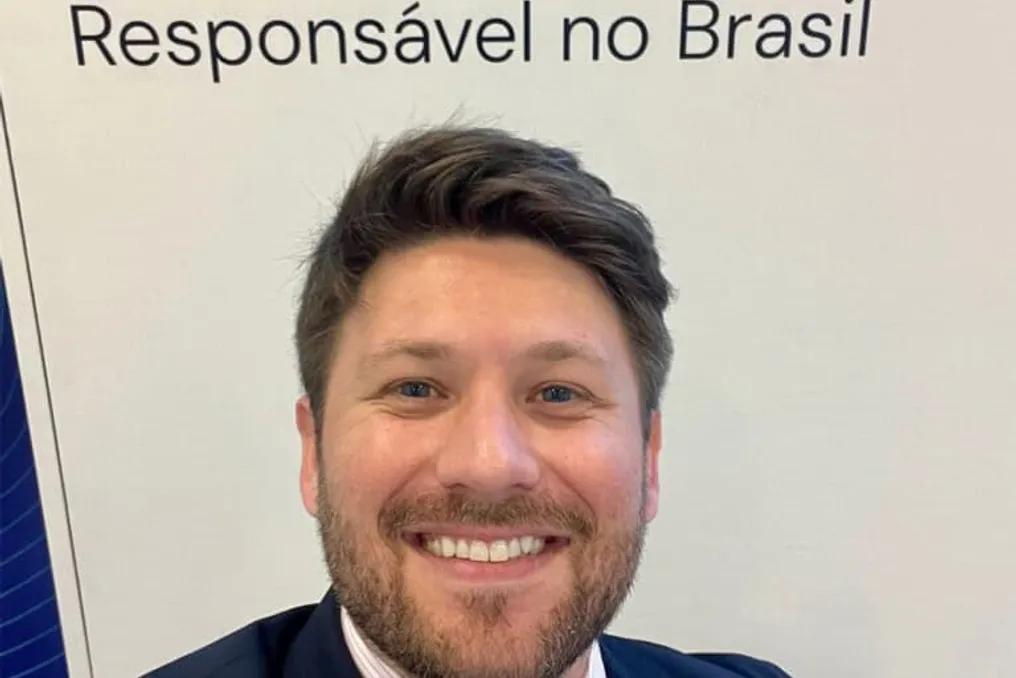
One year after its launch, Nicolas Robinson Andrade, a British citizen who has resided in Brazil since 2014, was hired to hold the position of Director of Public Policy, becoming the company's first collaborator in Latin America.
Andrade's trajectory is quite diverse, encompassing experiences that go beyond the conventional. Before joining OpenAI, he worked as a firefighter in India, had ventures in Spain, studied at Oxford in England, and participated in the organization of the Rio de Janeiro Olympic Games in 2016. His professional history also includes stints at two major technology corporations: Facebook and Zoom.
This variety of experiences underpins his current work. Acting on behalf of OpenAI's public policies for Latin America and the Caribbean, Andrade is responsible for communication between the company, governments, institutions, and various segments of society. This role demands an understanding not only of technological advancements but also of the economic, political, and social specificities of a region with over 600 million inhabitants.
Born in London, Andrade studied Politics and International Relations at the University of Bath, also in the UK, where he graduated with honors in 2012. From this formative stage, his interest in international dynamics and the challenges of economic development shaped his subsequent academic and professional choices.
During this period, he also studied at the Mahindra United World College of India, an international institution that hosts students from various nationalities. This immersion in a multicultural environment provided contact with distinct social and economic realities, elements that became crucial in his later professional career.
Latin America gained prominence in his academic journey. At the University of Oxford, he completed a Master's degree in Latin American Studies and subsequently a Master's in Public Policy at the Blavatnik School of Government. The choice of this latter course was motivated by the desire to acquire practical tools to manage complex projects and participate in decisions with the potential to generate social change.
In a profile published by the University of Oxford, Andrade mentioned that he sought to complement his theoretical training with knowledge applicable to daily professional life. The master's class included students from 38 countries, which facilitated the exchange of views on issues that, despite having local characteristics, often required international coordination.
Contact with Brazil occurred in 2014, during a professional activity in São Paulo. As part of an Oxford summer project, he collaborated with the agency Ogilvy Public Relations, developing communication strategies to alter the perception of commercial and industrial sector companies regarding fire safety and prevention. This work was linked to research he conducted on strategic communication and fire prevention in Brazil, marking a turning point in his life, as he chose to remain in the country instead of returning to the UK.
Professional opportunities arose shortly thereafter. In 2015, Andrade began his collaboration with the organization of the Rio de Janeiro Olympic and Paralympic Games, held the following year. His responsibility included coordinating relations with the Olympic committees of 13 nations in Latin America and the Caribbean, providing support to delegations on issues ranging from accreditation and security to logistics and finance.
This work required harmonizing the interests of different countries, each with its own demands and structures. The experience also allowed him to closely observe the magnitude of an international event that mobilized thousands of athletes and professionals. In an interview with the University of Oxford, Andrade recalled the diversity found in the Olympic Village and the opportunity to work with people from varied cultures.
He emphasized the potential of major events to promote changes that transcend sports competitions. Andrade stated: 'Sport and public policy are often seen as very separate worlds,' adding: 'But I saw firsthand how mega-projects, like the Olympic Games, have the potential to transform communities for the better.'
The assessment was linked to the changes experienced by Rio during the preparation for the Games, encompassing infrastructure works and population mobilization. For Andrade, this experience demonstrated how large-scale projects can involve multiple sectors of society and leave legacies that persist after the event concludes.
After the Games, Andrade worked at Facebook in 2016. This transition represented a more direct approach to the technology sector, while maintaining the characteristic of articulation between different groups and institutions present in his previous experiences.
At that company, he served as a public policy manager and coordinated the Hack Station, an innovation center created by Facebook in São Paulo. This initiative provided training and support to entrepreneurs, with activities focused on small business development and technological training, aiming to increase the chances for those wishing to use digital tools to start or expand their activities.
His work also covered entrepreneurship promotion programs in other Latin American countries. Instead of focusing solely on regulatory aspects, Andrade closely monitored how companies, developers, and small businesses integrated technology into their operations.
In February 2021, he left Facebook to assume the direction of government relations for Zoom in Latin America. This hiring occurred during the Covid-19 pandemic, a period when video conferencing platforms became vital tools for public bodies, schools, and companies.
In the new role, he was responsible for relationships with governments and institutions in the public and private sectors, as well as developing partnerships and initiatives in the region. His time at Zoom expanded his experience in an area that would be central to his subsequent career: mediation between technology companies and authorities responsible for defining market standards.
The move to OpenAI occurred in 2023. With the popularization of ChatGPT, the company felt the need to establish connections with governments and institutions in various countries. Andrade was hired to lead the public policy area in Latin America and the Caribbean, consolidating himself as the company's first employee in that region.
His arrival coincided with a period of intense expansion of generative artificial intelligence. While millions experimented with ChatGPT, governments debated how to manage technologies capable of producing text, images, code, and other content in seconds.
Andrade's work began to cover discussions on privacy, copyright, security, regulation, and economic impacts. It also includes creating alliances to facilitate access to the company's tools and boost applications that meet the specific needs of Latin American countries.
In August 2025, in an interview with Estadão, Andrade reported that Brazil had already established itself as one of OpenAI's most important markets outside the United States, registering over 140 million daily messages to ChatGPT from the country at that time.
Analyzing the behavior of Brazilian users, he highlighted not only the speed of adopting new tools but also the creativity in using technology. For the executive, this characteristic represents an opportunity to develop native solutions rather than just importing applications created in other markets.
This perspective is illustrated by projects such as FavelaGPT, an initiative developed in collaboration with OpenAI, which makes ChatGPT free for residents of communities in Rio de Janeiro and São Paulo. The goal is to bring artificial intelligence closer to these populations, allowing residents and entrepreneurs to learn about the tool's resources and discover how to apply them in their activities.
Another example is the partnership between OpenAI and researchers from the Computing Institute of the Federal University of Amazonas (UFAM), which uses AI in environmental monitoring of the Amazon. This project involves processing sensor data, analyzing soundscapes, and recognizing wildlife images, aiming to support the monitoring of regional biodiversity.
For Andrade, artificial intelligence must be accessible to diverse social groups and contribute to socioeconomic and environmental development goals.
Andrade's optimistic view of Brazil was also expressed in an interview with the newspaper O Globo, republished by the Superior School of Advertising and Marketing (ESPM). In this conversation, he emphasized the inventiveness of Brazilians in using artificial intelligence tools, stating: 'I believe that some of the greatest artificial intelligence solutions will come from here.'
OpenAI's relationship with Latin American countries faces challenges and divergences, particularly regarding the regulation of artificial intelligence. A central point of debate is how to create norms for the sector without stifling innovation and technological advancement.
In Brazil, the debate gained momentum with the processing of Bill 2.338/2023, which aims to establish guidelines for the development and use of artificial intelligence systems. OpenAI expressed reservations about certain aspects of the proposal, especially concerning the use of copyrighted content in training its models.
During a public hearing in the Chamber of Deputies in June 2025, Andrade participated in the discussion about the bill, presenting the company's position. The company argues that regulation must provide safeguards for users while preserving the necessary conditions for research, development, and innovation.
The issue is intrinsically complex, as it involves the interests of multiple spheres. Technology companies seek favorable conditions to develop their systems, while artists, journalists, researchers, and other professional categories debate how to protect their work given the capacity of AI models to replicate and transform content.
Another challenge lies in the job market. The automation of tasks and the possibility of replacing certain functions raise questions about which professions will be most impacted and how workers can adapt. In this scenario, training and education for the use of new tools emerge as priority issues for governments.
For Andrade, Brazil possesses the necessary elements to actively participate in this transformation. He told Forbes Brazil: 'Brazil brings together three crucial factors: scale, innovation, and talent.' The vast user base, the presence of innovative companies, and the diversity of problems that can be solved with artificial intelligence represent opportunities for creating local applications.
Andrade's trajectory, which began in London and passed through India and Spain before reaching Brazil, culminated in a strategic position at one of the most relevant companies in the current technological revolution, building a career at the intersection of the public and private sectors.