The Game Awards 2026 already has six titles pre-selected for the Game of the Year award, including Grand Theft Auto VI, Resident Evil Requiem, and Control Resonant. However, by examining the winners of the previous twelve editions, it is possible to discern which characteristics frequently lead a game to receive the industry's top award.
Since its founding in 2014, The Game Awards has honored productions of various styles, genres, and scales. Among the laureates are large open-world RPGs, cinematic adventures, cooperative titles, and even competitive games focused solely on multiplayer.
A review of the 12 winners, covering the period from 2014 to 2025, points to certain notable trends: RPGs are recurrent, single-player experiences are predominant, and studios like FromSoftware and BioWare share the stage with smaller developers.
This history provides context for the 2026 landscape, where GTA 6 enters the competition with eight nominations, even before its official release.
The list of winners demonstrates that the award is not restricted to a single developer or franchise. FromSoftware is the only producer to win twice, with Sekiro: Shadows Die Twice in 2019 and Elden Ring in 2022. The other ten trophies were distributed among ten distinct studios.
The RPG stands out as one of the most represented genres among The Game Awards winners. Five of the twelve awarded titles fall into this category, accounting for about 42% of all winners. This percentage may vary depending on the classification used, as games like Elden Ring are classified as action RPGs, while other winners possess typical genre progression systems.
Despite this, the constant appearance of RPGs suggests that experiences involving exploration, character development, and complex gameplay mechanics find a place among the titles most valued by the jury. On the other hand, titles such as Overwatch, It Takes Two, and Astro Bot demonstrate that the award also covers very diverse proposals.
Another frequent characteristic is the presence of experiences centered on personal campaigns. Of the 12 winners, ten can be categorized as games primarily aimed at a single player. The main exceptions are Overwatch, launched as a competitive multiplayer game, and It Takes Two, created specifically for a cooperative experience between two people.
This implies that approximately 83% of the winners prioritize individual experiences, although some also offer multiplayer features. This does not mean that the jury undervalues online games, but rather that campaigns with structured progression and narrative or exploration experiences have been more prominent in the awards history. Titles such as The Last of Us Part II, God of War, and Sekiro: Shadows Die Twice exemplify this, presenting distinct gameplay proposals but built primarily around singular journeys.
The history of The Game Awards also indicates that a game's commercial success does not automatically guarantee recognition in the awards. Productions from large corporations, such as Nintendo, Sony, and Blizzard, have won the trophy over the years. However, independent or smaller studios have also achieved victories.
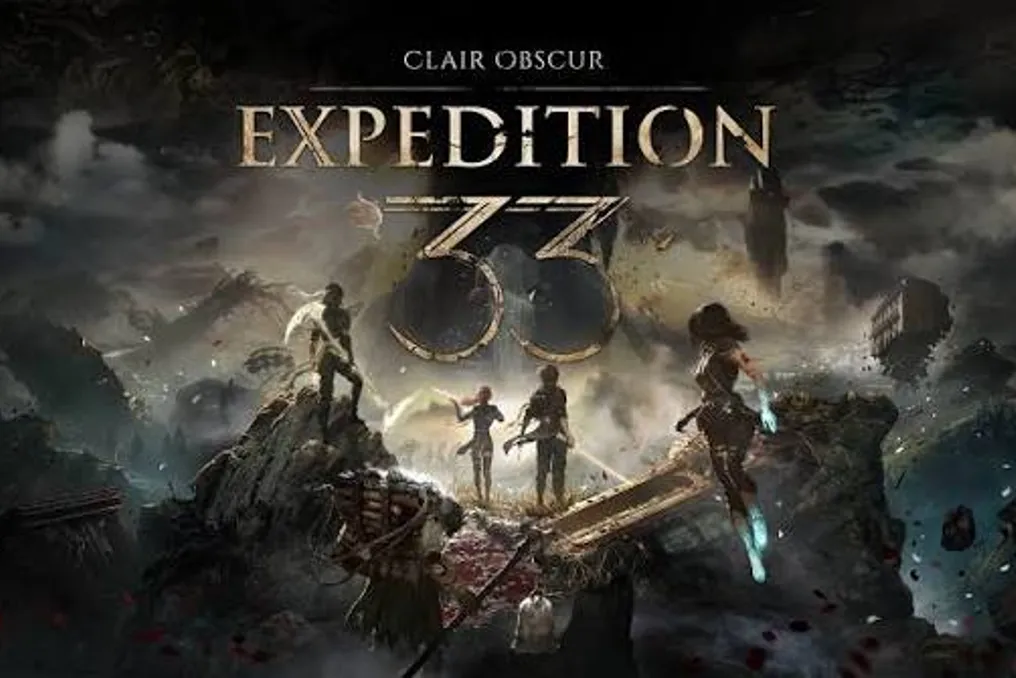
A recent example is Clair Obscur: Expedition 33, developed by Sandfall Interactive, a French company. This RPG won the main award in 2025, setting a new record at the event. The production received 13 nominations and won nine categories, surpassing the previous record of seven wins held by The Last of Us Part II in 2020. Among the awards won by Clair Obscur were Best Direction, Best Narrative, Best Art Direction, Best Soundtrack, Best RPG, and Best Indie Game. Its victory proves that a smaller-scale project can compete directly with large industry releases, provided it excels in the criteria evaluated by the jury.
The 2026 selection gathers six competitors for the Game of the Year award, and this choice reflects characteristics seen in past editions. All six nominees are single-player campaign focused experiences, aligning the 2026 edition with the dominant profile of the award's history.
The inclusion of The Legend of Zelda: Ocarina of Time deserves attention, as the franchise was already honored with the award for Breath of the Wild in 2017. While Resident Evil Requiem represents a traditional industry series, Control Resonant and Phantom Blade Zero compete with productions of great commercial appeal.
GTA 6 emerges as a unique case. The Rockstar Games title received eight nominations before its expected release on November 19th, one day before the end of the award eligibility period. The history shows that popularity is not a decisive factor in securing the trophy; games like Red Dead Redemption 2, Uncharted 4, and The Legend of Zelda: Tears of the Kingdom competed in their respective editions but were defeated.
The data points to trends, but does not define an exact formula. Although RPGs and individual experiences are more frequent among winners, The Game Awards also recognizes multiplayer games, cooperative adventures, and platformers. Another recurring point is the ability of each winner to present a distinct proposal within its genre. Breath of the Wild expanded the possibilities of open-world exploration; It Takes Two bet on cooperation as its central axis; and Astro Bot was awarded for its creative and platforming gameplay approach. Clair Obscur: Expedition 33 demonstrated that the size of the production does not prevent recognition in several categories. In 2026, GTA 6 could become the first Grand Theft Auto franchise title to win the main The Game Awards award, but, analyzing the last twelve years, the competition remains open, as the most anticipated release does not always take the trophy.