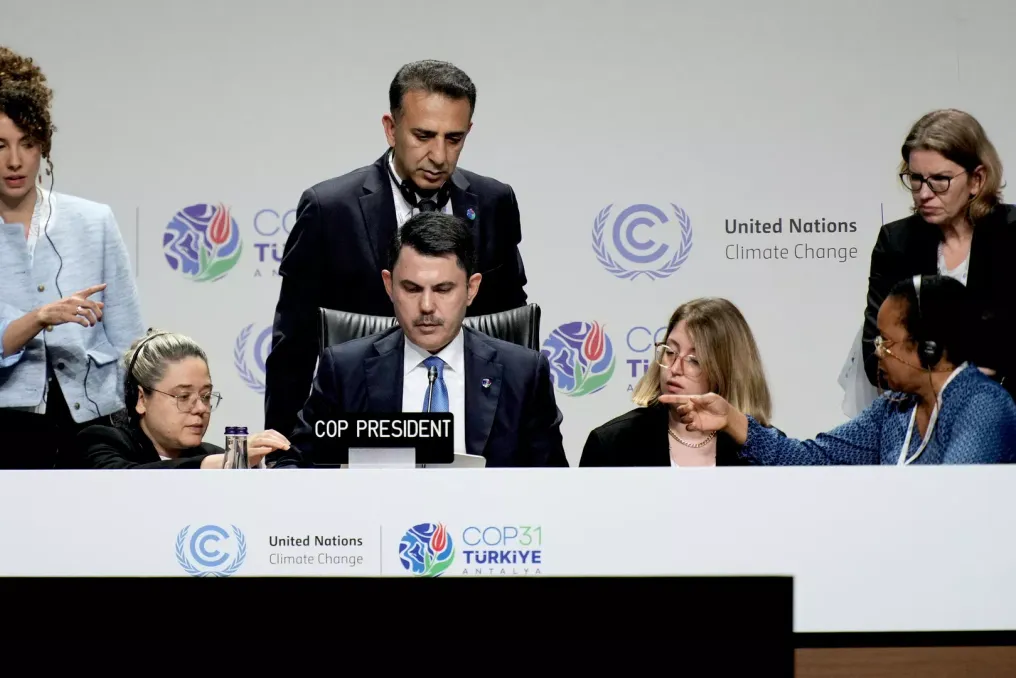
The UN's COP31 climate summit, held in Antalya, Turkey, concluded without reaching a major political agreement. According to Reuters, the main reason for this was the inability of nations to reach a consensus on phasing out oil, gas, and coal.
During negotiations that lasted over two weeks, representatives from nearly 200 countries discussed measures to combat climate change. However, they failed to agree on the gradual phase-out of fossil fuels and on providing financial assistance to developing nations.
The core conflicts arose between environmental goals and economic interests. Saudi Arabia and other major oil-producing nations opposed regulations on phasing out fossil fuels. They argued that oil, gas, and coal would maintain an important role in the global economy for the foreseeable future.
The Russian delegation also stated that rapidly reducing the reliance on oil and gas could lead to dangerous consequences. According to Russian representative Sergey Kononuchenko, such a situation would cause energy shortages, sharp price increases, and a risk of shifting to even more polluting fuel types, which would primarily harm underprivileged populations.
The European Union and some small island states most affected by climate change demanded clear rules on phasing out oil, gas, and coal in the final document. However, because the proposed final text lacked direct targets regarding fossil fuels, the EU and several other countries hesitated to adopt it.
Developing countries called for greater financial aid from wealthy nations to adapt to the consequences of climate change and transition to cleaner energy. Significant differences remained among the parties in this regard. Consequently, the main debate centered on how much funding should be allocated to implement environmental goals and at what pace oil and gas should be phased out.
The summit in Antalya concluded on November 22, nearly two days later than planned. This means that for the first time since the 2009 Copenhagen Summit, the UN's annual climate conference has failed to adopt a major political agreement.
Nevertheless, participants managed to reach certain decisions in areas such as adaptation to climate change and cooperation in the energy sector. Simon Stile, the Executive Secretary of the UN on Climate Change, expressed deep concern over the summit's outcomes, emphasizing the need to improve the international negotiation system. The next COP32 climate summit is scheduled to take place in Ethiopia in 2027.