Agon raises $70 million to simulate autonomous weapons in virtual environment
Read more
Ventureburn
ventureburn.com

Agon raises $70 million to simulate autonomous weapons in virtual environment

The creation of new autonomous weaponry is a complex process, but testing these systems presents an even more serious challenge. Experiments in real conditions require significant costs and take a long time, and they do not allow for billions of tests or the verification of rare scenarios that the battlefield might present.

London-based startup Agon aims to solve this problem. The company successfully raised $70 million in a Series A round, valuing it at $450 million. Agon's goal is to develop a virtual battlefield where autonomous systems can safely practice and make mistakes.

It is important to note that Agon does not manufacture weapons; instead, it creates something similar to an aviation simulator for military machines. Just as automakers test software for self-driving cars in simulators, arms manufacturers need such tools.

Thus, Agon has developed a software simulation of a virtual battlefield, allowing defense companies to model thousands of different situations using their drones, vessels, and other autonomous weaponry. This system will use real-world data and real-time conflict information.

Manufacturers can conduct tests considering factors such as mass drone attacks, signal jamming, and tactical changes. The simulator is capable of imitating even threats that do not yet exist, such as a drone traveling at 1000 km/h.

Currently, Agon is focusing on air defense and plans to expand its scenario library by attracting air defense system developers from Europe and allies. CEO Tristan Constant describes Agon's virtual world as a training ground for artificial intelligence in defense.

Northzone led the $70 million Series A funding round. Other participants in the round included Lakestar, XYZ, Lux Capital, Global Founders Capital, and Speedinvest. David Helgason, founder of Unity, also invested. New investor Roelof Bot, current CEO of Sequoia Capital, who led the company until 2025, joined. A more significant development was the participation of state funds in this round. Both the UK's Sovereign AI Fund and the National Security Strategic Investment Fund invested. Together, they achieved what the Cabinet described as the 'first direct investment' in a defense AI startup.

The total amount of funds raised by Agon now reaches approximately $100 million, including $30 million received in a seed round earlier this year. This is significant progress for the company, founded in 2026 and with offices in London and Berlin.

According to October data, European defense companies raised a record $7.4 billion this year. The UK government supports Agon to reduce dependence on foreign infrastructure and increase its own defense capabilities.

The Agon team also has experience in this field. Its CEO Constant served in the British Army for 20 years and also worked at Anduril and Applied Intuition, leading the European defense sector. Notably, Applied Intuition is now a competitor. Co-founder Junaid Hussain also founded Cambridge Aerospace and Iconic.

According to Agon, 80% of the raised funds will be directed towards financing engineers, researchers, and computing power. Agon aims to become a European defense AI laboratory, and Constant noted that building such a facility will be costly.

The company also emphasizes that human control will be maintained over the tested systems. AI Minister Kanishka Narayan stated that such support is necessary to ensure the reliable and responsible deployment of systems. Agon's simulation results can guide governments in making decisions about purchasing autonomous systems.

Similar stories

Company 'Melty' introduced 'Melty Gym'—a platform for training robots in video games, such as GTA 5
Read more
www.aajtak.in

Company 'Melty' introduced 'Melty Gym'—a platform for training robots in video games, such as GTA 5

The startup 'Melty' has launched a new platform called 'Melty Gym,' which aims to use video games as an environment for robot training. On this platform, robots can master tasks through repeated action and error analysis.

Despite the potential, the question remains open as to how reliably robots can perform skills learned in a virtual environment in the real world.

The company 'Melty' was founded by David Miller and is a startup part of Y Combinator Fall 2026. Initially, the company focused on modifying and linking various video games. Now, it applies this technology to the field of robotics.

Researchers can upload their robot models into existing games on 'Melty Gym.' They also have the ability to configure game conditions, goals, and robot behavior for training and testing purposes.

During a demonstration presented on November 13, anthropomorphic robots were shown in the game Grand Theft Auto V (GTA 5). After receiving a task, they attempted to open car doors, sit in seats, and drive vehicles in the virtual city. Additionally, some robots operated in a simulated data center environment, performing tasks on server racks.

Many experiments are planned to be conducted in these virtual worlds, allowing AI models to learn from mistakes without the need for real robots for every attempt.

This approach could be significant because training real robots can be expensive and time-consuming. Working with physical machines involves limitations related to equipment costs, potential damage to the machinery, and the time required to resume operation after a failure.

The virtual environment allows researchers to conduct more experiments, test various scenarios, and expand the scope of learning without constant physical testing. Video games provide a complex environment, including streets, buildings, objects, and moving characters, allowing developers to reuse created worlds for different training sessions.

Nevertheless, there is a significant limitation to this method. Completing a task in a video game does not guarantee that a robot will be able to perform the same task in the real world. Real-world factors, such as friction, balance, sensors, and unpredictable surroundings, present challenges that the virtual environment cannot fully replicate.

'Melty Gym' is currently only available for initial research trials. The company has not yet published results confirming the degree of reliability of skills acquired in the virtual environment when transferred to real robots. Currently, 'Melty Gym' offers a new method for robot training, and the key question remains the practical applicability of skills learned in video games in the real world.

Tiberius Aerospace raises $85 million to scale AI-based ammunition
Read more
ventureburn.com

Tiberius Aerospace raises $85 million to scale AI-based ammunition

The revolution in precision ammunition has led to a new trend in modern warfare focused on the precise targeting of objectives. However, there is a problem: modern military operations consume these high-precision munitions faster than traditional defense factories can produce them.

To solve this issue, the AI-munitions startup Tiberius Aerospace raised $85 million, valuing itself above one billion dollars. Just 14 months after closing a seed round of $4.5 million, Tiberius became the newest unicorn in defense technology.

In collaboration with Rochefort Asset Management, an American firm, Zurich-based investment company Lakestar led Tiberius Aerospace's Series A round of $85 million. Rochefort also provided a credit agreement, the details of which remain confidential.

New investors included Blacklake, Moonshots Capital, and UA1, while Dream Ventures and AeroX Ventures continued their partnership. Nikhil Vyas from Lakestar noted that the combination of Tiberius's military might and its scaling business model represents a very novel concept.

Tiberius's story began after Russia's invasion of Ukraine in 2022. Co-founder Andy Baynes was in the country studying its technological environment. Chad Steelberg was in France helping refugees. It was a single phone call between them that led to the creation of the company.

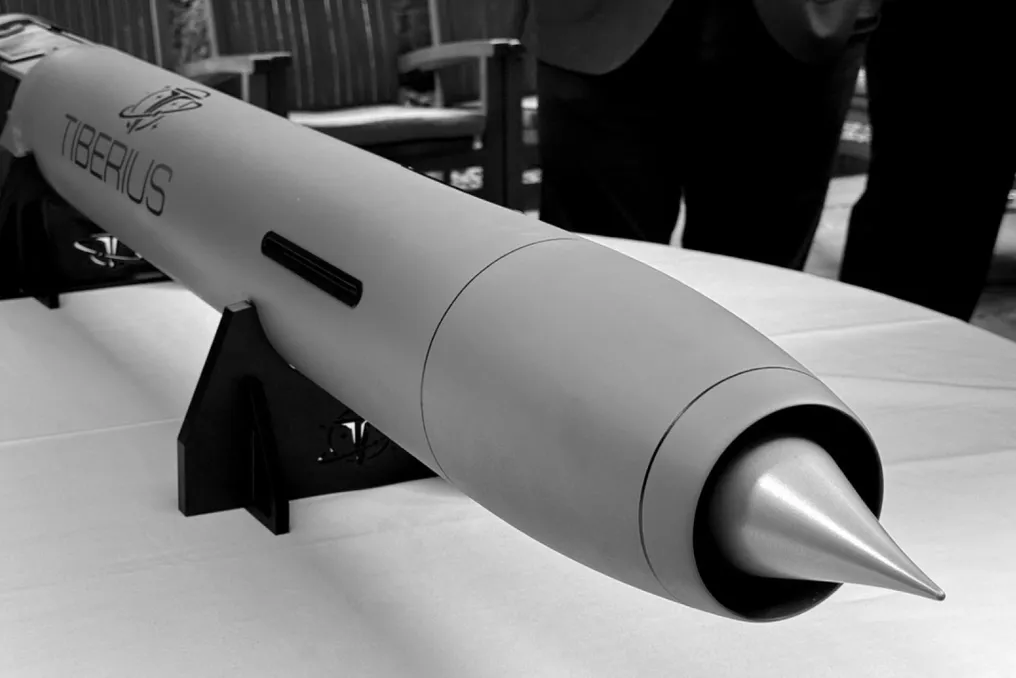
Currently, Tiberius is developing weaponry using artificial intelligence. Their flagship product is the Sceptre artillery shell, which is launched by a rocket motor and has a 155mm caliber compatible with standard NATO guns. It is claimed to be capable of hitting targets over 140 kilometers away, significantly exceeding the capabilities of conventional shells.

The company also offers a missile called 'Invictus' and the AI platform 'GRAIL'. Tiberius claims it managed to go from concept to contract in just 24 months, which is a very fast timeline in defense technology, where armament programs can take more than four years.

The funds raised will be directed towards a network of manufacturing partners, certification, and the development of GRAIL. Attention should be paid to the first licensed production lines, which will determine the effectiveness of this model.

This round is significant because it indicates the direction of venture capital: investors are supporting weapons manufacturers who sell designs, not the factories themselves. If this model proves successful, other startups will try to replicate it.

What differentiates Tiberius from other defense companies is that it does not mass-produce its weapons. Instead, it develops and tests them, and then licenses the technology to allied countries. These countries build their own factories and pay for the equipment, while they provide Tiberius with the recipe, which is then passed on to allies for production. The company calls this 'defense-as-a-service.'

Furthermore, the company provides insight into the market valuation of a defense startup: $85 million. This is an experienced track record held by the founders. Steelberg founded Veritone and sold dMarc Broadcasting to Google.

Baynes previously worked as a hardware engineer at Apple, and before that, he worked at Nest. The model has already shown activity: in October, a $500 million deal was announced for the production, licensing, and distribution of Sceptre in the UK.

Tiberius has also signed a contract with the UK Ministry of Defence for the development and testing of Sceptre, and has signed a research agreement with the US Army and collaborates with the Defense Innovation Unit for testing.

UFORCE raises $700 million at a $6 billion valuation to expand autonomous defense systems
Read more
ventureburn.com

UFORCE raises $700 million at a $6 billion valuation to expand autonomous defense systems

UFORCE, a Ukrainian-founded defense technology startup, has successfully raised Series A funding of $700 million USD. This round values the company at $6 billion.

The joint leaders of this round were Valor Equity Partners and UK National Wealth Fund. Additionally, Menlo Ventures, Xantium, and Hiro Capital participated as investors. Existing investors, including Shield Capital, Ballistic Ventures, Lakestar, and Squadra, also increased their investments.

The raised funds will be used to scale up UFORCE's production across the markets of the USA, Europe, the Asia-Pacific region, and the Middle East. The company, UROBOROS, also aims to facilitate production near key allied defense markets and increase manufacturing in partner countries.

Despite its origins in Ukraine, UFORCE is a London-based company with main operational centers in Kyiv and Washington, D.C. The company provides autonomous aerial, maritime, and ground platforms, as well as artificial intelligence software and control and management systems.

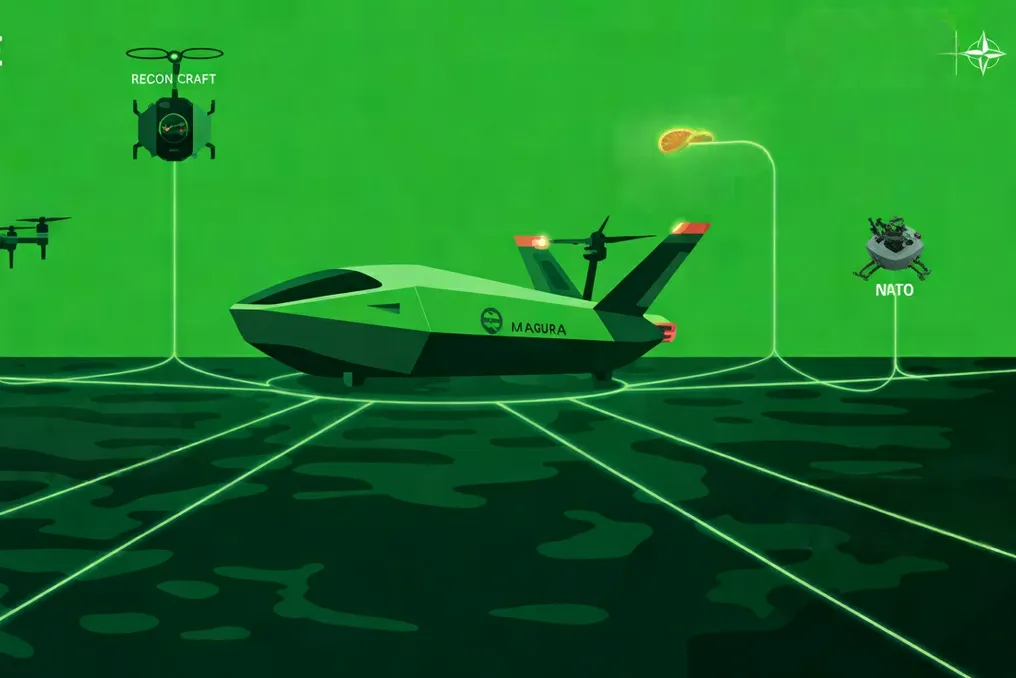
UFORCE produces various autonomous defense systems, such as the MAGURA ground vessels and NEMESIS aerial vehicles. Furthermore, the company releases LIUT ground robotic complexes and PREDATOR drone countermeasures systems. The company's control and management software integrates these platforms, ensuring synchronized operation across different domains.

The company claims that its goal is to significantly reduce the cost of defense compared to the cost of attack. The MAGURA maritime systems are also reportedly involved in sinking more than a dozen Russian warships, as well as shooting down helicopters and fighters. To date, these platforms are deployed in over 100 Ukrainian military units.

The NEMESIS combat platforms have accumulated over 300,000 combat flights. Production facilities will also operate in nearby regions. This approach can help guarantee supplies even if Ukrainian infrastructure is attacked, as the production site should be closer to the launch points.

UFORCE has stated its intention to collaborate with partners to modernize existing industrial facilities for defense production. For example, the company already has a partnership with Recon Craft, which allows for the production of MAGURA maritime systems in the USA.

The company will also deepen its involvement in the EU-Ukraine Drone Alliance, which will include broader interaction with NATO and the NATO force network, as well as with the Joint Expeditionary Force to promote wider industrial and operational cooperation. The attracted funds provide the company with the necessary momentum to realize these plans.

The Ukraine Reconstruction Fund and the US have already invested and will continue to invest in UFORCE's Ukrainian operations. UFORCE's investments will be used for hiring personnel, research and development, and new products. Thus, US investments are linked to the growth of the company and the Ukrainian defense technology sector.

UFORCE CEO Oleg Roginsky stated that this investment not only allows for scaling up production in Ukraine but also supports other alliance countries in achieving the same result. Currently, the firm is working on expanding production capacities and developing its range of technologies.

Popular