
How salary growth affects Gen Z monthly expenses: the impact of lifestyle
Read more
Aaj Tak
www.aajtak.in

How salary growth affects Gen Z monthly expenses: the impact of lifestyle

A salary increase always pleases young people because higher income opens up opportunities to improve the quality of life, buy desired clothes, acquire good phones, frequent restaurant visits, and travel. However, sometimes expenses rise so quickly that savings remain unchanged by the end of the month. This phenomenon is called lifestyle inflation or 'lifestyle creep'.

Consider an example: a young person from Generation Z whose starting salary was 25 thousand rupees used the subway or buses for commuting, brought food from home, and made thoughtful online purchases. After a salary increase to 40 thousand rupees, his habits changed: he started regularly using taxis, visiting restaurants on weekends, and buying expensive clothing from famous brands. These expenses gradually became his new norm.

Social media can also contribute to increased spending. Seeing friends' and influencers' vacations, expensive cafes, new gadgets, and shopping on Instagram, many young people may want to lead a similar lifestyle. The problem arises when they try to imitate someone else's lifestyle without assessing their own income and needs. Such expenditures using credit cards and installments can create future financial pressure.

According to a Moneycontrol report from March 13, 2026, after an increase in income, expenses are also prone to rising, and additional earnings may be spent on a new lifestyle instead of going into savings. To prevent this, one should not spend the entire extra amount when the salary increases; part of it must be set aside for savings and investments.

It is necessary to create a budget based on the new salary but not to consider every convenience a necessity. Buying an expensive phone or taking a taxi is not a mistake, provided it aligns with the person's financial capabilities. Ultimately, the true benefit of a salary increase is realized only when your savings also increase.

Similar stories

Gen Z plans expenses before receiving salary
Read more
www.aajtak.in

Gen Z plans expenses before receiving salary

The modern Generation Z faces an additional concern regarding the monthly budget even before the money hits their account. Many young people start thinking in advance about how much will be spent on rent, utility bills, and what amounts will remain after covering all expenses. Financial planning for the entire month begins even before it starts.

The reasons for this early financial planning are linked to rising costs. Inflation affects the lives of young people because a significant portion of income goes towards covering basic needs such as rent, transportation, utilities, and daily necessities. Therefore, young people try to allocate funds for necessary spending in advance to avoid running out of money mid-month.

The Burden of Loans and Installments

Many members of Gen Z purchase phones, laptops, and other necessary items on credit. Furthermore, they have to pay off credit card bills and other monthly payments. As soon as the salary arrives, repaying these amounts becomes a priority for them, which prompts many to determine in advance what part of the budget will be allocated to loan repayment.

Saving is also an important aspect. Gen Z is not limited to current spending; they also strive to put money aside for the future. Some save up for travel, others for buying their own home or achieving larger goals. They also consider it necessary to have reserve funds in case of unforeseen needs.

Online spending is under close scrutiny. Ordering groceries, online purchases, attending events with friends, and entertainment have become part of the youth's daily life. Often, small expenditures accumulate into significant sums by the end of the month. Because of this, Gen Z strives to decide in advance where exactly to spend money and where to save it.

Essentially, budgeting before receiving a salary is not just about financial care, but also an attempt to manage one's life more effectively. Young people want to ensure timely coverage of all mandatory expenses, achieve a certain level of savings, and avoid having to borrow money from others at the end of the month. For them, knowing how to manage earned money wisely has become as important as the income itself.

Five Expensive Habits Gen Z Should Quit to Keep Their Budget
Read more
www.aajtak.in

Five Expensive Habits Gen Z Should Quit to Keep Their Budget

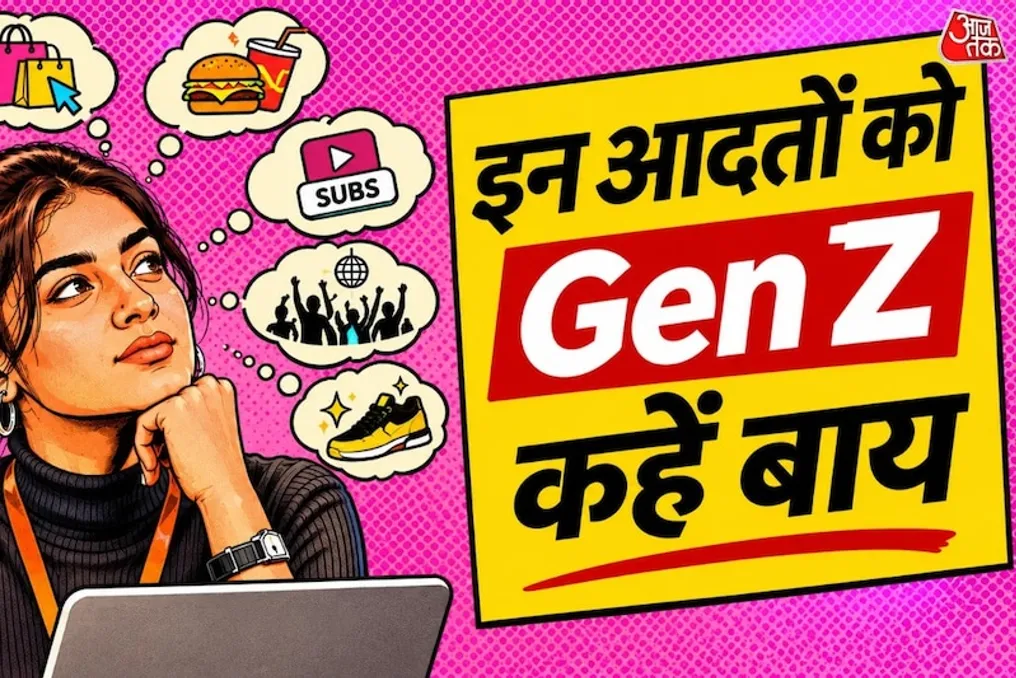
Generation Z tends to believe in the possibility of earning money at a young age and living on their own dime. However, some small habits can derail the budget by the end of the month. Among these habits are online shopping and eating out; it is important to pay attention to them to understand five costly habits that Generation Z can give up to save money.

The first of these habits is making unnecessary online purchases. When seeing sales, discounts, and new collections, people often buy things they do not need. Constant purchasing of clothing, shoes, and accessories can prove very burdensome for the wallet.

The second problem is ordering food from outside every day. Thanks to online food delivery services, it has become easy to order food. Nevertheless, daily orders of coffee, snacks, and full meals lead to significant expenses over the course of a month. This expense can be reduced by eating at home.

The third habit is keeping subscriptions that are not used. Many people sign up for various subscriptions to watch movies, listen to music, and receive other services, but often they do not use them. In such cases, it is better to cancel these subscriptions.

The fourth habit is going to parties every weekend. Going out with friends, dining in expensive restaurants, and regular parties may seem pleasant, but this behavior can disrupt the monthly budget. To prevent this, it is necessary to set specific limits in advance.

The fifth habit is buying expensive things for show. Sometimes, observing the lifestyles of others on social media, people start buying expensive phones, branded clothing, and accessories. However, spending one's earned money solely to show off to others is not a wise decision.

In conclusion, it should be noted that managing money correctly is just as important as earning it. If Generation Z pays attention to these small habits, it will be able to save a lot without sacrificing its lifestyle.

What is soft saving: Generation Z is changing the approach to savings
Read more
www.aajtak.in

What is soft saving: Generation Z is changing the approach to savings

Saving money has always been considered a virtuous habit. Previously, people would set aside a significant portion of their income for future needs, such as buying housing, educating children, and retirement. However, among Generation Z, a new method of financial management called soft saving is gaining popularity.

With soft saving, young people aim not only to save money for the future but also to fully enjoy life in the present. Instead of saving all their earnings, they prefer to spend some money on entertainment, purchasing desired items, and personal expenses.

Soft saving implies the absence of rigid rules regarding accumulation. People set aside a certain amount for the future, but cover their current needs and desires with the remaining funds. For example, instead of saving a large sum monthly, a young person might save a small amount, using the remaining funds to attend concerts with friends or buy favorite goods.

Traditional saving focuses primarily on financial future. People concentrate on regularly setting aside a fixed amount, investing, and achieving long-term goals. In contrast, soft saving gives equal importance to living in the here and now and does not deem it necessary to forgo every small pleasure for the sake of savings. Nevertheless, this does not mean that young people stop saving altogether.

Generation Z faces serious economic challenges, such as inflation, rising rent, labor market instability, and difficulties in acquiring housing. Many young people feel that even with active saving, very big goals can be hard to achieve. Therefore, they want to spend part of their income on today's pleasures and experiences, as they believe it is wrong to constantly postpone life.

Social media has also contributed to the formation of this concept. By viewing content about travel, fashion, concerts, and lifestyle on Instagram, young people strive to gain new experiences. They believe it is important to spend money on things according to their taste, rather than just increasing their bank balance. For them, a happy life includes not only financial security but also creating pleasant memories.

Soft saving does not mean that Generation Z completely ignores the future. It is more of a desire to find a balance between savings and spending. They want to keep some income aside for emergencies and future needs, but at the same time, they do not want to put off every joy until later. Furthermore, excessive spending without any plan is not soft saving.

Soft saving demonstrates that for Generation Z, financial success is not solely about accumulating large sums. They want to have both savings for the future and funds to live life as they choose today. While traditional saving focuses on protecting the economic future, soft saving tries to find a balance between the present and the coming times. Thus, for Generation Z, it has become important not just to save money, but to use it correctly.

The trend of soft saving shows that Generation Z is changing its attitude towards money. For them, simply accumulating funds for the future is not enough; living in the present according to one's preferences is also very important. They do not want their small joys to be left behind due to concerns about savings. However, alongside this attitude, it is important to understand financial responsibility. Ignoring future needs for present spending is not the right decision. True wisdom lies in combining savings and enjoying life.

Popular