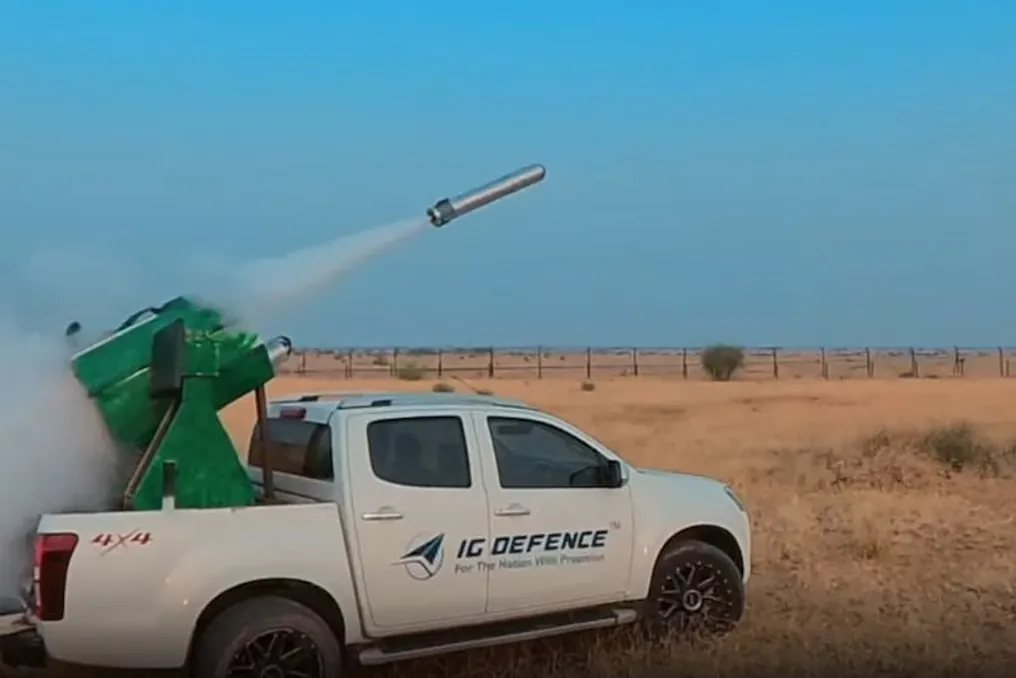
JWALA MK-1 micro-rocket successfully tested in Pokhara, capable of shooting down drones in the air
Read more
Aaj Tak
www.aajtak.in

JWALA MK-1 micro-rocket successfully tested in Pokhara, capable of shooting down drones in the air

The Indian company IG Defense has developed new indigenous weaponry to counter attacks from enemy drones. The successful test of the JWALA MK-1 micro-rocket system was conducted in Pokhara, Rajasthan. According to the company, this is the first autonomous anti-drone system created in India.

The system allows it to target enemy drones flying up to five kilometers away. The use of drones in military operations is rapidly increasing, and even inexpensive devices can cause serious damage. To counteract this, expensive missiles and air defense systems often have to be used, which increases defense expenditures.

Consequently, it has become critically important for India to develop low-cost, domestically designed anti-drone systems.

A feature of the JWALA MK-1 is the application of artificial intelligence (AI) technology. This system is capable of recognizing drones in the sky and then determining which specific drone poses a threat and should be targeted. The main task of the system is to destroy the enemy drone directly in flight.

The system also integrates GRID software, based on AI and developed by IG Defense. It collects information from various sensors, managing the entire process: from drone detection and assessing its danger to striking it.

Bodhisattva Sangpri, founder and CEO of IG Defense, noted that GRID acts as the 'brain' of this missile system, coordinating all actions from detection to drone neutralization. The company aims to create weaponry whose technology and software are entirely developed in India.

Wing Commander Anup Sharma, Vice President of the company, emphasized the need to reduce dependence on expensive weaponry for protection against cheap drones. He believes that JWALA MK-1 is a significant step in this direction, strengthening India's efforts to develop its own defense technology.
Similar stories

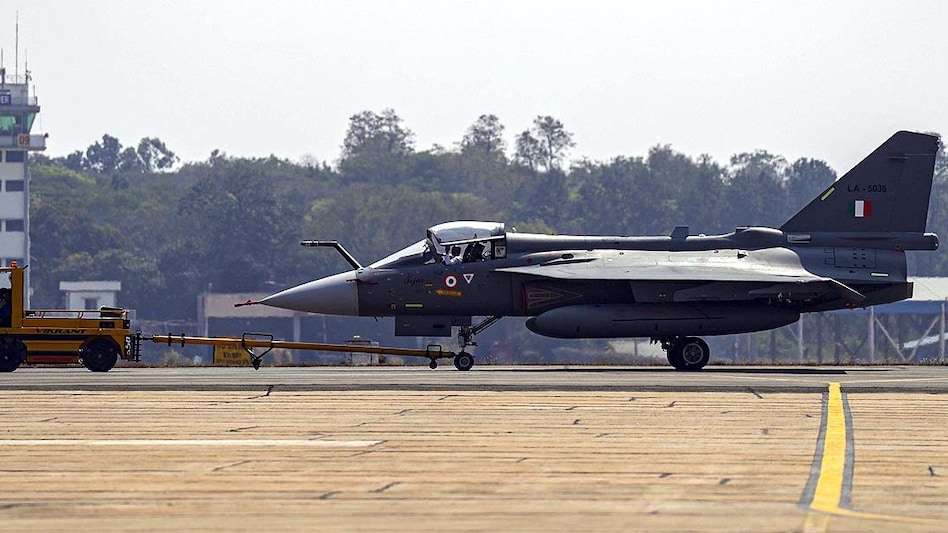
Tejas MK1A fighter jet delivery expected for Indian Air Force in January 2027
Read more
www.aajtak.in

Tejas MK1A fighter jet delivery expected for Indian Air Force in January 2027

The Indian Air Force is soon to receive the first domestically produced Tejas MK1A fighter jet. Hindustan Aeronautics Limited (HAL) and the Indian Air Force have strengthened their cooperation to ensure this crucial delivery by January 2027. As of September 2025, 14 engines have already been received, and work on the radar and software is also actively underway. This progress is significant given the current deficiencies of the Air Force.

Currently, the Air Force faces a shortage of 13 squadrons. Former Chief of the Air Force AP Singh has consistently insisted that to maintain the combat readiness of the Air Force, between 36 and 40 new fighters must be delivered annually. This need has increased following the retirement of old MiG-21 aircraft, and the Tejas MK1A represents a serious attempt to fill this deficit.

HAL and the Air Force have jointly accelerated the pace of work. Engine availability was a major issue, but 14 engines have now been procured. Progress is also being observed in radar systems and software updates. These two elements are critically important for a modern fighter jet. An improved radar helps in faster identification of enemy aircraft, while advanced software enhances the aircraft's performance. Thanks to all these improvements, the Tejas MK1A will become more capable compared to previous versions.

This project is part of the 'Atmanirbhar Bharat' (Self-Reliant India) initiative. Enhancing the country's ability to manufacture fighters domestically is strategically vital. Reducing dependence on foreign aircraft not only saves money but also increases supply security. Many experts consider this a worthy achievement, noting that timely delivery will strengthen the Air Force's readiness.

Nevertheless, some remain cautious. The Tejas project has faced delays multiple times in the past. Timelines have shifted due to issues with engines, radars, and production. Therefore, the public awaits official confirmation. One cannot fully rely on the situation until a clear statement is issued by HAL and the Air Force. Nevertheless, the current progress instills hope for achieving the goal in January 2027.

The Air Force is in urgent need of modern aircraft. Considering the military power of neighboring countries, India needs to increase both quantity and capability. The Tejas MK1A will not only increase numbers but also advance domestic technology. If the dream of delivering 36–40 aircraft annually is realized, the squadron deficit could be significantly addressed in the coming years. This delivery is not just about handing over one aircraft; it is a demonstration of the capabilities of the Indian defense industry. Success could lead to additional orders, which would allow for an acceleration of the production line. This could be a crucial step for both national security and self-reliance.

Popular