Indian Institute of Technology (IIT) to open branch in Nepal; startup incubators under discussion
Read more
Aaj Tak
www.aajtak.in

Indian Institute of Technology (IIT) to open branch in Nepal; startup incubators under discussion

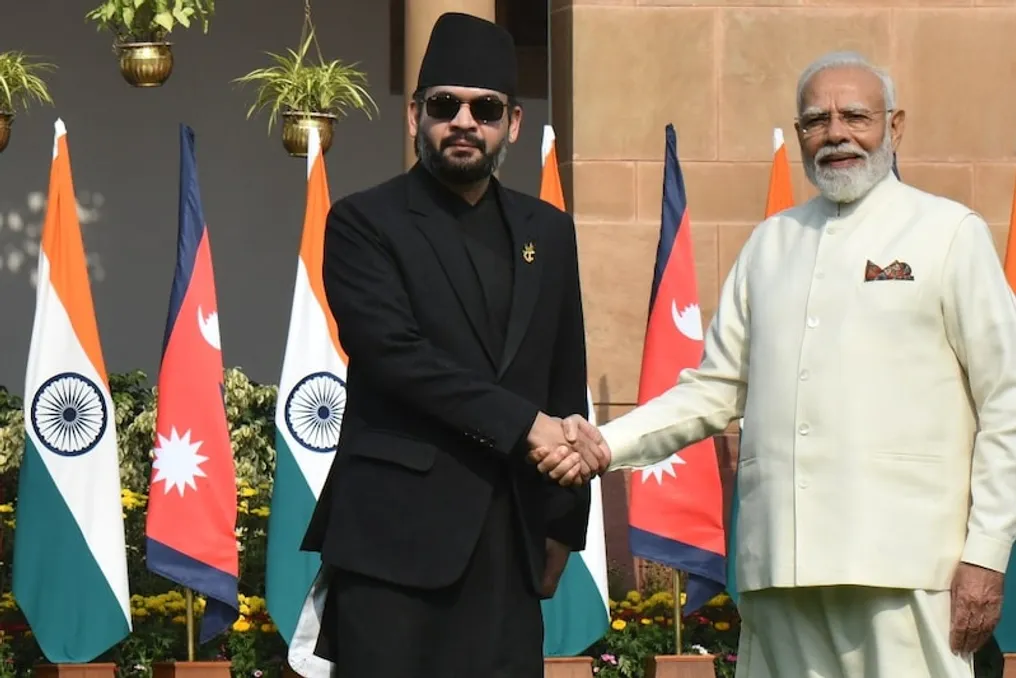
India is preparing to establish a foreign campus of the Indian Institute of Technology (IIT) in Nepal. This was announced by Prime Minister Narendra Modi following talks with Nepalese Prime Minister Balendra Shah on Monday. An incubator for startups and an innovation center will also be created as part of this initiative.

The goal of this project is to provide Nepali youth with the best opportunities in high-tech education, research, and entrepreneurship. Prime Minister Narendra Modi made this statement in a joint press release after delegation-level meetings at the Hyderabad House in New Delhi.

Speaking on the matter, Prime Minister Modi announced plans to establish a startup incubator, an innovation center, and a foreign campus of the Indian Institute of Technology in Nepal. He also noted that scholarship opportunities in India for Nepali students in the fields of law and technology will be expanded.

Furthermore, Prime Minister Modi mentioned plans to stimulate food processing and increase added value in Nepal. He added that India will assist in creating an agro-industrial park in the country to support these areas.

In addition to the IIT campus, India will offer more chances for Nepali students to receive scholarships. Prime Minister Modi emphasized that special attention will be paid to increasing opportunities for Nepali students to study in India in the fields of law and technology, which is expected to strengthen academic cooperation between the two countries.

The proposed startup incubator and innovation center in Nepal will help young entrepreneurs turn their ideas into commercial projects. Through these centers, they can receive mentorship, networking opportunities, and participate in innovative projects.

It should be noted that India and Nepal are already working to support new enterprises through the India-Nepal Startup Partnership Network (IN-SPAN). This network was launched in 2025 jointly with IIT Madras and its incubation center Pravartak. The first cohort of this project included 24 Nepali startups out of approximately 250 applications received. Participants went through an eight-week program that included training, mentorship, and internships. Some startups received offers for incubation and investment from Indian institutions.

Currently, many details regarding the future IIT campus in Nepal remain uncertain. It has not been announced which specific IIT will establish this campus in Nepal. Furthermore, information about the campus location, the courses that will be taught there, and the construction timeline has not been disclosed.

This initiative is viewed as an important step towards strengthening cooperation between India and Nepal in the fields of education, technology, research, and entrepreneurship.

Similar stories

International Cricket Stadium in Varanasi Ready for Matches; Possible Opening by PM Modi After Jay Shah's Visit
Read more
www.aajtak.in

International Cricket Stadium in Varanasi Ready for Matches; Possible Opening by PM Modi After Jay Shah's Visit

The wait for cricket lovers from Varanasi and the entire Purvanchal region may soon end. The international cricket stadium being built in Ganjari is in the final stages of preparation for opening. Discussions about its inauguration intensified after the visit of ICC Chairman Jay Shah on Wednesday (November 18th). There is a possibility that Prime Minister Narendra Modi could open this stadium in December, although an official date has not yet been announced.

Jay Shah arrived at the Ganjari Stadium on Wednesday around 18:10. He conducted a two-hour inspection there, examining the field, stands, spectator galleries, stadiums, and office premises. He also requested information from officials regarding the construction progress and available amenities. During the inspection, he asked questions on several matters and provided necessary directives.

The event was attended by the Mayor of Varanasi, Ashok Kumar Tiwari, District Administrator Satendra Kumar, and several other high-ranking officials.

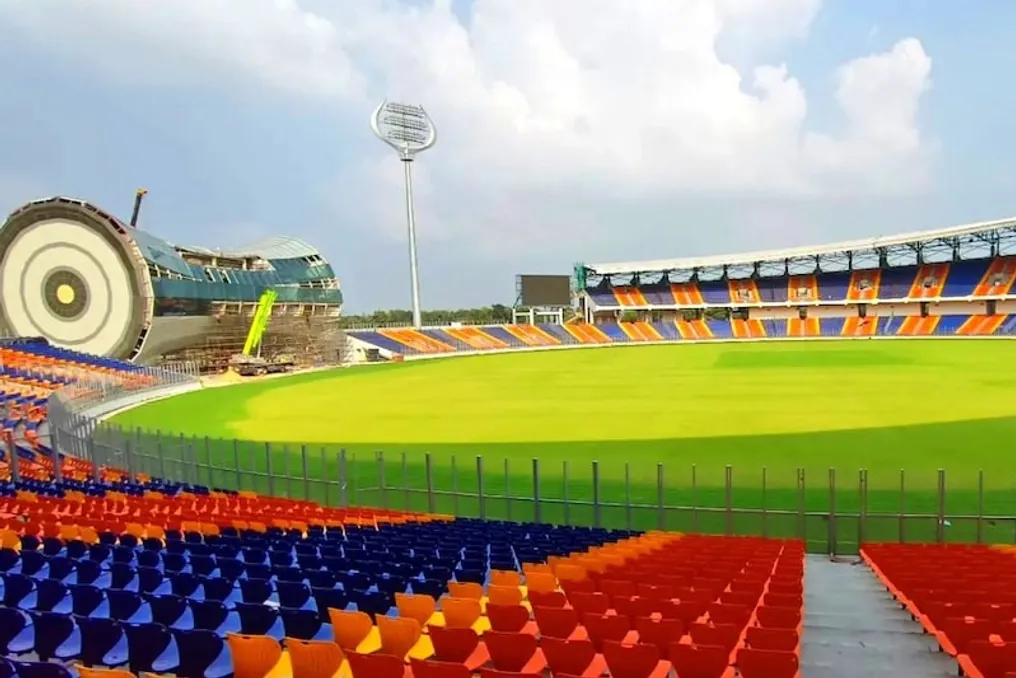
The Ganjari Stadium, whose construction cost approximately 450 crore rupees, features unique architecture reflecting the divine figure of Shiva and the religious-cultural heritage of Kashi. Six stadium lighting towers are designed in the shape of a trishula, and the media center resembles a damaru. The design of the main entrance is inspired by Belatra leaves, and the stadium roof features a semi-circular structure.

The design of the spectator stairs also drew inspiration from the historical ghats of Kashi. Thus, it will combine the excitement of cricket with the cultural identity of Kashi.

The capacity of the Ganjari International Cricket Stadium is about 30,000 spectators. The main field provides for nine cricket pitches, while a separate training ground has five pitches. Special attention was paid to athlete facilities: the stadium includes two gyms and separate jacuzzis (hydrotherapy baths) for both teams.

The stadium is equipped with six entrances designated for spectators and VIPs, as well as a separate entrance for players. The main public entrance will be located on the side of the ring road.

Significant attention has been given to corporate amenities. There are 17 corporate boxes on the first floor and 15 on the second, totaling 32 such boxes. Currently, the stadium has parking for about 1500 vehicles, with the potential to increase this number to 2500 in the future. The stadium's lighting towers are 65 meters high, each fitted with 95 lamps of 1.5 kilowatts each. The boundary line of the field is also set at the 65-meter mark.

The opening of the Ganjari International Cricket Stadium will bring great benefits to cricket lovers not only in Varanasi but across the entire Purvanchal region. Hosting international matches will provide local players with an opportunity to showcase their talent. Furthermore, the development of sports tourism can positively impact the hotel business, transportation, and local commerce. Following Jay Shah's inspection, discussions about the stadium's opening have intensified, and it is expected that Prime Minister Narendra Modi will inaugurate it in December, although no official announcement has been made yet.

How Tej Chingtam created the first incubator in Northeast India to support startups
Read more
yourstory.com

How Tej Chingtam created the first incubator in Northeast India to support startups

When young people from Northeast India approached Professor (Dr.) Tej Chingtam with questions about starting their own businesses, he could not always provide them with ready answers. Many of them returned from other parts of the country hoping to create something of their own, but the region lacked the necessary support system.

In a conversation with Shraddha Sharma, founder and CEO of YourStory and The Bharat Project, Tej Chingtam recounted how these interactions prompted him in 2016 to take a closer look at the region's startup ecosystem. At that time, he was a professor of computer science and had no plans to create an incubation center.

However, the attempt to understand the difficulties faced by local entrepreneurs ultimately led him to establish such a center. Today, he is the CEO of Atal Incubation Centre - Sikkim Manipal University Technology Business Incubation Foundation (AIC-SMUTBI), which collaborates with over 200 startups. The broader Northeast ecosystem has grown to more than 2000 startups.

In 2016, while traveling through the Northeastern states, Chingtam discovered entrepreneurs and several isolated initiatives to support them. There was no system capable of uniting these efforts and providing founders with consistent guidance. Mentors from cities like Bengaluru and Delhi would visit the region, spending several weeks or a month with entrepreneurs, before leaving. Chingtam felt that such short visits could not provide the sustainable support needed by startups.

He began developing a model that would motivate mentors to spend more time in the region. His idea combined mentorship with tourism, giving experts the opportunity to explore the Northeast while helping local entrepreneurs develop their businesses.

In 2018, he had the opportunity to found what he calls the first Northeast incubator. This task was new to him. Chingtam had never visited or worked in an incubator, so he had to independently master the process of establishing the institution and implementing its support systems. Work began on September 27, 2018. A few months later, on December 12, Chingtam was diagnosed with Stage III lung cancer. He continued treatment while working on building the center. AIC-SMUTBI began operating in June 2019.

Tej Chingtam's ambitions were not limited to creating an incubation center only in Sikkim. He wished for entrepreneurs across the entire Northeast to have access to mentorship and support that was often easier to find in established startup hubs. The incubator gradually expanded its collaboration to all eight Northeastern states. Chingtam thanks those who supported this initiative, especially those who helped bring together entrepreneurs and local stakeholders in their respective states.

Speaking with Shraddha, he emphasized that this effort went beyond the work of a single organization. According to him, there are now over 2000 startups in the region, with more than 200 working with AIC-SMUTBI, meaning the incubator is connected to approximately one in every ten startups in the Northeast. He sees significant potential in the region's natural resources, biodiversity, and local industry. Even its geographical location, as all eight Northeastern states share international borders, can provide opportunities for entrepreneurs who understand the local context.

His broader goal is to encourage youth to realize that they can build things at home. Instead of viewing the Northeast only as a place to leave in search of work, he wants them to see it as a place where business can grow.

Access to funding remains one of the challenges for startups in the region. Tej Chingtam notes that relatively few investors visit the Northeast, which often forces entrepreneurs to focus on building a customer base and generating revenue to sustain their business. He estimates the five-year survival rate of startups supported by the incubator to be around 80%. In his view, this is a result of their focus on customers and sustainable operations, rather than chasing high valuations.

He believes the ecosystem needs more early-stage mentorship, especially experts who can help founders validate their ideas before incorporating or engaging with funding and regulatory requirements. Policies that simplify investment could also stimulate capital inflow into the region. Chingtam suggested tax holidays for a certain period to attract investors.

In conversation with Shraddha, he summarized what the Northeast needs from the investment community with a phrase he frequently repeated: 'We need not so much venture capitalists as adventurers.' He calls on investors to travel through the region, understand its potential, and engage with businesses that may not be based in the country's conventional startup centers.

Tej Chingtam believes the Northeast needs more startups relative to its population. Reaching this point will require sustained mentorship, supportive policies, and investors willing to explore opportunities outside established markets. He also quickly points out that the incubator's journey was never the work of one person. Its progress depended on the people, institutions, and partners who helped strengthen the startup ecosystem across the region. His aspiration goes beyond increasing the number of enterprises associated with AIC-SMUTBI; he wants more young people to view entrepreneurship as a viable career and utilize resources in their states to build businesses. The incubator started with an attempt to answer the question constantly asked by young entrepreneurs to Chingtam: how to build something in the Northeast? Today, it works to ensure the next generation has a stronger support system and more reasons to find the answer at home.
Popular