Chevrolet launches pre-sale of plug-in hybrid Captiva with starting price of R$ 199,990
Read more
AutoPapo
autopapo.com.br

Chevrolet launches pre-sale of plug-in hybrid Captiva with starting price of R$ 199,990

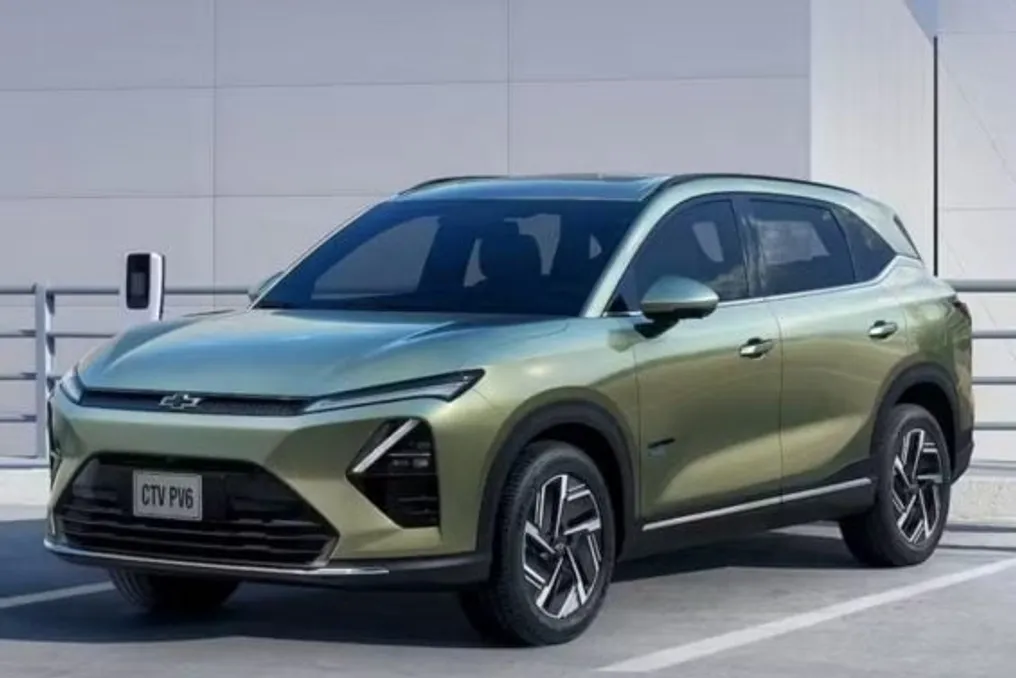
Chevrolet has started the pre-sale of the Captiva PHEV, the plug-in hybrid version of the SUV that was previously sold in Brazil only as a fully electric vehicle. The official launch of this model is scheduled for December.

Although the official price list has not yet been released by the manufacturer, dealerships are already announcing the vehicle at the price of R$ 199,990. This price represents a reduction of R$ 20 thousand compared to the Captiva EV, which costs R$ 219,990.

This is the first plug-in hybrid from Chevrolet to be manufactured domestically. The SUV will be produced at the Ceará Automotive Plant (Pace), located in Horizonte (CE), utilizing the former Troller facility. Production will begin using semi-knocked-down kits from China, where the model is known as the Wuling Starlight S, resulting from a collaboration between GM, SAIC, and Wuling.

In terms of performance, the mechanical unit combines a 1.5-liter gasoline engine with an electric motor, generating a combined power of 204 horsepower and a torque of 31.6 kgfm, according to Chevrolet. The drivetrain is front-wheel drive, and the maximum speed achievable is 170 km/h.

The 20.5 kWh battery allows for up to 90 km of travel using electricity alone under the European NEDC cycle, which is considered more optimistic. However, following the Inmetro standard, the dealership specifies a range of 60 km. When the fuel tank is full and the battery is charged, the vehicle's total range exceeds 1,000 km, according to the manufacturer itself.

An important point to note is that the Captiva PHEV operates exclusively on gasoline. In contrast, its main competitor, the BYD Song Pro, already has a flex plug-in hybrid version that also runs on ethanol.

The SUV dimensions are 4.74 meters in length, with a wheelbase of 2.80 meters, and a trunk capacity of 532 liters. Inside, the cabin features a 15.6-inch multimedia center and an 8.8-inch digital instrument panel. Included features cover a panoramic sunroof, electrically adjustable driver's seat, 360-degree view cameras, adaptive cruise control, autonomous emergency braking, and 18-inch wheels.

The warranty offered is three years or 100 thousand kilometers for the vehicle, and eight years or 160 thousand kilometers for the battery. The hybrid Captiva will also compete in the segment against models such as BYD Song Plus, GWM Haval H6, Geely EX5 EM-i, and Jaecoo 7.
Similar stories

Volkswagen T-Roc R launched with 333 hp and electric compressor similar to the Golf R
Read more
autopapo.com.br

Volkswagen T-Roc R launched with 333 hp and electric compressor similar to the Golf R

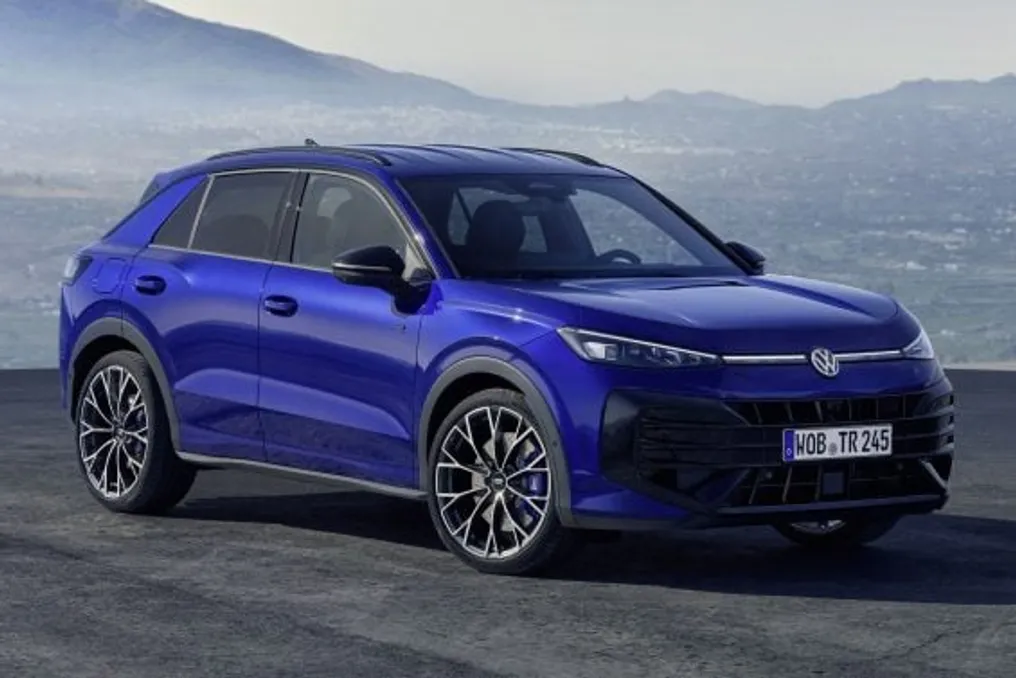
The Volkswagen T-Roc R has been relaunched, bringing a feature absent in the Golf R. This new sporty version of the second-generation compact SUV was revealed this Wednesday (18th) and represents the first vehicle from the R division to feature an electrified engine.

Pre-sales for this model began in Germany this Thursday (19th), with an initial price of 59,995 euros, which is equivalent to approximately R$ 381 thousand.

The propulsion is provided by the 2.0 turbo EA888 evo5 engine, which incorporates a 48-volt mild hybrid system. This system powers an electric compressor responsible for injecting air into the engine before the turbine reaches its operating speed.

Unlike the Golf R, which uses the evo4 version of the engine, the T-Roc R possesses this equipment. Within the Volkswagen conglomerate, this technology had already been applied by Audi in V6 and V8 diesel engines, such as the one found in the SQ7 SUV.

The maximum performance indicators are identical to those of the Golf R, reaching 333 hp and 42.8 kgfm. However, there is a distinction in how this torque is delivered: in the T-Roc R, maximum torque becomes accessible starting from 1,900 rpm, whereas in the hatchback, this point is only reached from 2,100 rpm.

The vehicle features a seven-speed dual-clutch automatic transmission and 4Motion all-wheel drive. This system utilizes the rear differential from the Golf R, which has the capacity to direct up to 100% of the force to the outer wheel during turns.

This configuration allows for the activation of Drift modes, intended for controlled slides on closed tracks, and Special mode, specifically optimized for the German Nürburgring circuit.

In terms of acceleration, the SUV manages to go from 0 to 100 km/h in 5 seconds, making it 0.4 seconds faster than its competitor, the European version of the Mini John Cooper Works Countryman. It is worth noting that the Mini is sold in Brazil for R$ 370,990, but the new T-Roc R has an acceleration time 0.2 seconds faster than the previous model.

Maintaining the tradition of the R division, the external design of the T-Roc R remains discreet. Visual details include blue brake calipers, 19-inch wheels (with the option of 20-inch forged wheels), and four exhaust outlets, which can be complemented by an Akrapovič titanium system.

Inside, a button labeled 'R' on the steering wheel allows the driver to activate Race mode. It is important to mention that the T-Roc is not available for sale in Brazil, a country where VW offers other SUVs such as T-Cross, Nivus, and Tera.

Caoa Changan CS55 PHEV surpasses BYD Song Pro in various technical and cost-benefit aspects
Read more
autopapo.com.br

Caoa Changan CS55 PHEV surpasses BYD Song Pro in various technical and cost-benefit aspects

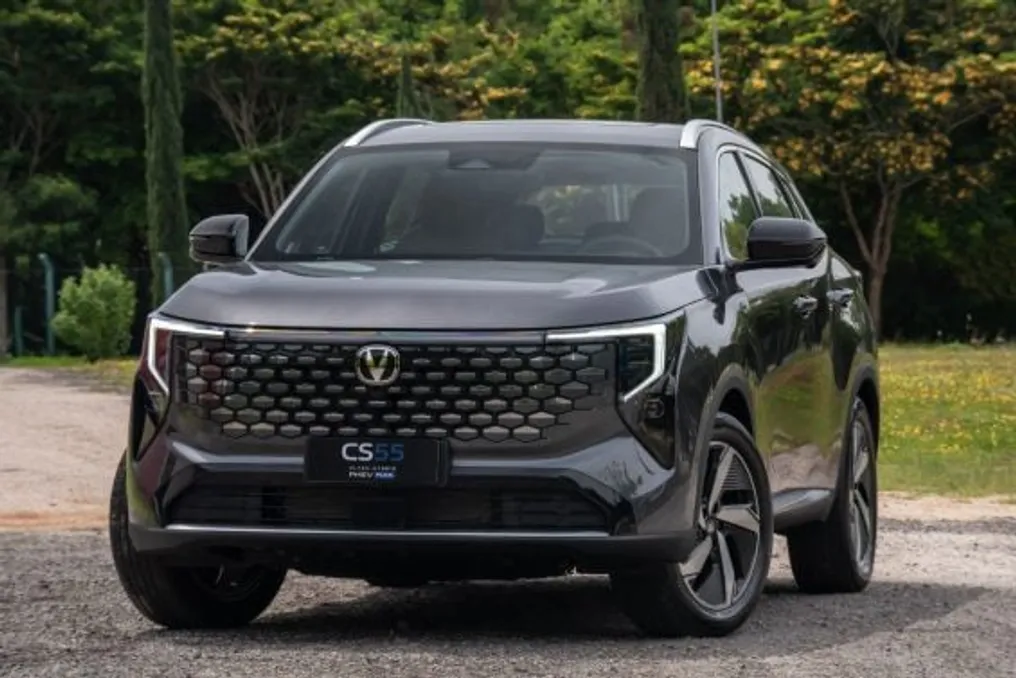
The BYD Song Pro achieved a notable sales volume in 2026, registering 30,011 registrations, driven by the introduction of the flex engine, which mitigated consumer concerns about the increased ethanol content in gasoline. In response to this success, Caoa Changan launched the CS55 PHEV, also equipped with a flex engine, aiming to capture some of these sales.

The CS55 PHEV is available in a single configuration for the price of R$ 189,990, leveraging the experience accumulated by the Caoa Group. On the other hand, the BYD Song Pro has higher price ranges, starting at R$ 196,990 for the GL version and R$ 199,990 for the GS version, the latter being differentiated by features such as battery size, sunroof, inductive charger, and safety features.

Considering that BYD focuses on direct sales of the GL version, the comparison was established between the Caoa Changan CS55 PHEV and the Song Pro GS version, focusing on mid-size hybrid plug-in flex SUVs under R$ 200 thousand. The CS55 arrived later in the market but presented more competitive prices, positioned at R$ 189,990, making it one of the most affordable mid-sized electrified vehicles in the country, R$ 10 thousand cheaper than its direct competitor.

Although BYD maintained the prices of the Song Pro GS after the conversion to flex, even adding more standard items, the analysis indicates that the cost-benefit ratio of the CS55 remains superior. In terms of performance, both SUVs use 1.5 engines coupled with an electric system for front-wheel drive. However, the flex engine of the Caoa Changan CS55 PHEV is turbocharged, giving it an advantage in performance and allowing for faster battery recharging in hybrid mode.

The CS55 PHEV delivers a total of 286 hp and 47 kgfm, surpassing the 219 hp and 30.6 kgfm of the BYD Song Pro. This difference is evident in the 0 to 100 km/h acceleration, which is achieved in 7.2 seconds in the Caoa Changan model, compared to 8.8 seconds for the rival.

In terms of electric usage, the Caoa Changan CS55 PHEV demonstrates greater versatility, offering an autonomy of 76 km in the Inmetro cycle and supporting fast DC charging at 43 kW. Despite having similar battery capacities (18.3 kWh), the BYD only reached 72 km of range and accepts charging only via AC up to 6.6 kW, which can prolong stop time during trips.

Regarding fuel economy, standardized Inmetro tests indicated that the Song Pro GS was more efficient than the Caoa Changan CS55 PHEV. It is relevant to note, however, that the standard Inmetro test does not favor plug-in hybrids, and in practice, savings may vary depending on how the driver uses the vehicle, although the methodological data presented points to the Song Pro as the most economical.

Both Chinese SUVs in this category are well-equipped. Both the Caoa Changan CS55 PHEV and the BYD Song Pro GS share features such as dual-zone air conditioning, wireless smartphone charging, panoramic sunroof, Level 2 ADAS package, electric tailgate, laminated front side windows, eight-speaker sound system, and electric adjustment for the two front seats.

The BYD Song Pro GS stands out for its connected services, remote updates on the multimedia center, photochromic interior rearview mirror, and external mirrors with defogger function. Meanwhile, the Caoa Changan CS55 PHEV offers additional luxuries, such as heating and ventilation in the front seats, driver seat memory, 540-degree camera, refrigerated center console, and customizable ambient lighting. Furthermore, its screens are larger, featuring a 14.6-inch multimedia center and a 10.3-inch digital dashboard.

In terms of dimensions, the BYD Song Pro is larger than its competitor, measuring 4.74 m in length, 1.86 m in width, and 2.71 m in wheelbase. The Caoa Changan CS55 measures 4.55 m, 1.86 m, and 2.65 m, respectively. The Song Pro's larger dimensions result in more passenger space and a 530-liter trunk. Although the CS55 is not cramped, its trunk accommodates 475 liters, which is 55 liters less.

In summary, Caoa Changan introduced a product with strong attributes to challenge the leadership of the BYD Song Pro. The CS55 PHEV presents lower prices, higher performance, greater electric range, fast charging capability, and a more complete set of equipment, making it considered the best choice at the moment for those seeking a family electrified model.

Porsche launches coffee machine and grinder inspired by the 911 Carrera RS 2.7
Read more
autopapo.com.br

Porsche launches coffee machine and grinder inspired by the 911 Carrera RS 2.7

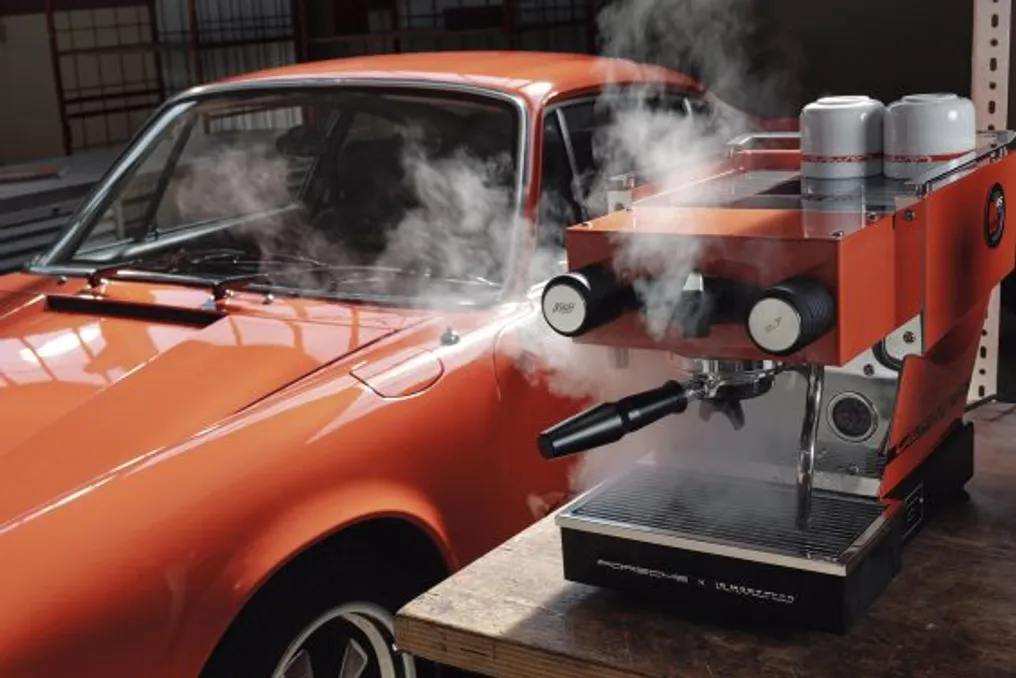
Porsche has adapted one of its most beloved automotive models to create coffee equipment. In collaboration with the Italian company La Marzocco, the brand has introduced a limited edition of the Linea Micra espresso machine and the Pico grinder, both inspired by the 911 Carrera RS 2.7 model, manufactured in 1972.

This is the second joint collection between the two companies, following the 2024 edition. The Linea Micra is available in three classic Porsche color schemes: Grand Prix white combined with green, tangerine with black, and Grand Prix white with blue.

A standout feature on the machine is the cup holder, which replicates the airfoil known as the 'ducktail' of the RS 2.7. Furthermore, the machine features the 'Carrera RS' engraving along with the old Porsche emblem, laser-engraved levers reading 'RS' and '2.7', and pressure gauges equipped with red and green pointers. A side plate displays the phrase 'One of 911', indicating the limited run.

The 911 Carrera RS 2.7 was conceived in 1972 with the purpose of homologating the vehicle for competition, being produced in a series of only 500 units. This car marked the beginning of the use of the Carrera name on the 911 model, a tribute to the Mexican Carrera Panamericana race, and represented the fastest production car in Germany at the time.

Internally, the Linea Micra is a two-boiler La Marzocco machine, which is handcrafted upon request. It features a 3-in-1 filter holder, an insulated steam wand, a 2-liter reservoir, and app control functionality, allowing temperature adjustment and scheduling.

The Pico grinder shares the same aesthetic and has a bean hopper with automatic closing. The white with green and tangerine with black editions will be limited to 911 units each. The white with blue version will have an exclusive distribution for Germany, totaling 150 pieces.

In terms of price, in Europe, the Linea Micra costs approximately R$ 35.7k (equivalent to € 5,790), while the grinder is priced at about R$ 9.6k (€ 1,550). In the United States, the machine price is approximately R$ 43.6k (US$ 7,911), a value that alludes to the 911.

The products can be purchased on the Porsche website, at selected points of sale, and in Porsche Design stores. The collection also includes complementary items, such as handmade cups, apparel, caps, socks, and 1:18 scale miniatures of the 911 Carrera RS 2.7.

Popular