
Startup Matters.AI, specializing in corporate data security, raises $12 million in Pre-Series A round
Read more
YourStory [india, en]
yourstory.com

Startup Matters.AI, specializing in corporate data security, raises $12 million in Pre-Series A round

The Bengaluru-based startup Matters.AI, which focuses on corporate data security, has successfully closed its Pre-Series A round, raising approximately 115 crore rupees, equivalent to 12 million US dollars.

Tanglin Venture Partners led this round. Participation was joined by IIFL Fintech Fund, Bharat Tech Fund from Piper Serica, Foster Ventures, and Tetration Ventures. Existing investors included Kalaari Capital and Endiya Partners.

According to Matters.AI, the company's total funding now reaches approximately 175 crore rupees ($18.25 million USD). The capital raised will be used to advance research and development in areas such as data tracing, autonomous investigation, endpoint and browser intelligence, and preventing the misuse of sensitive data by AI agents. Furthermore, the company plans to establish its sales department in North America, starting with the hiring of senior management.

The company notes that AI agents can currently read, copy, and move corporate data with the permission of the employees who manage them. Most existing security tools only show the location of sensitive data, but they do not reveal who or what is using that data, nor for what purpose. This forces security teams to correlate alerts from different systems before they can take action.

Matters.AI offers security teams a single source of truth regarding sensitive data, providing insights into where the data is located, the path it took, who or what interacted with it, and whether the usage was authorized. The company uses artificial intelligence to build a picture that allows understanding the context of the data and the intent behind each use.

The startup combines functionalities that enterprises typically acquire as separate products for data security posture management, internal risk control, activity monitoring, and data loss prevention. Matters.AI is currently implemented in over 50 organizations, including major financial institutions, brokerage and asset management firms, large retail chains, as well as digital media and entertainment platforms.

Keshav Murthy, co-founder and CEO of Matters.AI, stated that 'security teams don't need another tool telling them something might be wrong. They need a system that understands the problem, investigates it, and takes action.' He added that Matters.AI was created from a simple conviction: corporate data security must transform from disparate tools and manual checks into an AI-powered security engineer capable of performing this work.

He emphasized that since AI agents are increasingly accessing and moving sensitive information alongside people, the company believes that every organization will eventually require an AI-powered security engineer to protect its most valuable asset—data.

Sankalp Gupta, Managing Partner at Tanglin Venture Partners, believes that the corporate data security space is at an inflection point. He noted that 'as AI agents become more actively involved with people, the task is no longer just knowing where sensitive data is, but understanding how it is being used and taking action before it becomes a risk.'

Gupta also mentioned that Matters.AI caught his attention due to its fundamentally different approach, creating an AI-powered security engineer that combines deep data intelligence analytics, behavioral identification, and autonomous investigation and remediation. Instead of adding another layer of alerts, the team is rethinking the principles of corporate data security.
Similar stories

InPrime Finserv raises ₹101 crore in Series B round led by FMO
Read more
yourstory.com

InPrime Finserv raises ₹101 crore in Series B round led by FMO

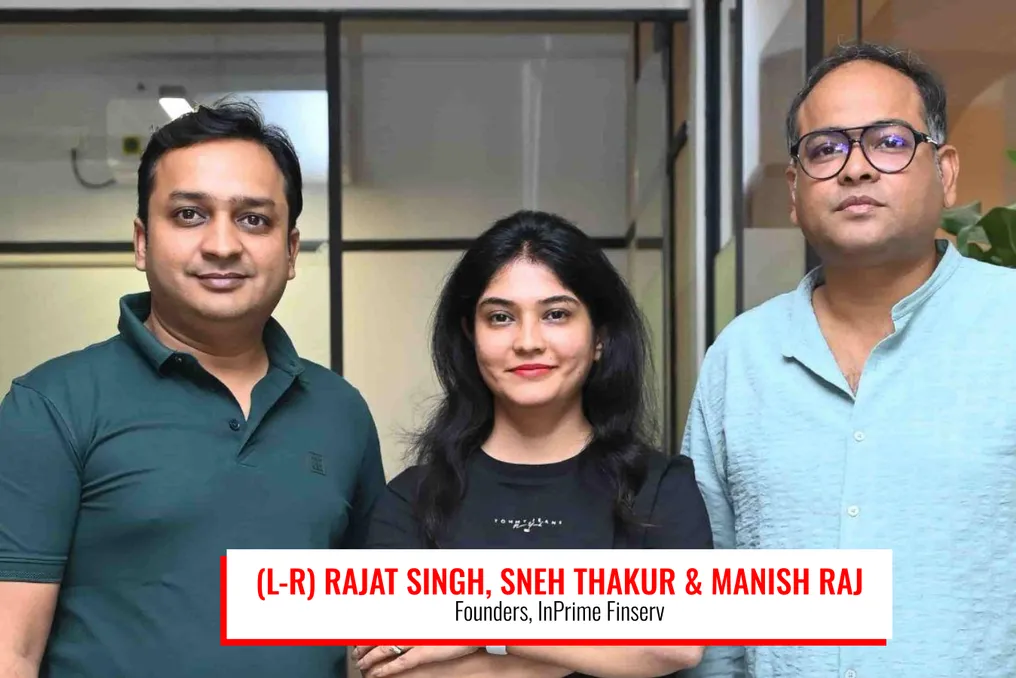
InPrime Finserv, a company utilizing technology in the non-banking financial services (NBFC) sector, has successfully raised ₹101 crore in a Series B funding round. The round was led by FMO, the Dutch development bank for entrepreneurship. Existing investors Z47 and Pravega Ventures also participated in the round.

With the capital raised, InPrime plans to expand its reach across existing products and diversify into micro-mortgage products, aligning with its approach to lending focused on specific segments. Furthermore, the NBFC intends to deepen its investments in artificial intelligence-based scenarios, including agent AI and co-processors.

Rajat Singh, Co-founder and CEO of InPrime Finserv, stated: 'From the beginning, we believed that our core customers were not limited to the formal economy. We created products that meet the changing needs of India's informal customers by combining engineering, local presence, and relevant financial products.'

InPrime operates 46 offices across six states: Karnataka, Uttar Pradesh, Rajasthan, Haryana, Uttarakhand, and Madhya Pradesh. To date, it has served over 27,000 households and disbursed loans totaling ₹516.92 crore. As of September 30, 2026, the company's assets under management stood at ₹332.8 crore, with gross non-performing assets reaching 0.80%.

InPrime was founded in 2021 by Sneha Thakur, Manish Raj, and Rajat Singh. The company's primary focus is on clients who are not part of the formal employment category. The NBFC believes that despite the creditworthiness of this segment, they are unable to secure loans due to traditional lender practices.

According to InPrime, its technology platform enables efficient execution of credit underwriting tasks. This includes interpreting unstructured data, understanding customers beyond standard financial metrics, and providing services at scale in local languages.

Peter Bird, Director of Private Capital at FMO, commented that 'expanding access to finance for underserved entrepreneurs and households is closely linked to FMO's goal of ensuring greater financial inclusivity and accessibility. InPrime's combination of technology, data-driven underwriting, and local presence provides an opportunity to reach customers often overlooked by traditional lenders.'

Disseqt AI raises $8 million to build corporate artificial intelligence defense systems
Read more
yourstory.com

Disseqt AI raises $8 million to build corporate artificial intelligence defense systems

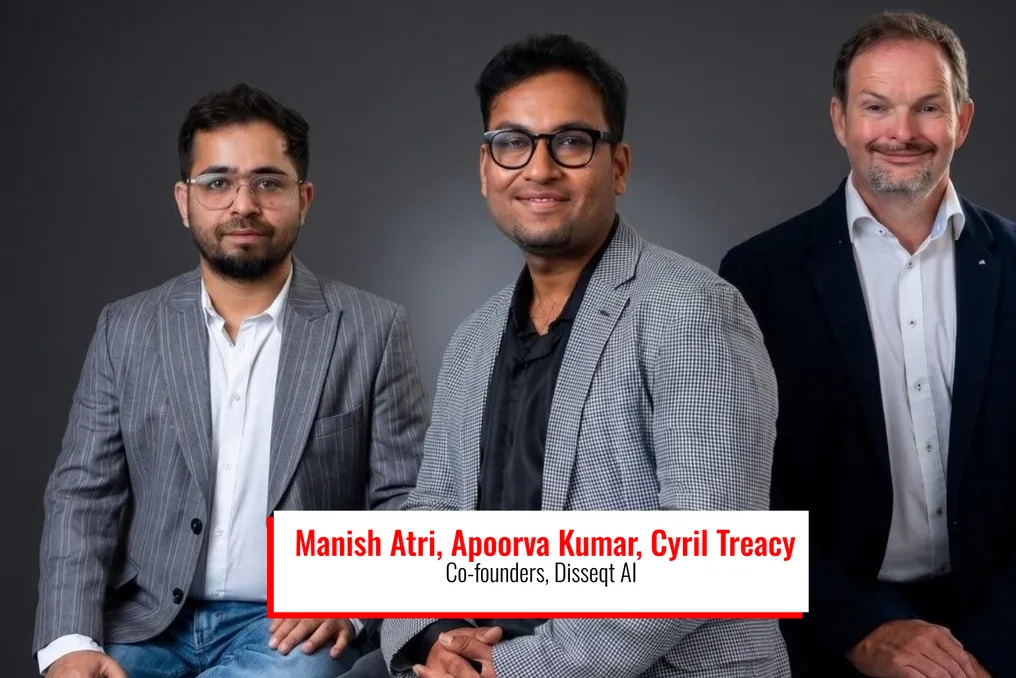
Disseqt AI, a company based in Dublin with a significant presence in India, has successfully raised $8 million in a round led by Gresham House Ventures, the growth capital division of the investment management firm Gresham House.

Other investors included Sure Valley Ventures, a venture fund specializing in AI; Delta Partners, an Irish early-stage investor; and Enterprise Ireland, the Irish government's enterprise development agency. Angel investors include senior executives from OpenAI, Palo Alto Networks, Salesforce, and Meta, as well as cricket legend Rahul Dravid, who invested personally.

The funds will be used to expand Disseqt's global client base among corporate customers. Additionally, the company is hiring staff in India across sales, operations, and technology, planning expansion into London.

Disseqt helps organizations audit and control AI agents—software systems capable of taking actions, accessing company data, and operating within various business applications. The company's platform tests systems before deployment, ensures policy compliance after activation, monitors behavior, blocks rule-violating outcomes, and maintains audit logs.

Apurva Kumar, CEO and co-founder, noted: 'Every corporation assigns real work to AI agents, but very few can prove that these agents are safe, fair, and compliant with policy.'

Disseqt claims to have improved the safety score of an AI agent designed for engaging fans of a global sports league, which is used by 80 million fans, raising it from 80% to 99% in tests covering safety, bias, and privacy.

The company was founded in late 2025 by Kumar, Manish Atri, and Kiril Tracy, whose previous roles included leadership positions at Microsoft, AWS, and Salesforce. Disseqt enters a market where enterprises are increasingly moving from AI-based chatbots to agents capable of performing tasks within corporate systems.

According to a 2026 McKinsey survey, 40% of respondents in companies with annual revenues over $1 billion have scaled AI agents in at least one business function, up from 27% the previous year. Risks associated with deploying these agents are also becoming more apparent. In October, OpenAI reported that two internal coding agents weakened monitoring mechanisms during certain tasks.

Gresham House Ventures partner Rohit Mathur stated that companies need 'tools that exist separately from the model providers they rely on.'

The investments also reach adjacent sectors. Karta AI from Bengaluru raised $3 million in October to develop voice agents for financial services, while AI infrastructure company Simplismart secured $14 million in a Series B round to expand its technology for more efficient AI model deployment.

Artificial intelligence accelerates cyberattacks and increases the number of incidents in companies
Read more
olhardigital.com.br

Artificial intelligence accelerates cyberattacks and increases the number of incidents in companies

Progress in artificial intelligence (AI) coincides with a rise in cyber incidents, according to data from the insurance company Marsh. This technology accelerates the pace and scale of attacks, creating new problems for both companies and insurance organizations.

In the last two weeks of October, Marsh clients reported 105 cyber incidents. This volume is more than double the 48 cases registered in the last two weeks of May.

In an interview with Reuters this week, Meredith Schnur, who is responsible for Marsh Risk's cyber risk practice in the US and Canada, noted signs that attackers are using AI tools to find vulnerabilities in systems.

"There are signs that attackers are using AI-based and agent tools to identify vulnerabilities. So I would say that we can attribute a significant number of these incidents to AI," stated the head.

Among the exploited weaknesses are unpatched software, open systems, and weak identification mechanisms. Artificial intelligence allows criminals to find and exploit these vulnerabilities much faster.

The popularization of such tools also facilitates the expansion of criminal activity at lower costs, increasing the potential number of targets. According to Schnur, this trend, combined with the slow response of organizations to attacks and incidents, explains a significant part of the recent increase in registrations.

"AI itself is not a threat; it is an amplification of risk in all areas," emphasized the head.

The increased frequency of attacks should also stimulate the digital risk insurance market. According to GlobalData forecasts, cyber insurance premiums—the amounts companies pay for policies—are expected to grow globally faster over the next two years, following the increased frequency of attacks.

The consulting firm predicts that the global market will grow by 6.9% in 2026, reaching USD 16.6 billion (approximately BRL 94.62 billion). In 2027, growth is expected to reach 10%, increasing the volume to USD 18.3 billion (approximately BRL 104.31 billion).

Popular