Rental market shifts towards eco-friendly homes, in addition to low rent
Read more
Aaj Tak
www.aajtak.in

Rental market shifts towards eco-friendly homes, in addition to low rent

In rapidly expanding Indian cities, young people are migrating from one settlement to another in search of better employment opportunities, leading to increased demand for rental housing and co-living spaces. Currently, the market values not only low rent, good location, and amenities, but also the degree of environmental friendliness of the home.

New requirements for urban housing include energy saving, reduced water consumption, and proximity to offices. In light of this, co-living management companies are beginning to integrate eco-friendly solutions into their real estate models.

Energy-saving technologies are increasingly being used in rented apartments to reduce electricity and water consumption. The company Colive is an example of this approach. This company installs LED lamps and sensor lighting in common areas, as well as low-flow plumbing fixtures in its properties.

Furthermore, the company has digitized administrative processes such as tenant registration and billing through applications, which helps reduce paper documentation. When multiple people live in one building, electricity and water consumption can be very high; therefore, these technologies help prevent resource waste. However, the actual benefit depends on the number of residents and how electricity and water are used in the property.

Environmental aspects, such as energy-saving equipment, low water consumption, and digital conveniences, can make co-living spaces more attractive to young renters. Nevertheless, the rental cost remains the most important factor for tenants. Initial investments in installing eco-friendly amenities can be high for companies, but in the long run, this can lead to savings on electricity and water bills.

Whether this saving will be passed on to tenants in the form of lower rent or smaller utility bills depends on the specific company and property management. Currently, there is insufficient data in India on how many young Gen Z representatives are willing to pay extra for eco-friendly homes.

Moreover, not only the characteristics of the building but also its location plays a significant role in how environmentally friendly a home can be. If the rented accommodation is near offices or employment centers, the daily commute distance can be reduced, which helps decrease fuel consumption and transport pollution. However, simply being located near an office does not guarantee reduced pollution; it also depends on whether people walk, cycle, or use private transport. Although the trend toward using eco-friendly amenities in co-living is growing, their real impact needs to be proven. Companies should demonstrate how much electricity and water consumption has decreased due to their initiatives, and what effect this has had on air pollution during commutes.


Similar stories

Experts predict job growth in five sectors due to the development of green skills
Read more
www.aajtak.in

Experts predict job growth in five sectors due to the development of green skills

Growing air pollution in many parts of the country, including Delhi-NCR, has ceased to be solely a health and environmental issue; it has begun to affect the business and employment sector. Today, companies face tasks not only of increasing production or reducing costs but also of decreasing energy consumption, improving waste management, and adapting their activities to environmental standards.

For this reason, the importance of green skills in the corporate labor market is growing. Work related to the environment is no longer limited to NGOs, government agencies, or specialized environmental institutions. Companies require specialists capable of implementing sustainable methods in areas such as technology, data analysis, energy management, supply chains, and other aspects of business.

According to the LinkedIn Global Green Skills Report for 2026, the share of environmentally related hiring in India increased by 31 percent. Over the same period, the share of green talent in the country's workforce grew by 29 percent. This indicates a growing demand from companies for people with green skills, although the availability of trained personnel remains a serious problem.

Green jobs encompass not only positions related to tree planting, pollution monitoring, or nature conservation. They also include work aimed at resource saving, more efficient use of raw materials, waste reduction, and minimizing the business's impact on the environment. Examples of this broad green economic space include solar panel installation technicians, electric vehicle repair specialists, waste recycling employees, and professionals preparing corporate sustainability reports.

The LinkedIn report indicates that green skills are now needed not only in roles with titles such as 'environment' or 'sustainability'. According to the company, about 74 percent of environmentally related hiring occurs in positions that are traditionally not considered green. This means that the importance of competencies in resource and environmental management is increasing even in existing professions.

The iFOREST report on ecology and development, titled 'India: Green Jobs – A Path to Building a Future-Ready Workforce', presents a comprehensive picture of employment opportunities in India. According to this report, published on October 7, 2026, India's green economy could support approximately 98.5 thousand jobs by 2030 and around 1.3 million jobs by 2035. These sectors include renewable energy, green hydrogen, electric transport, circular economy, and nature-based solutions.

According to the report, direct employment in key green sectors, such as renewable energy, manufacturing and EV charging infrastructure, and formal recycling, could increase from approximately 1.45 million in 2026 to about 3.5 million by 2030 and over 5.4 million by 2035. Based on these forecasts, an average of about 4.5 lakh additional jobs may emerge annually in these industries. It is important to note that this figure refers only to the projected growth of direct employment in the selected key sectors, not all green sectors in general.

The green economy sector is constantly expanding, and there are specific areas where significant employment prospects may arise in the coming years. In the renewable energy sector, due to the expansion of solar and wind energy projects, the demand for engineers, technicians, plant operators, as well as installation and maintenance specialists will increase. In the electric transport sector, new opportunities may emerge in electric vehicle manufacturing, battery technologies, charging stations, as well as vehicle servicing and repair. In the green hydrogen field, increased demand is expected for specialists in engineering, plant operation, safety, research, and maintenance. The waste management and recycling sector opens up employment paths in garbage collection, sorting, processing, recycling, and resource reuse. Furthermore, jobs related to nature-based solutions, such as reforestation, agroforestry, forest restoration, and mangrove preservation, can also create jobs. According to iFOREST estimates, nature-based solutions have become a major employment sector.

Many of these opportunities may appear not only in large cities but also in small towns and rural areas. For example, solar panel installation on roofs, electric vehicle repair, and waste recycling can be carried out at the local level.

The expansion of the green economy is not limited only to companies related to energy or the environment. According to the LinkedIn report, over the past five years, the rate of adoption of green skills in the financial sector averaged 18 percent annually, in the technology and media sector—15 percent, and in retail—14 percent annually. One of the factors behind this is the companies' desire to make their operations more efficient and less costly.

International Energy Agency: Green energy development helped India save over $100 billion in 15 years
Read more
timesofindia.indiatimes.com

International Energy Agency: Green energy development helped India save over $100 billion in 15 years

According to a recent report by the International Energy Agency (IEA), the expansion of renewable energy (RE) capacity over the past fifteen years has allowed India to save over $100 billion by avoiding expenditures on coal and natural gas imports.

With existing RE capacities of 300 GW, India has become the world's second fastest-growing renewable energy market, strengthening its energy security. Between March 2014 and September 2026, India added 168 GW of solar and 38 GW of wind capacity, while installed bioenergy capacity reached nearly 12 GW.

The IEA forecasts that by 2030, if international fuel prices remain around the average level of 2024–2025, the cumulative savings from coal and natural gas imports could reach $240 billion. The annual savings at that time are projected to be about $35 billion, which will exceed India's total expenditure on non-coking coal and natural gas imports in fiscal year 25.

The 'India Renewable Energy Market Report 2026' also showed that without the addition of solar photovoltaic, wind, and bioenergy capacities since 2010, India's coal imports in 2025 would have been approximately 110 million tons higher.

IEA Executive Director Fatih Birol noted that India's experience demonstrates how consistent policy can reduce renewable energy costs and attract investment, providing valuable lessons for other developing economies.

India achieved its goal of ensuring 50% of installed electricity capacity from non-fossil fuels in 2025, five years ahead of schedule. The IEA emphasized that this growth was not only due to large-scale projects but also to rooftop solar installations, corporate RE procurement, and the expansion of domestic production. Special attention was paid to the PM Surya Ghar Muft Bijli Yojana program to accelerate rooftop solar panel installation and PM-KUSUM to support solar-powered irrigation pumps and farm feeders.

Study shows: Economic benefit of cheap fertilizers for farmers decreases due to strain on the country
Read more
www.aajtak.in

Study shows: Economic benefit of cheap fertilizers for farmers decreases due to strain on the country

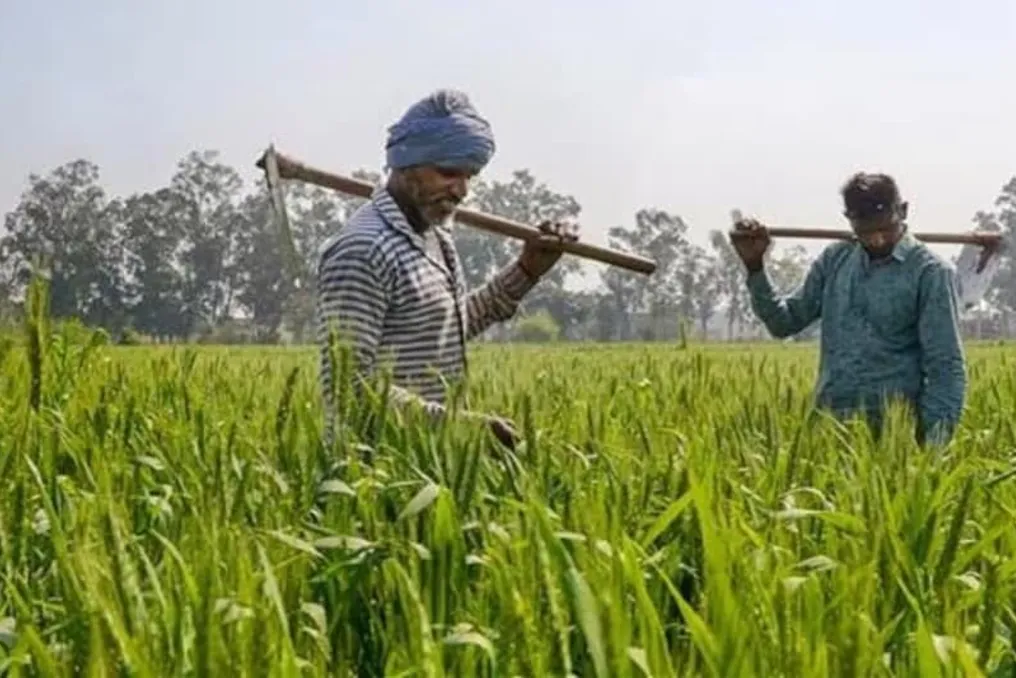
India's Green Revolution helped the country transition from food deficit to self-sufficiency in grain production through the use of improved seeds, irrigation, and chemical fertilizers. However, decades later, a new question has arisen for Indian agriculture: is the economic benefit derived by farmers from the excessive use of chemical fertilizers truly beneficial for the entire nation?

Various reports on topics such as agricultural health and energy were published during the COP 31 summit, which began in Turkey. A new study, 'The Economics of Cultivation' by the organization Climate Trending, asserts that the hidden costs of agriculture are rising due to the subsidization of chemical fertilizers, their unbalanced use, and dependence on imports. The report also proposes policy changes to support organic and natural farming.

According to the Climate Trends study, although farmers gain a tangible economic benefit from using chemical fertilizers, the real economic benefit for the country significantly diminishes when state subsidies, greenhouse gas emissions, and environmental damage are taken into account.

The study analyzed the agricultural sector of eight states, including Punjab, Haryana, Uttar Pradesh, Bihar, Madhya Pradesh, Chhattisgarh, Andhra Pradesh, and Karnataka.

1. Carbon Emissions from Nitrogen Fertilizers

The production of chemical nitrogen fertilizers relies on fossil fuels such as natural gas and coal. According to the report, the entire supply chain for nitrogen fertilizers generates globally 1.13 gigatons of CO2e. This accounts for about 2.1% of global greenhouse gas emissions. Of this, 38.8% of emissions come from fertilizer production, 58.6% from nitrous oxide emissions in the fields, and 2.6% from transportation. This demonstrates that the impact of chemical fertilizers on the environment is not limited to factories but also contributes to climate change through their use in the fields.

2. Farmer Profit vs. Real National Economic Benefit

The most important finding of the report highlights the difference between the farmer's private income and the socio-economic benefit to the country. In five studied cases of wheat production, it was found that the socio-economic benefit was 36% to 182% lower than the farmer's private profit, with an average difference of about 90%. For example, in Punjab (2019-20), the net private profit for the farmer was ₹31,901 per hectare, while estimated subsidy costs and emissions amounted to ₹11,554, and the net social benefit for the country was ₹20,347. Thus, while the farmer sees a profit of ₹31,901, the real benefit for the country after deducting public and environmental costs is ₹20,347.

3. High Burden of Subsidies on Punjab and Haryana

In India, during the 2021-22 period, the estimated financial burden on the government for chemical fertilizers was ₹3,630 per hectare. In Haryana, this amount reached ₹5,198, and in Punjab, it was ₹6,283 per hectare. However, in Punjab, this burden increased to ₹14,072 per hectare in 2022-23. This means that in 2022-23, the estimated financial burden in Punjab was approximately 3.88 times higher than the national average for 2021-22. This figure indicates growing financial pressure on the government due to an agrarian system heavily reliant on chemical fertilizers, and it also increases the sensitivity of the state budget to fluctuations in international fertilizer prices.

4. Subsidy Policy Stimulated Unbalanced Use of Nitrogen Fertilizers

According to the report, the Nutrient Based Subsidy (NBS) policy, introduced in 2010, caused an imbalance in the fertilizer market. Although phosphates and potash were included in NBS, the price of urea remained controlled. As a result, the share of nitrogen was 63.9% in 2007-08, then dropped to 58.8% in 2009-10, and rose to 69.9% in 2012-13. After 2010, the annual change in the nitrogen share increased by 4.42 percentage points. In Punjab and Haryana, the ratio of nitrogen to potassium was 21:1 and 20:1, respectively, while the national average was 5:1. The report suggests that the policy supporting a relatively low price for urea distanced farmers from balanced fertilizer use.

5. Dependence on Imports Persists Despite Fertilizer Production Growth

India is the second-largest fertilizer producer in the world, accounting for about 20% of global production volume. Nevertheless, India remains dependent on other countries for many essential fertilizers and raw materials used in their production. According to the report, urea production in India grew from 22.7 million tons in 2013-14 to 30.7 million tons in 2024-25. During the same period, the joint production of DAP and NPK increased from 11 million tons to 15.9 million tons. Despite this, the country imports large volumes of fertilizers. In 2022-23, India imported about 10.2 million tons of urea and 6.7 million tons of DAP, and covers about 90% of its phosphate rock needs through imports. Regarding potash, India is completely dependent on other countries.

Popular