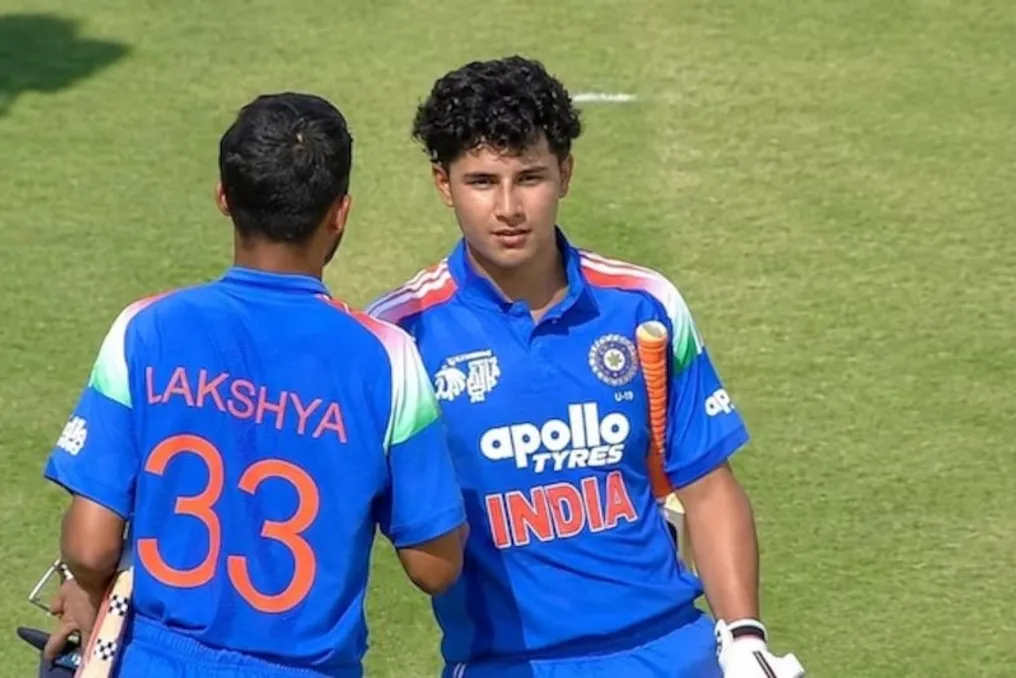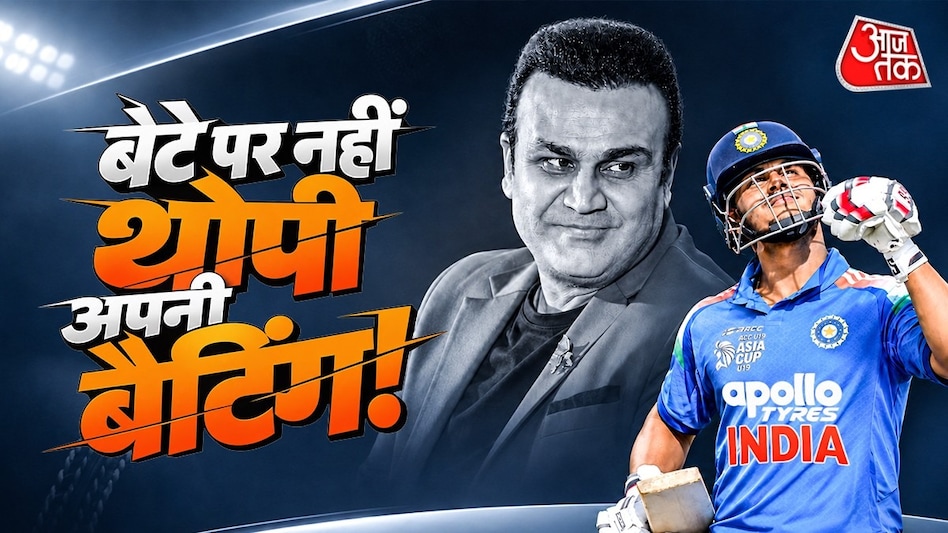
Virendra Saxhaug revealed what he taught his son Aryavir: not just batting technique
Read more
Aaj Tak
www.aajtak.in

Virendra Saxhaug revealed what he taught his son Aryavir: not just batting technique

The world witnessed Virendra Saxhaug's unique playing style. Regardless of the opponent or the pitch used, his shots always aimed for the boundary. Now, his son Aryavir also shows traits of Saxhaug in his game. Many of their strokes are so similar that it would be interesting to see them side-by-side. However, did Saxhaug teach his son to play in his manner? The former Indian opener himself answered this question.

Interestingly, Saxhaug passed on much to his son but did not focus heavily on batting technique. According to Saxhaug, he concentrated on making Aryavir mentally strong rather than teaching him the subtleties of cricket play. Aryavir received training from Raju Sharma at Virendra Saxhaug's academy and also played for various teams, participating in U-16 and U-19 tournaments, reaching the National Camp. During this time, he had the opportunity to work with many coaches.

Saxhaug emphasized that he did not focus on his son's technique. His main goal was to teach Aryavir how to score runs and how to build big totals. He stated: 'Whatever your technique may be, if you are mentally strong and have an idea for scoring runs, then your technique does not matter.'

Furthermore, Saxhaug taught his son to control his thoughts and become more psychologically resilient. He explained that batsmen experience both positive and negative thoughts, but they must remain focused on their goal, without letting them influence them. Saxhaug told his son about scoring big runs, gaining mental fortitude, and managing thoughts, all without interfering with his technique.

Thus, Saxhaug did not force his son to adopt his playing style. Instead, he gave him a principle: think about scoring runs, handle pressure, and believe in yourself.

Recently, Aryavir attracted widespread attention due to his performance at the U-19 Asian Championship. Throughout the tournament, he scored 361 runs, including one century and three half-centuries. For this outstanding performance, he was named the tournament player of the match. In the final against Pakistan, Aryavir also played a crucial innings, scoring 58 runs under pressure. India secured a tense victory by one run, chasing a difficult target of 338 runs, and won the title. Aryavir's performance demonstrated his talent. Father Saxhaug's lessons are clear: batting is not just about technique; the hunger to score runs, the goal of building big scores, and mental strength are equally important.
Similar stories

Mohit Ulva impressed with performance against Pakistan; father spoke about his struggle that began at age 9
Read more
www.aajtak.in

Mohit Ulva impressed with performance against Pakistan; father spoke about his struggle that began at age 9

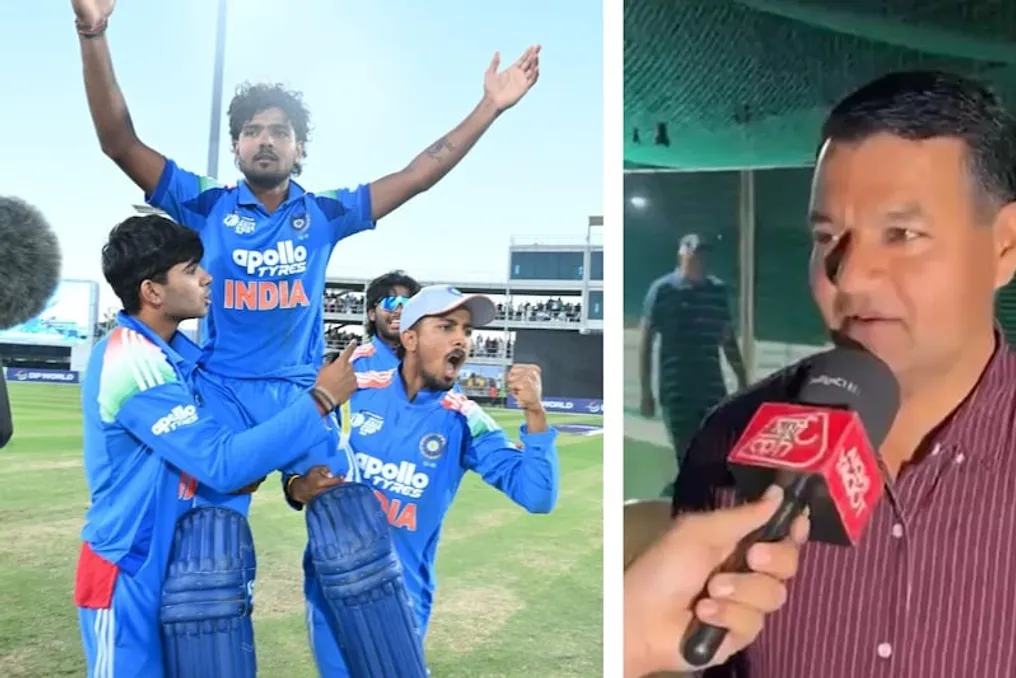
During the final match of the U-19 Asia Cup against Pakistan, when the Indian team faced difficulties, Mohit Ulva came onto the field at number ten and changed the course of the game. He scored 49 runs without being dismissed in just 26 balls, playing a decisive role in India's victory by hitting the fourth run with the last ball.

This outstanding result is the culmination of years of effort and preparation. Mohit started playing cricket at the age of just 9. His father shared details of this journey and his son's struggle.

In an exclusive interview for India Today Group, Mohit's father, Mahesh Ulva, expressed immense pride in his son following his performance. He noted that Mohit brought honor to all of India and helped the country achieve victory, which fills him with deep pride.

Mahesh Ulva stated that around the age of 9, he enrolled Mohit in a cricket academy in Jamnagar because he was stationed there at the time. He works for the Railway Protection Force (RPF). Mohit trained under coach Mahendra Singh Chauhan for approximately six years.

Later, Mahesh Ulva was transferred to Rajkot, where he currently serves at the Rajkot railway station. According to the father, for the last six years, Mohit has been training at the RDS cricket ground near the railway. During this time, he constantly improved his skills.

Mohit's father clarified that his son is primarily an all-rounder specializing in bowling. Although his batting performance drew attention during the final against Pakistan, it is not the first time Mohit has scored a big innings while batting lower down the order. Mahesh Ulva also mentioned that Mohit had previously scored 92 runs batting at number ten against Australia. Thus, his 49-run innings against Pakistan once again demonstrated his ability to be useful to the team in critical moments.

Mohit's training was not limited to the academy and stadium. His father arranged special conditions for his practice right at home. Nets and a ball-pitching machine are installed at home, where Mohit practices both batting and fielding. A journalist showed this home training ground, which testifies to the family's constant efforts to realize Mohit's sporting dreams. This journey, which began at age 9, reached a memorable result in the match against Pakistan.

17-year-old bowler Ishan Sud draws attention due to skill developed with the help of his father and technology
Read more
www.aajtak.in

17-year-old bowler Ishan Sud draws attention due to skill developed with the help of his father and technology

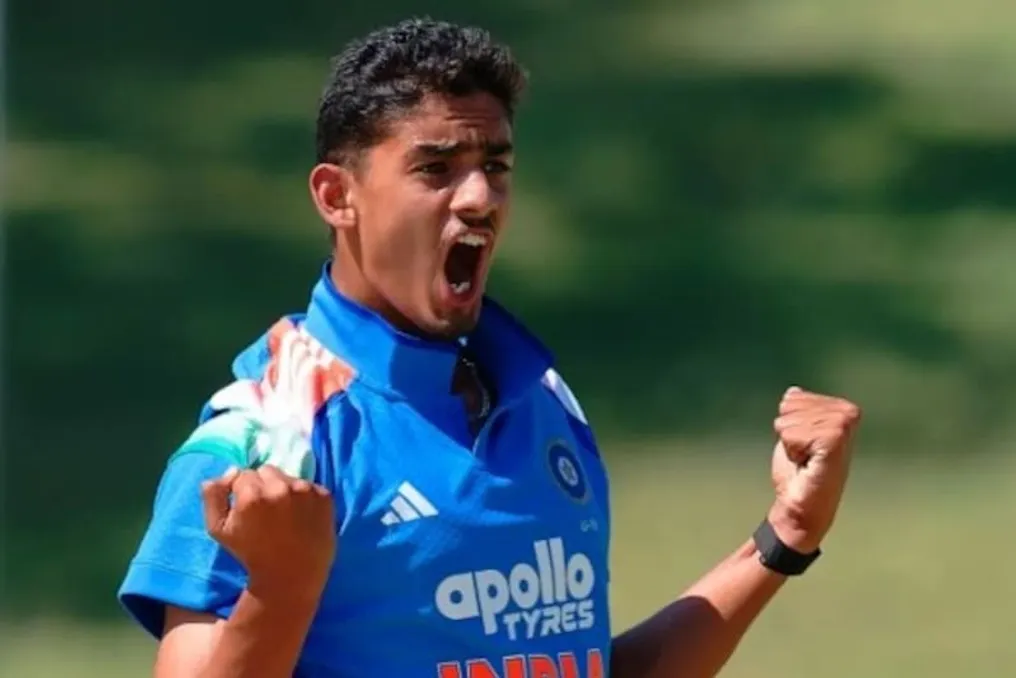
A new generation of young fast bowlers is emerging in Indian cricket, and Ishan Sud stands out among them. This 17-year-old player from Morinda, Punjab, has attracted attention for his performance in the Under-19 Asia Cup tournament. Ishan possesses an impressive height of 6 feet 4 inches, combining speed, bounce, and the ability to make the ball spin in both directions, while also demonstrating exceptional control over his bowling length.

Ishan's success is not linked to major sports institutions; his first mentors were his father, Diraj Sud. His father sacrificed his business to teach his son the basics of bowling. Notably, this father-son training system actively utilizes YouTube, Google, social media, and ChatGPT alongside the field. They watch videos together, study bowlers' techniques, conduct research on new balls and variations, and then practice it on the field.

Ishan's hard work was reflected in his performances at the Under-19 Asia Cup. In the first three matches of the tournament, he took 8 wickets. Against Nepal, he claimed 3 wickets, conceding only 18 runs in 10 overs, including four maidens. In the match against Pakistan, he took one wicket, conceding 36 runs in 9 overs. His performance against the UAE was particularly impressive, where he dismissed four batsmen, conceding 37 runs in 7 overs.

The main characteristic of his delivery is not just his height and associated bounce, but also the consistent pitching of the ball around the off-stump area, forcing batsmen to make decisions. In addition to the ability to make the ball spin in both directions, he can keep the ball straight after it touches the ground. This aspect causes the most difficulty for batsmen. Furthermore, he possesses a good yorker.

On social media, Ishan has been compared to former Indian fast bowler Ishan Sharma due to his similar tall physique, lean build, and the change in the ball's trajectory after contact with the ground. However, since Ishan's career is in its early stages, he has a long way to go, but the process of developing his game deserves attention.

To lay the foundation for his bowling, his father employed an unconventional method. The father and son trained for about six to nine months, focusing exclusively on one delivery—a ball aimed at the upper part of the off-stump with good length. During this period, they had access to only one practice ball.

Diraj explained that the goal was to make Ishan so reliable at a specific length that he would not deviate from his line and length under any circumstances. In an interview with IndiaToday.in, Diraj stated: 'We worked on only one thing for a long time. Bowling the ball at a good length and targeting the upper part of the off-stump. We focused on this ball for six to nine months, using only one ball for this.'

After Ishan mastered this length, training began on making the ball spin in both directions. According to Diraj, Ishan had a natural ability for rotation and trajectory change on the pitch. Therefore, they worked on moving the ball from one point inwards and outwards.

He continued: 'After that, we worked on getting the ball from the same point inwards and outwards. That also took eight or nine months. During all this time, we didn't practice anything else.'

Then came the study of the yorker. Ishan did not spend much time mastering this delivery. Diraj reported that he practiced the yorker for about 10-15 days, and Ishan started executing it well within 16 days. The father noted that Ishan quickly absorbs material, so after months of working on one delivery, he quickly achieved mastery in the complex yorker.

Diraj Sud's role is crucial in Ishan's cricket career. Diraj himself has experience playing cricket at the club level as a fast bowler and admired legends like Alan Donald and Glenn McGrath since childhood. However, his own career path did not reach the state level, as he felt that in his era, players lacked support and facilities for sports.

He wanted his sons to have the opportunities in cricket that he could not achieve. His elder son also dreamed of becoming an athlete, but an injury ended his career. His elder son was sent for education elsewhere, but the injury changed the family's plans. After this, Diraj decided to take responsibility for his younger son Ishan, deciding to personally oversee his bowling and training. To ensure full-time commitment and resources for his son's cricket, he sold his stationery shop after about 13 years.

Aryavir Sehvag scores one hundred runs in U19 Asia Cup match against UAE
Read more
www.aajtak.in

Aryavir Sehvag scores one hundred runs in U19 Asia Cup match against UAE

In the eleventh match (Group A) of the U19 Asia Cup 2026, featuring the Indian junior team, opening batsman Aryavir Sehvag delivered an impressive performance. During the match against the UAE, Aryavir, son of legendary Indian batsman Virendra Sehvag, scored a magnificent century, showcasing his class.

In this century innings, he scored 13 fours and two sixes. The UAE captain decided to win the toss and allowed India to bat first. According to the game rules, the ball had no high bounce and remained quite low. Initially, the fast bowlers from the UAE restricted the Indian batsmen.

After Captain Celak Raichandani (17 runs) was brought onto the field in the 14th over, caught by Nurullah Ayubi, Aryavir's composure and aggression became outstanding. He skillfully used his footwork against spinners, sending the ball over the covers and mid-wicket for boundaries off full deliveries.

Once Aryavir settled into the game after the initial overs, he began batting in the style of his father, Virendra Sehvag. He clearly showed his intentions by hitting two fours in one over from Nurullah Ayubi. Aryavir scored 100 unbeaten runs off 131 balls at an average strike rate of 76.34.

The second player, VK Vinith, supported him from the other end of the pitch, playing cautiously and scoring 29 unbeaten runs, including one four and one six off 40 balls, which helped the team solidify its position. By the completion of 33.5 overs, the Indian team had scored 159 runs while losing one batsman, confidently approaching a large total.

Popular