
Changes Continue in the Role of Women in Agra: They Are Taking Positions in Various Business and Work Sectors
Read more
Aaj Tak
www.aajtak.in

Changes Continue in the Role of Women in Agra: They Are Taking Positions in Various Business and Work Sectors

In the city of Agra, Uttar Pradesh state, the world of women is undergoing a transformation. In areas where the presence of women was previously minimal, they are now successfully forging their identity. Whether it concerns business or employment, women are now taking on responsibilities side-by-side with men. Notably, their initial hesitation and apprehension about work are gradually disappearing. These stories of women breaking free from domestic constraints and confidently moving forward demonstrate the new social changes occurring in Agra.

In the tourist center of Agra, it was rare to see female guides before, but now women's participation in this profession is growing. Women who introduce foreign tourists to the Taj Mahal and the city's historical heritage are carving out a distinct niche for themselves. Female guide Monica Sharma shared that initially, her relatives did not approve of this profession. Although family consent was later obtained, there were many restrictions regarding movement and work. However, circumstances changed over time, and the family's attitude also evolved. Today, she has complete freedom to work both at home and outside the home.

Women have also achieved significant success in the hotel industry through their hard work and determination. Rashmi Singh, who started her hotel business with only five rooms, is now established in this field. She notes that initially, people's attitude towards this business was not very positive, but the opinion of her family and society gradually changed. According to Rashmi, the number of rooms in her hotel has increased fourfold compared to the beginning. Despite numerous difficulties along the way, she no longer fears this profession; her experience shows that women can develop any business through confidence and hard work.

The PET industry, globally renowned in Agra, was long considered a male domain, but now women are also beginning to play a noticeable role here. Two sisters, Ananya and Tanya, took responsibility for the wholesale and retail PET production business after their grandfather's death, while their father manages the PET manufacturing factory. Ananya shares that it was initially unfamiliar for her to sit in a shop and interact with customers. Nevertheless, over time, she mastered the intricacies of the business and now runs the store's affairs with full confidence. The initiative of these two sisters shows that women are also finding their place in traditional business.

These changes are not limited to business; confidence among working and employed women has also increased. Ritika Jalaun and Chhavi, who work in pathology, note that they no longer feel the same fear when traveling from home to work. They recount that initially, their family members did not support their desire to work, but gradually the family's views changed. Today, their families are pleased with their work, and they are respected both at home and in society.

The stories of these women from Agra show that the changes involve not only increased employment opportunities but also a shift in public consciousness. On paths where women once hesitated, today they walk with full confidence. As the saying goes, where there is a will, there is a way. The women of Agra are proving this in practice.
Similar stories

According to PLFS data, female labor force participation is growing faster in rural areas than in cities
Read more
www.aajtak.in

According to PLFS data, female labor force participation is growing faster in rural areas than in cities

New government data demonstrates an interesting shift in the employment situation of women across the country. While the economic participation of women in urban settings is often discussed, recent reports indicate an active increase in the share of women in the labor force specifically in rural areas.

According to data for October 2026, the female labor force participation rate (LFPR) in rural areas reached 39.5%, compared to 25.9% in cities. This means that the growth rate of women's involvement in the workforce in villages was higher than in metropolitan areas.

This information was published on November 16 in the Periodic Labour Force Survey (PLFS) bulletin for October 2026, released by the Ministry of Statistics and Program Implementation (MoSPI). The report revealed that over the last year, the LFPR among rural women increased by 1.1 percentage point, while the growth among urban women was 0.5 percentage points.

The PLFS data analysis shows that in October 2025, the LFPR for rural women was 38.4%, which grew to 39.5% by October 2026. Similarly, the share of urban women rose from 25.4% to 25.9% during this period. More specifically, between September and October 2026, the participation of rural women increased by 0.6 percentage points, reaching 39.5%. At the same time, the LFPR for urban women remained stable at 25.9% in September and October.

The report also presents an analysis of the employment-to-population ratio (WPR), which also showed positive dynamics. The WPR for women in October 2026 rose to 33.3%, compared to 32.4% a year earlier, corresponding to an increase of 0.9 percentage points. Among rural women, the WPR increased from 36.9% in October 2025 to 38% in October 2026. In the urban environment, the WPR rose from 22.9% to 23.7% over the same period.

A significant difference is observed in unemployment rates between rural and urban territories. In October 2026, the unemployment rate among rural women was 3.8%, while among urban women it reached 8.7%. Nevertheless, over the past year, the unemployment rate decreased in both sectors. In October 2025, unemployment among rural women was 4%, and among urban women it was 9.7%. By October 2026, the decrease in rural areas was 0.2 percentage points, and in cities—1 percentage point. Overall, the general unemployment rate among women decreased from 5.4% in October 2025 to 5% in October 2026.

The LFPR, or labor force participation rate, reflects the percentage of the population aged 15 and over who are either working or actively seeking work. It includes both employed and unemployed individuals. In turn, WPR shows the share of people aged 15 and over who are actually employed.

This PLFS study is conducted by the National Statistical Bureau (NSO). The data for October 2026 is based on the current weekly status collected seven days prior to the survey. In this month, responses were received from 370,475 people nationwide, including 211,474 from rural areas and 159,001 from urban areas.

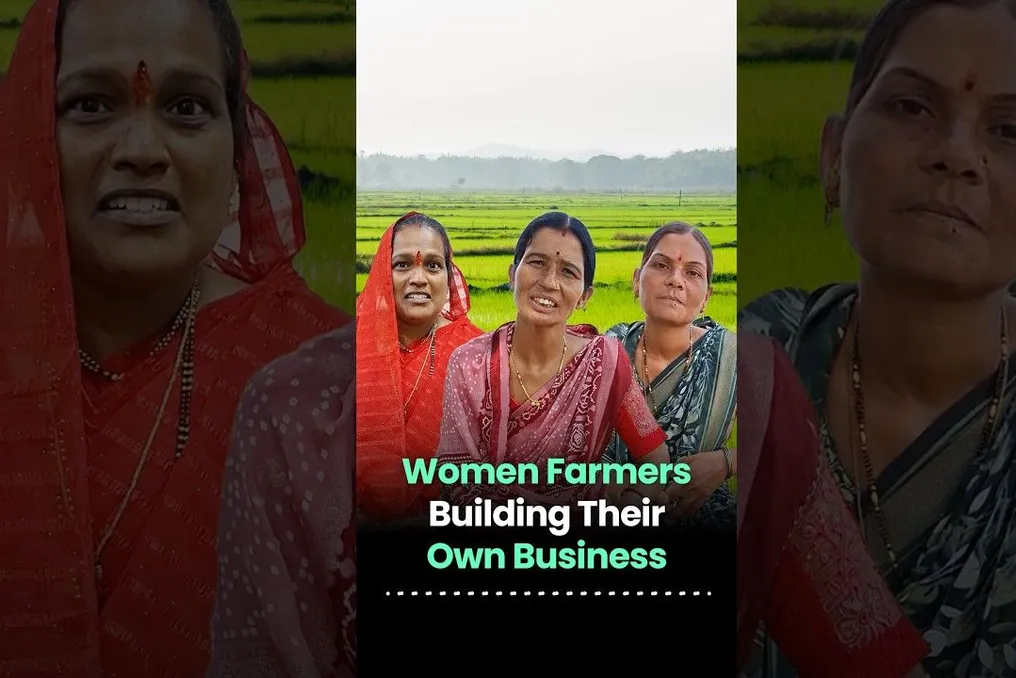
Women Farmers Create Own Business in Jhalna with Organizational Support
Read more
thebetterindia.com

Women Farmers Create Own Business in Jhalna with Organizational Support

Initially, the group consisted of twenty women farmers; however, today they lead an enterprise comprising 803 members from 18 villages.

Thanks to the support of the Unnati program from L&T and the Watershed Organisation Trust, the Shiv Swarajya Farmer Production Company in Jhalna, managed by a board of directors composed exclusively of women, has been able to start collective marketing of its products and find new sources of income. Furthermore, the cooperative benefits from improved water availability for agricultural needs.

As a result of these efforts, a farmer-owned business has been created that generates an annual income of 68 lakh rupees, with the leadership held by women farmers.

Popular