
Sarvam releases new artificial intelligence model Sarvam-105B-1711 with improved performance and reduced cost
Read more
YourStory [india, en]
yourstory.com

Sarvam releases new artificial intelligence model Sarvam-105B-1711 with improved performance and reduced cost

Sarvam AI has introduced the updated Sarvam-105B-1711 model, designed for businesses that process large volumes of customer queries, phone calls, and software-based tasks. The company stated that the new version follows instructions more reliably, utilizes digital tools better, and handles Indian languages more efficiently at a lower cost.

The model was released on November 22nd and is an update to the previous Sarvam 105B model, which debuted in March. The 105 billion parameter refers to internal values that the model adjusts during training to recognize patterns and generate responses.

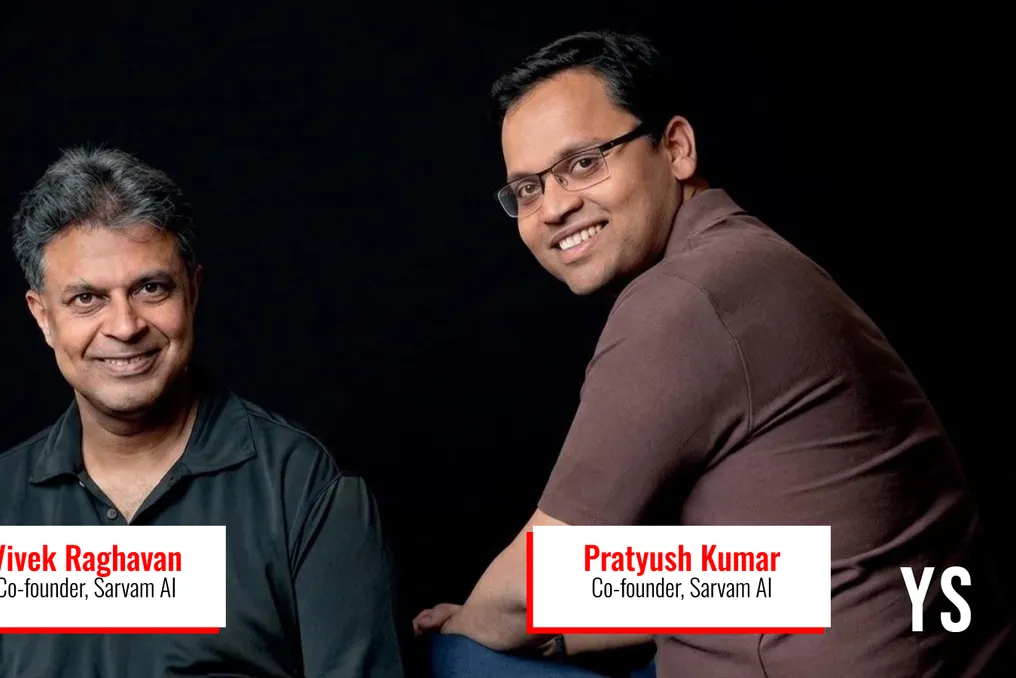
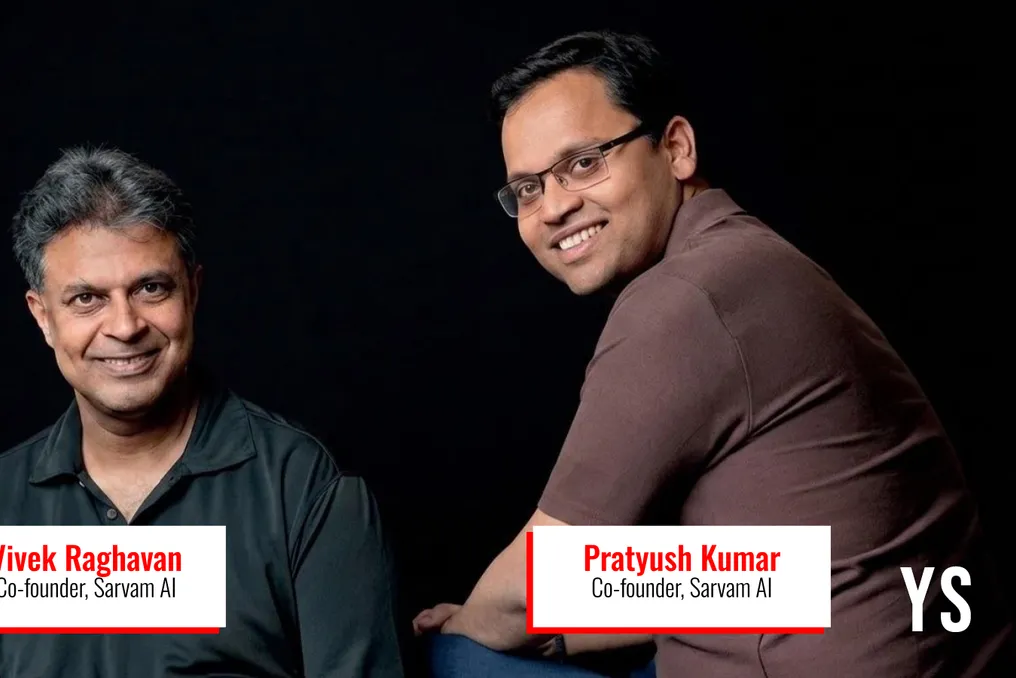
Sarvam reported that Nvidia Blackwell B200 chips—powerful processors specifically designed for AI computations—were used to train the new version. Co-founder Pratyush Kumar noted that over the past months, alongside building a token factory and scaling enterprise offerings, they optimized the training stack for Blackwell GPUs and achieved significantly higher performance.

Sarvam characterized this model as 'Flash-Lite,' indicating its development for handling a high volume of requests at relatively low costs. The model's architecture activates only specific parts to create each response, which helps reduce computational requirements. Potential use cases include customer service chatbots, voice assistants interacting with subscribers, and digital assistants performing tasks using other software.

The company made the trained model settings, known as weights, available for download, making it an open release. This allows enterprises with suitable hardware to run the model independently instead of relying entirely on Sarvam's online service. Furthermore, the company published instructions for running and training, although the data used for training is not necessarily public.

Sarvam reported that the new version scored an average of 73.9 out of eight tests, compared to 42.6 points for the March model. These tests evaluate the ability to follow instructions, write responses, use software tools, and work with Indian languages. These figures are average scores, not percentages of correct answers. Comparing itself, Sarvam places its model close to Google Gemini 3.5 Flash-Lite, which scored 74.0, and Gemma 4 31B, which scored 73.0.

Cost is a key aspect of this release. Sarvam noted that the total cost of processing text sent and generated by the model decreased from $0.44 to $0.15 per million tokens. Tokens are small fragments of text, sometimes entire words, and sometimes parts of words, that the AI model reads or generates. Indian rates are 10 rupees per million input tokens and 25 rupees per million output tokens.

This latest release is part of Sarvam's broader strategy to create models for various AI applications. Earlier in November, the company presented Sarvam Prism—a model built on its 105B system for quick and simple decision-making. In October, it also released Bulbul V4 Flash, which converts written text into natural-sounding speech, and in September, Saaras V4, which converts spoken language into text in 22 Indian languages.

Other Indian companies are also pursuing similar goals, although their models target different needs. In August, Gnani AI from Bengaluru introduced Evon v3.3—a 30-billion parameter model designed to operate in 11 Indian languages, as well as Plexus, a platform for creating AI assistants capable of performing tasks. Recently, under the IndiaAI mission, Soket Labs presented EKA-1—a 26.3-billion parameter model developed for all 22 approved Indian languages and English, applicable in mathematics, coding, and reasoning.
Similar stories

Sarvam clarifies its AI strategy amid discussions on hosting Chinese models
Read more
yourstory.com

Sarvam clarifies its AI strategy amid discussions on hosting Chinese models

After the Token Factory platform from Sarvam AI garnered both support and criticism, particularly due to the inclusion of AI models developed in China, co-founder Pratyush Kumar issued clarifications regarding the platform's funding, the use of computing resources, and its alignment with Sarvam's own ambitions in domestic AI.

Kumar stated that the IndiaAI mission provided approximately 20 startups with access to GPUs at a 40% discount. Sarvam utilized this support to train its 105-billion-parameter model from scratch. He emphasized that the government did not directly fund Sarvam; the subsidy was directed towards cloud GPU providers.

Launched on November 16, Token Factory allows developers and enterprises to access numerous AI models through a unified Application Programming Interface (API). The cost is calculated based on the number of tokens processed. Tokens are small text units read or generated by the AI model, while inference is the process of generating responses using a trained model.

The platform's catalog includes Sarvam's proprietary model alongside open-weight models such as DeepSeek, Kimi, GLM, and Google's Gemma. Open-weight models allow other users to download and run their trained parameters.

Kumar stressed that this business operates independently of government-supported training efforts. He stated: 'We serve many open-weight models on GPUs that we acquired privately, without any government support.' Sarvam also reported that its subsidized allocation of computing power will conclude in March 2026.

The inclusion of models developed in China has intensified debates about technological sovereignty. Sarvam's position is that the country of origin of the model and the location of the infrastructure on which it runs are separate issues. Hosting open-weight models on Indian GPUs means that requests do not necessarily need to be sent to external model providers.

However, internal hosting does not make a foreign-developed model Indian, nor does it transfer its intellectual property. Furthermore, this alone does not solve the problems of software supply chains and model behavior.

Sarvam asserts that a zero-data-retention policy is available upon request, meaning that queries and responses are not saved, although operational logs are regulated separately. Privacy is not guaranteed solely by data residency.

Kumar insisted that building inference infrastructure does not distract Sarvam from its core task—developing its own models. On November 22, the company introduced Sarvam-105B-1711, an updated, open-weight version of its 105-billion-parameter model, announcing improvements in reasoning, tool usage, and performance in Indian languages.

Sarvam noted that the model's average score across eight conversational agent benchmarks increased from 42.6 to 73.9. Kumar also mentioned future releases in computer vision, speech, and edge AI, as well as efforts to secure more advanced computing infrastructure for training larger models.

The commercial opportunity reflects a broader industry shift. As AI becomes part of everyday applications, the cost of multiple model runs can be as significant as the cost of their development. Sarvam is not alone in striving to capture this market.

Other Indian players, including L&T, Jarvislabs, Utho Labs, and Mirror Security, are also developing similar offerings, competing with established global providers like Together AI and Fireworks AI.

This activity occurs parallel to government efforts to strengthen domestic AI capabilities. The IndiaAI mission, approved in 2024 with a five-year budget of approximately 10,372 crore rupees, supports the development of foundational models and the overall computational framework. A June government update noted that 20 proposals for domestic models have been identified and 93 lakh GPU hours sanctioned under 237 projects.

Sarvam's decision to host Chinese AI models on Indian infrastructure sparks public debate
Read more
yourstory.com

Sarvam's decision to host Chinese AI models on Indian infrastructure sparks public debate

Sarvam AI's decision to host artificial intelligence developed in China on its infrastructure located in India has reignited discussions about the importance of creating sovereign AI.

Through its recently launched Token Factory offering, which provides access to models from DeepSeek, Moonshot AI, and Z.ai, alongside its own developments and Google's Gemma model, the Bengaluru-based company positions itself as an AI developer and inference service provider.

This move has drawn criticism from those who argue that the state-backed company should prioritize original research within India. However, there are also supporters who see commercial benefits in locally hosting international models.

Announcing this service, Sarvam stated: 'We host our own models and a full range of the best open models in India.' The company also noted that enterprises will gain more model options and an 'AI stack they can own without being tied to a single vendor.'

Token Factory is an inference platform that provides the computational backbone necessary to run trained AI models and generate responses. Instead of independently acquiring expensive hardware and managing separate models, developers can access multiple models through a unified application programming interface.

Sarvam asserts that its specialized software and infrastructure allow it to compete in terms of speed, reliability, and cost.

The Debate

Criticism centers on the distinction between AI hosting and AI development. Sanchit Monga, CEO of Runanywhere AI, an AI infrastructure company supported by Y Combinator, questioned whether the launch reflects the ambitions associated with Sarvam's selection under the mission of IndiaAI by the Indian government. He wrote: 'I wanted Sarvam to be a laboratory that brings cutting-edge research out of India. After so much capital and subsidized computing, this is not the case.'

Similar concerns were voiced by technology commentator Shakti, who argued that hosting predominantly Chinese models does not align with the goals of the country's sovereign AI.

The discussion became particularly interesting following statements by Sarvam co-founder Vivek Raghavan at the Bengaluru technology summit on November 17. Warning against India's dependence on foreign AI systems, he stated: 'Many people are proud that India is the largest user of ChatGPT. But that is not good. We export data and import intelligence.'

Although he did not directly address Token Factory, his comments underscore strategic concerns related to reliance on models developed abroad.

Nevertheless, there are strong commercial arguments in favor of Sarvam's approach. Hemant Mohapatra, a partner at Lightspeed India and investor in Sarvam, defended the launch, noting that international inference providers are already making money by hosting foreign models in India. He countered that there is significant demand for such services, especially as computing power becomes increasingly complex in some markets.

Tech entrepreneur Nikhil Pahwa also advocated for the necessity of the company building a sustainable business. He wrote: 'It is a business, and it must work in the interest of shareholders. Nationalism is the pitch that got them GPUs. They are not expected to do more than fulfill a contract.'

Nishal Jain, co-founder of Egma AI, offered a more balanced assessment. While acknowledging that companies must generate revenue, he argued that Sarvam has acquired particular significance in India's tech ecosystem. He wrote: 'Sarvam was supposed to be India's answer to the US and China. When we don't see their leading labs doing similar things, it is demotivating in an already difficult situation. Everyone must make money, and I sympathize with both sides of the debate.'

Questions have also arisen regarding the platform's competitiveness. Atarva Ingle, an AI engineer at competing inference provider JarvisLabs, stated that his company compared the performance of three models on two platforms. He claimed: 'We are equal to or faster than Sarvam in terms of speed and latency while offering lower prices.'

The broader context relates to India's attempt to reduce dependence on foreign AI technologies.

The IndiaAI mission, approved in March 2024 with allocations of approximately 10,372 crore rupees, aims to strengthen domestic computing infrastructure, research, and development of foundational models.

Sarvam was selected in 2025 to develop indigenous models and received subsidized access to 4096 Nvidia H100 GPUs. The reported subsidy amounted to 98.68 crore rupees. The company has also raised over $300 million with a stated valuation of $1.5 billion.

Ultimately, hosting foreign models on Indian infrastructure and developing indigenous models are different achievements, although they do not necessarily have to be mutually exclusive. Local hosting can improve data residency, accessibility, and computational efficiency, while a successful inference business can generate revenue to support further research.

The more important test will be whether Sarvam can translate its public support and commercial expansion into original technologies and competitive Indian models.

Popular