TVS NTorq 125 is the most affordable and unique automatic option among the brand's debut models in Brazil
Read more
AutoPapo
autopapo.com.br

TVS NTorq 125 is the most affordable and unique automatic option among the brand's debut models in Brazil

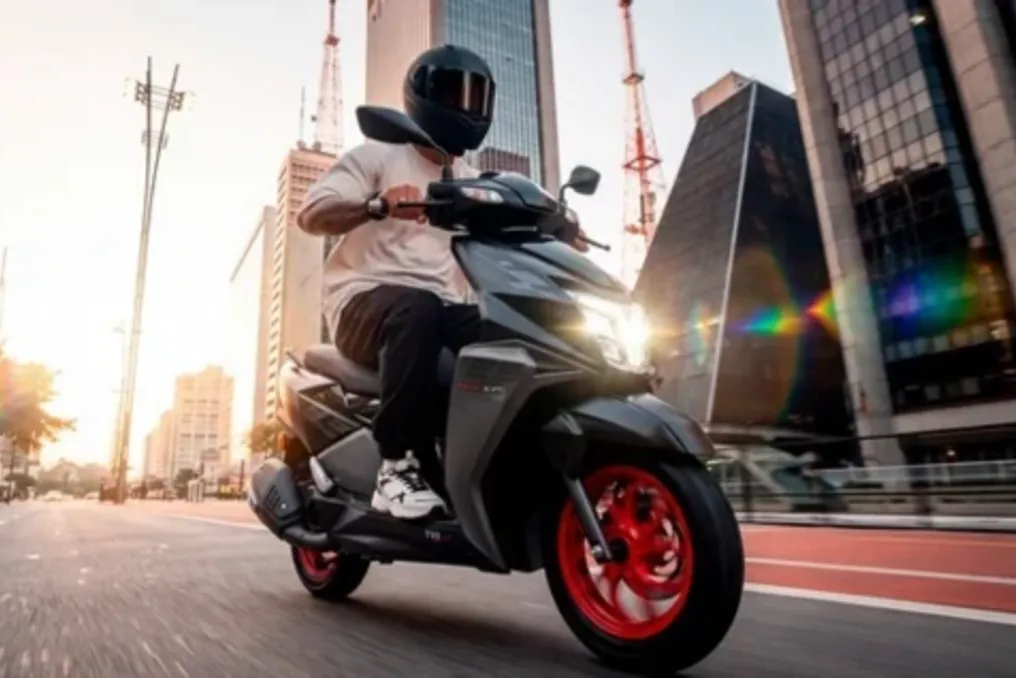
The TVS NTorq 125 establishes itself as the most economical model among the four vehicles marking the official return of the Indian brand to the Brazilian market, in addition to being the only one offered with an automatic transmission. Its price is R$ 15,200 plus shipping costs, and it is a scooter equipped with a 124.8 cm³ engine, weighing 111 kg, and featuring a 22-liter storage compartment under the seat.

Although it seems like a simple choice for urban commuting, the NTorq 125 should be compared to the Raider 125, which has the same engine but costs R$ 1,300 more and has higher consumption. The NTorq 125 engine is a single-cylinder, 124.8 cm³ unit with three valves, air-cooled, coupled to a CVT gearbox. It generates 10.2 hp at 7,000 rpm and 1.11 kgfm at 5,500 rpm, with a declared fuel economy of 40 km/l according to the WMTC cycle.

In contrast, the Raider 125, also with 124.8 cm³, produces 11.4 hp at 7,500 rpm and achieves 51 km/l in Eco mode. This difference in performance and cost of R$ 1,300 is partially attributed to the start-stop system present in the Raider 125 in Eco mode, something the NTorq 125 lacks, in addition to the inherent difference in transmissions.

When compared to the two Apache motorcycles, the NTorq 125 surpasses both, which register 36 km/l and 37 km/l respectively in Urban mode. The scooter only falls behind the fuel-economy focused model.

The NTorq 125 offers two riding modes, Street and Race; the 10.2 hp mentioned by TVS corresponds to Race mode. The performance in Street mode, which is the most likely to be used, has not been disclosed by the manufacturer. These sporty names aim to reinforce the scooter's appeal, but the practical gain from switching between modes, with 125 cm³ and 10.2 hp, tends to be discreet, serving primarily to adjust throttle response.

A significant differentiator of the NTorq 125 is its under-seat compartment, which offers 22 liters and includes a USB port, a feature absent in the other three new models, since these latter have a fuel tank between the rider's legs. This space is crucial for urban use, allowing items such as helmets, backpacks, or groceries to be carried without relying on an additional trunk.

The rest of the equipment follows the standard of the other launched bikes. The dashboard is digital and features SmartXonnect connectivity, which mirrors cell phone data via Bluetooth, and the headlight is LED with daytime running lights. The USB port specific to Brazil, mentioned by the manufacturer, applies to both Apache models but not to the scooter.

Technical Specifications of the TVS NTorq 125

The dimensions of the NTorq 125 are 1,861 mm in length, 710 mm in width, and 1,164 mm in height, with a wheelbase of 1,285 mm, ground clearance of 155 mm, and curb weight of 111 kg. Both wheels measure 12 inches. Being the smallest and lightest in the group, it weighs 41 kg less than the Apache RTR 200 4V, which has a curb weight of 152 kg. The reduced wheelbase aids maneuverability in parking lots and in congested traffic.

However, the ground clearance of 155 mm is lower than the 180 mm of the RTR 200 and the 190 mm of the Raider 125, and its 12-inch wheels are smaller than the 17-inch wheels of the Raider. This configuration requires greater attention from the rider on uneven surfaces, such as potholes, high speed bumps, and curbs, which is relevant for a large part of the public that uses 125 cm³ scooters in Brazil.

In terms of safety, the NTorq 125 uses a 220 mm front disc and a 130 mm rear drum, with the CBS (combined braking) system to distribute force between the wheels, lacking ABS. The front disc is the smallest in the line, compared to the 240 mm of the Raider 125 and the 270 mm of the two Apache models. The absence of ABS complies with Resolution 509/2014 of Contran, which requires the system only on motorcycles above 300 cm³, leaving the choice between ABS and CBS for smaller models, which also applies to the Raider 125.

This component choice contributes to the price but results in the NTorq 125 having the most basic braking system of the launch, without the feature that minimizes the risk of skidding on wet surfaces.

The cash price of the TVS NTorq 125 is R$ 15,200, excluding shipping, making it the cheapest of the four options. Direct sales by the brand, whether cash or installment payments up to 24 times on the card, will begin in January 2027, at TVS-Mottu dealerships. Until then, access is through the Conquiste Plan, a rental service with a purchase option offered by Mottu, costing R$ 610 monthly, with a R$ 2,000 deposit and a 48-month contract, without the need for credit analysis or guarantor, including documentation and IPVA, and available through the application. At the end of the term, the customer can acquire the scooter under the contractual conditions, the details of which were not specified.

The initial operation will take place in nine capitals in 2026: Belo Horizonte, Brasília, Campo Grande, Cuiabá, Curitiba, Fortaleza, Goiânia, Manaus, and São Paulo. Eight more cities will be added in the first quarter of 2027, including Belém, João Pessoa, Maceió, Porto Alegre, Recife, Salvador, São Luís, and Teresina. The remaining capitals should receive commercial infrastructure throughout the following year. The brand has already inaugurated its first concept store at Avenida dos Bandeirantes, 1,747, in Vila Olímpia, São Paulo, featuring a 149 m² showroom within a total area of approximately 250 m².
Similar stories

TVS Raider 125 is considered the most suitable option among the models launched by the brand in Brazil
Read more
autopapo.com.br

TVS Raider 125 is considered the most suitable option among the models launched by the brand in Brazil

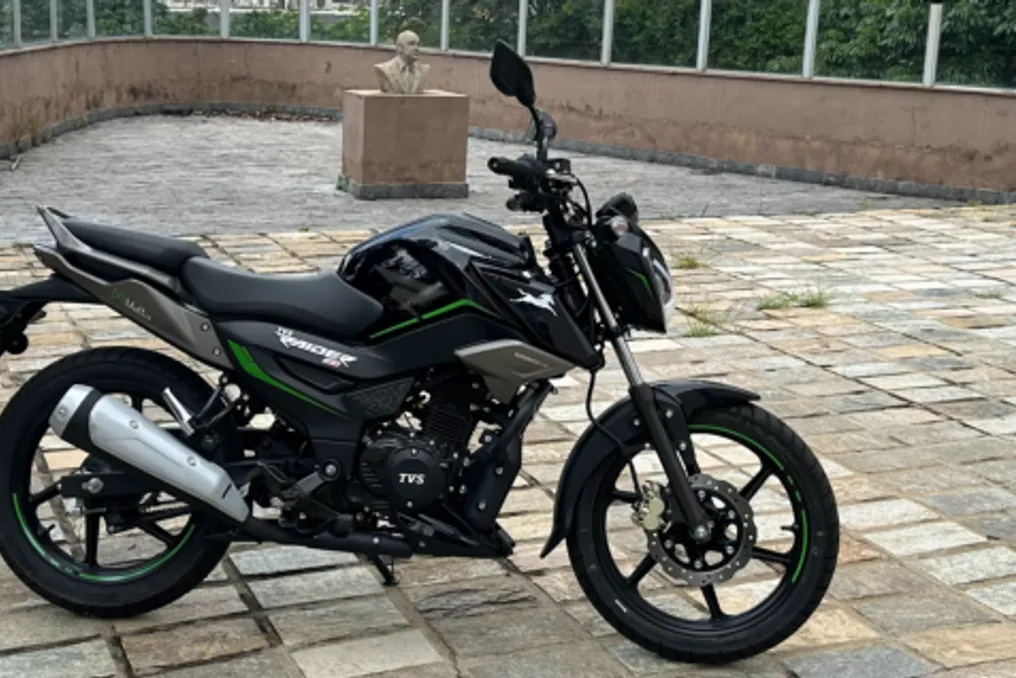
TVS began its presence in the Brazilian market with a portfolio of four motorcycles: two sporty versions, the Apache RTR 200 4V and the RTR 160 4V; a 125 scooter; and the Raider 125, which presents itself as the most promising model. Despite being one of the smaller options, the Raider 125 stands out due to its technology, comfort, balanced performance, and economy.

After testing, it was concluded that the model even surpasses its higher displacement siblings. In terms of engine, the Raider 125 uses a 124.8 cm³ single-cylinder engine, which is air-cooled and equipped with electronic fuel injection, coupled with a five-speed transmission. This engine generates 11.4 hp at 7,500 rpm and 1.2 kgfm at 6,000 rpm, values superior to those of direct competitors such as the Shineray Jet 125 (8.15 hp) and even the Honda Biz (9.53 hp).

In practice, this mechanical configuration ensures efficient riding, without the smaller size of the vehicle causing any feeling of loss of power. Regarding structure and riding dynamics, the model differs from the 200 and 160 siblings, which have sporty characteristics and a riding style similar to other Indian models. However, for the Brazilian driver, accustomed to Japanese brands, the Raider 125 offers a dynamic very similar to that of the CG and Fazer sold in the country.

The motorcycle dimensions are 2,070 mm in length, 785 mm in width, and 1,028 mm in height, with a wheelbase of 1,326 mm. The seat is positioned 781 mm from the ground, has a ground clearance of 190 mm, and weighs 123 kg dry. The wheels are 17-inch alloy on both ends, using 80/100 tubeless tires in the front and 100/90 in the rear.

The front suspension system consists of a traditional telescopic fork. In the rear, there is a gas shock absorber with five levels of preload adjustment, allowing the bike to be adjusted for both load weight and passenger presence. The braking systems are basic: a 240 mm disc in the front and a 130 mm drum in the rear, both with CBS (combined braking) to distribute force between the wheels, but without ABS. This setup is considered simple, consistent with what is expected for a 125cc bike, without major surprises.

Another positive point is the seat, which is split and wide, making it the most comfortable among the Raider and the Apache RTR 160 4V and RTR 200 4V. Furthermore, the footrests for the passenger are lower, providing more legroom for the person behind. Combined with its urban profile, this makes the Raider 125 the best choice among the three for passenger transport, highly recommended for those working as motorcycle taxis.

In terms of technology, the differential lies in the start-stop system. Although it is efficient in fuel consumption and works in Eco mode, where TVS announces 51 km/l in the WMTC cycle, some users may find it inconvenient because the engine shuts off whenever the bike stops. In Power mode, which is sportier, this system is deactivated. The dashboard is digital and includes a trip computer, gear indicator, and high beam warning light. The headlight is Full LED, but the turn signals remain analog. A USB port located near the handlebars complements the features.

Although the Raider 125 is not the most powerful or the best equipped among the four bikes introduced by TVS in Brazil, it fulfills the purpose for which it was designed more cohesively: city riding with low consumption and satisfactory handling. Its limitations follow the category standard, such as the absence of ABS and a functional but basic braking system.

The cash price of the Raider 125 is R$ 16,500, excluding shipping costs. Direct sales by TVS, whether cash or installment up to 24 times on the card, will begin in January 2027, at TVS-Mottu dealerships. Until that date, consumers can opt for the Conquiste Plan, which is a rental with purchase option offered by Mottu: the monthly value is R$ 640, requiring a deposit of R$ 2,500 and a 48-month contract, without the need for credit analysis or guarantor, with documentation and IPVA included. At the end of the contractual period, the customer has the possibility to acquire the motorcycle under the stipulated conditions.

The brand's operation will begin in nine capitals in 2026—Belo Horizonte, Brasília, Campo Grande, Cuiabá, Curitiba, Fortaleza, Goiânia, Manaus, and São Paulo—expanding to eight more cities in the first quarter of 2027.

Technical specifications: TVS Raider 125

Yamaha launches NMAX 2027 with new suspension and R$ 300 price increase
Read more
autopapo.com.br

Yamaha launches NMAX 2027 with new suspension and R$ 300 price increase

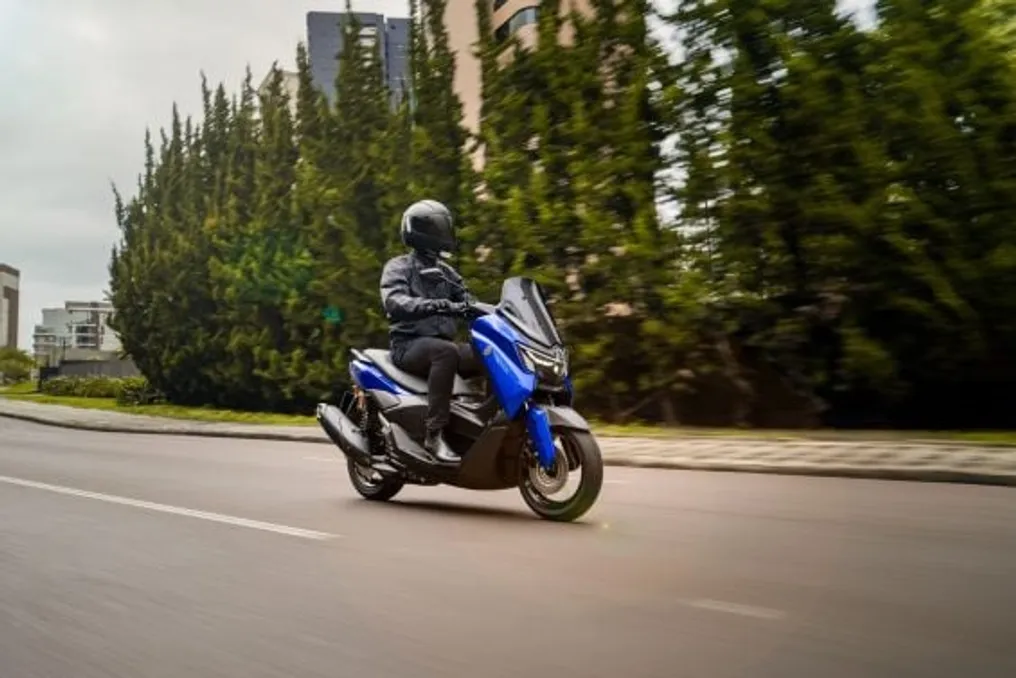
Yamaha has implemented updates to the NMax ABS Connected for the 2027 version, focusing specifically on the rear suspension. The scooter now incorporates KYB shock absorbers equipped with a subtank, meaning a separate gas reservoir, and its suggested price has been adjusted to R$ 23,590, representing an increase of R$ 300 compared to the previous model.

Unlike the 2026 line, which only introduced new color options, the change in this generation focuses on driving dynamics rather than electronic features. The new rear assembly features two shock absorbers with subtanks that offer a 91 mm travel. The front suspension remains unchanged, maintaining the 100 mm telescopic fork.

The separation of gas from oil in the shock absorber reservoir aims to ensure greater stability in system response, especially when the component heats up during urban use on uneven surfaces or when carrying passengers. Yamaha attributes this modification to increased vehicle comfort.

In terms of mechanics, the scooter retains the 155 cm³ single-cylinder engine, equipped with a DiASil cylinder and VVA system. This system allows for varying the timing of the intake valve opening and closing depending on the rotation and applied load. The transmission remains automatic CVT, generating 15.1 hp at 8,000 rpm and 1.4 kgfm at 6,500 rpm, and it has a 7.1-liter tank. The Stop & Start feature, which shuts down the engine at stops and restarts it upon acceleration, is also present.

Safety and standard items remain robust: the NMax uses 230 mm disc brakes both front and rear, both with ABS. The tires are models 110/70-13 and 130/70-13. Traction control remains a standard item, acting to reduce rear wheel slip on slippery surfaces, although the company presents it as a comfort feature.

The instrument panel is fully digital with a dark background, displaying information such as speed, time, fuel level, engine temperature, and indicators for ABS, traction control, VVA, Stop & Start, Smart Key, and the ECO function, which alerts about lower fuel consumption. Other maintained features include full LED lighting, presence key with Answer Back (which turns on turn signals and emits sound for location), USB-C port, lidded storage compartment, and Bluetooth connectivity with the Yamaha Motor On app, used to record usage data, performance, maintenance, and parking location.

The two-level seat and the under-seat compartment, suitable for storing a closed helmet, remain the same. The NMax ABS Connected 2027 is sold for R$ 23,590, without shipping or insurance costs, compared to R$ 23,290 for the 2026 line. The extended warranty is four years, and the model participates in the Fixed Price Revision program. Available colors are Racing Blue, Magma Brown, and Solar Red, identical to those of the previous version.

In this market segment, the scooter remains positioned above the Honda PCX 160, its direct competitor, which offers more affordable versions and an engine with similar performance. The price difference between the models requires the more complete equipment set and the new suspension to justify the additional cost.

The manufacturer has not yet disclosed the exact arrival date of the 2027 line in dealerships.

TVS introduces new Ntorq 150 scooter in Spectral Green with updated design
Read more
www.aajtak.in

TVS introduces new Ntorq 150 scooter in Spectral Green with updated design

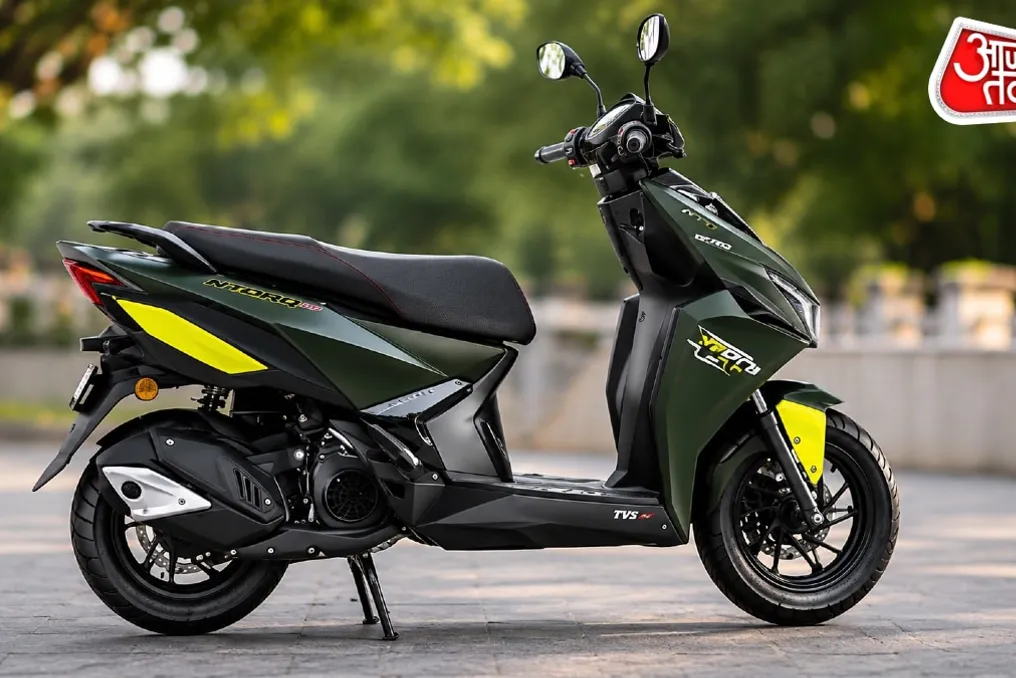
In the Indian market, among buyers who prefer sporty scooters, the TVS Ntorq occupies a special niche. The company has released this scooter with a new appearance. TVS has introduced the new color Spectral Green for its powerful Ntorq 150 scooter. This new shade may appeal to those who want their scooter to look original while avoiding overly bright or flashy colors.

The new Spectral Green shade for the TVS Ntorq 150 looks very attractive. It features a dark olive body finish complemented by graphics in grey and fluorescent yellow. Fluorescent yellow accents are also present on the front fender and side panel of the scooter. Compared to the other three colors, this new shade appears more subdued and premium.

This design combines a sporty look with a unique style, making it a good choice for customers who want to move away from black or other standard colors. With the arrival of this new color, the Ntorq 150 is now available in a total of four color variants.

Besides the new color, TVS has not made any mechanical changes to the Ntorq 150. The scooter is equipped with a three-valve, air-cooled engine with a displacement of 149.7 cc, as before. This engine generates 13 hp and a torque of 14.2 Nm. Thus, customers who choose the new Spectral Green color will get the same engine experience and performance as before. The company has only changed the exterior appearance.

Since the new Spectral Green color is available only in the TFT variant, it includes a 5-inch TFT display. This display provides smartphone connectivity and numerous related functions through TVS's SmartXonnect system. Furthermore, the scooter is equipped with two riding modes, traction control, and the TVS iGo Assist function.

Regarding the price, the standard version of the TVS Ntorq 150 costs ₹1,12,900 (excluding taxes). Customers will have to pay ₹1,22,100 for the TFT variant. The new Spectral Green color is available specifically in this TFT variant. Thus, the company has updated the appearance of the Ntorq 150 without changing the engine or functionality. Now it remains to see how much the new Spectral Green shade will appeal to buyers.

Popular