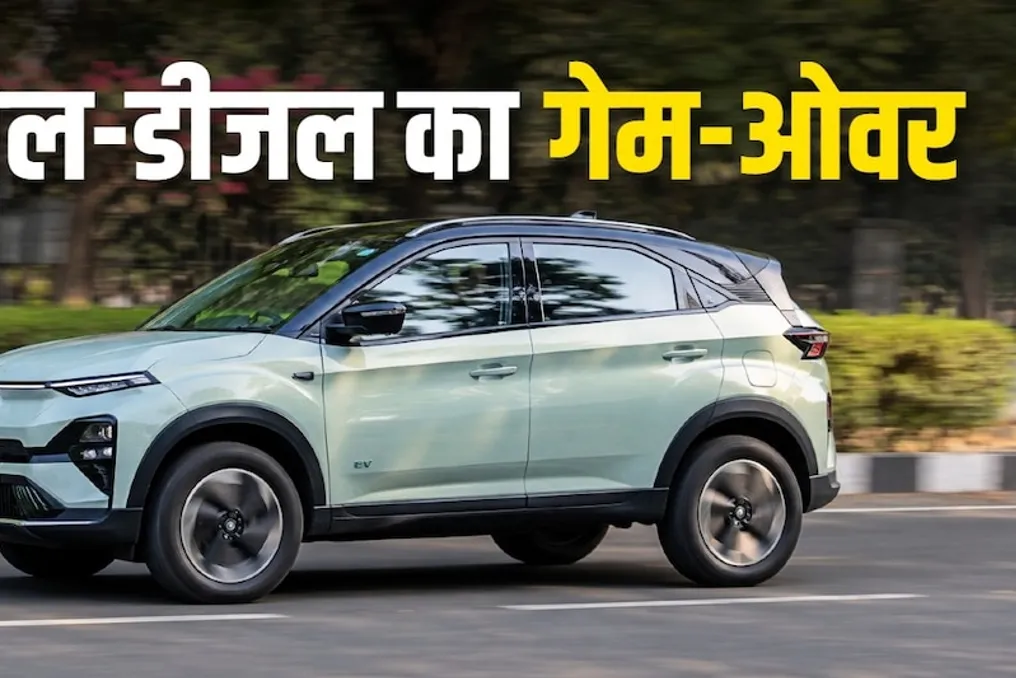
Electric vehicle sales rose by 72.91% during the festive season; over 500 thousand units sold
Read more
Aaj Tak
www.aajtak.in

Electric vehicle sales rose by 72.91% during the festive season; over 500 thousand units sold

A significant shift is observed in the Indian automotive market: consumers are increasingly moving away from gasoline and diesel vehicles, showing growing interest in electric cars. This trend became evident during the 2026 festive season.

Between Navratri and Diwali, there was an impressive 72.91% increase in the sales of electric passenger vehicles. These figures indicate that electric vehicles are no longer just a futuristic concept but are actively integrating into daily life.

According to data from the Federation of Automobile Dealers Associations (FADA), the total number of vehicles sold during this festive period, which lasted about 42 days, reached a record 55,25,490 units. The demand for electric vehicles caused a sensation, as more than half a million electric vehicles were sold for the first time in a single festive season.

The rise in popularity of electric vehicles is driven by several key factors. The main one is the low operating cost, as the expenses for using an electric vehicle can be lower than those for gasoline or diesel cars. Furthermore, more EV models with increased range have appeared on the market. This provides buyers with a wide selection of options matching various price categories and needs. The segment has also strengthened due to improved battery technologies, the development of charging infrastructure, and the release of new models.

The entire EV market demonstrated brilliant results during the festive season. According to FADA, sales across all EV categories grew by 52.62% over 42 days, exceeding the 500,000 unit mark for the first time. Specifically, sales of electric two-wheelers, such as scooters and motorcycles, increased by 61.10%, while commercial electric vehicle sales doubled. Approximately one in every ten vehicles sold during the festive season was electric.

A breakdown of sales during the festive season (42 days) shows that 330,846 units of purely electric two-wheelers were sold, which is 61.10% more than the 205,373 units sold in the same period last year. Regarding electric cars and SUVs, 52,104 passenger vehicles were sold between Navratri and Diwali, representing a 72.91% increase over the 30,133 recorded in the previous festive season.

Commercial electric vehicles showed the strongest growth, reaching approximately 154.56%. 6,387 such units were sold in the last 42 days, significantly more than the 2,509 sold last year. Electric three-wheelers are also gaining momentum: 1,20,330 electric rickshaws and autos were sold, which is 25.45% higher than the 95,920 sold last year.

Overall, the statistics clearly demonstrate the growing consumer interest in electric vehicles. It is expected that the growth of this segment will continue and accelerate in the future due to improved range, lower prices, and an expanded network of charging stations.
Similar stories

Global sales of electric cars grow in October, driven by Europe and Chinese exports
Read more
autopapo.com.br

Global sales of electric cars grow in October, driven by Europe and Chinese exports

Sales of electric vehicles and plug-in hybrids showed a global recovery in October, with an 8% increase compared to the same period last year. This growth was significantly influenced by factors external to China.

In total, 2.09 million units were sold in the month, raising the cumulative total from January to October to 17.5 million, representing an overall increase of 5% for the period.

Europe was a major driver of this growth, recording 510 thousand units sold, a 36% increase. This European advance is mainly attributed to 100% electric vehicles, which grew by 49%. Factors such as available subsidies, rising fuel prices, European Union emission regulations, and a greater variety of models are explaining this rise.

Within Europe, Germany stood out, where electric and plug-in cars accounted for over 45% of all new vehicles registered.

In contrast, China, which holds the largest global market, saw its sales decrease by 12%, reaching 1.14 million units. Due to weak domestic demand, manufacturers intensified their export strategies, shipping nearly 600 thousand electric and plug-in cars in October, setting a monthly record.

These exported vehicles contributed to an 85% growth in the rest of the world, excluding China, Europe, and North America, totaling 300 thousand units, more than double the volume recorded in North America.

In the United States, October marked the first month after the expiration of the federal tax credit for electric cars, which occurred in September of the previous year. For this reason, the 24% increase in the region may be misleading, as Charles Lester, Data Manager at Benchmark, stated that the American market stabilized at a lower level without recovering.

Brazil is part of the group of markets with the greatest expansion; however, Benchmark Mineral Intelligence points out that the sector's momentum in the country is limited. The consultancy observed that part of this initial growth was driven by importers who anticipated shipments before the progressive increase in import tax and amid a fuel crisis that stimulated demand.

It is expected that when tariffs reach the maximum limit and fuel prices fall, the main support for the Brazilian market will come from local BYD production.

Additionally, the Brazilian Electric Vehicle Association (ABVE) reported that 54,486 electrified vehicles, including hybrids that do not require external charging, were sold in Brazil in October, marking a record for the segment.

Over 300 thousand electric vehicles sold in India: Demand growth and company leadership
Read more
www.aajtak.in

Over 300 thousand electric vehicles sold in India: Demand growth and company leadership

The demand for electric vehicles in the Indian market is showing steady growth, reflected on the roads where significantly more electric cars can now be seen, especially in major cities. Sales have reached record levels.

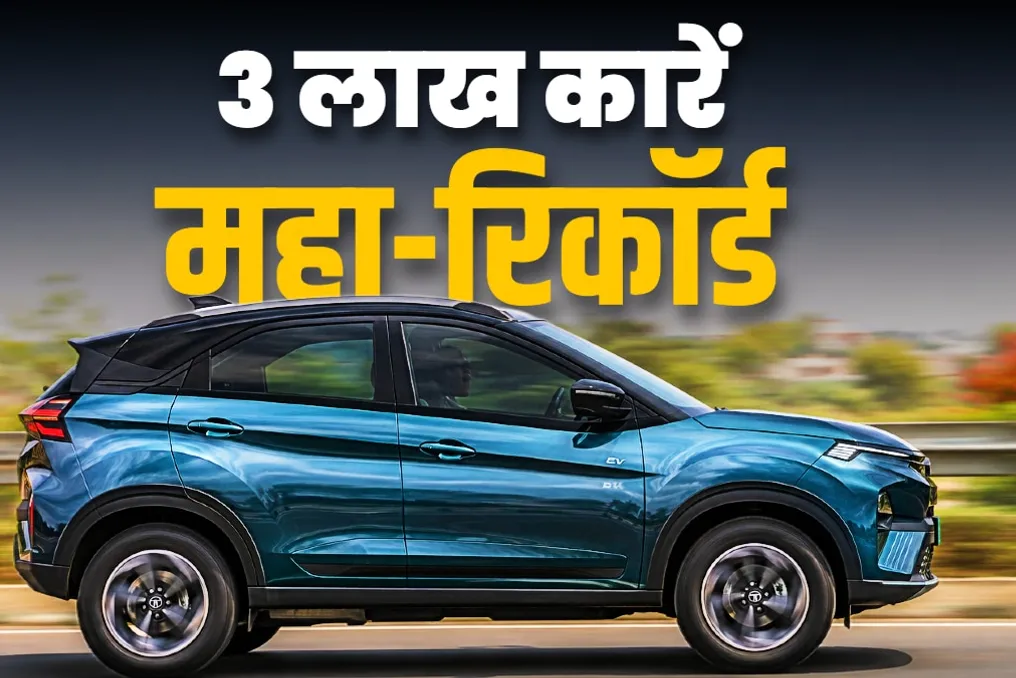
In 2026, sales of electric passenger vehicles exceeded the 300,000 unit mark for the first time. Notably, this figure was achieved just one and a half months before the end of the year, surpassing the results of the entire previous year. Tata Motors maintained its lead in this race, while Mahindra secured second place, overtaking MG Motor.

According to VAHAN data, from January 1 to November 9, 2026, a total of 304,701 electric vehicles, including SUVs and MPVs, were sold in the country. This volume exceeds the figures for the same period last year by 66%. In 2025, 195,571 electric passenger cars were sold for the full calendar year, meaning that as of now in 2026, 109,130 more units have been sold, representing an increase of about 56%.

The growth in demand for electric vehicles this year accelerated starting in June, when monthly sales first exceeded 30,000 units, and this trend continued for the following five months. Sales set a new record in September.

The growing demand for electric passenger vehicles is influencing the entire electric vehicle market in India. To date in 2026, 29.7 million electric vehicles have been sold in the country, of which 304,701 are electric cars, SUVs, and MPVs. Consequently, the share of passenger vehicles in the total electric vehicle sales volume has increased to 10%, up from 8% last year.

Nevertheless, two-wheeled models lead the electric vehicle market, with 18.5 million units sold, accounting for 62% of the market. Next are three-wheeled electric vehicles, with 785,965 units sold, making up 26% of the market. Commercial electric vehicle sales amounted to 28,865 units, corresponding to approximately 1% of the market.

In the electric passenger vehicle segment, Tata Motors remains the largest company. From January 1 to November 9, 2026, the company sold 120,895 electric cars, which is 58% more than the 76,644 units sold in 2025. Tata Motors' share in the total volume of electric passenger vehicles sold this year is about 40%.

Tata Motors has the largest portfolio of electric vehicles. Among the company's six models, the Nexon EV is the best seller. Additionally, there is increased interest in the updated Tiago EV and Punch EV models.

The most significant change this year occurred in the battle for second place. Mahindra & Mahindra managed to secure the second position, surpassing MG Motor. The company sold 69,660 electric SUVs in 2026, which allowed it to increase its market share to 23%.

MG sold 56,988 electric cars so far. Its market share is 19%, placing it in third place. Last year, the company sold 57,239 electric cars for the full calendar year, holding a market share of 29%. The most popular MG model became the Windsor EV.

Vinfast, a Vietnamese electric vehicle manufacturer that entered the Indian market about a year and a half ago, has also made progress. To date, the company has sold 15,867 electric cars, ranking fourth with a 5% market share.

Popularity of alternative fuel vehicles grows in India: CNG, hybrids, and EVs surpass gasoline and diesel models
Read more
www.aajtak.in

Popularity of alternative fuel vehicles grows in India: CNG, hybrids, and EVs surpass gasoline and diesel models

A noticeable shift is occurring in the Indian automotive market: the dominance of gasoline is weakening as vehicles running on compressed natural gas (CNG), hybrid, and electric models gain popularity. In October, the share of these three types of vehicles exceeded that of gasoline cars.

Meanwhile, the total volume of car sales decreased by 14.23% year-on-year. However, compared to September, the market showed an increase of 18.86%, indicating that the market is not stagnant but rather that consumer preferences are changing. Data provided by FADA confirms this trend.

According to the latest FADA data, 507,768 passenger vehicles were sold in October. Nevertheless, the timing of Diwali in November influenced October's sales. This month sees a significant change in buyer preferences, with consumers increasingly choosing alternative fuel vehicles over gasoline and diesel ones.

Comparing with last year, 592,032 passenger vehicles were sold nationwide in October of the previous year. Compared to this year, the figure dropped to 507,768 units, reflecting a 14.23% decline in year-on-year sales. However, when compared to September 2026, the picture looks much better: 427,213 passenger vehicles were sold in September, while in October, the number increased to 507,768 units, representing a monthly sales growth of 18.86%.

FADA believes that the drop in annual sales should not be seen as a lack of market demand. The main reason is the high demand last year, when the Navratri and Diwali festivals occurred simultaneously in October. Furthermore, purchases grew despite the reduction in tax rates under GST 2.0. In 2026, customers postponed their purchases for a while because Diwali was moved to November, which affected October figures.

In October, sales of passenger vehicles grew in both urban and rural areas, with the urban market showing better results. Compared to September, retail sales of cars in urban areas rose by 20.10%, accounting for 61.7% of total sales. In rural areas, the monthly growth was 16.90%, with the rural sector accounting for 38.3% of the total passenger vehicle sales.

The most significant change in the automotive market in October relates to fuel choice. For the first time, the combined share of vehicles with supplementary fuels, such as CNG, hybrids, and electric vehicles, surpassed the share of gasoline and ethanol blends. According to statistics, the overall share of gasoline and ethanol vehicles decreased to 41.60% in October, compared to 48.96% in October 2025. On the other hand, the share of vehicles with supplementary fuels grew to 41.83%. CNG vehicles contributed the most to this growth, reaching a share of 24.59%. The share of hybrid vehicles was 9.94%, and the share of electric vehicles was 7.30%. The share of diesel vehicles remained at 16.57%, indicating a shift by consumers from gasoline and diesel to other types of fuels.

One factor contributing to this is the rise in gasoline prices and recent debates surrounding E20. Consumers remain uncertain about E20 fuel. The government acknowledged that using E20 fuel could lead to a 3% to 6% decrease in fuel consumption. Additionally, the possibility of component damage in older vehicles may have forced buyers to change their choices.

Demand for electric passenger vehicles also significantly increased. During Navratri 2026, retail sales of electric vehicles jumped by 36.66%, reaching 13,349 units. This is attributed to the price of electric vehicles approaching the prices of gasoline and diesel models, as well as improved range, making EV purchase more accessible to customers.

According to FADA, the inventory level of passenger vehicles in October was maintained at 43–45 days, unchanged from September. However, it is expected that purchases will increase in November during Dhanteras and Diwali, which could lead to a decrease in dealer stock. Actual sales data during Diwali is yet to be received.

Popular