Admission rules changed in Delhi private schools: enrollment for groups from nursery to Grade 1 starts December 1
Read more
Aaj Tak
www.aajtak.in

Admission rules changed in Delhi private schools: enrollment for groups from nursery to Grade 1 starts December 1

Parents preparing to enroll their children in private schools in Delhi should be aware of important changes. The admission process for Nursery, Lower KG, Upper KG, and Grade 1 for the 2027-28 academic year will start on December 1, 2026. Parents can submit applications until December 28.

Significant adjustments have been made in this admission campaign. In the new academic year, Lower KG and Upper KG groups will be introduced as separate entry levels. Furthermore, rules regarding children's ages have been modified.

According to the updated age structure for the foundational stage, children entering Nursery must be at least three years old or under four years old by March 31, 2027. For Lower KG, the minimum applicant age must be four years or less than five years, while Upper KG requires an age of at least five years but less than six years.

The official circular states that within the restructured primary stage for the 2027-28 academic year, Lower KG and Upper KG groups will be launched as separate primary level classes. Children who attended Nursery in the 2026-27 academic year will be transferred to Lower KG. New admissions to Lower KG will also be permitted for those meeting the age criteria.

Students who were in KG during the 2026-27 academic year will move to Grade 1 in the following academic year according to the existing structure. Schools must provide parents with application forms before the deadline. Parents can pay a non-refundable registration fee of only 25 rupees, and purchasing brochures remains optional.

The Directorate has instructed schools to apply fair, reasonable, and transparent admission criteria. Schools cannot use criteria previously abolished by the department, including factors such as parental qualifications or profession, gender, non-smoking habits, vegetarianism, or interviews.

According to PTI, scores assigned to applicants will be uploaded on January 4, 2027. Parents can ask questions or appeal the scores assigned to their children from January 5 to January 11. Final scores will be presented on January 12.

If multiple applicants competing for a limited number of spots have the same score, the school must conduct a lottery. This process must be completely transparent, accompanied by video recording, and take place in the presence of parents and a designated Directorate representative. Schools are obliged to notify parents about the draw no later than five days in advance. To ensure transparency, they must also conduct a preliminary trial run in the presence of parents and Directorate representatives. District-level monitoring cells will oversee compliance with the rules, check school admission criteria, and resolve parental complaints. They will also monitor the uploading of applicant data, scores, and admission lists on the Department's portal.

Similar stories

Primary school student numbers in Hong Kong fall to lowest level in 25 years
Read more
noticiasaominuto.com

Primary school student numbers in Hong Kong fall to lowest level in 25 years

The government of the Chinese region announced that the number of students enrolled in the first year of primary education in Hong Kong for the 2027/28 academic year reached the lowest level recorded in the last 25 years.

In a statement, the Education Department reported that Hong Kong families registered 32,104 children eligible to enter the first year in public or subsidized schools. This figure represents a reduction of 15%, or 5,477 fewer students, compared to the current academic year. According to the local newspaper South China Morning Post, this is the lowest record since the Education authority began publishing these data in 2001.

The decrease had already been noted in the 2026/2027 academic year, when there was a drop of approximately four thousand students, amid historical lows in the region's birth rate.

As a consequence of this low enrollment, 15 primary schools had fewer than 16 enrollments for the first year, falling below the minimum established by the Education Department for granting subsidies. In May, the authority announced that four of these 15 schools opted to close. Two of them ceased operations in the previous summer, while the other two are scheduled to close in 2029.

Additionally, eight schools decided to merge with other educational institutions to ensure their continuity, and two opted to operate without government support. Among those who chose to merge was the Five Districts Business Association School, an institution with 69 years of tradition, where the current leader of the local government, John Lee Ka-chiu, studied.

The Hong Kong Education Department projects that the number of six-year-old children will fall from 47,000 in 2025 to 31,000 by 2029. In March, Christine Choi Yuk-lin, Secretary for Education of Hong Kong, warned about the possibility of more primary schools closing due to the continuous registration of a decreasing number of school-age children in the city over the past ten years, driven by the decline in birth rates.

Hong Kong recorded about 31,100 births in 2025, its lowest historical number. In response, in 2023, the government implemented a subsidy of 20,000 Hong Kong dollars (equivalent to about 2,150 euros) aimed at new parents, seeking to stimulate procreation, as part of a three-year program. The executive expected this aid to raise the annual birth rate to 39,000, representing a 20% increase compared to 2022. However, the total number of newborns remained at 33,200 in 2023 and 36,700 in 2024.

In the neighboring Chinese region of Macau, the current academic year started with about 86,000 higher education students, which is lower by three thousand compared to the 2025/2026 academic year. In September, Kong Chi Meng, Director of the Education and Youth Development Services (DSEDJ), announced that two schools merged. Caritas Kindergarten came under the supervision of St. John of Britto School, a Catholic educational institution administered by Caritas Macau. In June, the DSEDJ informed Lusa that there are between nine and eleven schools with plans for merger or transformation.

UP Board Examination Centers List for 2027: Check Locations and Apply for Corrections by November 21, 2026
Read more
www.aajtak.in

UP Board Examination Centers List for 2027: Check Locations and Apply for Corrections by November 21, 2026

The main concern for students and parents regarding the 10th and 12th-grade examinations in UP Board is how far the assigned Exam Center is from home. This is particularly worrying in rural areas and among female students for whom distant centers pose a serious problem.

According to the list of potential examination centers for 2027 published by the Uttar Pradesh State Council of Examination (UPMSP), the opportunity to submit corrections is available only until November 21, 2026.

The list, which was uploaded to the upmsp.edu.in portal after approval by the committee chaired by the District Magistrate (DM), is not yet final. Sometimes, due to a lack of technical or geographical information, centers may be distributed too far from the school or have limited facilities.

If a student, parent, or school administration has any objections regarding the distance to the center, means of transport, or on-site conditions, they can request changes within the stipulated period. After the deadline of November 21, the council will not consider any changes.

The council has established very strict rules for submitting objections. Even a small error can lead to the cancellation of your application:

  • Do Not Visit Post Offices or Offices: The council has clearly stated that any offline complaints (by mail or by visiting the DIOS/council office) will not be accepted. The objection must be submitted exclusively online.
  • Applications Without Evidence Will Not Be Accepted: A simple assertion that the center is far or incorrect is insufficient. The applicant must provide valid reasons and upload the necessary documents to support their position.
  • Adhere to Deadlines: The portal will be closed after November 21, 2026, and any subsequent requests will be automatically rejected.

Students and parents can report their issue to their school director, as the online objection must be submitted through the official school login portal. The process is quite simple:

  • First, visit the official UP Board website at upmsp.edu.in.
  • Click on the school login portal on the homepage and log in using a valid username and password.
  • Then, select the link for filing an objection regarding the examination center list.
  • Clearly describe the issue related to the assigned center (e.g., excessive distance or another error).
  • Upload the necessary documents to support your complaint.
  • After careful review of all information, click the final submission button.
Education Minister Delhi Aashish Sood presented a special handbook at Vasant Valley School, emphasizing the importance of empowering RTE students
Read more
www.aajtak.in

Education Minister Delhi Aashish Sood presented a special handbook at Vasant Valley School, emphasizing the importance of empowering RTE students

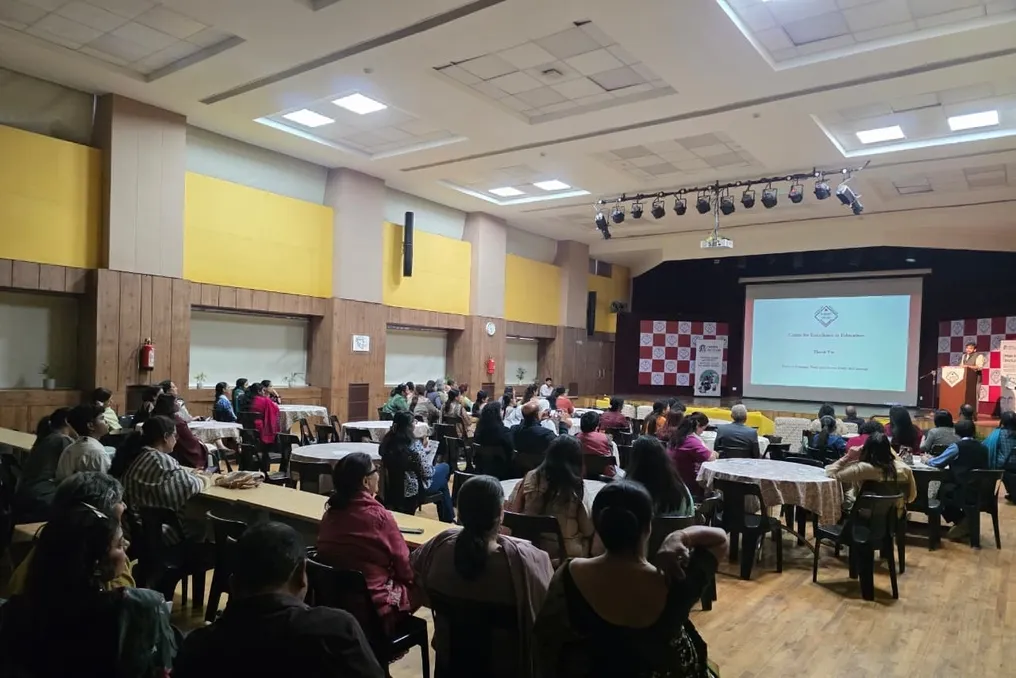
The Education Minister of Delhi, Aashish Sood, visited Vasant Valley School in Vasant Kunj and participated in a special conference where a unique handbook titled 'Inclusion in Action: Lessons from RTE 12(1)(c) Implementation in Delhi Classrooms' was presented.

The core idea behind the Vasant Valley School initiative is to create an inclusive educational environment where children admitted under the Right to Education (RTE) quota receive the same welcome, respect, and encouragement for development as other students, regardless of their financial status.

Addressing the attendees, Education Minister Aashish Sood noted that merely ensuring school admission is not enough; it is crucial that children feel accepted, actively participate in all activities, and gain self-confidence. He raised the important question of how comfortable children from RTE quota beneficiaries feel in the classroom, whether they participate in lessons, and if they can openly express their opinions.

Sood emphasized that no one is born with a predetermined family economic status that could determine a child's intelligence, talent, or abilities. He insisted that educational institutions must be such that every child feels respected, receives support for growth, and never feels like an 'outsider' in their class. Furthermore, he linked inclusive education to a great responsibility for the mental and emotional well-being of children.

Vasant Valley School Principal Sharmila Bakshi stated that her institution does not allow any difference between children from affluent families and those admitted under the 25 percent RTE quota. She stressed: 'For us, every child who enters the school is simply a child, regardless of whether they come from a wealthy family or a family benefiting from the RTE quota. We do not differentiate between students who pay tuition and those who study for free.'

Sharing the school's view on inclusive education, Bakshi said that every child should have the opportunity to recognize their abilities and boost self-esteem. She added: 'If we give every child a chance to excel and become a 'hero,' fear and lack of confidence in them will gradually disappear. This also promotes mutual respect among peers. Our role as teachers is to support children's enthusiasm, whether in sports, art, music, or academics. If we can help a child advance in any of these areas, that is our true success.'

Bakshi acknowledged that children from economically vulnerable backgrounds often do not receive the same academic support at home as children from well-off families. In this regard, the school provides additional tutoring and support when necessary to bridge this gap.

The handbook launched at this conference is based on a study conducted by Indus Action in collaboration with Vasant Valley School and Alstonia Impact. This study examined the implementation of Section 12(1)(c) of the Right to Education Act of 2009 in private schools in Delhi. According to this rule, non-government private schools are obligated to reserve 25 percent of seats in primary classes for children from Economically Weaker Sections (EWS) and Disadvantaged Groups (DG).

The study surveyed 9 private schools in Delhi, inspected 26 classrooms, and conducted over 160 interviews with students, parents, teachers, and principals. The research identified 14 practical methods that proved effective on the ground for strengthening inclusion in schools.

Rahul, Director of Indus Action, explained that the goal of this study was to find out what happens to children after they are admitted under the RTE quota. He stated: 'Admission is just the beginning. We wanted to understand if these children feel like part of the school, whether they receive the same quality of education as other students, if they face discrimination, and if they can adapt to the school atmosphere?'

He also explained that children from low-income families may lack amenities such as laptops and internet at home, and their parents may not be educated enough to help them with their studies. Among the 14 key recommendations identified in the study are encouraging leadership qualities among RTE students, implementing special remedial classes, providing career counseling, and allocating specialized...

Popular