The President of Uzbekistan, Shavkat Mirziyoyev, criticized the current state of distribution networks and the high level of electricity losses. These remarks were made on November 19 during the first meeting of the Uzbek-Turkish High-Level Council for Business Support.
The discussion arose after a report by Ebubekir Tivnikli, Chairman of the Board of Directors of Turkish EKSIM Holding, who expressed readiness to modernize the power grids of Bukhara region and transfer them to private management.
Negotiations with Turkish EKSIM Holding
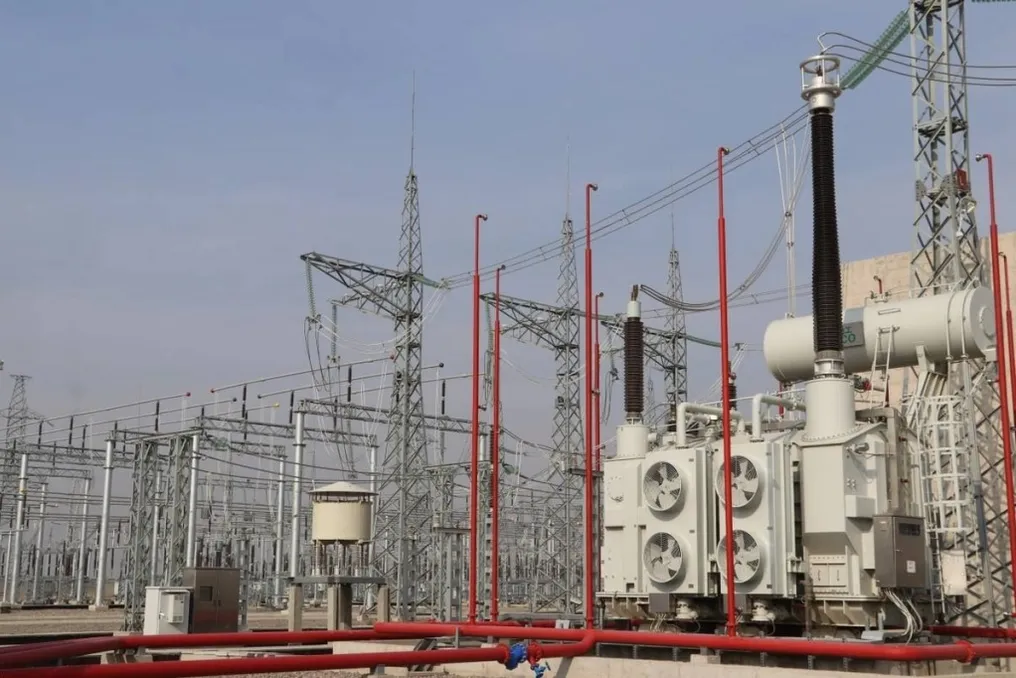
Mirziyoyev stated that despite a significant increase in electricity generation capacity in the country over recent years, the distribution networks remain outdated because they 'are still from the Soviet era.' The President noted that although Uzbekistan is actively developing solar, wind, and hydropower, system losses reach 20%, and in some places, may be higher.
He emphasized the critical importance of updating the distribution infrastructure, which directly supplies energy to end consumers. Previously, Mirziyoyev mentioned discussing investment projects with the holding's representatives during his visit to Ankara, after which he instructed relevant agencies to continue the work.
Ebubekir Tivnikli reported that EKSIM Holding specialists conducted two weeks of negotiations with regional authorities and ministries of Uzbekistan. The holding's team thoroughly studied the electricity distribution infrastructure in Bukhara and expressed confidence in the successful implementation of the project, offering to take over energy distribution management in Bukhara upon approval of their proposal.
The President stressed that modernizing the networks of Bukhara region is of strategic importance, noting EKSIM Holding's extensive experience in this field and insisting that such work should have started earlier. He called on the governors of other regions to study partnership opportunities with the company and present concrete proposals, avoiding general discussions.
As part of the discussions, the Uzbek side provided the Turkish holding's working group with data on the power grids of Samarkand, as well as project materials in Jizzakh and Navoi regions. Cooperation in Khorezm region and the geological sector was also considered, including the potential involvement of the holding in the development of the Kizilturuk gold deposit located in the Zarafshan-Gissar mountains.
Mirziyoyev requested that EKSIM Holding be allocated premises for a permanent representative office in Tashkent and that its head be appointed by the end of the current week. Furthermore, responsible parties must prepare concrete proposals for energy and geological investments by the end of 2026, calling it 'as necessary as air.'
What is Known About EKSIM Holding
EKSIM Holding is a Turkish group of companies operating in the energy and food industries. Through its subsidiary Dicle Elektrik, the holding has managed electricity distribution in six provinces of Turkey since 2013: Diyarbakır, Şanlıurfa, Mardin, Batman, Siirt, and Şırnak. According to the company itself, it supplies electricity to about 2.5 million subscribers in a region with a population of 6.5 million.
On November 14, the governor of Bukhara region, Botir Zaripov, met with representatives of Dicle Group, which is part of EKSIM Holding. The parties discussed the possibility of attracting investment to modernize and manage the power grids of Bukhara region, aiming to increase reliability and ensure stable supply. However, no agreement on public-private partnership or transfer of networks to the Turkish firm was announced at the time of the meeting.
Electricity Losses in Uzbekistan
The problem of high losses in the power grid had previously drawn criticism from the president. At a meeting held on July 27, it was noted that losses in Uzbekistan's networks amounted to 17.2%, and in the first half of 2026, the volume reached 4.8 billion kWh. Between June and July, approximately 4000 outages occurred in the networks, leaving residents and entrepreneurs in several regions without electricity for 8–10 hours.
At that time, the president stated that the energy problem was not due to a lack of funding but to the system's management itself. Following this meeting, the Minister of Energy and the head of the 'Regional Electric Networks' company were dismissed. The new management was tasked with developing targeted plans to reduce losses, decrease the number of outages, and update infrastructure.
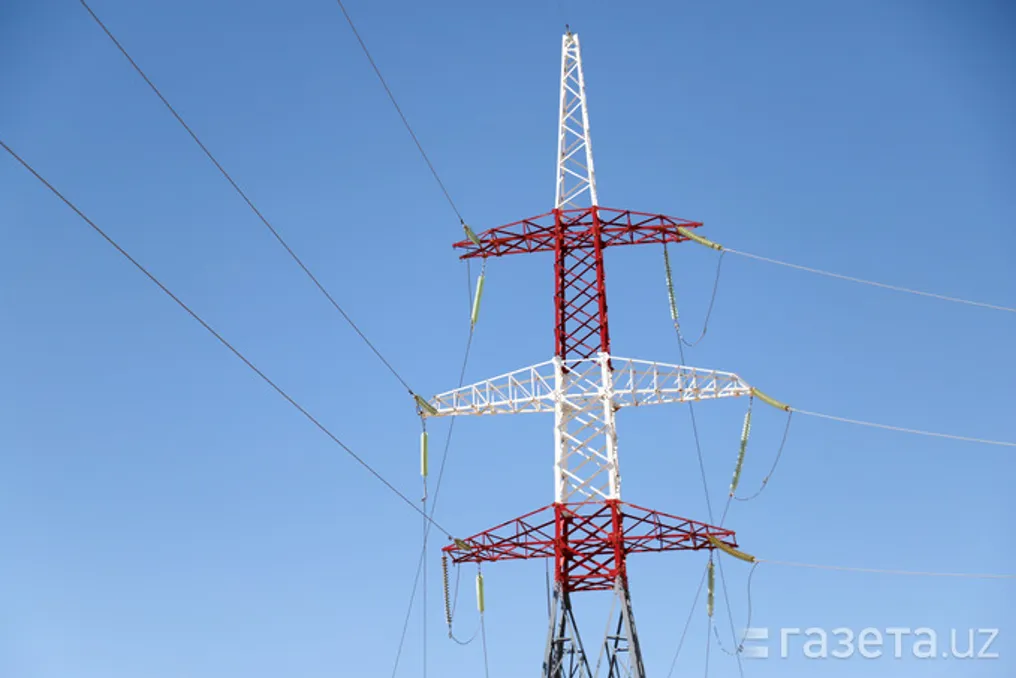
Earlier, in April, the head of state drew attention to 44 districts where losses exceeded 20% and ordered the dismissal of the heads of the respective district power grids, setting the new leaders the task of reducing losses by at least half. According to data published in June 2026, 44.5% of Uzbekistan's 274 thousand kilometers of electrical lines and 35.5% of approximately 93 thousand transformers require modernization, with a significant portion of the equipment being over 40 years old.
In some networks, losses reach 15–20%, with the annual volume of such losses estimated at approximately 6 billion kWh. These estimates may vary depending on the calculation methodology. For example, according to the World Bank, technical losses in Uzbekistan's distribution networks in 2024 amounted to about 13%.
In May 2025, the bank approved a preferential loan of $100 million for the modernization of distribution networks, and an additional $50 million was allocated by the 'Regional Electric Networks' company. This program includes plans to build and upgrade 6,000 km of low-voltage lines, replace and install 1,200 transformers, and connect 150,000 smart meters.
Transferring Power Grids to Private Operators
Uzbekistan has begun attracting foreign investors to modernize and manage distribution power grids. In November 2025, the Turkish company Aksa Elektrik won the tender for managing the power grids of Samarkand region, establishing AKSA Samarqand Electricity Distribution in Uzbekistan for this purpose. The investor is obliged to update the infrastructure and gradually halve electricity losses, which will provide annual savings of about $20 million.
On August 14, 2026, the president signed Decree No. PP-295, which approved the parameters of the public-private partnership project. PPP and state support agreements were signed on January 29, 2026. The project involves attracting $357 million in investments over the first twelve years. The private partner will be responsible for the management, operation, modernization, and expansion of the Samarkand region's networks, while ownership of the infrastructure remains with the state.
According to this decree, if a technical audit reveals annual losses within 20–25%, the private operator must reduce them by 1.4 percentage points annually. If the initial losses are 15–20%, an annual reduction of 0.6 percentage points is stipulated. In January 2026, the president also considered extending the model of attracting private operators to Andijan, Jizzakh, Namangan, Syrdarya, Tashkent regions, and the city of Tashkent. Aksa Elektrik expressed interest in taking over the management of the power grids of Tashkent, Syrdarya, and Jizzakh regions.
3