Digital financial services are gradually transforming the investment market of Uzbekistan, opening up opportunities to acquire stakes in major international corporations, participate in IPOs, and work with tokenized financial instruments accessible even with a minimum amount of 1 US dollar.
One such project is Walt, previously known as Wallet on Telegram. As part of a pilot project overseen by the National Agency for Advanced Projects (NAPP), this service gives users access to tokens backed by American stocks. An example of such an offering is participation in the stock placement of Anthropic, the developer of the Claude AI assistant; users could apply for ANTx tokens, each tied to one real share of the company.
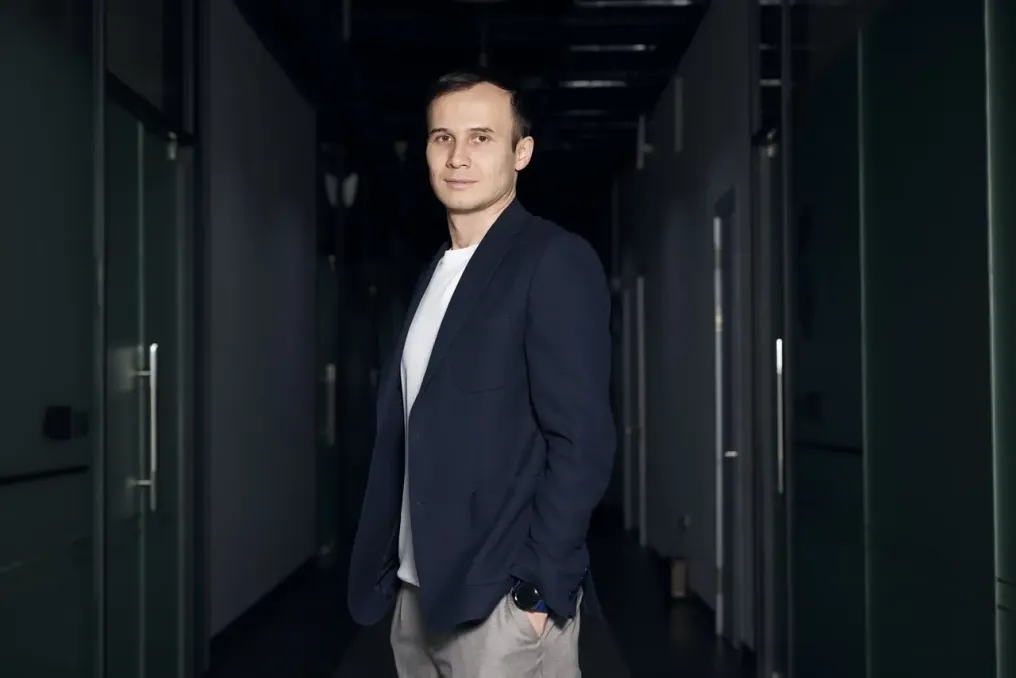
Diyorbek Muhammedov, Walt's regional director, told UzDaily about the service's operating mechanism, the differences between tokenized assets and traditional securities, and the protection of user funds in Uzbekistan.
Overcoming Barriers to Global Investments
Despite Uzbekistan's growing interest in global financial markets, retail investors' participation in the IPOs of large American companies has traditionally been difficult. Diyorbek Muhammedov noted that one of Walt's main goals is to make international investment instruments more accessible to a wider range of users. Previously, such operations required opening a brokerage account, undergoing additional registration procedures, and understanding the infrastructure of global markets.
The service aims to simplify this process by allowing users to access tokenized instruments directly in Telegram through a familiar digital interface. However, it is emphasized that only the access to the instruments is simplified, not the investment risks themselves, as market risks remain regardless of the asset acquisition platform.
Tokenization Mechanism and IPO Participation
When a user purchases ANTx through Walt, they receive a token in the xStocks ecosystem, which is backed by a real Anthropic share at a 1:1 ratio and is intended to track the dynamics of the underlying asset. Several parties are involved in this model: tokens are issued, corresponding shares are acquired, and the custody of these shares is provided by regulated custodian banks in Europe. Kraken is responsible for trading in the secondary market, while Walt allows users to buy, sell, and store tokens in Telegram.
It is important to understand that owning ANTx provides economic exposure to the stock price but does not grant all shareholder corporate rights; for instance, token holders do not receive voting rights at shareholder meetings.
Regarding IPO participation, Diyorbek Muhammedov clarified that users do not become direct participants in the primary public offering in the traditional sense. The mechanism allows them to submit preliminary applications for tokens that will be backed by shares after the company goes public. During the subscription period, users specify the amount and view the estimated price range and commission. Funds are reserved in the wallet balance, and applications can be modified or canceled before the subscription period closes.
After the placement concludes, the final price and allocation percentage are determined. Users receive tokens at the IPO price, not at the market price that may arise after trading begins. If an application is partially fulfilled, unused funds are automatically returned to the balance. Nevertheless, full allocation is not guaranteed and depends on the total volume of applications and the available number of tokens; for example, the SpaceX placement had a 60% share.
Significance for the Uzbek Market and Participation Conditions
Anthropic planned to raise up to $64.4 billion during its IPO, valuing the company at $1.4 trillion. The significance of such instruments for the retail investment market of Uzbekistan lies in expanding opportunities for private investors, as organizational and infrastructural barriers previously limited access to such international possibilities.
Users can now consider instruments related to major international companies without going through the complex process of opening a foreign brokerage account. The development of tokenized assets may become a direction of evolution for the Uzbek financial market, but this requires not only technological solutions but also transaction transparency, clear conditions for users, and cooperation with the regulator.
For ordinary users, the entry threshold remains low: the minimum application amount for the Anthropic IPO through Walt was 10 USDT, and buying and selling tokens is available from a starting amount of 1 US dollar. The commission for participating in the Anthropic placement was 5%, and Walt's internal exchange commission ranges from 0.09% to 0.9% depending on the user's transaction volume. Wallet top-ups using Humo, Visa, and Mastercard cards issued in Uzbekistan are processed by the licensed partner Asterium with a 1% fee. All commissions are displayed before transaction confirmation. The service is available to adults who have undergone identity verification via MyID.
Regulation and Asset Security
Walt operates in Uzbekistan through a local company licensed by NAPP, ensuring a transparent and regulated environment. The pilot project providing access to tokens backed by American stocks is implemented under regulatory supervision. Furthermore, wallet top-ups in national currency are carried out through the licensed partner Asterium, which is responsible for payment processing.
The fund protection model includes several levels: the underlying shares are stored with regulated custodians, including banks in Switzerland, and the local Walt company operates under an NAPP license. Special attention is paid to user identification: the profile is linked not only to the Telegram account but also to the individual via MyID, which is important for account recovery in case of loss. The wallet itself is protected by additional authentication methods, such as PIN code, fingerprint recognition, and Face ID.
It is stressed, however, that open discussion of risks is necessary: no storage or security system eliminates market risks. The token price may fall, the IPO application may be partially fulfilled, and the asset value after trading begins may be lower than the placement price. Therefore, it is recommended to start with small amounts and invest only funds whose loss you can afford.
In case of postponement, cancellation of the IPO, or change in the final price, procedures are pre-written in the documentation for users. If the IPO is canceled or postponed, the reserved funds and commission are fully returned to the user. If the final price differs from the estimated price, a fee based on the actual placement price is charged. Any unused balance is automatically returned to the wallet.
Development Prospects
Walt previously provided access to instruments related to SpaceX, Bending Spoons, and SK Hynix. The company intends to continue expanding access to international offerings and tokenized assets. According to Walt's data, the peak values of these assets exceeded their placement prices by 67%, 105%, and 34%, respectively.
Future companies will depend on market conditions and the ability to organize corresponding placements. Walt closely monitors major international listings and plans to inform users in advance about the start of new subscription periods.
In the long term, tokenization is viewed as a direction for the development of modern financial infrastructure, connecting traditional assets with digital platforms. This is particularly relevant for Uzbekistan in terms of expanding the investment opportunities for the population and developing digital financial services. However, sustainable development in this area is impossible without user trust, clear regulation, reliable asset storage infrastructure, and financial literacy. Walt's task is not just to provide access to new tools but also to ensure that users understand what they are acquiring, how the asset value is determined, what commissions apply, and what risks exist.