
Search advertising in Uzbekistan could have led to losses of up to $12.8 million due to non-targeted clicks, according to estimates
Read more
UzDaily
uzdaily.uz

Search advertising in Uzbekistan could have led to losses of up to $12.8 million due to non-targeted clicks, according to estimates

According to analysts, search advertising in Uzbekistan might have spent about $8.5 million on clicks that did not result in registered inquiries in 2025. This amount is equivalent to approximately 102 billion soums. Applying various assumptions, the estimated loss ranges from $4.3 to $12.8 million.

This estimate is based on two calculations. The first concerns the total spending on search advertising in the country. Since there is no unified metric for the Uzbek advertising market, agency estimates vary: they assess the total market to be in the range of $165 to $262 million in 2024–2025. The author used a forecast from Admixer, published by Spot.uz in June 2025, which predicted search advertising spending of $42.6 million in 2025. It is important to note that this is only one agency's forecast and it does not detail the spending between Google and Yandex, so all subsequent calculations are approximate.

The second calculation is based on the share of search advertising budgets spent on queries that did not generate registered inquiries in advertising accounts. The author obtained this share from an anonymized database of real advertising accounts from different countries and sectors, covering the period from 2018 to 2026. According to this database, this share usually ranges from 10% to 30%.

This percentage can vary significantly even within one industry. Among six direct competitors, the share fluctuated from 6.4% to 31%. Such clicks often occur for queries similar to those targeted by advertisers but reflecting a different user intent. People might be searching for vacancies in a specific field, free versions of products, instructions for self-service, or simply the definition of a word. Advertising systems may show ads to these users because their queries are generally related to the advertiser's target audience. Users click, realize the offer is not suitable for them, and leave, while the advertiser pays for the click.

Applying the assumed shares to the projected search advertising spending of $42.6 million yields results: $4.3 million at 10%, about $8.5 million at 20%, and $12.8 million at 30%. The author chose the midpoint—20%. This is not a measured national average for Uzbekistan.

According to the Central Bank exchange rate of 12,014 soums per US dollar on November 14, 2026, $8.5 million corresponds to approximately 102 billion soums, or about 280 million soums daily.

Similar stories

About 2.1 million attempts to access fraudulent websites blocked in Uzbekistan
Read more
podrobno.uz

About 2.1 million attempts to access fraudulent websites blocked in Uzbekistan

From January to September 2026, nearly 2.1 million attempts to visit phishing resources were blocked in Uzbekistan. These fake pages are created with the aim of stealing users' bank details and passwords.

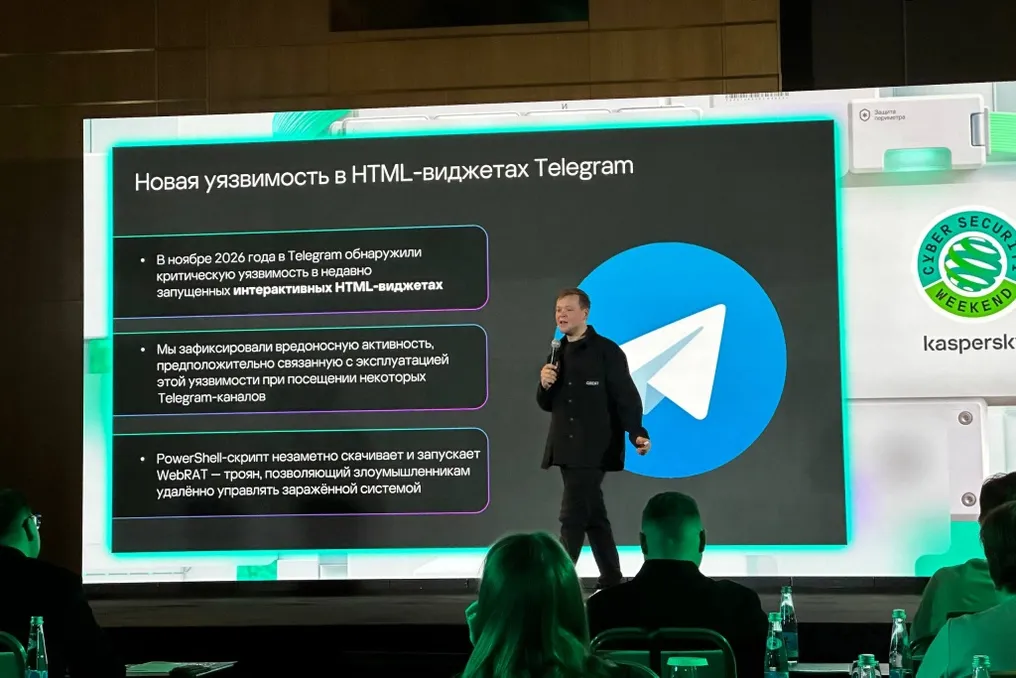
According to data presented at the Kaspersky CyberSecurity Weekend 2026 event in Tashkent, in the third quarter of 2026, the number of such attempts exceeded the figures of the first quarter of 2025 by more than threefold. It is important to note that blocking an attempt to open a dangerous website by security software does not guarantee that the user has not become a victim of fraudsters.

How the deception is carried out

One of the most common methods of deception involves emails mimicking messages from employers or well-known online services. During internal audits in Uzbek companies, it was found that 13% of staff clicked on links in emails concerning the alleged expiration of a password. Furthermore, 7% of employees responded to a notification about the approval of a ChatGPT work account, and another 6% responded to a message about alleged incorrect use of medical insurance.

These scenarios were part of controlled testing aimed at assessing employee susceptibility to fraud schemes, so the results obtained do not indicate actual account breaches.

Use of new technologies in fraud

Konstantin Isakov, a cybersecurity expert, reported on another tactic: attackers sent messages promising compensation payments. To increase trust, they used the legitimate Google service, but the links could lead to fake web pages.

Experts also note that fraudsters actively use artificial intelligence to create convincing messages free of grammatical errors. Consequently, even a well-written email should not be considered safe if it suddenly requires clicking a link, providing a password, or confirming bank card details.

Recommendations for users and companies

Valery Zubanov, Managing Director of Kaspersky Lab in Kazakhstan, Central Asia, and Mongolia, emphasized that companies must not only purchase protection tools but also conduct employee training on security rules. Specialists advise ordinary users to always check the website address and never enter passwords or SMS codes via links contained in suspicious messages.

Previously, Telegram users received warnings about fake notifications requiring them to undergo a 'security check' within twelve hours; in reality, such messages are used to steal accounts.

Uzbekistan Committee Intensifies Control Over Blogger Advertising on Social Media
Read more
uzdaily.uz

Uzbekistan Committee Intensifies Control Over Blogger Advertising on Social Media

The Competition Commission of Uzbekistan discovered violations of advertising legislation in the posts of twelve bloggers, resulting in administrative fines being imposed on the responsible individuals.

It is reported that the committee has compiled a list of 110 bloggers whose social media activities are under observation regarding advertising. The accounts of these bloggers are checked daily for compliance with the Law on Advertising.

During the inspections, it was established that 12 bloggers placed advertising materials in violation of established norms. Corresponding administrative measures were applied, although the committee did not disclose the specifics of the violations or the amount of the sanctions imposed.

Furthermore, the committee has prepared a list of well-known singers, actors, actresses, and athletes in the country whose publications related to advertising on social media will also be regularly monitored.

The agency strongly called on all advertisers, producers, and distributors of advertising, including public figures and bloggers, to comply with all legal requirements. The committee emphasized that advertising must be truthful and must not mislead consumers regarding goods and services.

It was noted that ignorance of the law or disregard for its requirements does not exempt anyone from liability. The committee stated its intention to continue monitoring advertising on social media to identify and prevent violations, protect consumer rights, and ensure compliance with legislation in the advertising market.

Popular