Uzbekistan Prefers Water Conservation Over Importing Water from Siberia
Read more
UzDaily
uzdaily.uz

Uzbekistan Prefers Water Conservation Over Importing Water from Siberia

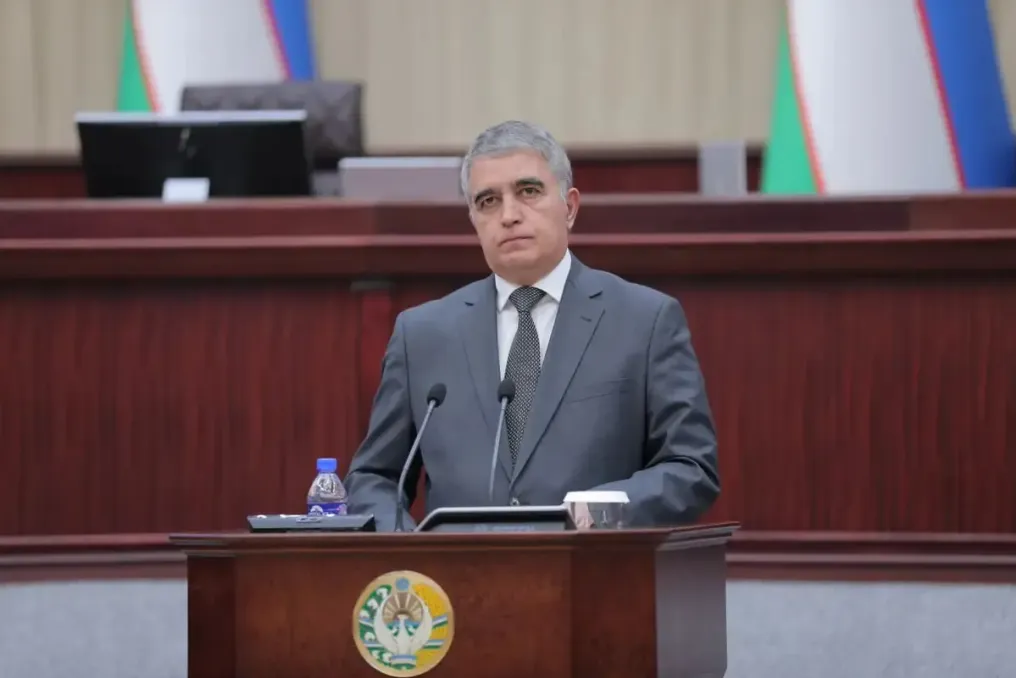
The Minister of Water Resources of Uzbekistan, Shavkat Khamraev, stated at a press conference on November 19 that improving irrigation infrastructure and implementing water-saving technologies are more economically advantageous than realizing an expensive project to divert water from Siberian rivers.

According to Khamraev, Russian scientists are once again discussing the possibility of transporting water from Siberia to Central Asia. One proposed option involves diverting about 5 billion cubic meters of water annually, with initial investments estimated at 100 billion US dollars.

The Minister recalled that similar plans were developed during the Soviet period. Many methods for water delivery were studied, but in 1986, Soviet authorities decided to abandon this project on August 14.

Khamraev emphasized that Uzbekistan has already achieved significant water savings by avoiding huge costs associated with transferring water from other regions. He noted: 'We are already saving 11 billion cubic meters of water independently. And we have not spent 100 billion dollars. If we add up all the costs of our measures, this figure may amount to about 5 billion dollars.'

He predicts that additional investments of 5–10 billion dollars in modernizing irrigation infrastructure and implementing water-saving technologies will allow Uzbekistan to save even more water.

Nevertheless, the minister did not rule out the need for additional water sources in the future. He explained that this would depend on climate change, precipitation levels, and the volume of water in transboundary river basins. 'Suppose that by the 2050s, if there is no natural miracle, if water reserves continue to decline year after year, and climate change is against us, we will be forced to seek additional water sources,' said the Minister of Water Resources.

Khamraev also mentioned that the Soviet project involved diverting approximately 27 billion cubic meters of water annually. In his opinion, such a scheme could benefit Uzbekistan, Russia, Kazakhstan, and to some extent Turkmenistan. He does not rule out reconsidering this idea if further research and negotiations confirm its feasibility.

In November 2025, scientists from the Russian Academy of Sciences proposed resuming research into the possibility of diverting part of the Ob River runoff to Central Asia. Unlike the Soviet concept, which provided for open canals, the modern proposal includes a closed pipeline system.

One option involves constructing seven pipeline lines, each about 2100 km long. The initial stage involves transporting approximately 5.5 billion cubic meters of water annually, with subsequent increases in volume threefold or fourfold.

According to Dmitry Sozonov, head of projects at IES Engineering and Consulting, initial investments could amount to no less than 100 billion US dollars. Annual operating costs are estimated at 700 million – 1.5 billion dollars, and the construction of main facilities could take at least 10 years.

The Ministry of Natural Resources of Russia previously stated that it had not received design documentation and that discussions remained at the stage of scientific and expert analysis.

Meanwhile, Uzbekistan continues to expand its water conservation programs. On November 11, Khamraev reported to the Legislative Chamber that water-saving technologies, modernized irrigation infrastructure, and digitalization have helped save 10.69 billion cubic meters of water.

Of this, about 5 billion cubic meters of savings was achieved through water-saving technologies and land laser leveling. Another 3.14 billion cubic meters was saved through the repair, restoration, and concreting of irrigation networks.

The water resources development program for 2025–2028 provides for the reconstruction of 2551 km of irrigation networks and the implementation of water-saving technologies over an area of 1.4 million hectares. According to these plans, annual water savings of 14 billion cubic meters are expected by 2028, and 15 billion cubic meters by 2030.
Similar stories

Uzbekistan chooses water conservation over costly water transfer from Siberia
Read more
podrobno.uz

Uzbekistan chooses water conservation over costly water transfer from Siberia

Uzbekistan has decided that it is more expedient to invest in modern water-saving technologies rather than implement a large-scale and expensive project to transfer water from Siberian rivers. According to estimates by the Minister of Water Resources, Shavkat Khamraev, the project proposed by Russian researchers could cost around $100 billion.

The head of the department stated this position on November 19 during a press conference in Tashkent dedicated to the effective use of water resources. He reported that Russian scientists had suggested considering the possibility of transporting approximately 5 billion cubic meters of water annually from Siberia to Central Asia, with a preliminary cost estimated at $100 billion.

Khamraev presented Uzbekistan's results, which demonstrate significant water savings with much smaller financial investments. According to the Ministry of Water Resources data, from January to October 2026, thanks to the application of modern irrigation methods, as well as canal concreting and other measures, 10.69 billion cubic meters of water were saved. It is planned that this figure will reach 11 billion cubic meters by the end of the current year.

Specific achievements include saving about 4.9 billion cubic meters of water through the introduction of water-saving technologies and laser leveling of agricultural lands. Furthermore, the repair and concreting of irrigation canals helped save another 3.1 billion cubic meters.

The Minister believes that additional investments of $5–10 billion in modernizing irrigation infrastructure and developing water conservation technologies will allow for further reduction in the country's water demand. Nevertheless, he noted that by the 2050s, Uzbekistan may have to seek new water sources if climate change leads to a further decrease in available water resources.

The idea of transferring water from Siberian rivers has a long history, as a similar project was discussed during the Soviet period. At that time, the possibility of delivering about 27 billion cubic meters of water annually to Central Asia was considered, but work on this project was halted in 1986. In 2025, Russian scientists once again proposed studying the potential for partial diversion of the Ob River runoff.

It was also mentioned that Afghanistan will not begin full-scale water withdrawal from the Amu Darya via the Koshtepa canal until 2030. Shavkat Khamraev added that Uzbekistan continues to negotiate with the Afghan side regarding the future distribution of water resources.

Uzbekistan and Turkey Discuss Joint Projects on Water Resource Management
Read more
uzdaily.uz

Uzbekistan and Turkey Discuss Joint Projects on Water Resource Management

The Ministry of Water Resources of Uzbekistan reported that the country held discussions on joint projects with Turkey and international organizations aimed at implementing water-saving technologies, digital water accounting, and specialist training.

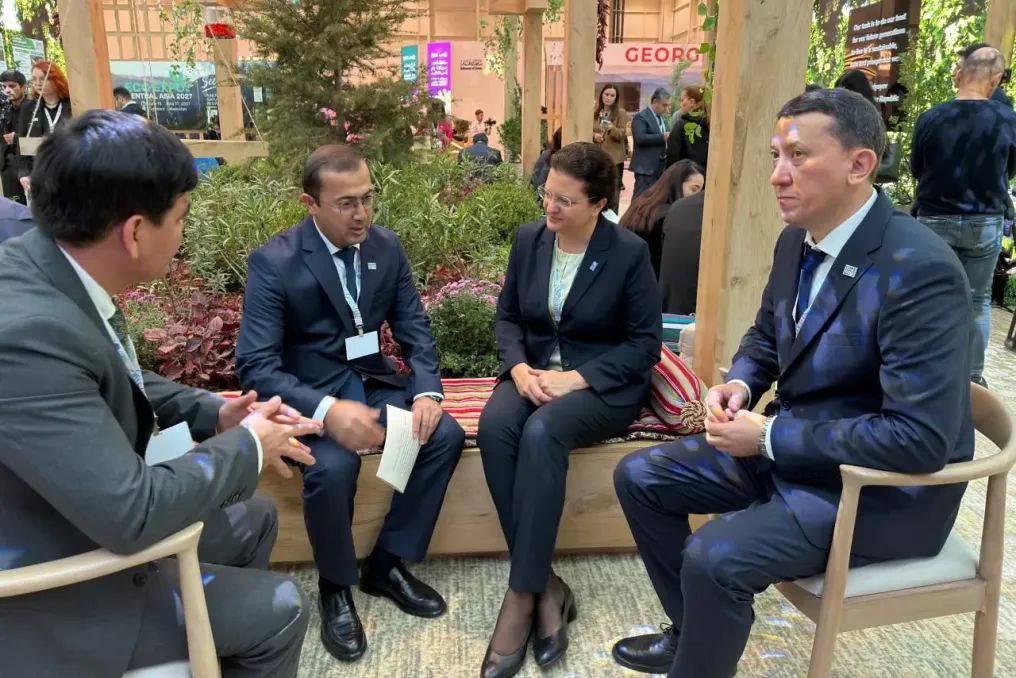
The dialogues took place in Antalya as part of the COP31 conference. The delegation from Uzbekistan was headed by Deputy Minister of Water Resources Rustam Karshiev, who held meetings with representatives of Turkish state bodies, the International Water Management Institute (IWMI), and the United Nations Development Programme (UNDP).

During meetings with the Deputy Minister of Agriculture and Forestry of Turkey, Ebubekir Gizlidicer, the parties reviewed the implementation of a joint program for the period 2026–2027. This document was signed by the ministries of both countries in October 2026.

To accelerate the implementation of the program, it was proposed to send Turkish specialists to Uzbekistan, as well as organize internships in Turkey for Uzbek experts. Furthermore, the parties discussed the possibility of cooperation between the scientific research institutions of the two states.

The meeting with Mehmet Akif Balta, Director General of the Turkish State Hydraulic Works (DSI), focused on water-saving technologies, digital water accounting, and monitoring systems. The Uzbek side proposed launching a joint pilot project for implementing irrigation systems with closed pipelines equipped with water meters. An initiative was also put forward to create a technical working group for exchanging experience in reservoir safety and early warning systems.

Mehmet Akif Balta accepted the invitation to visit Uzbekistan. In turn, Karshiev was invited to participate in the XX World Congress of Water Resources of the International Water Resources Association (IWRA), scheduled for October 2027 in Istanbul.

The Uzbek delegation also met with Mark Smith, Director General of IWMI, to discuss the institute's 25 years of work in Uzbekistan and prospects for further cooperation. The parties reviewed joint projects on implementing water-saving technologies, digitizing water accounting, and improving specialist training. Funding could potentially come from the institute and international donors.

Mark Smith agreed to speak at an event organized by the Ministry of Water Resources of Uzbekistan during the UN Water Conference in Abu Dhabi in December 2026.

In the meeting with Styliana Nedera, Director of the UNDP regional hub in Istanbul, the parties discussed the terms of implementing the Uzbekistan-Turkey joint program with the participation of the UNDP office in Uzbekistan. Special attention was paid to the financing of specialist exchanges. Nedera supported this initiative and instructed the staff of the regional hub to study it in detail.

Popular