Tata Projects wins contract to build 1600 MW thermal power plant in Central India
Read more
Business Standard
business-standard.com

Tata Projects wins contract to build 1600 MW thermal power plant in Central India

Tata Projects Ltd (TPL), a major EPC contractor, announced on Monday that it has secured an order to construct all the auxiliary infrastructure for a 1600 MW coal-fired power plant located in Central India.

Under the terms of the contract, Tata Projects will be responsible for the design, engineering, manufacturing, supply, construction, installation, testing, and commissioning of the project's Balance of Plant systems.

The company specified in its statement that these systems include critical infrastructure necessary to ensure the stable operation of the station outside the boiler-turbine-generator unit.

The statement indicated that Tata Projects Ltd (TPL), one of India's leading EPC companies, received the full scope of work for the Balance of Plant (BoP) for the ultra-supercritical 2 x 800 MW thermal power plant project in Central India from a large integrated energy company.

The project covers the entire BoP scope of work, including coal and biomass handling systems, fuel and ash management facilities, water intake, purification, and cooling systems, electrical infrastructure, and power evacuation systems, as well as all associated civil and structural works.

Rajiv Menon, President and Director of Growth and Strategy at Tata Projects, noted that this award reflects client confidence in the company's technical depth and project execution capabilities.

Tata Projects has experience in providing sustainable solutions for large and complex urban and industrial infrastructure projects. Its portfolio also includes refineries and petrochemical plants.

Similar stories

PTC Industries secures major defense order for supply of 400 tons of titanium
Read more
business-standard.com

PTC Industries secures major defense order for supply of 400 tons of titanium

PTC Industries announced on Monday that it has secured a significant contract with the defense sector to supply approximately 400 tons of titanium ingots, bars, and rods for use in critical defense applications.

The company specified in the deal report that this contract is internal in nature and its implementation is scheduled over a 12-month period. The value of the order was not disclosed by PTC Industries due to strategic importance and confidentiality considerations.

The materials supplied under this agreement are intended to support defense systems that require high strength, corrosion resistance, dimensional stability, and long-term reliability when operating in harsh conditions.

The received order strengthens the company's position as a domestic supplier of strategically important titanium products and contributes to the realization of India's initiative to develop local manufacturing under the Atmanirbhar Bharat program.

Through its wholly-owned subsidiary, Aerolloy Technologies, PTC Industries has invested in developing its own capacities for the production of titanium and superalloys. These facilities include specialized alloy melting, ingot production, forging, rolling products, precision casting, as well as inspection and testing.

Furthermore, the company is building a comprehensive manufacturing platform covering key stages of the titanium and superalloy value chain. The goal of this platform is to enhance control over material quality, traceability, manufacturing processes, and supply reliability.

Management Statement on the Significance of the Order

Sachin Agarwal, Chairman and Managing Director of PTC Industries, noted that this order confirms the company's integrated capabilities in producing materials that cover alloy melting, ingot production, forging, and rolling products.

Agarwal emphasized that titanium is the foundation of modern aerospace and defense systems, and the ability to produce it in large volumes reliably demonstrates strategic independence. He added that the order shows that the PTC ONE™ – From Melt to Mission™ system now supplies products in significant volumes, and critical materials that India has long imported can be manufactured domestically, meeting the strictest standards. The company will continue to patiently and purposefully invest in capabilities that help India catch up with global leaders.

SDTT approves grants worth over 150 crore rupees for five initiatives
Read more
business-standard.com

SDTT approves grants worth over 150 crore rupees for five initiatives

The Tata Trusts Council (SDTT) has approved grants totaling over 150 crore rupees to support five different projects. These decisions were made at a meeting chaired by the Chairman of Tata Trusts, Noel Tata. Venu Srinivasan and Vijay Singh also participated in the meeting.

Specifically, an allocation of 50 crore rupees was approved for a hospital in Pune, managed by Jahangir H. S. Jahangir, who previously collaborated with other Tata Trusts foundations. According to informed sources, no other matters concerning the headline topics within the Tata group were discussed at the meeting.

Questions arose regarding the provision of a grant to an organization associated with Jahangir, a trustee of Sir Ratan Tata Trusts. However, a source assured that there is no conflict of interest in this case. The Jahangir Hospital in Pune, promoted by the Cowasji Jehangir Trust, utilizes Jahangir H. S. Jahangir as its chief executive officer.

The hospital management presented a detailed presentation at the SDTT meeting held at the Tata Trusts office in Mumbai on Thursday. They outlined an expansion plan worth 300 crore rupees. This multi-specialty hospital with 350 beds will expand by constructing another building, and SDTT is supporting them in this project. It was noted that a quarter of the hospital's beds are designated for subsidized treatment.

SDTT members believe that a medical institution capable of attracting its own funds should receive financial support, especially during a period when many healthcare providers turn to private investors. Among other proposals reviewed and approved are projects for establishing a sports academy, poverty alleviation, and girls' support, many of which are located in underdeveloped regions. The remaining applications request grants of approximately 25–30 crore rupees each, bringing the total number of approved grants to 150–200 crore rupees.

Regarding other discussions, given that the meeting took place less than a week before the important board meeting of Tata Sons on November 26, a source reported that all trustees asked others to leave the room and held a discussion among themselves for about 10 minutes. Other participants included Noel's son, Neville, and Tata group veteran Bhaskar Bhatt; Srinivasan and Singh attended virtually.

In current disagreements among the top management of the Tata group, Srinivasan and Singh have taken a position against Noel, while the other trustees support him. Securing Jahangir's backing will be crucial for Noel Tata in his fight for Tata Sons—the holding company of India's largest conglomerate, in which Tata Trusts holds 65 percent of the shares. Tata Sons was unable to hold its annual general meeting (AGM) because the Maharashtra charity commissioner froze SRTT. At the last Tata Sons board meeting on September 17, all board members, including Srinivasan, voted against Noel on key issues, including the appointment of N Chandrasekaran as chairman and compliance with the RBI mandate for Tata Sons listing. A board meeting of Tata Education and Development Trust is also scheduled for Friday afternoon, which will include Noel Tata, Mehli Mistry, and J.N. Mistry.

Gandhi Sagar Project in Madhya Pradesh to become the largest energy hub with a capacity of 1920 MW with investments of 11,500 crore rupees
Read more
www.aajtak.in

Gandhi Sagar Project in Madhya Pradesh to become the largest energy hub with a capacity of 1920 MW with investments of 11,500 crore rupees

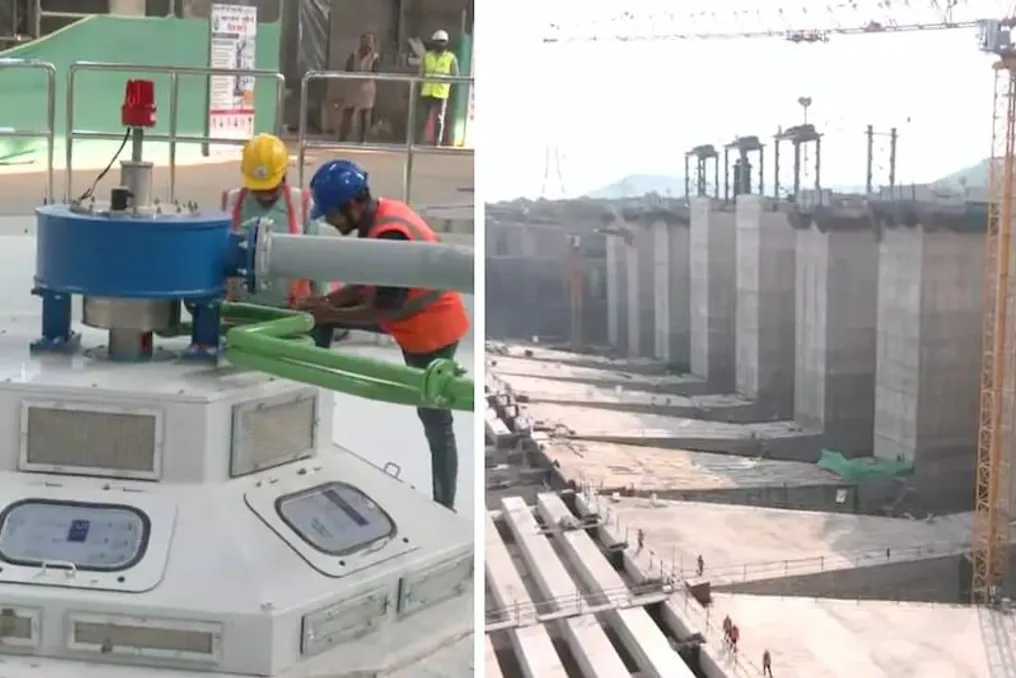
The Gandhi Sagar Dam, located in the Mandsaur district of Madhya Pradesh state, is intended to play a significant role in meeting the region's energy needs. Currently, a large pumped storage hydroelectric power plant project with a capacity of 1920 megawatts is under construction, with total costs amounting to 11,500 crore rupees. Upon completion, it will function as a major energy hub. A key feature of this project is the multiple reuse of the same water for electricity generation.

This project, being implemented next to the Gandhi Sagar dam on the Chambal River, at the border of Mandsaur and Nimcha, is considered one of the largest pumped storage hydroelectric power plant projects in the country. Construction began in January 2024, with a planned completion date of June 2027.

Various obstacles related to the project were removed thanks to the initiative of Chief Minister Mohan Yadav. Furthermore, support was obtained from the Rajasthan government after negotiations, which helped in lowering the water level in the Gandhi Sagar dam, thus facilitating construction work.

The main characteristic of this project is its technology. Unlike traditional hydroelectric power plants where energy is generated directly from the flowing river water, the pumped storage project reuses the water. During the day, when solar and wind energy generate excess electricity, this energy is used to drive pumps and turbines that raise water from the lower Gandhi Sagar reservoir. This water is then stored in an upper reservoir located at an altitude of about 127 meters.

When night falls or electricity demand increases, water is released from the upper reservoir into the power plant. The water pressure drives the turbines, allowing up to 1920 megawatts of electricity to be generated. Thus, excess daytime energy is used to lift the water, and during peak load hours, the same water is used to produce electricity.

The Gandhi Sagar project is being constructed on an area of about 414 hectares and includes the installation of nine turbines. The total capacity of the project will be 1920 megawatts, ensuring continuous electricity production for six hours. The project utilizes approximately 2.4 trillion cubic meters of water. The upper reservoir is built at an altitude of approximately 127 meters. According to the company, the average cost of electricity produced by this project is estimated at about 5 rupees per unit. This will reduce the state's need to purchase expensive electricity during periods of high demand and ensure savings.

The construction is being carried out by the company Greenko. According to the company's information, about 79 percent of civil works are complete, and equipment supply work is 85 percent complete. The concreting of the upper reservoir dam is 92 percent complete, and the concreting of the upper intake is 98 percent complete. It is planned that the first two units will begin generating electricity by December 2026, and the remaining seven by June 2027. The construction has created about 4000 jobs, both direct and indirect.

This Gandhi Sagar project could become an important element of Madhya Pradesh's energy system. It will allow for the storage of surplus energy obtained from solar and wind sources in the form of water for use when needed. This will help balance electricity supply and demand. After all units are operational by June 2027, Gandhi Sagar will strengthen the state's energy security and enhance Madhya Pradesh's role in the clean energy sector.

Popular