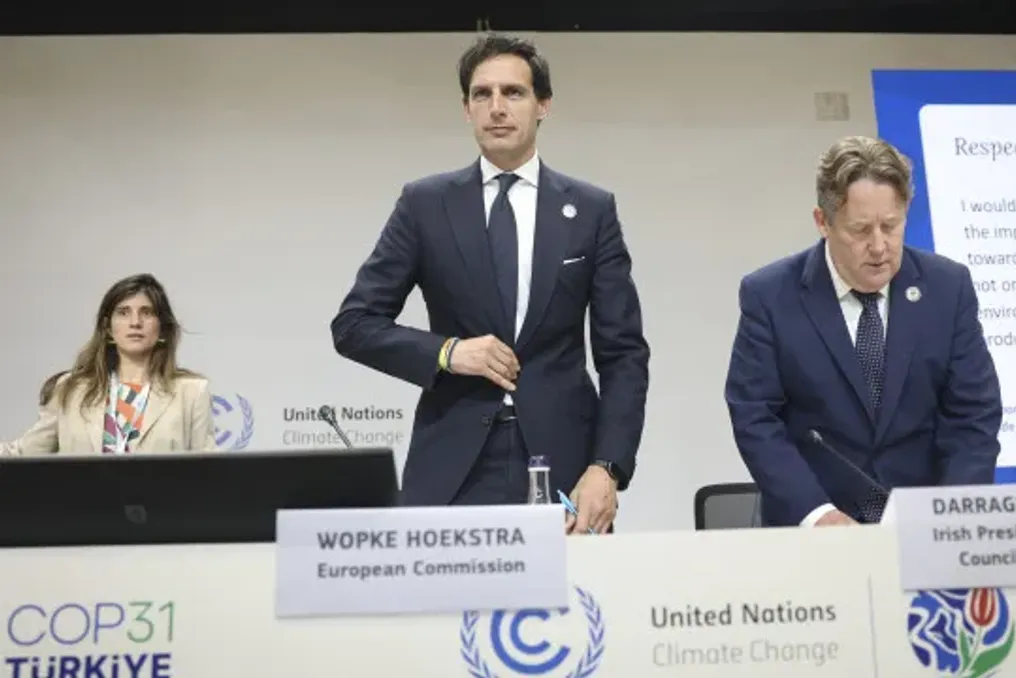
As the guidelines for the next Multiannual Financial Framework are being established, the European Union Regions Committee expressed its position on the matter. The Committee's president, Kata Tüttő, commented that her housing park has integrated into the global investment market, being treated as an asset, similar to financial securities.
The Committee, which represents cities and regions of Europe, strongly disagrees with the so-called national envelopes proposed by the European Commission since the beginning of the discussions. Centralizing Cohesion and agriculture funds into a single national amount would allow Member States to decide where and how to apply these resources, which the Committee considers a distancing from local authorities and regional leaders in the decision-making process—something they have never accepted.
In an interview, the president detailed her 'red lines'—non-negotiable limits—regarding three crucial aspects of the EU budget: the total amount spent, the allocation of these resources, and who holds the power of decision.
Although there is debate about the volume, the central discussion points out that the EU budget, equivalent to about 1% of the European GDP, does not show a significant change. Tüttő warned that despite growing challenges and accumulated crises, the budget is not excessively voluminous; the annual budget for the 27 Member States is around 250 billion, an amount lower than Catalonia's annual GDP.
Regarding the destination of the funds, a consensus defended by countries like Portugal and Hungary is that the Single Market is the EU's main competitiveness project, facilitating the free movement of capital, people, goods, and businesses.
Cohesion Policy is not seen as a charity fund, but rather as the primary tool for the integration of the European Union. It operates in two dimensions: horizontally, connecting regions, people, and capital to the Single Market; and vertically, linking broad European objectives, such as climate neutrality and the circular economy, to local investments.
The main concern lies in the possibility of nationalizing Cohesion Policy. Tüttő emphasized that it must remain an autonomous European regional policy, as its detachment from its European character would reduce it to a mere national priority, competing with other areas such as agriculture and housing.
The expert stressed that Cohesion drives competitiveness by connecting all territories to the market, sustaining the promise of shared prosperity, and being beneficial to all countries, regardless of their level of development.
Another critical point raised was governance and the disconnection between planning and execution. Policies are created in Brussels but implemented in places like Porto or Lisbon. Without the participation of local entities in planning, they cannot influence the most useful use of resources, and there is a lack of a feedback mechanism for regulation.
Tüttő compared the situation to the European Union's 'digestive system': it is useless to provide nutrients if the system cannot process them. She concluded that effective change requires dialogue between those who implement and those who define the direction, warning that decisions too far removed from daily realities can cause regulations to lose meaning.