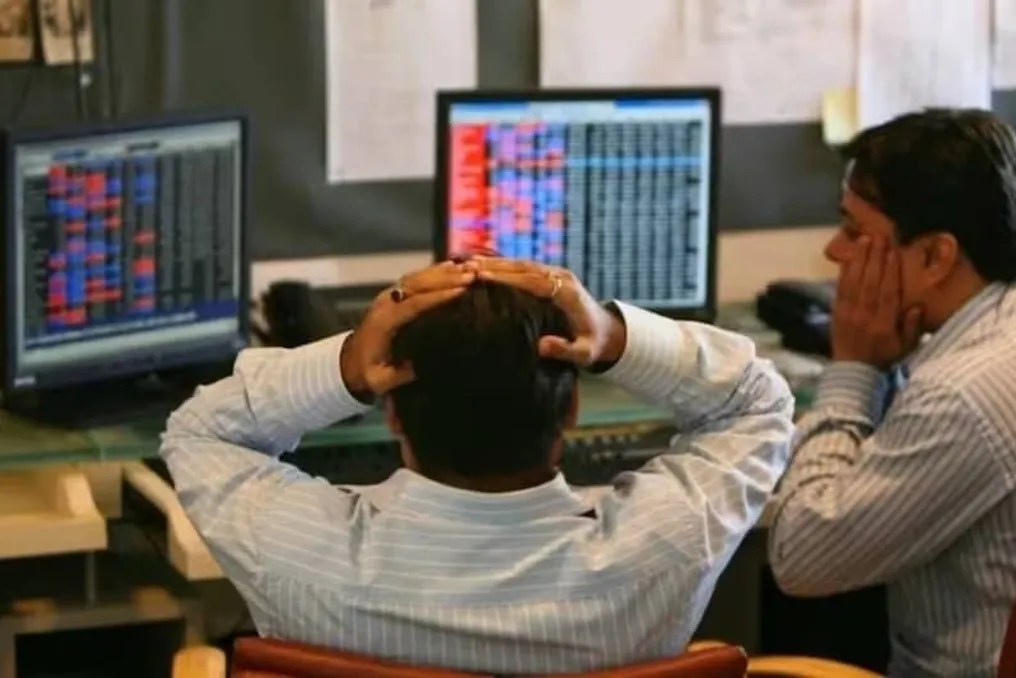
Seoul Stock Exchange falls nearly 3% due to Nasdaq collapse and Artificial Intelligence concerns
Read more
RTP Noticias
rtp.pt

Seoul Stock Exchange falls nearly 3% due to Nasdaq collapse and Artificial Intelligence concerns

The main indicator of the Seoul Stock Exchange, the Kospi, registered a drop of almost 3% at the market open, amid persistent concerns regarding the artificial intelligence (AI) sector, following significant declines observed on Wall Street.

About ten minutes after trading began, the index suffered a loss of 2.87%, corresponding to 139.66 points, settling at 4,730.30 points. It is worth noting that in the previous session, the Kospi had closed with a retraction of 5.21%.

Meanwhile, the Kosdaq index, which groups technology and small-to-medium-sized companies, showed a decline of 0.35%, or 2.28 points, closing at 643.40 points.

This movement in Seoul occurs after a negative week on Wall Street. The Nasdaq, which concentrates most of the American technology corporations, plummeted by 5.28% on Friday, completely reversing the strong growth recorded in 2026, driven by optimism about AI.

Investors are expressing growing anxiety about the possibility that massive investments directed towards this sector may not yield the expected returns.

Even the American company Anthropic, which recently conducted the largest IPO in history in New York, was not exempt from the correction, losing 8.5% on Friday and approaching its initial listing price.

The Kospi, known for its volatility, demonstrates particular sensitivity to fluctuations in confidence in the AI market. This is because Samsung and SK Hynix are crucial memory suppliers for artificial intelligence systems and data centers, vital components for this technology's infrastructure.

Sales extended to other areas of the South Korean economy. The technology holding company SK Square registered a decline of nearly 4%, as did the digital platform Naver, which lost a similar percentage.

In the automotive segment, Hyundai Motor and Kia presented depreciations of approximately 4%. Defense companies, such as Hanwha Aerospace, Korea Aerospace Industries, and LIG Defense & Aerospace, also recorded losses. Shipbuilders HD Hyundai Heavy and Hanwha Ocean were also trading lower.
Similar stories

Stock Market Crash: Sensex Index Falls by 1800 Points, Losing Over 500 Billion Rupees
Read more
www.aajtak.in

Stock Market Crash: Sensex Index Falls by 1800 Points, Losing Over 500 Billion Rupees

The first working day of the week, Monday, turned out to be like a 'Black Monday' for investors in the stock market. After a strong rise, the market suddenly experienced a crash, which caused panic among traders. The Sensex and Nifty indices dropped sharply.

The BSE Sensex index, comprising 30 stocks, plummeted by 1800 points from its daily high of around noon after an initial rise of 700 points. Meanwhile, the NSE Nifty index lost approximately 300 points. As a result of this market turmoil, investors lost over 500 billion rupees in a single moment.

An analysis of the start of trading shows that the Sensex from BSE began with a sharp jump, opening at 84,421 points compared to the previous close of 83,919. In the first minutes of trading, it reached 84,662, showing an impressive rise of 743 points. However, the subsequent decline intensified as the market continued to operate. By the time of writing, the Sensex had fallen by 1800 points from its daily high, reaching the mark of 82,862.

Indian stock market collapses after sharp rise, influenced by declines in US, Japanese, and Korean markets
Read more
www.aajtak.in

Indian stock market collapses after sharp rise, influenced by declines in US, Japanese, and Korean markets

The start of the trading day in the Indian stock market on Monday was impressive for investors; however, their joy lasted only a few minutes as the Sensex-Nifty index suddenly fell sharply. An analysis of the initial market movement shows that, on one hand, the Sensex of the Bombay Stock Exchange (BSE) jumped by more than 700 points immediately after opening, and the Nifty Index of the National Stock Exchange (NSE) also reached around 26,000 at the opening.

However, just 10 minutes later, the situation changed drastically: the initial rise of the Sensex-Nifty was abruptly replaced by a sharp decline, and both indices crashed. The Sensex lost over 650 points. This occurred under the influence of significant drops in the stock markets of America and Asia, including Japan, Hong Kong, and South Korea, which had already collapsed during the start of trading.

Examining the start of trading, the Sensex BSE, composed of 30 stocks, opened at 84,421, significantly higher than the previous close of 83,919. It then showed a strong jump of 743 points, reaching the mark of 84,662. But immediately after reaching this level, the direction of the Sensex changed, and it began to fall rapidly, resulting in a drop of 658 points to reach 83,210.

As for the NSE Nifty, it moved synchronously with the Sensex, opening in the green zone at a high speed. This index of 50 stocks started trading at 25,929, exceeding the previous close of 25,800, and then reached 25,992. However, following the decline of the Sensex, it also began to decrease suddenly and sharply, dropping to the level of 25,567.

It should be noted that on Monday, the Indian stock market received mixed signals due to foreign markets. On one hand, the rise of Gifty Nifty by 150 points indicated a potential rise in the Sensex-Nifty, and this indeed happened. Nevertheless, the negative impact of the collapse of the markets in Japan, America, and Korea, including Hong Kong, led to a sudden sharp decline.

Market fell by 200 billion rupees amid rising inflation and oil prices
Read more
www.aajtak.in

Market fell by 200 billion rupees amid rising inflation and oil prices

The Indian stock market experienced a significant decline as retail inflation in India reached 6.09 percent in October, the highest figure in two years. Following the sharp rise in inflation, there was a strong downturn in the Indian stock market.

The Nifty index fell by 155 points, closing at 25,144, while the Sensex dropped by 318 points or 0.39 percent, ending trading at 81,592. The decline also affected the banking sector, where Nifty Bank lost over 480 points.

This drop led to a significant reduction in the BSE's market capitalization, which shrank by 2.25 trillion rupees to 510 trillion rupees. Among the top 30 companies on the BSE, only seven stocks recorded growth; the other 23 stocks fell by up to 2 percent. The largest decline was observed among BEL shares. Pressure was felt across all sectors, with the biggest fall in industries such as cement, automotive, and metallurgy. The Nifty Realty index also closed down by 1.70 percent.

V2 shares, in particular, faced significant pressure, falling by more than 12 percent. Jeevan Seekho Life Care shares decreased by 7 percent, and Piccadilly Agro shares also lost up to 7 percent. Manappuram Finance shares declined by approximately 4 percent, while Ola Electric shares fell by 3 percent. Furthermore, Tata Motors Commercial shares dropped by more than 4.32 percent, and Shriram Finance shares lost 3.37 percent.

The reasons for today's stock market slump are twofold. Firstly, retail inflation in India exceeded the RBI's target of 6 percent in October, signaling rising inflation and reduced incomes, which triggered sell-offs in the stock market. Secondly, crude oil prices rose again. Crude oil increased from $91 to over $95 per barrel. This rise in oil prices followed recent statements by Trump regarding Iran.

Popular