In November of this year, air travel in America faced a series of technical problems. First, there was a failure in the communication network of the federal agency FAA, followed by a breakdown in United Airlines' system, and subsequently, Delta Air Lines encountered malfunctions in its automation system.
These incidents raised serious questions about how the operation of thousands of flights in the country, considered a global technological leader, can depend on computer and network failures. The cause is not only outdated software but also decades of postponed technical upgrades, dependence on various systems, staff shortages, and the growing volume of air traffic.
Currently, preparations are underway to use artificial intelligence (AI) to improve these systems, but it remains an open question whether AI will solve the problem or create new complexities.
To understand this situation, it is necessary to examine three events from November. On November 13, a technical issue occurred in the communication network of the Federal Aviation Administration (FAA), forcing the agency to temporarily suspend flights nationwide. This stoppage lasted about four hours and 45 minutes, and according to the FAA, approximately 12,462 flights were canceled that day. Although not all these flights were canceled due to the ground stop, the incident significantly impacted the entire aviation network.
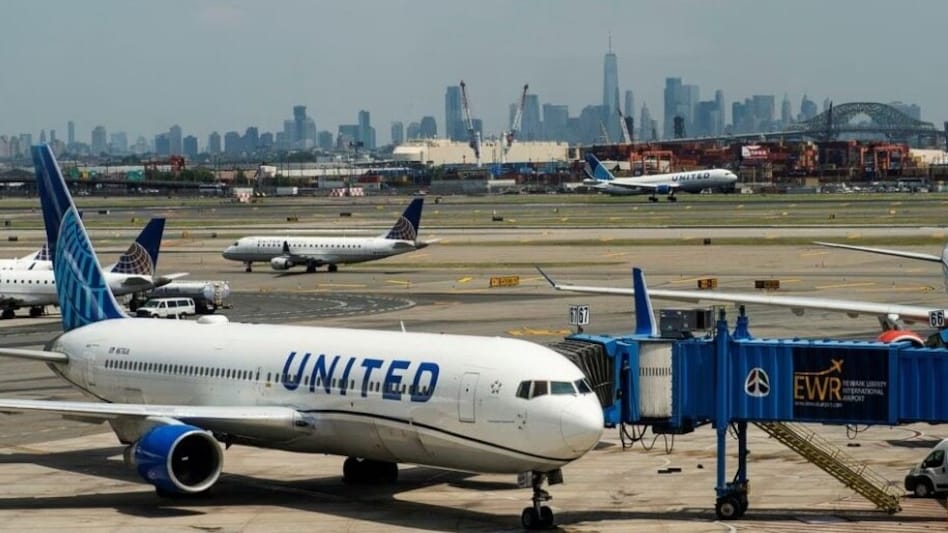
Three days later, on November 16, a failure was detected in United Airlines' computer system, leading to delays in some departures. According to AP, the system was disrupted for about one hour and 40 minutes. Pilots pointed to a problem in the system used for calculating aircraft weight. United did not specify which system malfunctioned but stated that flights in the air and regional United Express flights were unaffected. No signs of a cyberattack were found in this case.
Subsequently, on November 22, a failure occurred in Delta Air Lines' automation system. This system is responsible for calculating the weight and balance of the aircraft before flight. Due to its inoperability, staff had to perform some procedures manually. Temporary delays were introduced for Delta flights at the major Atlanta airport. According to FlightAware, by Sunday, about 2,000 Delta flights were delayed, and approximately 3 percent were canceled. Delta reported that about 70 percent of the delays and cancellations recorded by FlightAware were directly related to this system failure; the rest were caused by bad weather and other air traffic restrictions.
These three events cannot be attributed to the same malfunction. The FAA issue concerned the government communication network, the United incident was related to the airline's internal system, and Delta's difficulties arose in the aircraft weight and balance automation system. Nevertheless, all three cases point to one common problem: air transport management is now critically dependent on digital systems, where the slightest failure can affect a vast network.
The air traffic control system in the United States is one of the busiest and most complex in the world. Thousands of planes fly here daily. Ensuring safe separation between them, providing meteorological information, determining routes, and managing movement at airports is a complex technical process. To carry out this work, the FAA has extensive infrastructure, including computers, communication networks, radars, software, and data systems. However, part of this infrastructure is significantly outdated.
There are numerous systems whose modernization has long been required, but the upgrade process has progressed slowly. A report by the government oversight body, the Government Accountability Office (GAO), indicated that out of 138 FAA air traffic control systems, 51 were not considered reliable, and 54 systems raised concerns about their condition. Thus, 105 out of 138 systems are either obsolete or their continued maintenance may become difficult.
According to a Reuters report from September 2026, some FAA centers use computer and communication systems that are decades old. Furthermore, in some locations, it is becoming difficult to find spare parts for old equipment. Another problem is that systems in different air traffic control centers cannot always easily interact with each other. As a result, a failure in one network or device can spread to other centers.
This problem is not new. In January 2023, a failure occurred in the FAA's NOTAM system, which provides pilots with important flight information. At that time, all flights across America had to be temporarily halted. Even after this incident, questions arose about the need to modernize the system. In September 2025, delays of thousands of flights were also observed in the Dallas area due to communication network issues.
The question is how the failure of one system can cause such large-scale inconvenience. The answer lies in the interconnectedness of air transport systems.