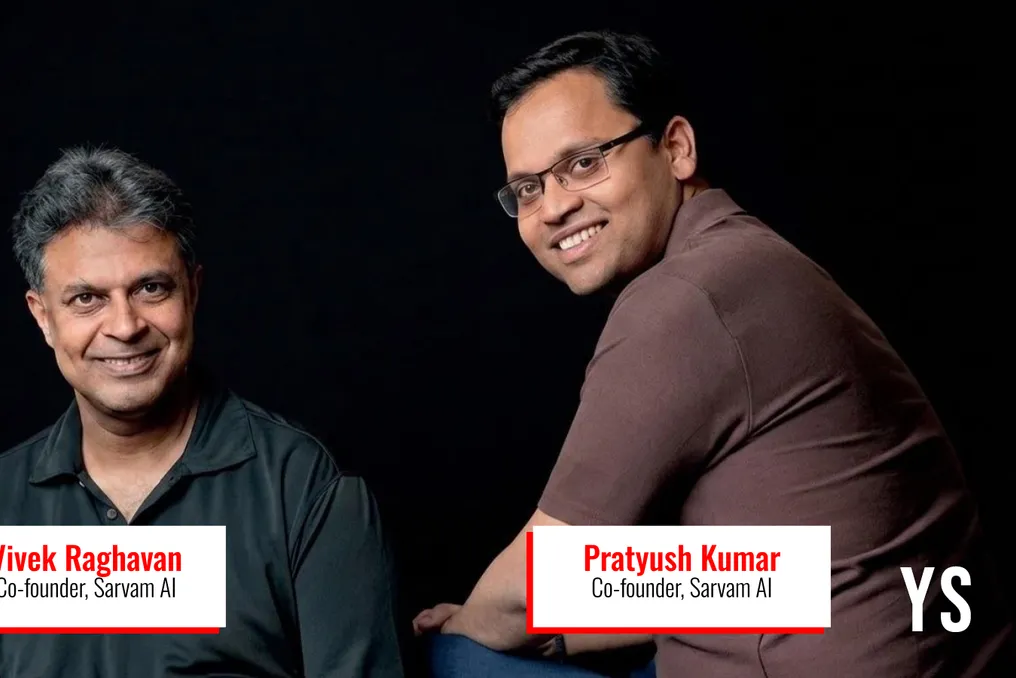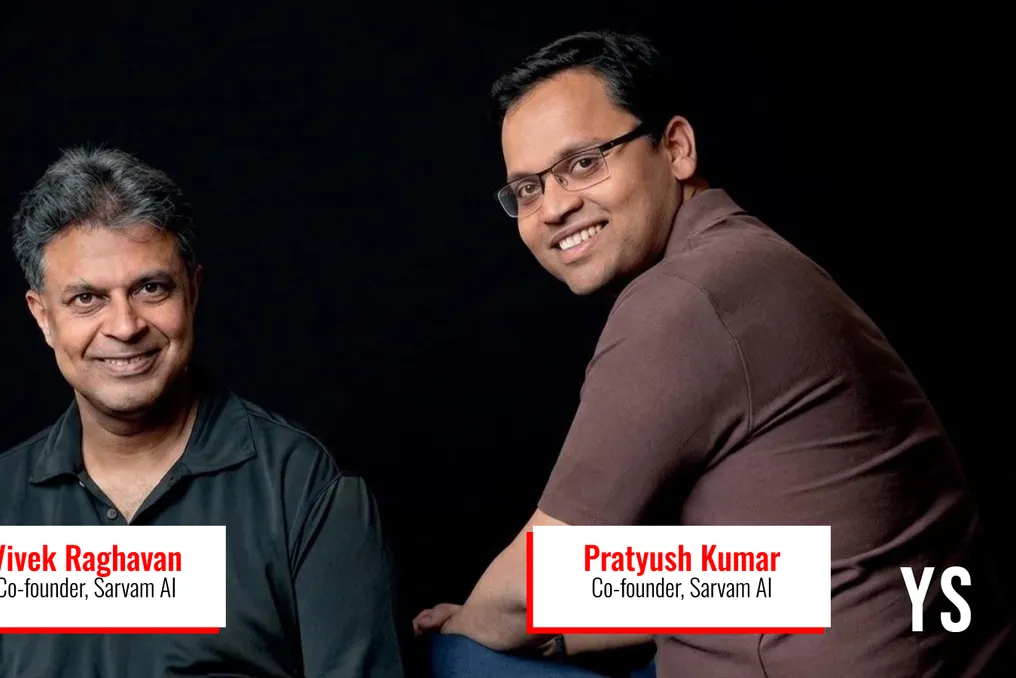
After the Token Factory platform from Sarvam AI garnered both support and criticism, particularly due to the inclusion of AI models developed in China, co-founder Pratyush Kumar issued clarifications regarding the platform's funding, the use of computing resources, and its alignment with Sarvam's own ambitions in domestic AI.
Kumar stated that the IndiaAI mission provided approximately 20 startups with access to GPUs at a 40% discount. Sarvam utilized this support to train its 105-billion-parameter model from scratch. He emphasized that the government did not directly fund Sarvam; the subsidy was directed towards cloud GPU providers.
Launched on November 16, Token Factory allows developers and enterprises to access numerous AI models through a unified Application Programming Interface (API). The cost is calculated based on the number of tokens processed. Tokens are small text units read or generated by the AI model, while inference is the process of generating responses using a trained model.
The platform's catalog includes Sarvam's proprietary model alongside open-weight models such as DeepSeek, Kimi, GLM, and Google's Gemma. Open-weight models allow other users to download and run their trained parameters.
Kumar stressed that this business operates independently of government-supported training efforts. He stated: 'We serve many open-weight models on GPUs that we acquired privately, without any government support.' Sarvam also reported that its subsidized allocation of computing power will conclude in March 2026.
The inclusion of models developed in China has intensified debates about technological sovereignty. Sarvam's position is that the country of origin of the model and the location of the infrastructure on which it runs are separate issues. Hosting open-weight models on Indian GPUs means that requests do not necessarily need to be sent to external model providers.
However, internal hosting does not make a foreign-developed model Indian, nor does it transfer its intellectual property. Furthermore, this alone does not solve the problems of software supply chains and model behavior.
Sarvam asserts that a zero-data-retention policy is available upon request, meaning that queries and responses are not saved, although operational logs are regulated separately. Privacy is not guaranteed solely by data residency.
Kumar insisted that building inference infrastructure does not distract Sarvam from its core task—developing its own models. On November 22, the company introduced Sarvam-105B-1711, an updated, open-weight version of its 105-billion-parameter model, announcing improvements in reasoning, tool usage, and performance in Indian languages.
Sarvam noted that the model's average score across eight conversational agent benchmarks increased from 42.6 to 73.9. Kumar also mentioned future releases in computer vision, speech, and edge AI, as well as efforts to secure more advanced computing infrastructure for training larger models.
The commercial opportunity reflects a broader industry shift. As AI becomes part of everyday applications, the cost of multiple model runs can be as significant as the cost of their development. Sarvam is not alone in striving to capture this market.
Other Indian players, including L&T, Jarvislabs, Utho Labs, and Mirror Security, are also developing similar offerings, competing with established global providers like Together AI and Fireworks AI.
This activity occurs parallel to government efforts to strengthen domestic AI capabilities. The IndiaAI mission, approved in 2024 with a five-year budget of approximately 10,372 crore rupees, supports the development of foundational models and the overall computational framework. A June government update noted that 20 proposals for domestic models have been identified and 93 lakh GPU hours sanctioned under 237 projects.