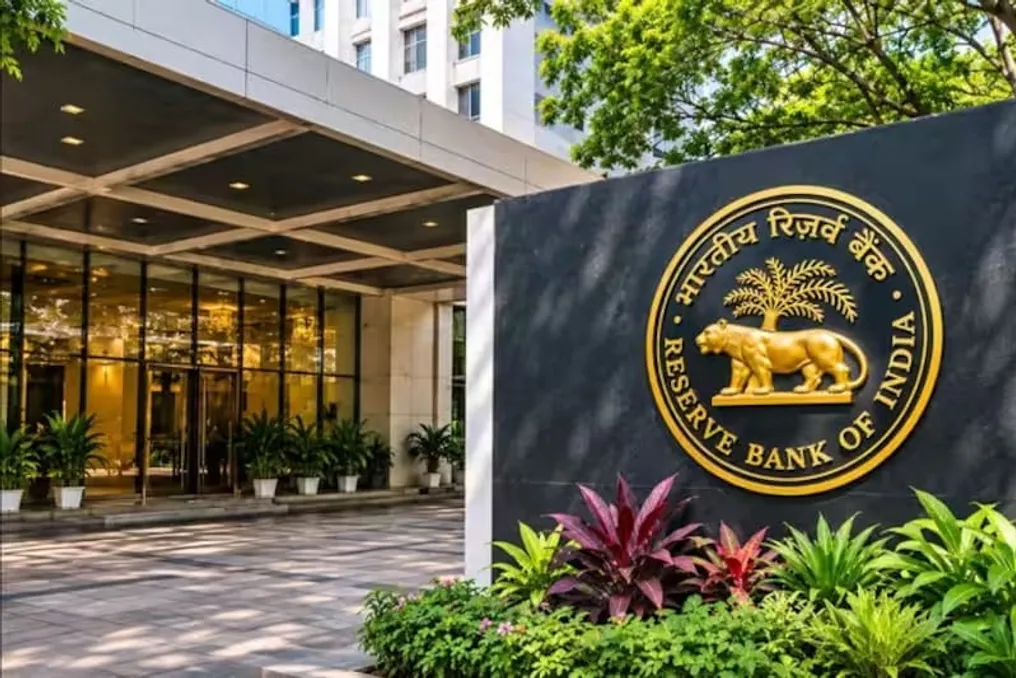
New GDP series from RBI narrows the gap between demand and supply estimates
Read more
Business Standard
business-standard.com

New GDP series from RBI narrows the gap between demand and supply estimates

Deputy Governor of the Reserve Bank of India (RBI), Poonam Gupta, stated on Monday that the updated Gross Domestic Product (GDP) series has helped reduce the discrepancies between estimates derived from demand and supply, and changes in the CPI measurement methodology will improve monetary policy decision-making.

According to Gupta, the new series eliminates a key limitation of the previous one, as estimates calculated by demand and supply did not always align previously, leading to large and volatile discrepancies. The new series integrates these estimates using a resource use table structure, ensuring a much closer match of nominal GDP estimates.

Gupta noted that in the old series, the divergence between demand and supply estimates was reported separately as a potential significant and unstable imbalance. In the new series, however, thanks to the use of the resource use table structure, estimates from both sides coincide much more closely. Although a small gap may persist in real terms due to the differing deflations of the two sides, it is significantly smaller than before.

The revised national accounts series, which uses 2022-23 as the base year instead of 2011-12, incorporates a wider range of administrative data and surveys. Furthermore, it applies double deflation for agriculture and manufacturing, aligning with international best practices.

Gupta emphasized that the revision reflects the transformations of the Indian economy over the last decade. She reported that the new series demonstrates an economy that has become more complex, diversified, and larger since the last base revision in 2011-12.

Regarding the demand side, estimates of private final consumption expenditure are now based on more recent Household Expenditure Survey data. A mapping of gross fixed capital formation by sectors investing in each asset—whether public, private, corporate, or household—has also been conducted. Thus, it is now possible to estimate not only the volume of investment but also where exactly it is directed.

These changes are expected to enhance the ability to analyze, forecast, and explain the factors of economic growth from both the demand and supply sides, making early estimates more stable and reducing the need for frequent adjustments when releasing subsequent data.

Gupta added that the improvements in the new series should contribute to more accurate and stable policy, especially in monetary policy, as early estimates based on surrogate indicators and preliminary information are a vital input into monetary policy.

Furthermore, Gupta highlighted changes in the Consumer Price Index (CPI), noting that the revised series will better reflect changing household consumption patterns and improve inflation measurement. The new CPI series uses the 2023-24 Household Expenditure Survey instead of 2011-12 data and follows the UN's Classification of Individual Consumption by Purpose (COICOP) 2018, allowing for more detailed classification of consumption.

The revised methodology includes improved handling of missing data, particularly for seasonal goods, as well as changes in how household indices are combined. Housing is now covered in rural areas, and prices from 12 online markets are collected for the first time. Gupta noted that this will be important for interpreting price signals as the share of online consumption grows.

The expanded coverage also includes item-level indices for rural, urban, and combined sectors, as well as for all states and union territories. This will help policymakers determine whether price pressures were concentrated in specific regions or spread more widely. These adjustments, in her view, should narrow the gap between measured and implied inflation and benefit monetary policy implementation within the inflation targeting framework.

Gupta concluded that the base revision is not merely a technical procedure but an important tool for understanding structural changes in the economy, including the evolution of sectoral composition, changes in household behavior, and sources of growth. Improved measurement of these shifts is critical for policy decision-making.


Similar stories

Secretary of Economic Affairs calls for wage increase to stimulate household spending
Read more
business-standard.com

Secretary of Economic Affairs calls for wage increase to stimulate household spending

A senior official from the Ministry of Finance stated that Indian firms need to increase wages to support consumer demand and economic growth amid the activation of private investments.

Economic Secretary Anuradha Thakur reported at an industry event in New Delhi on Thursday that there has been some improvement since April, citing investments. However, she strongly urged enterprises to address 'wage stagnation,' emphasizing that higher incomes can stimulate demand.

The purchasing power of Indian households is declining due to rising inflation and increased borrowing costs, yet wage hikes remain insufficient to provide relief. Although the economy has been supported by government infrastructure spending, the secretary noted that a revival in private investment would provide an additional boost to growth.

According to government data, the average monthly income of salaried workers in India increased by approximately 5% in 2023 and 2024. However, after adjusting for inflation, incomes remained virtually unchanged over these two years. Pressure is mounting again: consumer inflation accelerated to 6.09% in October, while food inflation reached 8.94%.

Households are increasingly resorting to loans to cover expenses, which calls into question the sustainability of consumption, which accounts for about 60% of the gross domestic product. Thakur explained that private investments initially appeared to be growing only in a few sectors, but subsequent monthly data showed this improvement was becoming broader. She stated that stronger wages could strengthen this recovery by generating demand, urging businesses to view this issue through the lens of 'benign cyclicity.'

The secretary added that this 'stimulates demand.' Furthermore, Thakur called on businesses to play a more active role in investing in infrastructure and manufacturing, including utilizing public-private partnerships. The improving investment situation occurs against a backdrop of easing some external pressures on the economy.

The secretary noted that India is in a 'good position' due to reduced geopolitical tensions, the return of capital outflow, and falling crude oil prices, allowing the country to 'accelerate genuinely.'

Goldman Sachs forecasts Nifty growth to 28500 by 2027 and a possible three-fold increase in the repo rate
Read more
www.aajtak.in

Goldman Sachs forecasts Nifty growth to 28500 by 2027 and a possible three-fold increase in the repo rate

Amid global geopolitical tensions, rising energy prices, and inflation exacerbated by weak rainfall in the southwest monsoon, the Reserve Bank of India raised the repo rate by 25 basis points to 5.50% in October. Goldman Sachs expects the central bank's Monetary Policy Committee to increase this rate three more times by 25 basis points, bringing the target repo rate to 6.25%.

This forecast comes as companies are forced to raise prices on products, from automobiles to consumer goods, due to high raw material costs. In October, the Consumer Price Index (CPI) for October 2026 exceeded the upper limit set by the RBI (2-6%), reaching 6.1% compared to 5.5% in September.

Pressure on food prices has intensified due to Middle East conflicts, which caused crude oil prices to rise, as well as due to the weak monsoon triggered by El Niño.

According to Shantanu Sen Gupta, Goldman Sachs' chief economist for India, due to risks associated with El Niño affecting winter crop production, food inflation in 2027 could rise by approximately 2 percentage points, reaching 7.7%. He also anticipates that core inflation will rise in early 2027 as increased raw material costs permeate all goods and services, before declining towards the end of the year.

Sen Gupta noted that, according to their estimates, overall inflation is likely to remain slightly above 6% in the second quarter of 2026 and the first quarter of 2027, with upward pressure on the prices of essential goods and services. Therefore, the RBI is expected to maintain a cautious policy. The base forecast anticipates an additional hike of 25 bps in December and another 50 bps in the first six months of 2027. Overall, total inflation in 2027 is expected to be around 5.7%, and core inflation around 4.7%.

Furthermore, there is no acceleration in government capital expenditure, as the government is likely to maintain fiscal prudence by adjusting salary and subsidy spending. All of this will affect India's GDP growth, which is expected to slow to 7.2% in the calendar year 2027 compared to the 7.9% forecast for 2026.

Despite the interest rate hikes, rising rates do not necessarily have to worsen stock market sentiment. After a period of selling this year, Foreign Portfolio Investors (FPIs) invested ₹94,963 crore in November up to the 17th, significantly more than the approximately ₹71,000 crore they sold in September and October. Nevertheless, FPIs remain net sellers amounting to ₹2 lakh crore as of 2026.

Against the backdrop of FII selling, there is a growing demand from the government to withdraw the Long Term Capital Gains (LTCG) tax, especially for FIIs. Previously, Finance Minister Nirmala Sitharaman was ready to consider proposals regarding LTCG.

However, Sunil Kaul, Goldman Sachs' emerging markets equity strategist, believes that the recent inflow of FIIs is not necessarily driven by LTCG. He emphasized that profit growth in India remains strong, and results over the last five quarters have exceeded general forecasts. Kaul believes that as global profit growth slows down due to the peak in AI capital expenditures, the attractiveness of India's sustained growth should return.

Goldman Sachs has assigned India an 'Overweight' rating and set a target for the Nifty 50 at 28,500 by the end of 2027, which is about 13% higher than the current level. Kaul noted that strong domestic demand, good earnings, and low foreign positioning make India an attractive market for diversification outside the AI business.

Despite large FII sales and rising oil prices, the Indian rupee faced significant pressure, reaching 96.96 against the US dollar in May 2026. However, thanks to RBI measures, cooling oil prices, and the return of FII investments, the rupee recovered to approximately 93.45 to the dollar on November 18.

Goldman Sachs believes the worst period for the rupee is behind it. Sen Gupta stated that despite Middle East turmoil, India's current account deficit in 2026 and 2027 is expected to be around 1% of GDP, supported by strong service exports and remittances. Furthermore, with improved FPI stock inflows, there may be an increase in capital inflow into Indian bonds in the Bloomberg Global Aggregate index in 2027.

They forecast that the rupee will stabilize around 94 to the dollar within three months and then gradually weaken to around 96 by the end of 2027.

Inflation rise and possible RBI rate hike threaten household budgets
Read more
www.aajtak.in

Inflation rise and possible RBI rate hike threaten household budgets

People who were hoping for a decrease in inflation may face disappointment. In October, the retail inflation rate in the country exceeded the upper limit set by the Reserve Bank of India (RBI) at 6%. This data has intensified concerns about a potential interest rate hike at the Monetary Policy Committee (MPC) meeting in December. According to economic experts, the RBI might increase interest rates by 25 basis points, or 0.25%, while some specialists predict another increase in February 2027.

In October, retail inflation stood at 6.09%, marking the ninth consecutive month of growth in the core inflation index. The primary driver of this inflation surge has been accelerating food prices, which directly impacts the family budget of ordinary citizens. Economists suggest that these figures indicate sufficient room for the central bank to continue its tight monetary policy.

According to forecasts, the RBI may raise the repo rate by 25 basis points at the December meeting. It is worth noting that in October, the RBI raised the repo rate to 5.5% for the first time in about three years. Concurrently, the central bank shifted its policy stance from 'neutral' to 'calibrated tightening,' signaling the possibility of further interest rate increases to control inflation.

Despite the rise in food prices, the situation with food inflation has also worsened. According to the Consumer Food Price Index (CFPI), food inflation was 7.74% in September and jumped to 8.94% in October. The increase in daily necessities prices has heightened public anxiety. Furthermore, inflationary pressure is felt across many sectors of the economy: price increases of 4% or more were recorded in 19 out of 43 sub-groups of the Consumer Price Index (CPI).

The RBI had initially projected that retail inflation for the third quarter of the current fiscal year (October-December) would be 6%, and 5.4% for the fourth quarter (January-March 2027). However, reaching 6.09% in October has put pressure on the central bank's forecasts. RBI Governor Sanjay Malhotra has also indicated that a reduction in interest rates is unlikely in the near future; instead, rates may remain stable or even rise.

Crude oil prices have fallen from $110 per barrel to approximately $93 per barrel, attributed to Middle East peace expectations. Nevertheless, an immediate decline in inflation is not anticipated. Experts believe that the effect of lower oil prices may only materialize over time, as the impact of previous price increases is still reflected in inflation data. Specialists forecast that inflation will be 6.1% in the third quarter of the current fiscal year.

Some economists suggest that the cycle of interest rate hikes by the RBI could continue after December. Madhvi Arora, Chief Economist at MK Global, maintained a forecast of an overall increase of 75 basis points in interest rates. According to her assessment, a 25 basis point hike could occur in December 2026, followed by another 25 basis points in February 2027.

Although the drop in crude oil prices and the inflow of Foreign Portfolio Investments (FPI) have provided some relief to the Indian market and the rupee, inflationary pressure may persist. Experts also note that if the main cause of inflation is supply-side issues, the RBI must assess the impact of further rate hikes on economic growth before making a decision.

If the RBI raises the repo rate by 0.25% in December, borrowing costs for banks may increase, which will affect interest rates on home loans, auto loans, and other borrowings. However, the actual impact will depend on how much banks adjust their rates. Currently, ordinary citizens are facing a dual problem: on one hand, food prices are rising, and on the other, there is a risk of increased monthly loan payments due to potential rate hikes. All attention is now focused on the RBI MPC meeting in December.

Popular