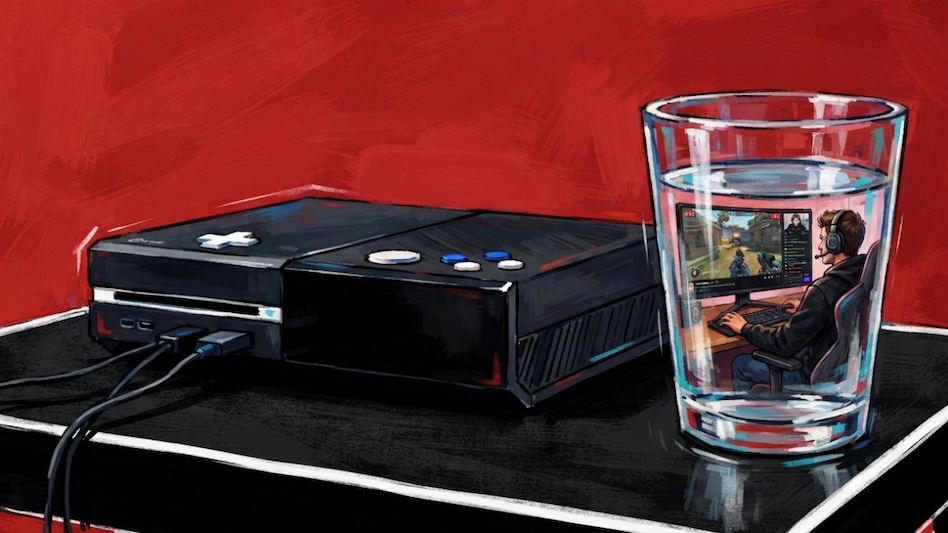
Analysis of the Indian Gaming Industry: Market Growth, Salaries, and Career Opportunities Using GTA 6 as an Example
Read more
Aaj Tak
www.aajtak.in

Analysis of the Indian Gaming Industry: Market Growth, Salaries, and Career Opportunities Using GTA 6 as an Example

Society often holds the view that excessive time spent on video games should be controlled, and focus should be placed on obtaining a 'real career,' such as engineering, medicine, civil service, or an MBA. For a long time, gaming was perceived merely as leisure or an activity to do after completing homework.

However, the situation is rapidly changing. The immense enthusiasm demonstrated worldwide, including in India, for the release of Grand Theft Auto VI (GTA 6) on November 19, 2026, once again highlighted the significance of gaming. In just the first 24 hours, GTA 6 streams on Twitch, YouTube, and Kick peaked at 79.1 million viewers, with total viewing time exceeding 12.54 billion hours.

Before the official launch, 32.5 million copies of the game were sold, generating a record revenue of $3.79 billion in the first day alone. In India, major content creators like Carry Minati and Mythpat attracted millions of views on their approximately 10-hour live streams, where the audience enjoyed not only the game but also the entertainment, commentary, and storyline.

An interesting Indian aspect is that over 1600 developers from Rockstar India in Bangalore participated in the development of GTA 6. This serves as an important example for those who believe that gaming is only about playing in front of a screen. Behind every major gaming project is an entire team, including developers, designers, artists, animators, testers, and producers.

According to the third edition of the 'India Gaming Report 2026' by Dentsu and IWMBuzz Media, there are approximately 535 million active gamers in India in the last year. Of these, 332 million played in the last three months, and 109 million are paying gamers. According to this report, the net gaming market in India in 2026 is valued at 14,344 crore rupees. This amount includes 8,705 crore rupees from gaming advertising, 5,239 crore rupees from consumer payments for games, and 401 crore rupees from esports and other revenue streams (excluding real-money games, betting, or gambling).

Now, this industry extends beyond game sales, encompassing advertising, esports, streaming, content creation, and development. The next big challenge for India is to transform its vast user base into a strong center for producing original games and intellectual property (IP).

According to the GameDev Outlook 2026 from the Game Developers Association of India, over 1900 game development companies operate in India, employing about 130 thousand people. Global studios such as EA, Ubisoft, and Zynga have contributed to talent development in India, and Rockstar studio in Bangalore has contributed to large-scale projects like GTA 6. Furthermore, companies like PlaySimple, MoonFrog, and Bombay Play demonstrate that opportunities exist in this field not only for corporate work but also for running one's own business and creating games for a global audience.

For youth wishing to participate in competitions instead of game development, esports offers one path. Professional gaming has developed around games such as BGMI, Valorant, Dota 2, and League of Legends. Players participate in tournaments, represent teams, receive sponsorships, and attract viewers through live streams. Names like Mortal (Naman Mathur), Jonathan Amara, Scout OP (Tanmay Singh), and Mavi have become famous. According to an esports report from 2023, serious BGMI players could earn between 100,000 to 150,000 rupees per month, while creators with 5 to 10 million subscribers could earn up to 500,000 rupees monthly (these are old industry estimates and not a guarantee). However, young people often face the problem of convincing parents that this is not just a pastime but demanding work. Professional gaming requires regular training, teamwork, strategy, and opponent analysis.

Today, one of the most accessible opportunities for Generation Z is becoming a 'gaming creator.' To do this, it is not necessary to win tournaments or become the most famous player in the country. It is important to entertain the audience, form one's own identity, and retain their attention. This was clearly demonstrated during GTA V in India. When PUBG Mobile was banned, many creators retained the audience using GTA V Online role-playing servers, custom characters, and their own stories, turning it into an interactive show. With the release of GTA 6, new possibilities in role-playing, storytelling, and collaborations are being discussed.

Similarly, large communities have formed around Minecraft, Roblox, BGMI, Free Fire Max, and Valorant. Creators' income comes from YouTube advertising, super chats/donations, paid memberships, brand partnerships, sponsorships, tournament prize pools, merchandising, and events. Thus, the creator acts simultaneously as a video producer, artist, community manager, and...

Similar stories

Study with 133 surveys indicates that players exhibit better cognitive performance in certain areas
Read more
super.abril.com.br

Study with 133 surveys indicates that players exhibit better cognitive performance in certain areas

The myth that video games are harmful to health has been constantly refuted by various studies. Studies point out that regular gaming can positively contribute to motor coordination, mental health, creativity, brain plasticity, strengthening social bonds, and even assisting in therapeutic processes with psychologists. However, it is emphasized that excessive consumption must be avoided to ensure the hobby remains healthy.

An investigation conducted in July 2026 provided another piece of evidence in favor of gamers, correlating the habit of playing video games with superior cognitive performance. This study was published in the journal Acta Psychologica and sought to clarify a divergence found in previous works: while some suggested benefits for mental skills, others reported minimal or inconsistent effects.

The researchers conducted a systematic review and three meta-analyses, examining 133 studies published between January 2005 and August 2025, involving a total of 14,245 participants. All these works focused on the link between the act of playing and an alleged improvement in cognitive performance.

Results

In all the meta-analyses analyzed, positive results were noted in cognitive tests, although these were considered modest. The most relevant findings emerged from controlled trials, where researchers evaluated interventions using video games, unlike the simple observation of individuals who played on their own. In this type of trial, memory showed a significantly clear improvement.

It is important to note that the study does not corroborate the notion that video games promote a generalized and expressive increase in intelligence, given that the detected effects are relatively small and the possibility of establishing a cause-and-effect relationship remains limited. Stating that a video game broadly improves intelligence would be difficult to sustain in the short term, as 'intelligence' is a vast concept and research generally focuses on specific skills within delimited groups and periods.

Despite this, the results confirm once again that players tend to exhibit above-average cognitive performance in certain tests, particularly regarding memory.

The other side

To understand the relevance of this 2026 study, it is necessary to consider a previous work, dated 2018, which reached the opposite conclusion: video games do not enhance cognitive ability. This meta-analysis, published in Psychological Bulletin, analyzed 227 individual studies.

In this analysis, scientists investigated whether the specific skills used during gameplay translate into broader cognitive abilities, i.e., whether they raise overall intelligence. Since they found no definitive proof of this, they concluded that there is no causal link between playing video games and improving general cognitive ability.

The 2018 and 2026 studies addressed different issues: the older one sought to know if gaming generated gains in general cognitive ability, while the more recent one investigated the enhancement of specific cognitive skills. For this reason, their conclusions are not necessarily contradictory, but rather different perspectives on the topic of intelligence. A positive point is that none of the mentioned scientists claimed that playing makes people less intelligent.

Video games become a source of intellectual property for cinema and streaming
Read more
olhardigital.com.br

Video games become a source of intellectual property for cinema and streaming

Historically, the relationship between video games and cinema was marked by adaptations that did not always please enthusiasts. In the past, films were adapted into games to boost releases, and game characters appeared in cinema productions that often failed to capture their special essence.

This landscape has undergone a significant change. Titles such as Super Mario Bros. Movie, The Last of Us, Arcane, Fallout, and Minecraft Movie prove that video games have established themselves as one of the primary sources of intellectual property (IP) for cinema and streaming platforms. The focus has shifted from merely adaptation to exploring universes capable of attracting audiences across various formats.

Commercial success reinforces this interest. Super Mario Bros. Movie surpassed the $1.3 billion global box office mark, and Minecraft Movie earned around $960 million, placing these works among the biggest recent Hollywood successes.

However, there is a deeper question: why do some IPs manage to transition across different media, while others do not achieve the expected success?

One of the central reasons for this transformation lies in generational change. People who grew up playing video games are now also consumers of cinema and streaming, work in the audiovisual industry, and often participate in decisions about which projects receive investment. Video games have stopped being perceived solely as children's entertainment, assuming a prominent role in popular culture.

For film studios and streaming platforms, this represents a clear market opportunity. An established game franchise brings with it recognizable characters, defined universes, and, crucially, an engaged fan base. While this does not guarantee success, it reduces the uncertainty inherent in presenting a completely new story to the public.

Another relevant aspect is the advancement of production technologies. Digital tools, animation, and visual effects have made it possible to represent worlds that would previously have been excessively costly or complex to replicate.

However, it is vital to distinguish between adapting a game and merely using its brand for promotional purposes. When a game IP migrates to audiovisual media, it carries with it a community, a visual identity, and a pre-existing universe for the audience. Conversely, cinema and streaming offer something of great value to games: the chance to reach individuals who have never handled a controller.

It is possible that someone discovers The Last of Us through the HBO series before knowing the Naughty Dog games. Similarly, a child might watch the Mario movie without having played any Nintendo titles. This movement establishes a virtuous cycle of intellectual property appreciation: the game strengthens the audiovisual production, and this, in turn, expands brand recognition, potentially generating interest in the games.

This phenomenon is known as transmedia, where an IP develops across multiple media, leveraging the specificities of each one.

There is a frequently neglected challenge: each medium has its own language. Based on its trajectory in the gaming industry, the author described two contrasting projects. In Swan Princess Hidden Tales, based on The Fairytale Princess franchise, the challenge was converting a cinema-created IP into an interactive experience. It was not enough to replicate scenarios and characters; one had to understand the franchise's audience, respect its identity, and create mechanics coherent with that universe.

Years later, the inverse process was experienced with Starlit Toons, an animated series inspired by the Starlit game universe. In the games, the characters already possessed visual identity, personality, and functions linked to game mechanics. However, an animated series demands distinct elements: narrative, conflicts, interpersonal relationships, and plot development.

A character might be effective in a game simply by possessing a fun ability, but this is insufficient on television. They must be capable of sustaining a story and captivating the viewer. These experiences reinforced the notion that adapting an IP does not mean copying the original product, but rather preserving its essence while building an experience appropriate for the new medium.

In the industry, there is the concept of 'deck appeal,' which refers to an IP's ability to spark interest in potential partners, investors, or producers. Although there is no single formula, certain components help identify a brand's potential in different formats.

The first is the presence of easily recognizable characters or symbols, such as Mario's silhouette or Pikachu, recognizable even by those who have never played Pokémon. The second is the presentation of a world with its own rules, like the visual and functional logic of the Minecraft universe. The third is the central action, the IP's 'verb': jumping in Mario, catching and training in Pokémon, or building and exploring in Minecraft. The fourth element is emotional identity, as the IP must evoke something recognizable, whether humor, adventure, nostalgia, or suspense. Finally, there is the capacity for expansion, meaning whether the universe allows for new stories, products, or experiences without losing its identity.

Minecraft serves as a notable example. Its universe, composed essentially of blocks, does not require a mandatory linear narrative, and its protagonist does not have a rigidly defined personality. Despite this, Minecraft has become a highly recognized brand in entertainment. The secret lies in the combination of a distinct visual identity, a world with its own rules, and a powerful central action: building.

LEGO follows a similar path. Its initial product is a building toy, but its versatility has allowed for the creation of games, movies, and series representing almost any universe. Transformers and Cars illustrate another path: objects that acquire personality, emotions, and conflicts, transforming into characters capable of sustaining narratives.

Tetris presents a unique case. Being essentially a pure mechanic, without traditional characters or narrative universe, its 2023 Apple TV film focused on the history behind the game's commercialization, rather than turning falling blocks into adventures. This proves that an IP does not need to start with a grand story to reach audiovisual media, but to do so, a character is essential for telling a narrative.

Despite the sector's enthusiasm, IP adaptation remains a risky endeavor. A common mistake is assuming that mere brand recognition guarantees success. Using famous characters without understanding what made them popular can lead to productions unpleasant for both original fans and the new audience.

Ignoring the fan community is another problem. Followers have expectations regarding characters, worlds, and behaviors. Although an adaptation does not need to be faithful to every detail, any changes must be logically consistent with the proposal.

There are also commercial obstacles, such as licensing rights, exclusivity, platforms, and timelines, which require a well-defined structure. A poorly planned strategy can prevent an IP from capitalizing on crucial expansion opportunities.

For independent developers, especially in Brazil, this discussion is relevant. Not every studio should turn its game into a TV series, but considering the IP's identity, characters, and universe from the beginning can increase its future commercial chances. A game can be the starting point for a much larger brand.

For a long time, developers focused primarily on mechanics, platforms, and business models. However, the growing convergence between games, cinema, and streaming introduces a new dimension: a game's value can transcend the game itself. This does not imply that every project must be a transmedia franchise; many of the best games thrive by exploring unique characteristics that other media cannot replicate.

The essential thing is to understand that a robust IP can open doors in various markets, provided there is a cohesive expansion strategy. Perhaps the most important question for anyone developing a game today is not just about sales potential, but whether, removing the gameplay, there remains a universe, a character, or an idea that people would want to follow. This answer defines whether one is creating just a game or the next great entertainment intellectual property.

Study points to association between video games and improvement in children's cognitive skills
Read more
olhardigital.com.br

Study points to association between video games and improvement in children's cognitive skills

Video games are frequently the subject of debates related to screen time, behavior, and child development. However, scientific research investigates whether the act of playing can aid the brain in the learning process.

Researchers from the University of Vermont, located in the United States, discovered a correlation between the habit of playing video games and performance in certain cognitive abilities, such as impulse control and working memory.

This study was published in the scientific journal JAMA Network Open and analyzed data collected from nearly two thousand nine and ten-year-old children participating in the Adolescent Brain Cognitive Development (ABCD Study), which is supported by the U.S. National Institutes of Health (NIH).

The findings demonstrated that children who dedicated three hours or more daily to video games achieved superior results in some cognitive tests compared to those who did not play.

However, scientists emphasize that these results do not establish that video games are the direct cause of the observed differences.

To conduct the investigation, specialists divided participants into two groups: those who did not play video games and those who reported playing at least three hours a day. Participants were subjected to tasks designed to measure two crucial aptitudes.

It was observed that children who played video games responded more quickly and accurately in both assessment tests. Furthermore, researchers employed functional magnetic resonance imaging (fMRI) to monitor brain activity while the tasks were performed.

The MRI results revealed disparities in brain areas linked to information processing, attention, and memory.

One possible explanation raised is that games require constant use of these skills, as players need to make decisions, follow events, and retain information during matches.

It is important to note that the study did not differentiate between various types of games, making it impossible to determine which modalities provide the greatest cognitive benefits.

Despite the positive results in cognitive tests, it was found that children who played three hours or more also showed notably higher scores on indicators of depressive symptoms, attention problems, and signs associated with Attention Deficit Hyperactivity Disorder (ADHD).

The researchers clarified that these scores did not reach levels considered clinically relevant in the studied groups.

Another relevant aspect is that the research only recorded associations at a specific point in time, without tracking the development of these skills over time. This prevents knowing whether video games improved cognitive performance or if children with certain skills already had a greater affinity for games.

The authors themselves warned that the findings do not justify unlimited video game use.

The research suggests that the act of playing may be linked to essential cognitive skills for learning, particularly impulse control and working memory. However, good performance in these tests does not automatically imply better academic achievement; the study did not show improvements in grades, literacy, or other metrics of academic success.

Factors such as sleep quality, physical exercise, family environment, and time spent on other activities must also be taken into account.

Scientists indicate that the next step involves following these children through adolescence and early adulthood, investigating the relationship between gaming habits and brain and behavioral changes.

In summary, science indicates that video games can integrate cognitively stimulating experiences, but their effects depend on variables that still require greater understanding. The challenge lies in understanding how, to what extent, and under what circumstances video games can contribute to development, going beyond the simple question of being good or bad.

Popular