Trees perform far more functions than just providing shade, bearing fruit, or supporting medicinal plants and vegetables. In Mzansi, we are fortunate to have rich soil and land that allow for the placement of a wide range of trees that support ecosystems and stimulate entire industries.
Although timber plays a huge role in daily life, from furniture in homes to stationery, forestry remains a profitable venture for anyone interested in entering this sector.
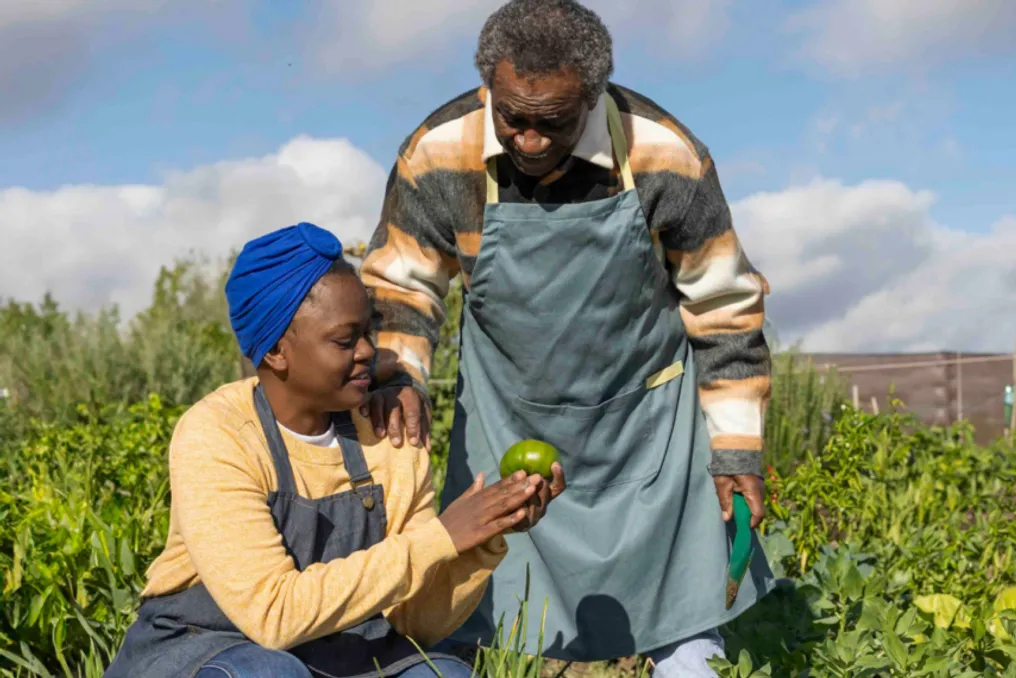
Robin Hills, a program manager at Food and Trees for Africa, shares valuable knowledge with farmers about what forestry business truly looks like.
For those who want to start growing trees, it is important to first assess the conditions of the land, soil, and climate. Robin Hills advises starting with observation and ecological design, rather than rushing into planting. Before choosing any tree, one must study the microclimate of the site, water availability, wind patterns, and soil condition, including drainage, depth, and organic matter content.
Instead of forcing trees onto degraded areas using large amounts of chemicals, they should be used as living infrastructure for land restoration. This includes building soil using pioneer and nitrogen-fixing trees, which are capable of extracting deep minerals and dropping nutrient-rich leaf litter, thereby restoring the topsoil and improving water infiltration.
It is also important to design the system with climate resilience in mind: by mapping prevailing winds and slopes, tree lines can be organized as windbreaks. This helps reduce water loss from crops by up to 30%, and root systems stabilize the soil against erosion and replenish groundwater reserves.
The most sensible approach is the principle of 'right tree, right place, multiple functions.' Instead of planting monoculture timber plantations, which are vulnerable to pests, fires, and require long waiting periods for financial returns, local and adapted species should be chosen that thrive in the specific rainfall zone and serve both the ecosystem and the farmer.
When selecting, priority should be given to multipurpose value: choosing species that provide wind protection, habitat for pollinators, fodder for livestock, or soil regeneration, alongside commercial products. In South Africa, trees such as wild olive, quince, moringa, or hardy fruit and nut varieties yield annual harvests, as well as valuable medicinal bark/leaves and cultural value, while remaining productive.
The biggest initial investment in this business is not in expensive equipment, but in ensuring water security, site preparation (compost and mulch), fencing/livestock protection, and patience. Unlike seasonal crops, trees require a multi-year establishment period, but agroforestry can accelerate viability.
The return on investment differs from pure forestry: while pure timber requires 10–25 or more years to generate income, intercropping fast-growing fruit trees, medicinal herbs, or cash crops among young trees allows income generation within 1–3 years.
New farmers are advised to connect with local agroforestry NGOs, conservation networks, municipal inspectors to expand knowledge, and nursery cooperatives instead of trying to figure out commercial forestry models on their own. These networks often provide training, propagation support, and access to 'green' financing or Corporate Social Responsibility (CSR) partnerships.
Timber views the tree as a disposable commodity, harvested once, whereas diversified tree-based enterprises create multiple income streams from one standing asset. Markets include fresh fruits, nuts, and dried products for local markets, school feeding programs, or regional processors.
Furthermore, there are non-timber forest product (NTFP) markets, such as honey from local flowers, medicinal plant value chains, essential oils, natural dyes, and seed collection for restoration nurseries. Collaboration with corporations and ecosystems is also possible: as soil restoration and carbon sequestration become increasingly relevant, small farmers can access biodiversity grants, carbon sequestration programs, and social responsibility investments by uniting through farmer cooperatives.
The most common mistakes of new farmers are planting monocultures, neglecting post-planting care (especially watering and livestock protection in the first two years), and viewing trees solely as timber. Many projects fail because trees are planted in isolation, without soil preparation or community support.
The advice for young people and new farmers is to think not like a logger, but like an ecosystem manager. A standing, multipurpose tree provides an 'annual rent' through wind protection, healthier soil, shade for livestock, medicine, and fruit. It is necessary to start small, focus on local and multipurpose species that enhance your farm's resilience, and build a business where your ecological capital strengthens with every season.