Zhipu released GLM-5.4 model with vision support and one million token context window
Read more
TechNode
technode.com

Zhipu released GLM-5.4 model with vision support and one million token context window

Zhipu has made the GLM-5.4 model available through its Coding Plan subscription, expanding its functionality with visual understanding and enhanced capabilities in coding tasks. The model appeared in the service selection menu on Monday, where it is presented with vision support and a one million token context window.

A member of the Zhipu operations team reported that the company has spent the last three months scaling both the size of its model and the Loop Transformer approach. Users of V2, V3, and team plans have received a 50% increase in their GLM-5.4 usage limit and can access it by setting the model name to 'glm-5.4'.

The release of the new model is integrated directly into Zhipu's developer subscription product. As of the report's publication, the company has not yet provided full technical documentation describing the architecture, number of parameters, or testing results for this model.

Similar stories

Alibaba releases Qwen4-Max model with expanded context window and reduced API prices
Read more
technode.com

Alibaba releases Qwen4-Max model with expanded context window and reduced API prices

Alibaba made its flagship Qwen4-Max model publicly available on the QwenCloud platform on Monday. Access to the model was previously provided through a limited preview that began on November 11.

The model is built on a mixture-of-experts architecture and possesses 2.4 trillion parameters. It can directly process images and supports a context window of up to one million tokens. Furthermore, Qwen4-Max is accessible via Qwen Studio, QwenWork, and Qoder.

According to Alibaba's statements, this model requires fewer tokens compared to Qwen3.8-Max when performing comparable tasks. Combined with lower API prices, the average cost of completing a task on the company's proprietary Work360 benchmark has decreased from 26.58 yuan to 11.16 yuan, representing a reduction of approximately 58%.

The company also introduced a plugin that allows agents to provide an initial version of their work and subsequently make revisions based on user feedback. Alibaba plans to release more compact versions of the Qwen4 models into the public domain.

Huawei Unveils G1, Its First Continuous Glucose Monitor After Class III Approval in China
Read more
pandaily.com

Huawei Unveils G1, Its First Continuous Glucose Monitor After Class III Approval in China

Huawei officially announced the release of its first continuous glucose monitoring (CGM) system, G1, via a teaser posted on its consumer business official account on Weibo on November 13. The company stated that this product will provide a professional and intelligent experience for managing blood glucose levels. Huawei has not yet published an English product page, and information regarding price and availability is absent.

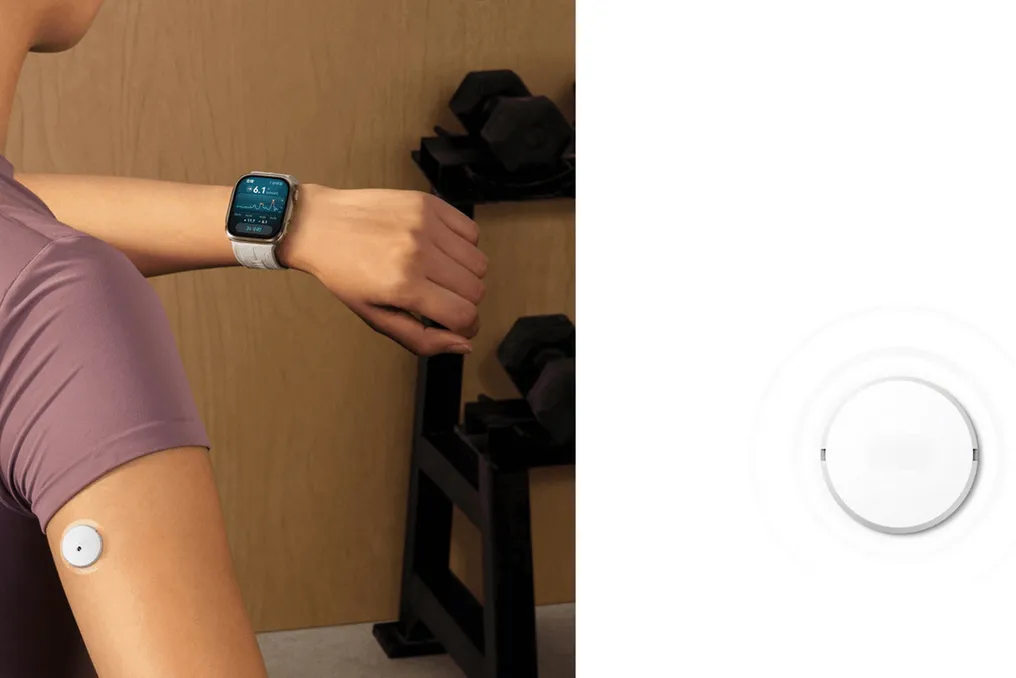
The official poster lists three key features of the device: 24-hour continuous glucose monitoring, the ability to view readings on both phones and smartwatches, and alerts for abnormal glucose levels. Images show a small circular sensor worn on the back of the upper arm, with data displayed on a Huawei watch.

This announcement followed the receipt of regulatory approval. On October 30, the National Medical Products Administration (NMPA) of China included Huawei Device Co., Ltd.'s continuous glucose monitoring system in the list of recently approved Class III registered devices. This class is the highest in China's medical device system and corresponds to the level of cardiac stents and artificial joints. G1 is the first Huawei device to receive Class III registration.

Previously, the company's devices had received Class II approvals, which related to a wrist blood pressure monitor, software for sleep apnea screening, and software for pulse wave recording that detects atrial fibrillation and premature beats.

Device Details and Purpose

According to registration data reported by Chinese media, the device is intended for adults aged 18 and older suffering from diabetes. It continuously or periodically measures glucose levels in interstitial fluid, retains real-time readings for trend tracking, and warns users when levels exceed set thresholds. The device is designed for single-patient use, does not require user calibration, and can be worn for up to 16 days.

Some technical specifications remain unconfirmed. Previous leaks reported by IT Home indicated that the sensor uses a soft subcutaneous filament with a glucose oxidase electrode, has a Mean Absolute Relative Difference (MARD) below 10%, lags behind blood glucose levels by approximately five to fifteen minutes, conceals the needle, and can be used while swimming. Huawei has not confirmed these figures.

Huawei has been involved in glucose monitoring for several years. The WATCH 4 series, released in 2023, offered a high sugar risk assessment that evaluated risk without providing actual glucose values. The CGM sensor provides these values directly, although, like all CGMs, it measures interstitial fluid, which lags behind blood glucose during rapid changes in levels.
China Mobile Cloud and Zhipu sign cooperation agreement on GLM integration, coding product development, and token research
Read more
pandaily.com

China Mobile Cloud and Zhipu sign cooperation agreement on GLM integration, coding product development, and token research

China Mobile Cloud and Zhipu have signed a cooperation agreement covering model services, AI coding products, and application across various industries. The agreement was signed on November 6th and reported by Chinese media on November 8th; it represents an announcement of a partnership, not the launch of a ready-made joint service.

According to a Chinese language report based on a statement from China Mobile Cloud, the companies intend to establish a joint development center focused on tokens. Their technical work will involve adapting models for domestic computing hardware and optimizing models to enhance token production efficiency. No data regarding achieved efficiency gains or implementation timelines were disclosed.

The agreement also stipulates connecting Zhipu's GLM model family to China Mobile Cloud's MoMA model services platform. This will allow the operator to include the model data in its offering, although the announcement does not specify whether each GLM version is already available on this platform. Supported versions, client access conditions, or service levels were also not indicated.

Another focus area is the joint development of AI coding products. The announcement describes comprehensive work on a product but does not name a new code application, publish a list of features, or set a public release date. This distinction is important for developers: an agreement to create products differs from a publicly available coding tool or a proven migration path.

For industrial users, the partners identified the financial sector and government applications as priority areas. They describe solutions that combine computing resources, models, and applications instead of disclosing names of client implementations or independent assessment results. The report lacks data on deployment, benchmarking results, or pricing for these proposed solutions.

Thus, specific next steps include technical adaptation, platform integration, and product development. The practical value of these measures will depend on details yet to be revealed, including model support, methods of client access, and whether planned optimizations will lead to measurable increases. Currently, the agreement outlines a general agenda for joint development, rather than evidence of a completed breakthrough in efficiency.

Popular