Ant Group introduces AI-powered smart ring and bracelet for health under the Afu brand
Read more
TechNode
technode.com

Ant Group introduces AI-powered smart ring and bracelet for health under the Afu brand

Ant Group has launched its artificial intelligence-based healthcare service, Afu, by releasing a smart ring and a bracelet. These devices expand the company's range of services in health management, bringing it to the level of wearable hardware.

At the Afu healthcare ecosystem conference, it was announced that the gadgets are designed to monitor indicators such as sleep, heart rate, respiration, and blood oxygen levels. Based on the collected data, the AI will generate health status reports and provide relevant recommendations.

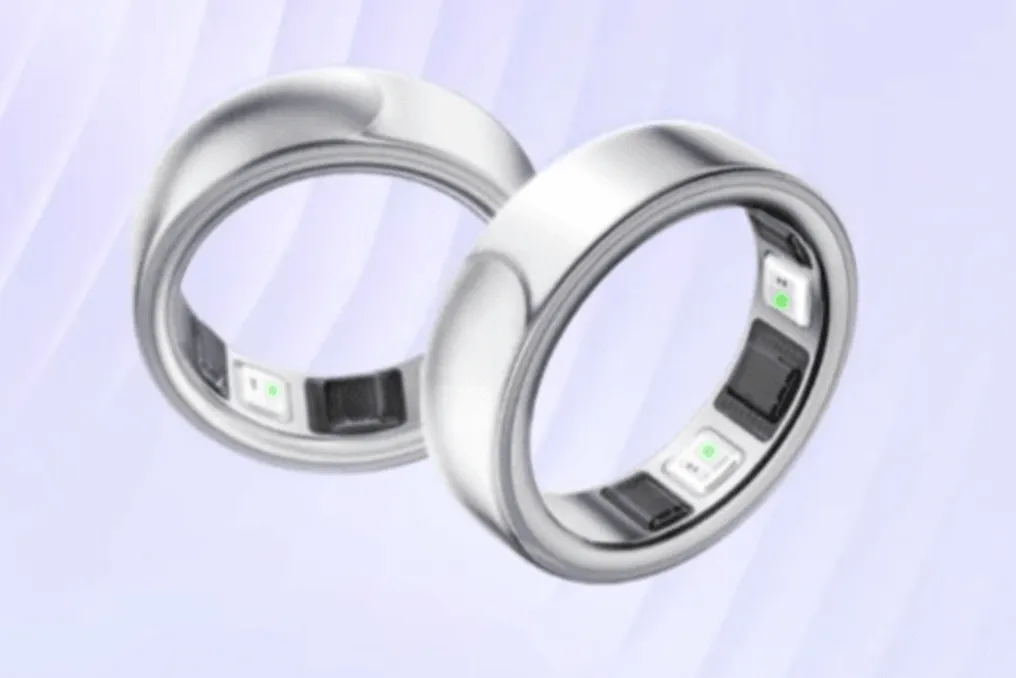
The bracelet, named Fuhuan in Chinese, is available in two versions—with and without a screen. The Fujie ring features a simple silver-white design. Ant emphasized the long battery life of both products, but the official announcement did not disclose detailed battery specifications, retail prices, or sales start dates.

Afu stated that it plans to open opportunities for cooperation with various partners. With these devices, the service gains the ability to collect continuous health data alongside information provided by users during conversations, thereby expanding its function from simply answering individual queries to constantly monitoring changes over time.

Similar stories

Ant Group updates AQ app with video consultations and wearable device support
Read more
pandaily.com

Ant Group updates AQ app with video consultations and wearable device support

Ant Group introduced an update to its health application, AQ, at the healthcare ecosystem conference held in Guangzhou on November 23. The update includes real-time video interaction capabilities, expanded family health management, and two new wearable devices. Furthermore, the company announced plans to release an international version of the application in various markets.

According to reports from the event, users can point their phone camera at skin changes, areas of discomfort, medicine packaging, or medical reports while describing their concerns. The application is capable of asking follow-up questions and recording sounds, such as coughing, offering an option to connect with a doctor for further consultation.

The company asserts that the enhanced service integrates its LingSante healthcare models with audio-visual interaction, health prediction features, and safety measures. It is important to note that these are product descriptions, not independent proof of diagnostic accuracy or clinical outcomes. Video instructions and readings from wearable devices should not be mistaken for confirmed medical assessment replacements.

The family management update allows for the consolidation of records and current activity in one place, including weight monitoring, glucose levels, and childcare. Ant states that the application can use past data to identify changes, provide reminders, and turn agreed-upon goals into daily actions. This personalization depends on the information provided by users or permissions granted for data exchange with connected devices.

Ant also presented a fitness tracker bracelet and ring to monitor metrics such as sleep, heart rate, and respiration, generating reports and recommendations using artificial intelligence. The bracelet was demonstrated in both screen-equipped and screenless versions. The viewed reports did not contain retail prices, battery life data, or general sales availability, and the products were presented as open for partnership collaboration.

An international version of the application is planned, although its launch has not been confirmed. According to Sina Technology, this version will include health query functions, skin image interpretation, and health management. A Hong Kong version is also expected, which will support localized cross-border healthcare services and insurance payment.

Ant reiterated that the total number of users has reached 150 million, emphasizing that this figure does not represent monthly active users. The new consumer application features and hardware plans are separate from the release of the LingSante medical model weights and from earlier integration with UpToDate for physicians.

Amazon launches Ring Robotics with flying drone and security robot for surveillance
Read more
olhardigital.com.br

Amazon launches Ring Robotics with flying drone and security robot for surveillance

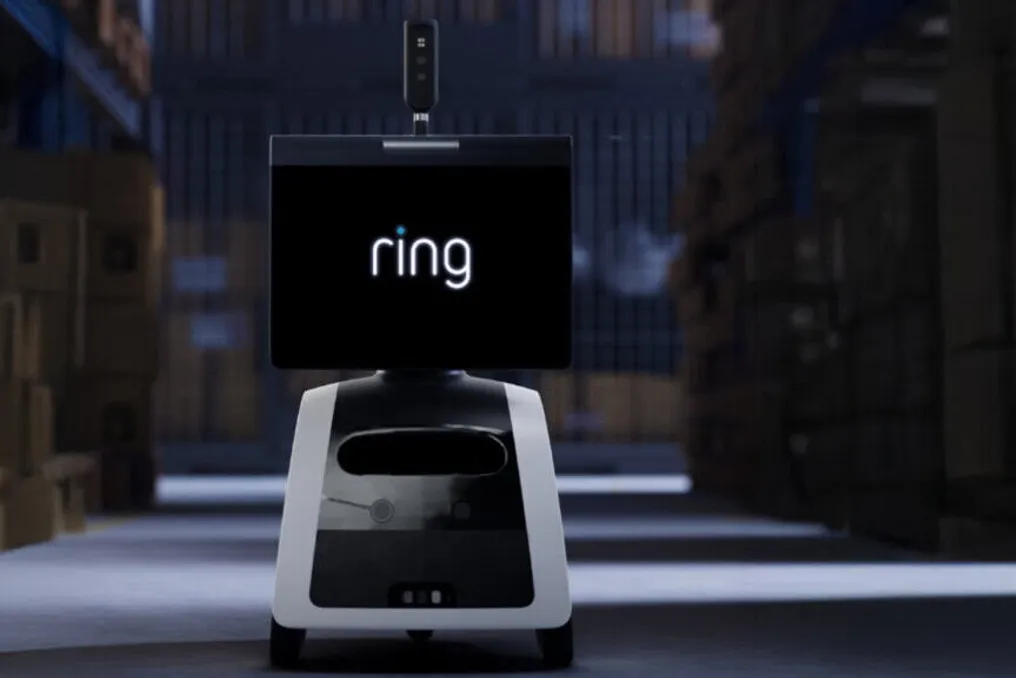
Ring, an Amazon subsidiary, has introduced the Ring Robotics line, which consists of autonomous security devices. This line includes an aerial camera intended for residences and a mobile robot aimed at business use. These devices are designed to patrol, investigate incidents, and integrate with the company's existing ecosystem of alarms and cameras.

The initial models presented are the Ring Drone Cam and the Ring Rover Cam. Both devices utilize artificial intelligence to map spaces, detect points of interest, and operate autonomously.

Both units employ AI Pilot, a system created by Ring, the company that was acquired by Amazon in 2018. This system integrates cameras, advanced computer vision models, sensors, and cloud processing, enabling independent navigation for the robots.

During the setup phase, the user can guide the Drone through environments so it can record the space. The Rover, however, has the capability to explore the location without human intervention. Based on this collected information, the system generates a map of the area, identifies rooms, and suggests ideal patrolling areas, such as hallways, doors, windows, and cash registers. It is also possible to add specific locations defined by the user.

When starting a patrol, AI Pilot determines a route to the pre-selected points, ensuring automatic detours around obstacles like shelves and furniture.

The Ring Drone Cam functions as an aerial camera capable of monitoring various rooms without the need to install fixed equipment in each area. When not in operation, it returns to a base and shuts down the camera.

The Ring Rover Cam was specifically designed to ensure the security of commercial establishments. This robot circulates through environments performing scheduled patrols and checking for any occurrences signaled by connected devices.

The development of the Rover benefited from the experiences gained with the Amazon Astro. According to Ring, customers of the home robot had praised the security patrol functionality. Therefore, the team decided to create a dedicated device for protecting commercial spaces.

The Rover features a camera that transmits images in up to 4K resolution and performs complete 360-degree scans upon reaching patrol points. Furthermore, it has an adjustable mast, allowing visibility of areas located above counters and shelves.

Other notable features include: Ring reports that the Drone deactivates its camera while at the base; on the Rover, Sleep mode retracts the periscope and deactivates the microphone. Both devices have recording LED indicators, and the Rover displays this information directly on its screen.

Recorded videos will be protected by the encryption system called Throw Away the Key Encryption (TAKE), which the company presents as its most robust encryption method to date.

Initially, the launch of these products is planned for the United States. The company has not yet announced a date for the devices' arrival in other markets.

Ant Group's Robbyant releases LingBot-Touch model for tactile perception of robotic hands
Read more
pandaily.com

Ant Group's Robbyant releases LingBot-Touch model for tactile perception of robotic hands

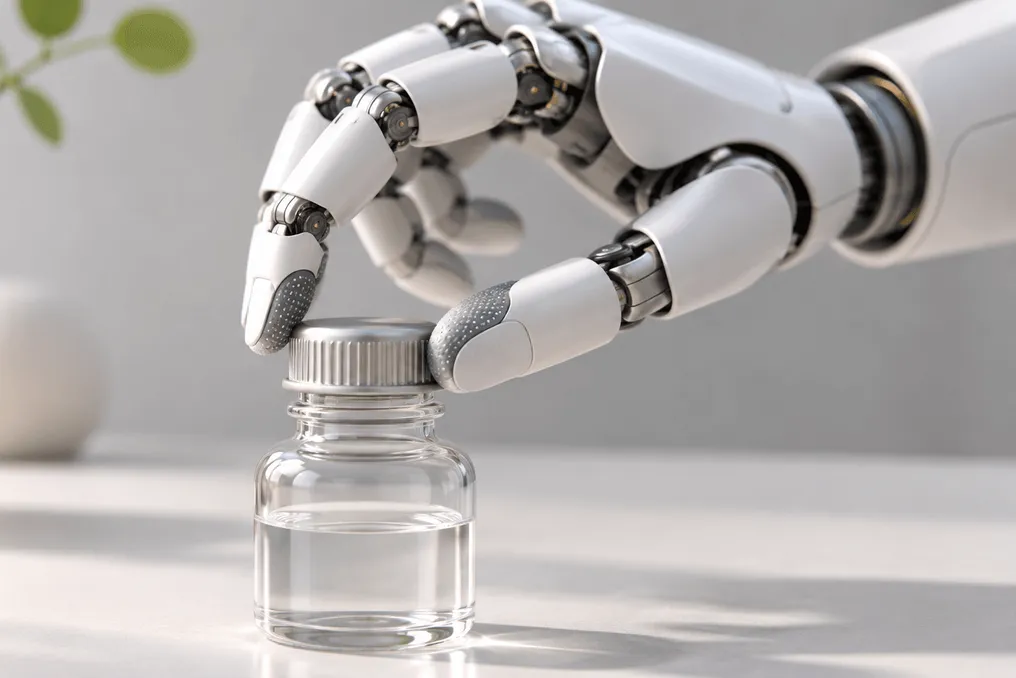
Robbyant, a subsidiary of Ant Group, has released the LingBot-Touch model to the public. This fundamental tactile model is designed to provide robotic hands with a unified sense of touch.

Announced on November 10, the model was pre-trained on data collected from nearly 5000 hours of real tactile experience. It covers three sensory principles: magnetic, visual-tactile, and piezoresistive. The model code is available under the Apache-2.0 license, and the Tiny and Small checkpoints are hosted on Hugging Face and ModelScope.

The main problem that LingBot-Touch solves is the incompatibility of raw signals generated by different tactile sensors; touch experience gained from one type of sensor is rarely applicable to another. LingBot-Touch addresses this by providing each sensor type with its own input tokenizer, which feeds data into a common Transformer. The model maps contact points into a single fingertip coordinate space and outputs unified tactile tokens that can be used by various action models.

The repository describes a target approach in the JEPA style, which predicts latent representations from the spatio-temporal context of touch. Training data was obtained from both human-worn tactile gloves and teleoperated dexterous hands.

Testing the model on robotics tasks

Robbyant tested the model on two dexterous hands—Sharpa Wave and XHand—across 26 tasks performed by real robots. These tasks included turning pages, twisting bottle caps, and identifying Mahjong tiles. When adding the LingBot-Touch representation to four action models—LingBot-VLA, $\pi$0.5, Diffusion Policy, and T-Rex—the average task success rate increased by approximately 14–26 percentage points compared to versions without tactile feedback.

In one instance, when T-Rex attempted to twist caps on Sharpa Wave, the success rate was 56.25% without tactility, 62.5% using raw sensor signals, and 90% after integrating LingBot-Touch.

All 26 tests were conducted using the Tiny version, which has about 5 million parameters and increases the size of connected policies by only 0.13%–0.16%. The team notes that the larger Small version continues to improve as the volume of training data increases to 5000 hours.

To verify knowledge transfer across different hardware platforms, the team froze the encoder on XHand, whose magnetic sensing module was absent in the pre-training data, and trained only the action model on XHand demonstrations. Knowledge of magnetic touch in this case was acquired exclusively from human glove data.

Robbyant positions this model as a neutral layer between tactile sensors and action models, rather than a component tied to its proprietary LingBot-VLA. This allows hardware manufacturers to choose sensors based on cost, while system teams can retain their own policies.

All presented results belong to Robbyant itself, and the company has not reported independent reproduction of this data. The release on GitHub is an inference release containing the frozen encoder and utilities for extracting tactile features.

Popular