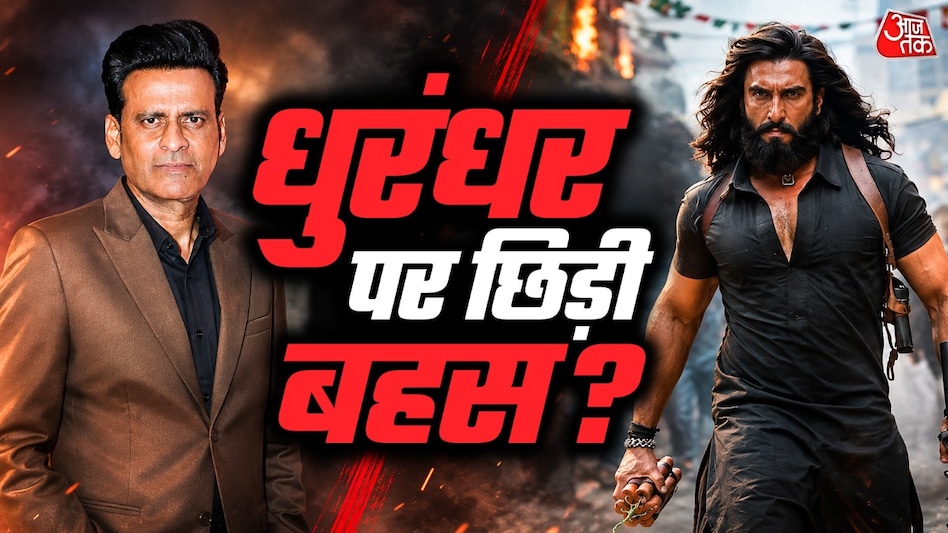
During a recent event, Manoj Bajpayee commented on several films that, in his opinion, contribute to the spread of hatred in the country. His remarks sparked active discussions on social media. Among the works discussed was Aditya Dhara's film 'Dhurandar,' which collected 3000 crore.
Bajpayee spoke about the industry's silence and films accused of inciting enmity. During a conversation on the program '4 PM Tehzeeb,' he made sharp remarks that provoked public debate. Users claim that the actor called 'Dhurandar' propaganda cinema.
The discussion surrounding the film 'Dhurandar' has been ongoing for a long time, as many consider it propaganda, although there are also defenders of the film. Despite almost a year having passed since the film's release, discussions continue. In an interview, Bajpayee commented on films that are alleged to sow hatred in the country.
In a viral video, Manoj Bajpayee talked about propaganda films. When the host mentioned films such as 'Dhurandar,' 'Kashmir Files,' and 'Kerala Files,' the actor replied that such films can be counted on one's fingers.
Furthermore, Bajpayee shared his opinion on the old formulas used in Bollywood films. He noted that Indian cinema has long been built on stories of love between a boy and a girl, where good triumphs over evil. According to him, viewers are accustomed to watching such films, and they are gradually becoming part of traditions.
Bajpayee's statements elicited mixed reactions among users. One user compared the influence of some films to the destructive effect of atomic bombs, emphasizing that even a small number of such films can have a huge impact on generations. Another user criticized the actor, linking his statement to an attempt to influence Shabana Rajdhuri's wife, and accused him of labeling certain films as 'hate propagators.'
Nevertheless, some users supported Bajpayee, noting that his courage to speak openly deserves praise and is a sign of bravery. It should be noted that Ranveer Singh starred in 'Dhurandar' as the Indian spy agent Hamji, who infiltrates Pakistan to fight terrorism.
In the same conversation, Manoj Bajpayee reacted to the silence of Bollywood stars on various national issues. He stated that people focus only on certain names that do not speak out about problems, while some artists have already taken a stand, but their opinion remains unrecognized. The actor mentioned actress Richa Chadha, who constantly speaks out about national issues.
When the host mentioned Amitabh Bachchan, Bajpayee questioned why everyone was so focused only on him. In his opinion, the voice of those artists who speak out and show courage is unheard. He also noted that every artist weighs their own interests and the interests of their family before speaking. Bajpayee demonstrated support for Bollywood by stating that all artists have already taken their stance.