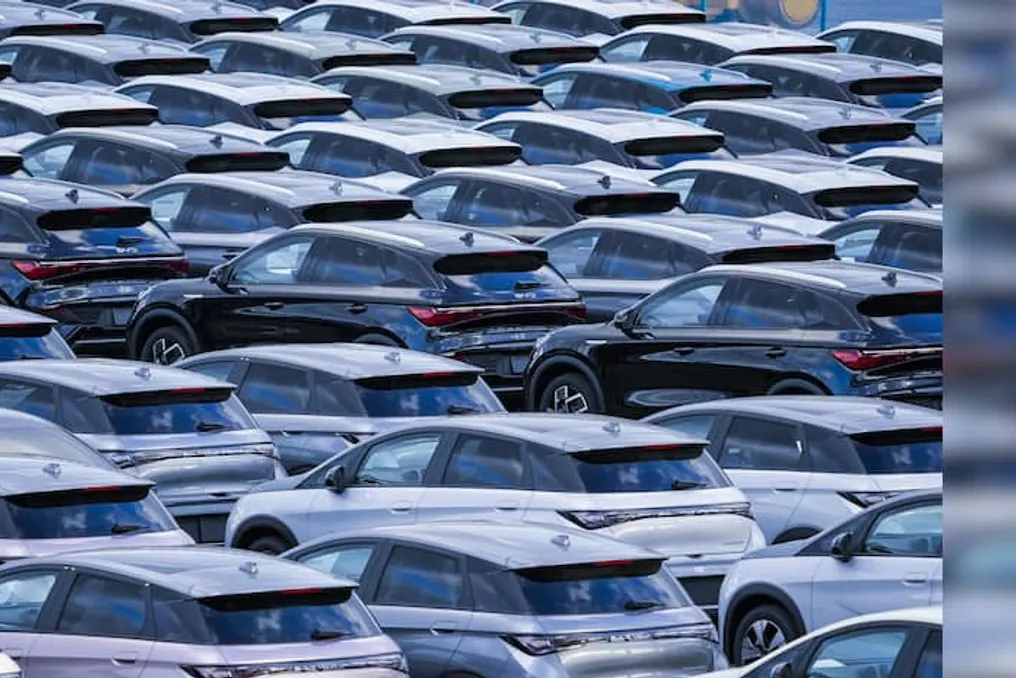
Indian auto retail reached a record 5.525 million units during the 42-day festive season
Read more
Business Standard
business-standard.com

Indian auto retail reached a record 5.525 million units during the 42-day festive season

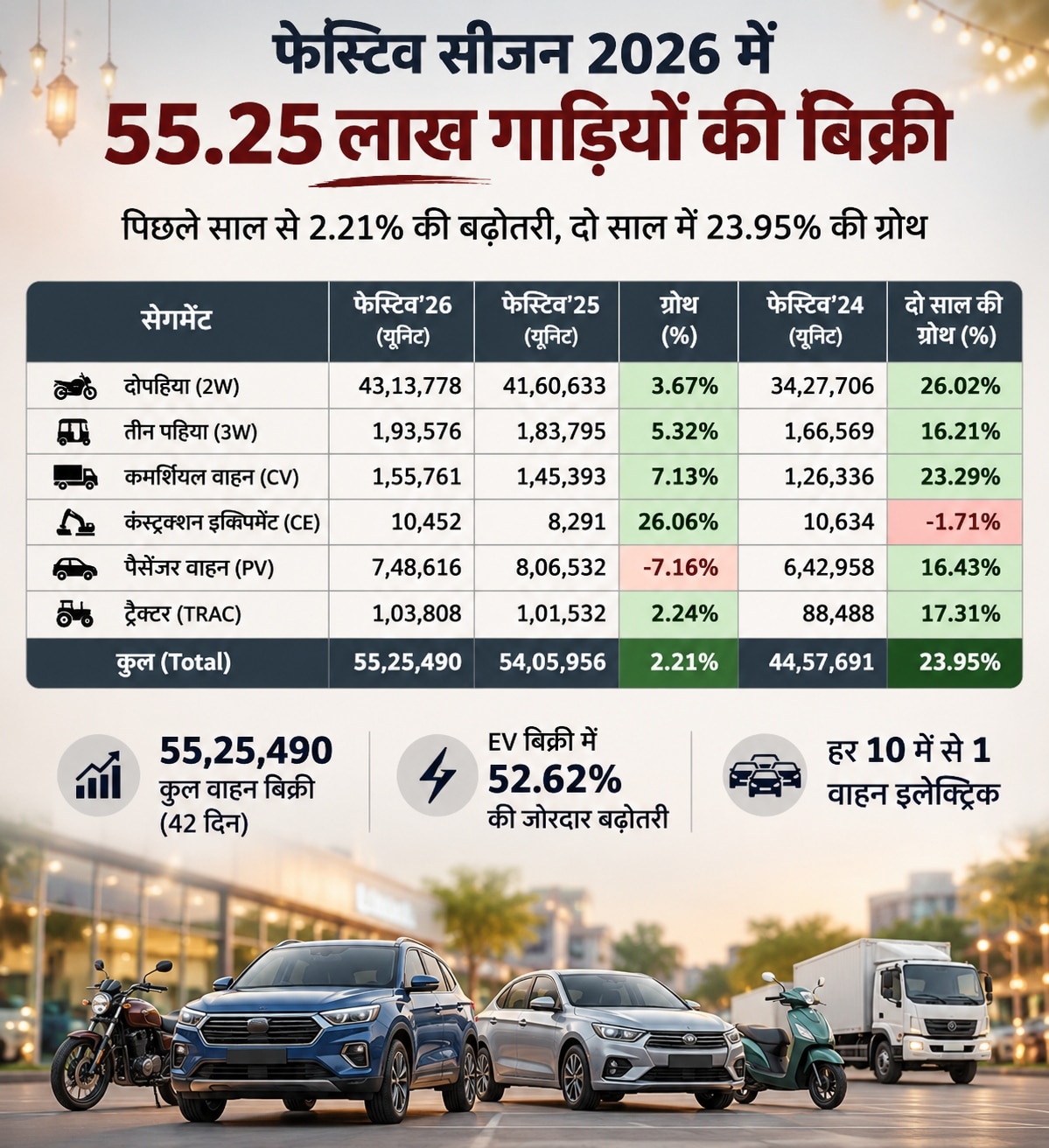
According to data provided by the Fada dealers council, automotive retail sales in India increased by 2.21% year-on-year, reaching a record high of 5.525 million units during the 42-day festive period this year. This growth occurred despite a high sales base established by the surge in demand due to the rationing of the GST rate 2.0 last year.

The total volume of vehicle retail sales for the 42-day festive period of 2026 was 55,25,490 units, marking the highest figure for a comparable period. Compared to the 2024 festive season, car retail sales showed an increase of 23.95%, indicating sustained demand following the optimization of GST rates.

In the two-wheeler segment, there was a growth of 3.67%, reaching 43,13,276 units, while three-wheeler sales increased by 5.32% to 193,576 units. Commercial vehicle sales grew by 7.13% to 155,761 units, tractor sales increased by 2.24% to 103,809 units, and construction equipment sales sharply rose by 26.06% to 10,452 units.

However, the passenger car segment saw a decline of 7.16%, falling to 748,616 units compared to 806,322 units the previous year. The most significant development of the season was the sharp rise in electric vehicle adoption: EV retail sales jumped by 52.62%, exceeding half a million units for the first time in a single festive period. This growth was driven by electric scooters (a rise of 61.10%) and electric passenger cars (a rise of 72.91%), as well as the doubling of electric commercial vehicles.

Fada reported that nearly one in ten cars sold during this season was electric. Fada President Sai Giridhar noted that the 2026 festive season will go down in history as the year when Indian auto retail set a record above a record. He emphasized that despite last year's exceptional base, bolstered by GST 2.0, the dual holidays ensured a historic high, with retail sales growing by 2.21% to 55,25,490 units this year.

Future outlook suggests that India is approaching a historical milestone—registering over 30 million retail vehicle sales in a calendar year, and the festive season has created the necessary foundation for this achievement.
Similar stories

Festival sales exceeded expectations, 5.5 million cars sold in 42 days
Read more
www.aajtak.in

Festival sales exceeded expectations, 5.5 million cars sold in 42 days

Unlike last year, when GST discounts stimulated mass purchases, the market showed unexpected growth this year. Although sales slowed down during Navratri, the festivals of Dhanteras and Diwali drastically changed the situation, leading to the sale of 55.25 lakh cars in just 42 days. This figure is the largest in the history of the market.

A new significant factor was the sharp rise in electric vehicle sales, which increased by more than 52%. This indicates that consumers in India are changing not only the vehicle itself but also their approach to transport selection.

According to data from the Federation of Automobile Dealers Associations (FADA), 55,254,90 units of transport were sold during the 42-day festival season, setting a record. The growth in demand for electric vehicles was particularly noticeable: for the first time in one festival season, over 500,000 electric vehicles were sold.

FADA Chairman Sai Giridhar noted that the 42-day festival season of 2026 will be memorable for the Indian auto retail market. Despite impressive sales last year thanks to GST 2.0, this year saw an increase of 2.21% in retail car sales. Total sales reached 55,254,90 units, setting a new festival season record.

Compared to the 2024 festival season, the current period demonstrated an impressive sales growth of 23.95%, indicating sustained high consumer interest in purchasing cars after the introduction of GST 2.0, and now growing demand.

The start of this year's festival season was somewhat sluggish. The impact of last year's record sales was particularly noticeable during Navratri, which affected the market. Passenger vehicle sales decreased by more than 18% during Navratri. However, as Dhanteras and Diwali approached, buyer activity significantly increased.

This influenced the overall season figures: the initial decline in the passenger car segment was reduced by more than half. Furthermore, the overall auto retail market, which was in negative territory during Navratri, turned positive towards the end of the festival period as customers actively purchased cars in the final days.

Sales growth this season was not limited to one segment. Sales increased in most categories, including two-wheelers, commercial vehicles, three-wheelers, and tractors. According to FADA, two-wheeler sales grew by 3.67%. The commercial vehicle segment showed a growth of 7.13%, and three-wheeler sales increased by 5.32%. Tractor sales grew by 2.24%, while the construction equipment segment showed the strongest result with a growth of 26.06%.

The passenger car segment was the only major segment to record an annual decline during this festival season. Car and SUV sales fell by 7.16%. This is attributed to the implementation of GST 2.0 last year. Last year, when Navratri began on September 22, new GST rules came into force across the country, leading to a significant drop in vehicle prices and a buying boom. This did not happen this year, and prices for passenger cars continue to rise compared to last year.

Nevertheless, when compared to the 2024 festival season, passenger car sales still showed confident growth of 16.43%.

The main story of this festival season was electric vehicles. EV segment sales soared by 52.62%, and for the first time in one festival season, EV sales exceeded the 500,000 mark, setting a new record. Electric motorcycle sales grew by 61.10%, and electric passenger cars (cars and SUVs) by 72.91%. Sales of electric commercial vehicles doubled. Thus, approximately one in every ten cars sold this season was electric.

Analysis of data over two years shows a 67.55% growth in electric vehicle sales. This suggests that the demand for EVs no longer depends solely on government programs or subsidies; consumers are actively adopting electric vehicles due to low operating costs, improved range, and expanded market choice.

Popular