Brookfield agrees to acquire PGP Glass from Blackstone for $1.7 billion
Read more
Business Standard
business-standard.com

Brookfield agrees to acquire PGP Glass from Blackstone for $1.7 billion

Brookfield Asset Management announced on Monday that it has reached an agreement to purchase the Indian glass packaging manufacturer PGP Glass from Blackstone for $1.7 billion.

PGP Glass specializes in the production of glass containers for cosmetics, perfumes, alcoholic beverages, food products, and pharmaceuticals.

PGP Glass CEO Vijay Shah welcomed Brookfield and noted the readiness to cooperate with the company to accelerate the next stage of growth and create value.

Production and Market Details

According to information on the company's website, PGP Glass operates thirteen furnaces and has a production capacity exceeding 1,800 tons per day. The company operates in markets including Brazil, India, and the United Kingdom.

Brookfield Asset Management, based in New York, manages assets worth over $1 trillion across various asset classes such as infrastructure, renewable energy, private equity, real estate, and lending.

Similar stories

Uzbekistan acquired 1922 Giorgio Gatti violin for national collection
Read more
uzdaily.uz

Uzbekistan acquired 1922 Giorgio Gatti violin for national collection

The Ministry of Culture reported that Uzbekistan has acquired a violin made by Giorgio Gatti in 1922. This instrument is intended for the formation of a national collection of professional musical instruments.

Tashkent, Uzbekistan (UzDaily.uz)

The purchase was initiated by the Creative Association of Academic Instrumental Performance with the support of the State Property Management Agency. The instrument was acquired from Kenneth Warren & Son, Ltd., located in Chicago, United States of America.

This violin is now part of the first collection of professional musical instruments in Uzbekistan's history. The Ministry did not disclose additional information regarding the cost of the instrument or its distribution among musicians.

Vitrocsa inaugurates new headquarters in Yverdon-les-Bains with large functional glass openings
Read more
archdaily.com.br

Vitrocsa inaugurates new headquarters in Yverdon-les-Bains with large functional glass openings

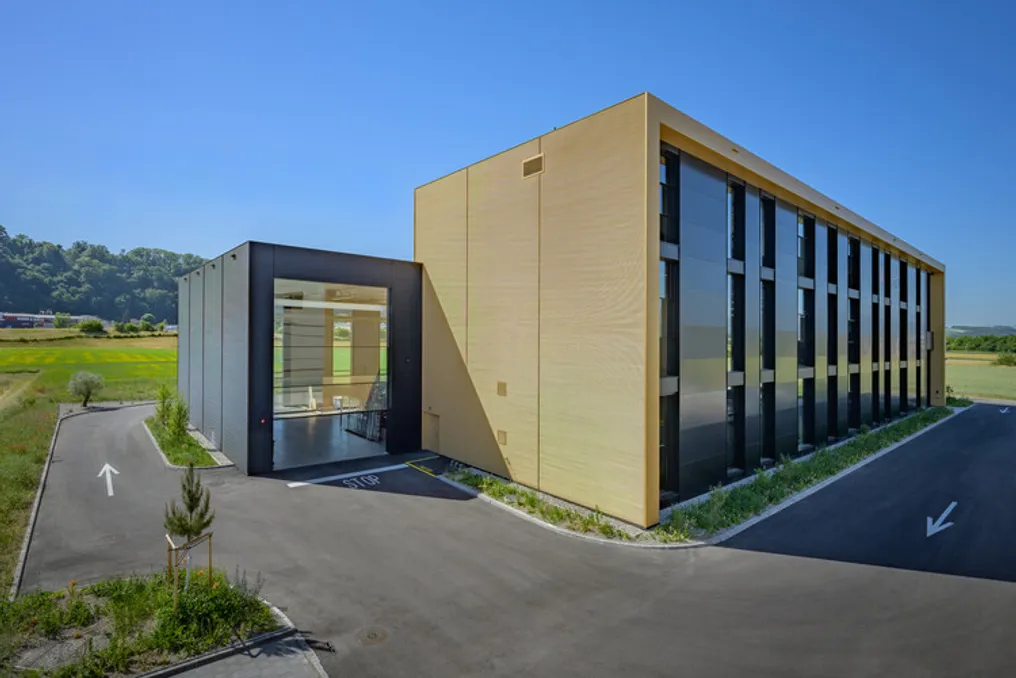
The new Vitrocsa headquarters, located in Yverdon-les-Bains, Switzerland, features large glass openings that allow trucks to enter the production hall. Integrating vehicular access into the glazed facade required careful planning of panel dimensions, opening mechanisms, and the space needed for vehicle maneuvering, impacting both aesthetics and material flow.

In this new complex, two guillotine window systems, each measuring six meters wide by nine meters high, were installed. These systems, along with a six-meter-high pivot door, showcase the company's minimalist frames in daily operation.

The inauguration of this site represents the unification of production, administration, and storage teams under one roof. This building replaces the company's previous facilities in Saint-Aubin-Sauges, which were no longer suitable for manufacturing and logistics demands. The construction was completed after an 18-month period at the Y-Parc technology park in Yverdon-les-Bains, with the location chosen for its proximity to employees and the possibility of centralizing activities.

Furthermore, the headquarters functions as a permanent showroom for the framing systems developed by Vitrocsa over more than three decades. These systems are integrated into both the facade and the interior spaces, allowing visitors to experience their operation in everyday use. The building's infrastructure also includes geothermal energy piles and photovoltaic panels on the roof.

The Facade in Daily Use

Combining production and storage in a single building requires efficient organization of input arrival, transit between sectors, and dispatch of finished products. The layout and dimensions of the accesses are crucial for linking these activities to external loading zones.

In the Vitrocsa hall, each of the two large openings consists of four glass panels. The guillotine mechanism operates the panels vertically, allowing trucks to enter without the door leaf invading the circulation area. This optimizes the proximity between loading/unloading operations and storage areas while integrating vehicular access to the glass facade. When closed, the frames ensure the entry of natural light into the hall.

The main pivot door, six meters high, immediately communicates to the public the magnitude and design possibilities of Vitrocsa's systems. Its dimensions were selected to highlight the company's technical competence, making the access itself the first point of contact with the role of the headquarters as a real-scale showroom. This philosophy extends throughout the facade and interior spaces, which display the framing systems created over more than 30 years.

Integrating frames and doors on this scale demands coordination between architecture, structural engineering, and the manufacturer. It is necessary to jointly consider the weight of the components, their supports, the movement mechanisms, and maintenance access, alongside the circulation and distribution of internal spaces. At the headquarters, these decisions are visible in action: the hall openings facilitate truck and goods traffic, while the pivot door directs visitors to a building that demonstrates the efficiency of its systems in daily life.

Manufacture, Use, and Exhibit

Vitrocsa designed its headquarters to function as a showroom, incorporating its own systems into the facade and interior spaces. In this approach, in the production and storage areas, the exhibition of products is directly linked to the company's operational functions. Visitors find the frames and doors installed in the same place where they are manufactured.

The workshops, storage areas, and offices provide an authentic context for understanding the link between the produced parts and their application in civil construction. For the company itself, the building puts its products into practical use within its facilities, serving the people who work there, receive supplies, and organize deliveries.

This proximity gives the exhibition of the systems a practical character. Besides analyzing the profiles and proportions of a window or door, it is possible to understand its implementation in the environment, the area it occupies when open, and its interaction with surrounding activities. The building offers examples of use that an isolated showroom would hardly be able to present.

By including large glazed openings in service entrances, the project expands the scenarios for the application of these systems. Their use extends to production and logistics sites, where the choice of a framing system depends directly on what must pass through and the available space for its movement. This connection between design and use establishes the headquarters as an important reference for other projects.


MTN is negotiating to buy Telkom, which could change South Africa's telecommunications sector
Read more
iol.co.za

MTN is negotiating to buy Telkom, which could change South Africa's telecommunications sector

Two major South African telecommunications operators may soon merge under one structure after MTN Group began discussions regarding the potential acquisition of full control over Telkom.

MTN confirmed in a shareholder notice published on the JSE's Stock Exchange News Service (SENS) on Monday that it is in talks with the state-owned company about a possible takeover. The telecom giant stated that it is considering a cash offer but is also open to an alternative where Telkom shareholders receive MTN shares.

However, MTN warned that the negotiations are in the early stages, terms are still being discussed, and there is no guarantee of the deal's completion.

This is not the first time MTN has attempted to acquire Telkom. In 2022, the company negotiated with the state-owned company, but the talks fell through in October of that year because Telkom could not provide MTN with exclusivity guarantees.

Following this, Telkom continued its strategy of restructuring and unlocking value from its business.

The difficult path to recovery

The proposed acquisition by MTN comes against the backdrop of years of financial and operational difficulties for Telkom, which has been forced to adapt to profound changes in the South African telecommunications industry.

The company, once dominant in the country's fixed-line market, has faced declining demand for traditional landline services and copper lines as consumers and businesses increasingly switch to mobile communication, fiber optics, and data services.

In January 2020, Telkom announced plans to cut 3,000 jobs while battling growing debt, falling revenue from fixed voice services, and increased market competition. The company noted that the rapid shift from fixed-line services to mobile voice, data, and fiber optics is a serious challenge.

This was followed by further restructuring, including a large-scale workforce reduction program in 2023. As reported by IOL in July 2024, Telkom's permanent staff decreased by 15% for the financial year ending March 2024, and the restructuring program achieved savings in fixed costs of approximately 1 billion rand.

Since then, the company has made significant progress in its turnaround. In the latest annual results for the year ending March 31, 2026, Telkom reported revenue of 44.5 billion rand, an increase of 1.4%, and EBITDA grew by 5.8% to 12.5 billion rand. Concurrently, net debt decreased by 14.7% to 6.37 billion rand.

Telkom's business segment, Openserve wholesale fibre business, also recorded revenue growth for the full financial year for the first time in nine financial years.

IOL Business

Popular