Study shows that breast milk was consumed by children in ancient Gymera until four years of age
Read more
N+1
nplus1.ru

Study shows that breast milk was consumed by children in ancient Gymera until four years of age

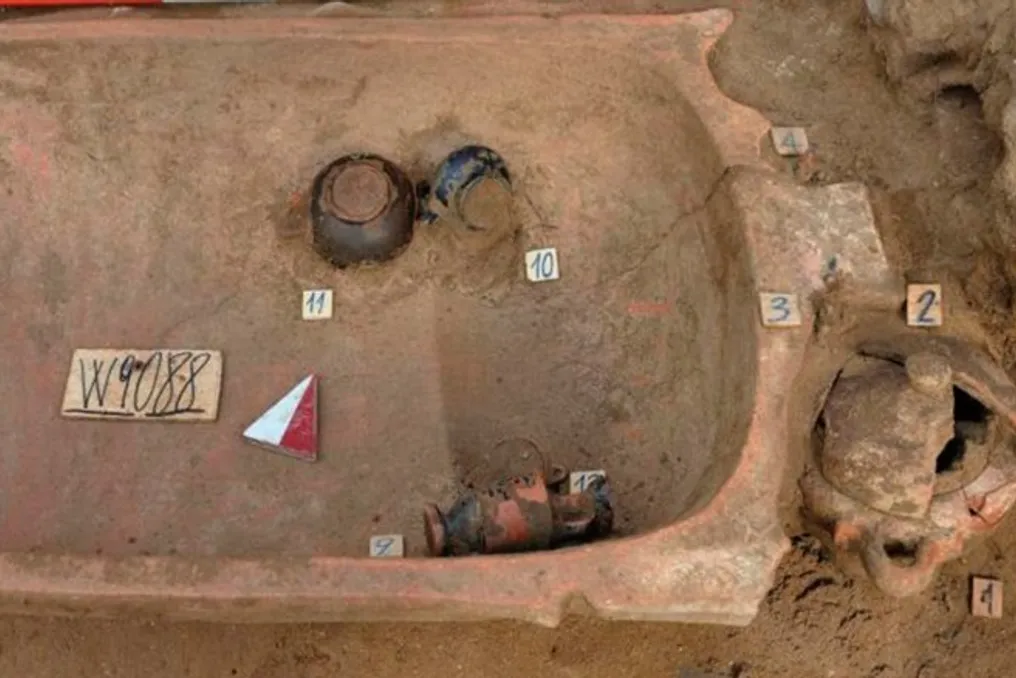
Bioarchaeologists analyzed the isotopic composition of remains from numerous individuals whose burials were discovered in the ancient settlement of Gymera. During this study, scientists determined that the indigenous population of Gymera began introducing complementary foods to infants at approximately three or four months of age.

Furthermore, it was found that children completely stopped breastfeeding between the ages of 3.5 and 4 years. The results of this discovery are presented in a scientific publication published in the European Journal of Archaeology.

Similar stories

Milk bank success in Macau requires enhanced promotion of breastfeeding
Read more
noticiasaominuto.com

Milk bank success in Macau requires enhanced promotion of breastfeeding

The Association for the Promotion of Breastfeeding and Child Care in Macau (APACIM) welcomed the announcement of the milk bank's creation but stressed that active promotion of breastfeeding will be necessary to ensure a sufficient number of donors.

The establishment of the milk bank, which APACIM has been pursuing for several years, was announced by the Chief Executive, Sam Ho Fai, during the presentation of the Government Action Plans (LAG) for 2027.

The association's chairperson, Virginia Tam, commented on the event, noting that the COVID-19 pandemic delayed the project's implementation. She expressed hope that this would provide significant support to the current government regarding breastfeeding issues.

Virginia Tam suggested that Macau's decision might have been inspired by Hong Kong's experience, where a maternal milk bank began operating in 2025. This bank assists premature or medically ill infants, not healthy newborns.

According to the LAG report, the bank in Macau will be located in a public hospital and will primarily serve infants with special needs or those who are premature. Virginia Tam called this a 'genuine public health necessity,' emphasizing that 'the most vulnerable should be fed breast milk.'

She rejected the idea of linking this measure to low birth rates or declining fertility. Nevertheless, despite not seeing a direct link between the new measure and the drop in local birth rates, Virginia Tam believes the future success of the milk bank depends on strengthening breastfeeding advocacy and having a sufficient number of mothers willing to breastfeed and donate milk.

The association also expressed a wish that along with any potential recovery in birth rates, the inclination towards breastfeeding would also increase, stressing that the desire to have children is not necessarily linked to the desire to breastfeed.

The association's proposal for the milk bank dates back about ten years, when breastfeeding was actively supported and promoted. According to Virginia Tam, the level of desire to breastfeed no longer matches the figures recorded 'eight or ten years ago,' leading her to advocate for a return to the culture of breastfeeding promotion that existed before the COVID-19 pandemic.

Health services data indicates that while almost all infants in Macau begin breastfeeding (90.17% in 2025), only a few continue to feed exclusively on breast milk in the initial months. The exclusive breastfeeding rate up to four months dropped from 26.18% in 2021 to 9.64% in 2025.

Given that maternity leave in Macau is 90 days, which is 'still below' the World Labour Organization's recommendation (98 days), Virginia Tam believes that a primary reason for the reluctance to breastfeed is the lack of workplace support. She noted that although there are government campaigns to create favorable conditions for feeding at work, mothers often face difficulties pumping milk during working hours in practice.

In this regard, she proposed incentivizing employers to support family policies in the workplace, including providing feeding breaks, and strengthening pre-natal education 'to raise awareness of the benefits of breastfeeding, combined with government financial support.'

Virginia Tam also expressed concern about the influence of postnatal care homes on breastfeeding, noting that the popularity of these centers, where mothers spend their first month recovering, has increased since the pandemic, and many of them are 'not very conducive to breastfeeding.' She acknowledges that many prefer a 'less stressful recovery period for mothers,' which can lead to separation from infants and early introduction of bottles, subsequently hindering direct breastfeeding.

Anvisa suspends batch of Italy brand mozzarella cheese due to Listeria monocytogenes contamination
Read more
olhardigital.com.br

Anvisa suspends batch of Italy brand mozzarella cheese due to Listeria monocytogenes contamination

The National Health Surveillance Agency (Anvisa) has ordered the suspension of a specific batch of sliced mozzarella cheese from the Italy brand. This action was taken after a report confirmed the presence of the bacterium Listeria monocytogenes in the product.

The affected batch is number 180926, and it was produced by Agroindústria Santo Anjo, a company that had already identified the microorganism and initiated the food recall process. It is essential that anyone who possesses this item at home avoids consuming it.

Listeria monocytogenes is known for being able to contaminate various foods and trigger an infection called listeriosis. A notable characteristic of this bacterium is its resistance and ability to replicate even under refrigeration conditions.

Transmission of the disease occurs through the consumption of contaminated items, with ready-to-eat foods, processed meats, and unpasteurized dairy products being particularly dangerous.

In healthy individuals, the infection may manifest mildly, presenting symptoms such as fever, muscle aches, nausea, and diarrhea. However, the risk of developing serious complications is significantly higher in certain population groups.

In the most severe scenarios, the bacterium can invade the bloodstream or the central nervous system, resulting in sepsis and meningitis. For pregnant women, listeriosis poses an additional risk, potentially leading to miscarriage, premature birth, or severe infections in the newborn.

Consumers who purchased the Italy sliced mozzarella should check the batch number printed on the packaging. If the identification is 180926, the recommendation is not to ingest the cheese and to contact the place of purchase or the manufacturer regarding the return.

Anyone who starts feeling symptoms after consuming the product should seek medical assistance, especially if they belong to high-risk groups. The resolution issued by Anvisa did not specify whether there were records of sick people linked to the consumption of this item; the agency emphasizes that the recall aims to remove foods from the market that could endanger consumer health.

Amul's milk price hike worsens household budgets, causing concern among women
Read more
www.aajtak.in

Amul's milk price hike worsens household budgets, causing concern among women

Inflation has reached the kitchen of ordinary people, and now even tea and milk, which start the morning, are creating an additional burden on the wallet. The large dairy company Amul has increased the price of milk by 2 rupees per liter. This increase, which occurred immediately after the holidays, is negatively affecting the monthly budget of middle-class families. Housewives are feeling this particularly strongly, noting that it has become harder to save amid rising daily expenses.

Although the increase in the price of milk by 2 rupees may seem insignificant, its impact on family expenses for a month is substantial. Against the backdrop of rising costs for gasoline, diesel fuel, and other foodstuffs, more money now has to be spent on milk. Women note that they have not yet managed their expenses from Diwali, and another burden has been placed upon them.

Aaj Tak correspondent Hetali Shah spoke with women from the Kheda area in Gujarat state. Housewife Prachi Mehta reported that the rise in milk prices has affected her family's budget. She emphasized: 'The rise in milk prices has caused us losses. We start the morning with milk, and it is used everywhere, so this is a direct loss for us. We ask the government to reduce prices considering our budget.'

Prachi Mehta also mentioned gasoline prices, noting that they now have to carefully consider how to save if they need to travel somewhere. She appealed to the government to care for the expenses and savings of common people, pointing out that the increase in the price of essential goods makes it difficult to maintain financial balance in families.

In the opinion of the women, milk is used not only for morning tea and baby food but also during lunch. Consequently, the price increase affects not only one product but also the overall monthly household budget. After spending on sweets and other goods during the holidays, this increase has brought additional difficulties.

Housewife Manisha Patel also expressed dissatisfaction with the increase in the cost of milk. She asked: 'How can the middle class survive if they keep raising the price of milk? We start the morning with milk, and then food... everything is getting expensive. Prices for gasoline and diesel fuel are already rising.'

Manisha added that Diwali had just ended, and monthly expenses had not yet stabilized, and the price of milk had risen again by 2 rupees per liter. This makes managing the household budget difficult for the general public. She wonders how the middle class will be able to save if the prices of essential goods continue to rise.

Dakshaben also shared her concerns about inflation, stating: 'We earn by working hard, but prices are rising.' She believes that although ordinary families earn through honest labor, a significant part of this income goes towards covering the rising prices of vital goods.

Overall, the increase in the price of milk by 2 rupees per liter has once again raised concerns about household budgets. Housewives assert that the rise in the price of such a necessary item as milk directly hits their savings and overall monthly expenses.

Popular