The road to the Cango caves is a reason for visiting Klein Karoo itself, but the surrounding famous underground site's landscape deserves a separate route. The Cango Valley stretches through the foothills of the Swartberg mountains, offering picturesque recreation shaped by rugged mountain slopes, winding country roads, waterfalls, working farms, and the quiet beauty of the semi-arid center of the Western Cape.
Beyond the limestone formations underground, the landscape changes at every turn of the road. Travelers can stop to view a waterfall, visit a farm, admire expansive mountain views, or enjoy the more relaxed rhythm of rural life.
Cango Route
The Cango Route runs from Oudtshoorn through the valley towards the Swartberg Pass, combining many such experiences. Although this route can be driven in a few hours, taking time to explore the stops reveals another side of Klein Karoo.
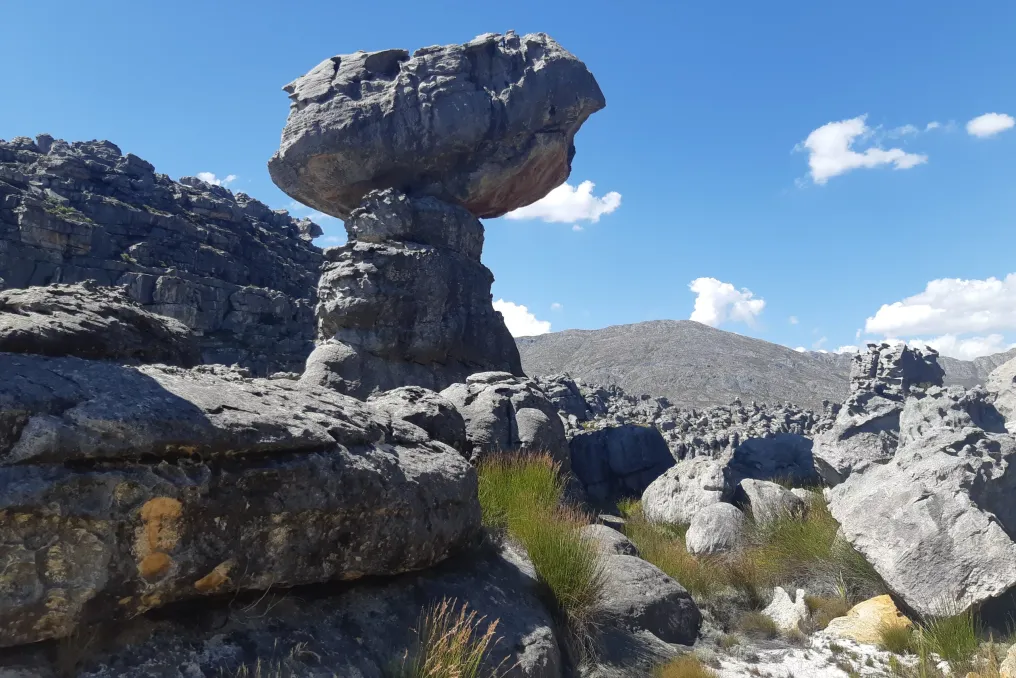
The Cango Valley is situated beneath the majestic Swartberg range, whose harsh ridges, layered rocks, and steep slopes help define the characteristic landscape of Klein Karoo. The mountains sharply contrast with the dry plains and open scrubland below, creating a landscape that ranges from rocky outcrops and dusty roads to pockets of vegetation in sheltered areas.
The wider Swartberg region is an important nature conservation landscape, known for its mountain biodiversity, fynbos, dramatic geological formations, and cultural heritage. These mountains are not just a scenic backdrop; they form an important part of the region's ecological history.
Traveling through the valley offers an opportunity to see this natural diversity, especially where streams, mountain slopes, and fynbos meet. For nature lovers, the appeal lies as much in the landscapes along the road as in the final destination.
Swartberg Pass
Few journeys convey the rugged character of Klein Karoo as well as the Swartberg Pass. Connecting Oudtshoorn with Prince Albert, the gravel road winds through the Swartberg mountains, ascending past steep slopes, dramatic turns, and panoramic views of the surrounding area.
This pass, built by the renowned road engineer Thomas Bain between 1881 and 1888, is a masterpiece of historical civil engineering. Its dry stone retaining walls, sharp curves, and mountain views make the journey unforgettable, whether travelers are heading to Prince Albert or simply exploring the surroundings.
The pass is a gravel mountain road, and while an off-road vehicle is usually not required in suitable conditions, travelers should drive slowly and check the road's accessibility before setting out. Conditions can change after heavy rain or snow, and narrow sections require careful driving.
For those who want to turn the trip into a longer adventure, the Swartberg Loop connects a series of scenic roads and small towns, including De Raadts, Klaarstrum, Prince Albert, and Oudtshoorn. This route is best experienced without rushing, allowing time for roadside stops, photography, and exploring the towns along the way.
Rust-en-Vrede Waterfall
One of the noteworthy detours in the valley is the Rust-en-Vrede Waterfall, located in the Swartberg landscape along the Oudemuraag road. The waterfall can be reached via a scenic route branching off the road towards the Cango caves, offering a quieter nature retreat away from major tourist spots.
From the parking area, a short walking trail follows the stream through vegetation, crossing small bridges as one approaches the waterfall. The contrast between the dry terrain of Klein Karoo and the greenery around the water makes the walk particularly appealing.
At the end of the trail, the waterfall empties into a natural pool surrounded by rocky slopes and vegetation. Visitors can enjoy the walk and the scenery, while picnic and barbecue facilities are available near the entrance, not at the waterfall itself. An entrance fee may apply, so visitors should check current information before arriving.
The waterfall is also more than just a scenic attraction. Water from this area historically played a role in supplying Oudtshoorn, adding another layer to the history of how people relied on the landscape.
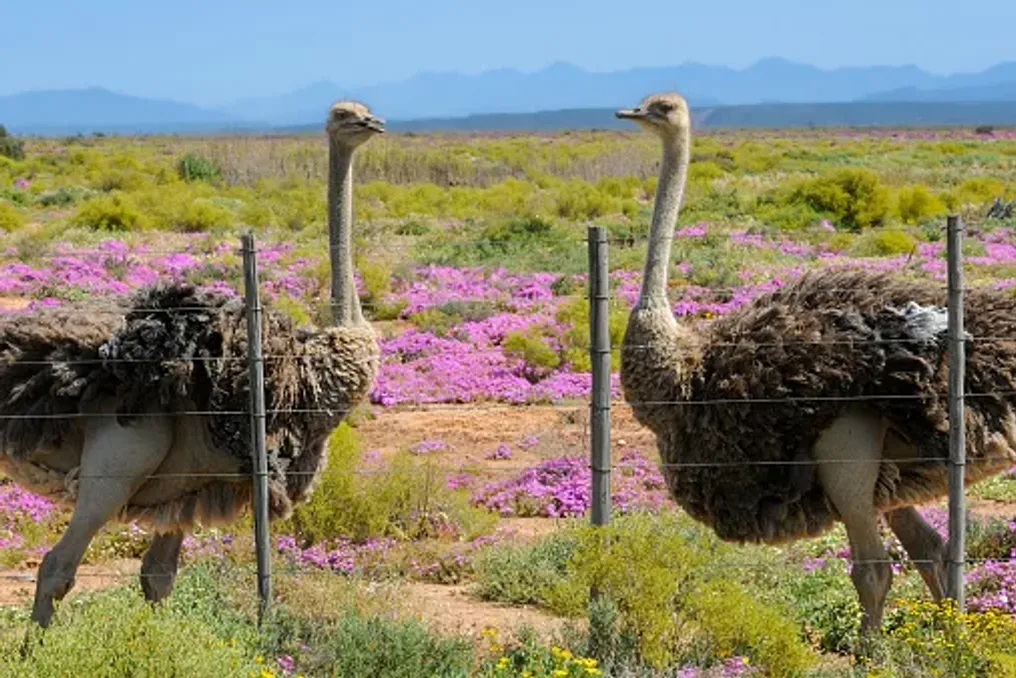
The landscape of the Cango Valley is shaped not only by mountains and rivers but also by farms scattered across the countryside. Oudtshoorn and its surroundings are associated with quail farming—an industry that has played a significant role in the region's history and identity.
Visitors can experience the farming life in this area, from quail farms and agricultural attractions to rural accommodation and local culinary offerings. Farms along and around the Cango Route also provide opportunities to experience the rural character of the region, some of which offer activities, restaurants, and other attractions for visitors.
Olives are another feature of the Klein Karoo's agricultural landscape. Local farms and producers offer gastronomic experiences reflecting the agricultural diversity and semi-arid climate of the area.
Instead of viewing farm visits as a quick stop, travelers can use it as an opportunity to learn how the climate, landscape, and agricultural traditions of Klein Karoo have shaped life in the valley.
The wider Swartberg region provides opportunities for travelers who prefer to explore the landscape on foot or through active recreation. Hiking and nature tours can bring visitors closer to the mountain environment, while protected areas and the surrounding countryside allow appreciation of the region's flora, geology, and scenery.
The Swartberg mountain landscape is linked to diverse habitats, conservation areas, and evidence of earlier human settlement, including archaeological heritage. Exploring the region allows a closer look at the natural and cultural landscape that extends beyond the valley's main tourist attractions.
Travelers interested in hiking should research specific routes and access conditions before visiting, as trails may require permits, advance planning, or special equipment. The mountain environment can also experience rapidly changing weather conditions, making preparation important.
For those who prefer less strenuous walks, the scenic roads themselves offer opportunities to stop, photograph the landscape, birdwatch, and enjoy quiet stretches of the countryside.
The Cango Valley and the wider Swartberg landscape have long been part of routes connecting communities in Klein Karoo and Great Karoo. Mountain passes, river corridors, and farming settlements determined how people traveled, traded, and settled in this harsh region.
Swartberg itself carries layers of history, from evidence of early nomadic settlement to the arrival of European farmers and the development of mountain routes. The historic Swartberg Pass, built by Thomas Bain, remains one of the most tangible reminders of how people carved their path through a formidable landscape.
Meanwhile, Oudtshoorn has become an important center for the quail industry, helping to shape the economic and cultural identity of Klein Karoo. Exploring the farms, countryside, and historical routes of the valley provides insight into how the region developed beyond its natural attractions.
The Cango Valley is easily accessible as a day trip from Oudtshoorn, but a longer stay allows visitors to view its landscapes at a more leisurely pace. The Cango Route offers a combination of mountain drives, farm experiences, outdoor activities, and rural accommodation, making it an attractive addition to a Klein Karoo trip.
Travelers can spend the morning exploring the scenic roads of the valley, stopping for a walk at the Rust-en-Vrede Waterfall, visiting a farm or local producer, and then continuing on to the Swartberg Pass. Those with more time can explore sections of the Swartberg Loop, connecting Oudtshoorn with towns like De Raadts and Prince Albert. The mountains, farms, and open spaces around the Cango caves remind us that Klein Karoo is best explored outside its main attractions. Take advantage of the scenic drive, stop wherever the landscape catches your eye, and allow enough time to discover the quieter corners of the valley.