WeBuyCars Founders Hand Over Leadership to CTO Amid Pressure from Chinese Cars
Read more
TechCentral
techcentral.co.za

WeBuyCars Founders Hand Over Leadership to CTO Amid Pressure from Chinese Cars

Co-founders of WeBuyCars, Fan and Dirk van der Walt, are stepping down from managing the used car sales company, handing over the CEO position to Chief Digital Officer, Wynand Beycus. This is occurring against a backdrop of declining profits due to increased competition from cheaper Chinese vehicles.

According to the company's report for the period up to September 30, published on Monday, Beycus, who took the role of Deputy CEO in January as part of the board succession plan, will officially lead the group starting January 1, 2027. Fan van der Walt will remain on the board of directors as a non-executive director and will advise the group for at least one year. Dirk van der Walt will step down as Executive Director and become an alternate non-executive director alongside Fan.

The board of directors noted that Beycus, who collaborated closely with Fan van der Walt within the mentorship program, is 'well-prepared to guide the group through the rapidly changing artificial intelligence environment.' As Chief Digital Officer, he led the company's digital transformation, resulting in the AI-based vehicle inspection platform Inspectify, which the company plans to sell to competitors, as well as the internal vehicle financing system WeFin.

The transfer of power coincides with falling revenues. Earnings per share decreased by 18.6% to 182.8 cents, despite revenue growing by 7.2% to 28.3 billion Rands and the number of cars sold increasing by 4% to 186,220 units. Furthermore, dividends for the year were cut by 43%, amounting to 17 cents, leading to a total dividend payout of 50 cents instead of the previous 60 cents.

WeBuyCars attributed the pressure on gross margin to the deflationary used car market. The company lowered prices on its inventory, especially for cars competing with Asian brands and attractively priced new vehicles, to maintain inventory turnover. The situation worsened in the second half of the year due to weakening consumer confidence and a sharp rise in fuel prices since May.

Chinese car manufacturers play a significant role in this pressure, alongside favorable financial offers and low interest rates. According to WeBuyCars, the share of new passenger cars from Chinese and other Asian brands increased from 9.2% in 2024 to 13.8% in 2025 and to 20% in 2026. New car sales grew by 12.5% in the first nine months of 2026, and the ratio of new to used car sales decreased from 1:3.14 in 2024 to 1:2.51.

Despite this, WeBuyCars managed to increase its share in used vehicle registrations to 10.7% from 10.3%, and cash generated from operations grew by 48.2% to 1 billion Rands thanks to cautious purchasing and the sale of old stock.

The company believes that the influx of Chinese cars will help it in the medium term, as these vehicles will enter the used market in greater numbers, expanding the pool of available vehicles for purchase. Four new car 'supermarkets' were opened during the year in Pretoria North, Cape Town, Witbank, and Bloemfontein, and the company continues to aim to buy and sell 23,000 cars monthly by the 2028 financial year. March was the best month so far, when 17,209 cars were sold. The company also secured a 2.7-hectare plot in Polokwane for another supermarket, the opening of which is planned for 2027.
Similar stories

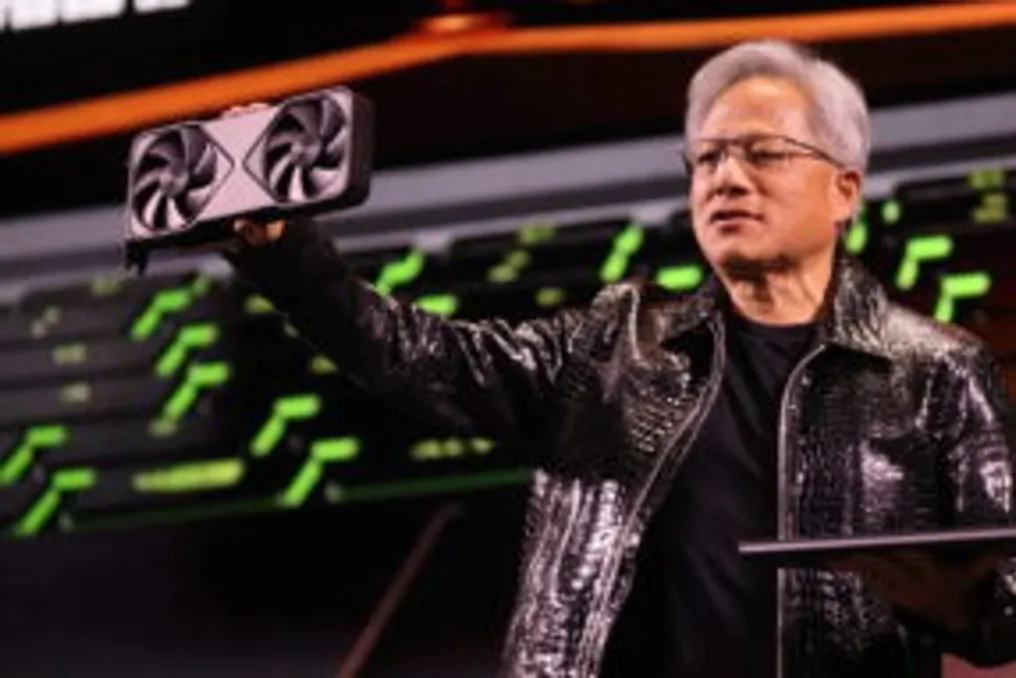
Tech CEOs support Jensen Huang's return to Nvidia leadership
Read more
tecnoblog.net

Tech CEOs support Jensen Huang's return to Nvidia leadership

An initiative called 'Stand With Jensen' seeks to reverse Jensen Huang's departure from the CEO position at Nvidia. This campaign aims to support Huang, who resigned after facing accusations related to extramarital scandals.

A notable aspect of this mobilization is the endorsement from other prominent business figures, including Elon Musk. As a co-founder, Huang led Nvidia since 1993, the year the company was founded. Under his management, the company rose to become one of the world's most valuable assets, primarily by consolidating Nvidia as a leader in supplying chips and essential technologies for artificial intelligence and high-performance computing.

Huang's decision to leave the presidency of Nvidia was motivated by allegations of involvement in extramarital relationships, specifically with a woman allegedly working as a spy for Chinese intelligence services.

Elon Musk is highlighted as the main proponent of the campaign. He argues that much of the commercial partnerships built by Nvidia over time are based on the trust that other executives place in Huang, a relationship that transcends mere formalities.

For Musk, Huang's absence from leadership could diminish Nvidia's ability to establish and maintain new agreements, implicitly suggesting a negative impact on both the corporation and the American economy.

Other individuals supporting the cause include Tim Sweeney, CEO of Epic Games; Garry Tan, president of Y Combinator; Travis Kalanick, co-founder of Uber; and Tobias Lutke, CEO of Shopify.

It is important to note that the campaign does not demand that the controversial points be ignored or that Huang return to the position without anything having happened. Instead, it calls for the entrepreneur to have the opportunity to present his version of the facts and remain in the position while investigations are underway.

Additionally, the campaign requests that the investigations be conducted independently and impartially, that their results be made public, and that the Nvidia board of directors disclose the criteria used in decisions shaping the company's future.

Although the campaign has the backing of business leaders, it is a public endeavor. As of the release of this news, over 180,000 people have signed the open petition in defense of Huang, including thousands of current and former Nvidia employees.

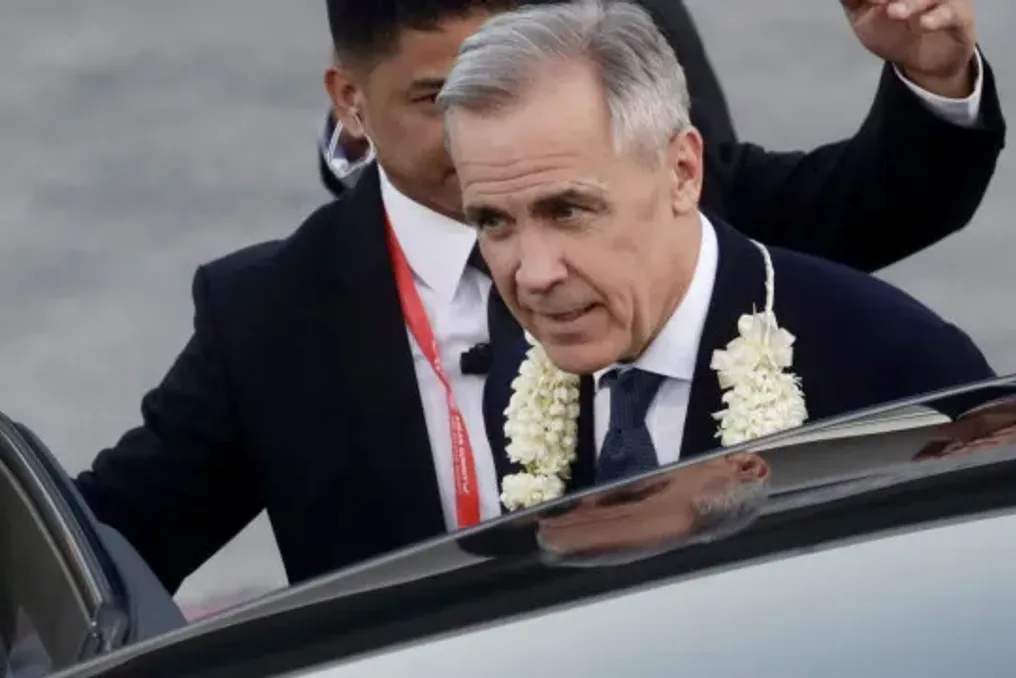
Mark Carney threatens to use Chinese manufacturers if US negotiations fail
Read more
noticiasaominuto.com

Mark Carney threatens to use Chinese manufacturers if US negotiations fail

Canada's Prime Minister Mark Carney stated that Canada could turn to Chinese automakers if trade talks with the United States fail to preserve the integrated North American automotive industry.

Carney made these statements today in the Cambodian capital, Phnom Penh, ahead of a planned meeting with Chinese President Xi Jinping this week in Shenzhen, southern China, where Chinese auto production is set to be discussed.

In January, the two leaders reached an agreement allowing tens of thousands of Chinese electric vehicles to be imported into Canada at reduced tariffs.

Carney told journalists: 'We have the best automotive workers in the world, and we want them to be fully employed in all capacities in the integrated North American market.' He added that 'this market has become less integrated due to US trade measures.'

On Saturday in Manila, Carney said that any trade agreement with Washington must guarantee a viable automotive industry for Canada. Today he clarified that talks with the US remain a priority, but the outcome may determine whether Canada seeks alternatives involving European, Chinese, or Japanese automakers.

When asked whether potential Chinese investment is a bargaining chip in US negotiations, Carney replied: 'It is not a bargaining chip. It is a reaction and an action.' He stressed: 'If they are not fully utilized in the North American context, it opens up other opportunities,' referring to Canadian automotive workers and production assets. He concluded: 'Canada will move forward either way.'

'The Detroit Big Three'—Ford, General Motors, and Stellantis—have factories in Canada, the US, and Mexico, with parts sometimes crossing borders multiple times before the vehicle is completed.

US President Donald Trump has repeatedly pressured automakers to move production from Canada to the US. Carney noted that any Chinese investment must involve substantial production in Canada, not just the assembly of imported parts.

The head of government stated that this would require proper labor standards, production capacity, and national supply chains that would expand over time, including Canadian critical minerals used in electric vehicles. Carney emphasized: 'This is not just about car kits. There must be a manufacturing component involved.'

Under the January agreement, Canada lowered the tariff on Chinese electric vehicles from 100% to 6.1%, which initially allowed the import of up to 49,000 vehicles per year, with the maximum limit increasing over time. In return, China agreed to lower duties on Canadian agricultural products, including rapeseed.

Carney had expressed hope at the time that this agreement would attract Chinese investment into the Canadian automotive industry and create jobs. However, the agreement drew criticism from Ontario Premier Doug Ford, whose province is a hub of the Canadian automotive industry. Ford warned that allowing Chinese EVs into Canada could jeopardize Canadian jobs and undermine access to the US market.

Tariffs imposed by Trump disrupted the Canadian automotive industry, which relies heavily on cross-border production. Recently, Canada threatened to sue Stellantis after the manufacturer moved planned Jeep Compass production from Brampton, Ontario, to Illinois and agreed to sell its inactive Canadian assembly plant.

Carney reported on Saturday that he had spoken extensively with Trump and high-ranking American officials, and that both countries are making progress toward a possible trade agreement, although some disagreements remain.

Popular