In the city of Delhi, where air pollution often penetrates buildings, air circulation in classrooms does not guarantee clean breathing. For many children attending schools that cannot afford expensive air purifiers, this is a daily reality, as they spend hours in rooms with minimal protection against fine particulate matter.
Two teenagers from Delhi, Krish Aggarwal and Samart Mittell, decided to approach this problem differently. Instead of demanding that schools invest in costly purification systems, they wondered if existing classroom fans could be made to work more effectively.
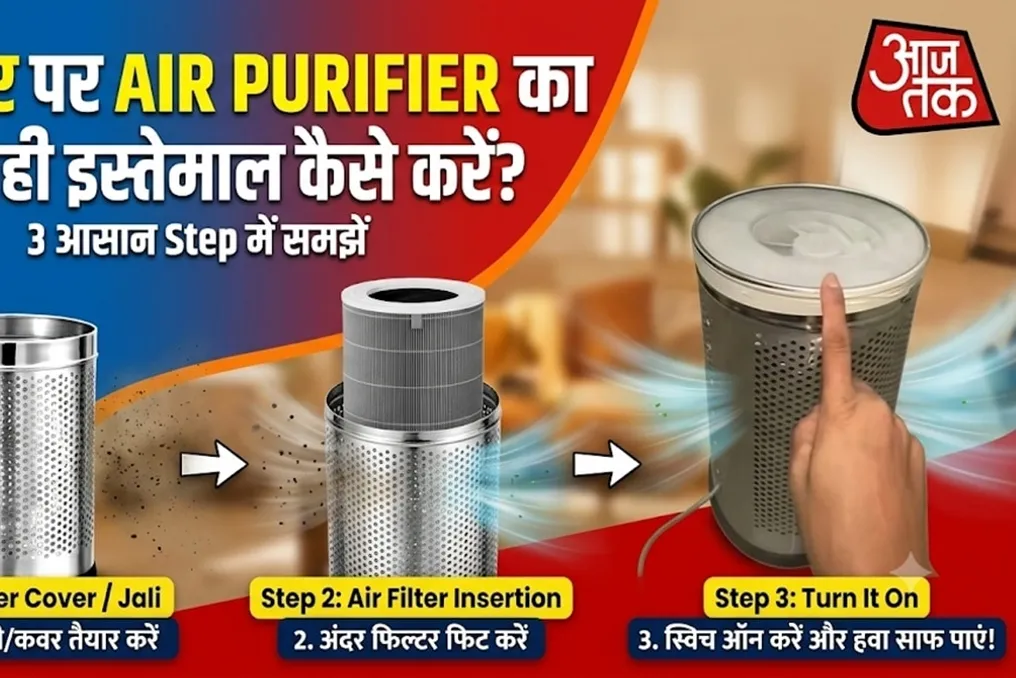
Their idea materialized within the Vayu project—an initiative that created an affordable filter that attaches over regular desk and wall fans, thereby turning them into air purifiers. The cost of one filter is about 140 rupees, allowing schools to combat indoor air pollution without needing to purchase entirely new equipment.
"Growing up in Delhi, we personally felt the effects of air pollution," say the two. "We were concerned that while some schools could afford expensive purifiers, thousands of students in under-resourced schools remained unprotected."
What if a school fan could purify the air?
Instead of creating a new device from scratch, Krish and Samart decided to utilize existing school infrastructure. The main technical challenge was developing a filter capable of capturing fine solid particles, especially PM2.5, without restricting the airflow of a standard fan.
"We experimented with various designs before arriving at our spherical filter made of electrostatic carriers with electrostatically charged fibers," they explain. The filter uses electrostatically charged fibers that attract and capture tiny suspended particles. It is attached to an existing desk or wall fan using an elastic backing. Once the fan is turned on, the airflow inflates the filter into a spherical shape, increasing the filtration area.
No additional motors, electrical modifications, or special mounting are required; the filter can be installed in less than a minute without tools. For the development and testing of the technology, the teenagers approached Hollingsworth & Vose, a manufacturer of filtering media. They first sent the idea to the company's team in India and were surprised by the company's willingness to support them. The company provided the filtering media free of charge and collaborated with the team in research and development.
"Air purification technology already exists. Schools simply lack the funds. By using the fans already in classrooms, we eliminated the need for expensive motors and additional infrastructure," they note. This support helped keep the production cost at around 140 rupees per filter.
What difference can a 140-rupee filter make?
For the young innovators, developing an affordable product was only half the battle. They also needed to determine whether the product could have a measurable impact on indoor air quality. According to the founders, independent external testing, as well as joint research and development with Hollingsworth & Vose, yielded encouraging results.
In a closed room measuring about 200 square feet, the concentration of PM2.5 reportedly dropped from 158 to 11 micrograms per cubic meter within an hour of using the filter, representing a reduction of over 90%. However, these results depend on the size and conditions of the room. In a larger classroom, the team recorded a 60% reduction in PM2.5 levels within an hour, with further decrease over several hours of use.
There is also a visible sign of captured particles. "One of the most striking things is watching the filters change color from white to gray or even black after several weeks of use. It is a visual reminder of how many pollutants are present in classrooms," they say.
From 295 Classrooms to Thousands of Students
Gaining the trust of schools regarding an unfamiliar technology developed by high schoolers proved challenging. Initially, many educational institutions displayed understandable caution. However, demonstrations and explanations of the conducted tests helped the team gain confidence.
The Vayu project began with a pilot project covering 295 classrooms and about 8,000 students. Since then, the initiative has expanded to over 10 schools and reached approximately 20,000 students. The team has also installed filters in several low-income medical clinics.
The work was not without difficulties. Identifying schools, obtaining permits, and navigating institutional procedures often slowed down the installation process. "Balancing the Vayu Project with studies was definitely difficult. Most of our time goes into approaching schools, coordinating installations, and monitoring approvals," they note.
The efforts also brought recognition. Krish was awarded a spot on the Diana 2026 list of honorees for his work on the Vayu Project. He credits this recognition to everyone who helped create the initiative, including Samart and their colleagues. Samart adds: "The Vayu Project taught me that innovation doesn't always require inventing something completely new. Sometimes it's about making existing technology more accessible."
What's next for the Vayu Project?
Now the duo hopes to spread the Vayu Project to more schools across Delhi and eventually to other parts of India. They are interested in collaborating with government bodies, school principals, teachers, and organizations that can help deliver the filters to the children who need them. Their aspiration is based on a simple belief: access to clean air should not depend on the financial capacity of the school.
For Krish and Samart, the idea was never just about making a fan work differently. It was about looking at what is already available in classrooms and asking how it could better serve children. And sometimes, to change a situation, you don't need to invent a brand new machine. It starts with finding a new purpose for what already exists.