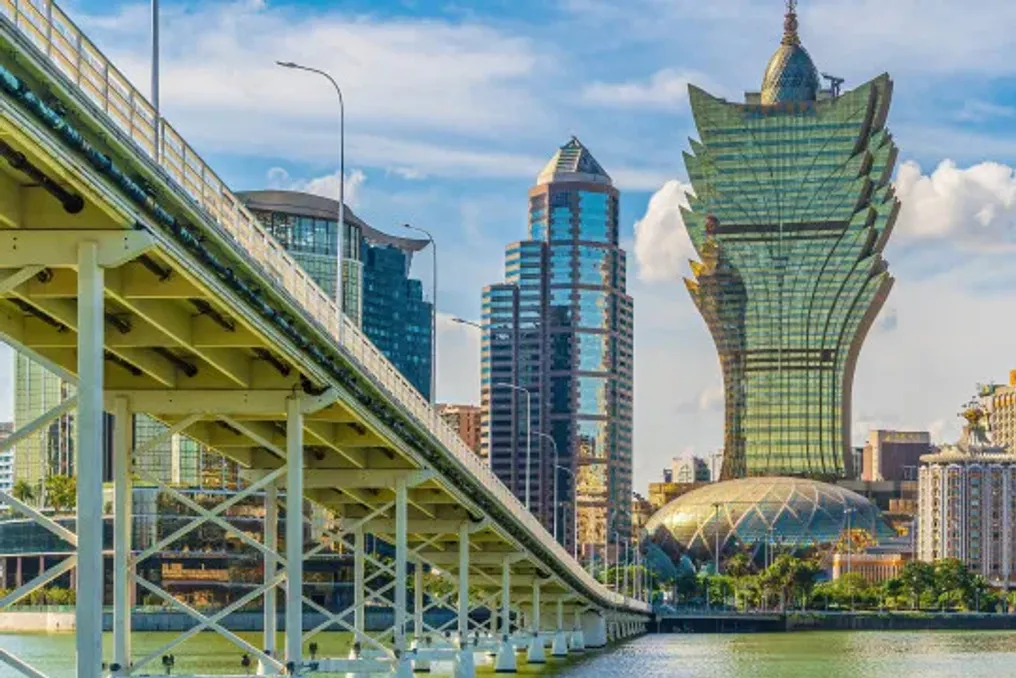
The Macau government announced that an independent audit will be conducted to verify whether casino operators have fulfilled their promises to invest funds outside the gaming sector, as well as to assess the impact of these investments on the diversification of the global gambling hub's economy.
When renewing concessions in 2024, six casino operators in Macau committed to investing over 100 billion patacas (equivalent to 11.3 billion euros) over ten years in non-gaming elements.
The Secretary for Economy and Finance reported that the total commitment of the six operators for non-casino projects reaches 130.5 billion patacas (14.8 billion euros).
Dora Ng Wai Han presented this information to members of the local parliament, the Legislative Assembly, during the presentation of the State Action Plans (LAG) for the coming year. She emphasized that a working group consisting of several secretaries of the Macau Government will be responsible for monitoring the execution of these investment projects.
According to Dora Ng, who was previously a casino regulator, the six concessionaires must provide invoices to confirm the amount invested in these projects. Furthermore, a third, independent party will be engaged to audit these non-gaming investments.
Moreover, Macau government secretary Sam Hau Fai stated that he will also evaluate or approve these investments according to the annual plan. Dora Ng assured that the authorities have a 'very strict mechanism' for determining whether the projects are 'beneficial' for diversifying the regional economy.
In June, when she left the DICJ, the founder of the gaming consultancy company IGamix told the newspaper Lusa that investments in non-gaming elements are 'the most pressing issue raising many questions from investors.' Ben Lee warned that since more than a third of the concession period has passed, 'the lack of any significant progress' in setting targets for 'specific investments' 'is worrying many investors and creating uncertainty.'
Macau is a global casino hub and the only place in China where gambling is legalized. In the first half of 2026, casinos accounted for almost half (49.4%) of Macau's Gross Domestic Product (GDP) and provided employment for about 66,100 people. Including tourism, this sector together accounted for 74.1% of the economy of the semi-autonomous Chinese region. Macau is betting on financial services between China and Portuguese-speaking countries to diversify the urban economy.